
The Motorcycle That Quietly Delivers The Best Long-Term Value
When you’re considering a new bike purchase, the dealership walks you through the usual numbers like MSRP and monthly payments, while you weigh the horsepower per dollar. Frankly, those numbers are just about enough to ride home with that day. In reality, however, they just aren’t the whole math behind owning a motorcycle, because the cost that matters only comes to the fore years later, during the course of its upkeep, and especially when you’re ready to part ways with the bike. And it’s understandable, after all, in the excitement of a new motorcycle coming home, almost no one thinks that far ahead. Defining the purpose of your purchase should reveal more cost considerations, and the touring motorcycle buyer is someone who usually factors in more numbers.
Long-Term Value Is A Different Consideration

Touring riders have a narrow-focused purpose of simply racking up the miles, come rain or sunshine. The new bike excitement is still intact, but gear, fuel economy to cover greater distances, and most importantly, service schedules to keep that tourer rolling on the road are factored in by default. Depreciation, however, is the largest expense in a motorcycle’s ownership.
And almost nobody budgets for it because it’s somewhat hidden till you post that bike for sale. Flipping bikes every couple of years makes the situation worse, as the steepest part of the depreciation curve is absorbed, thus paid over and over, with each purchase resetting the clock at its most expensive point. It’s the difference between a bike that simply runs and one that holds its value surprisingly well.

Touring bikes reward that patience the best. They sure cost the most when new, so more value is at stake, but the good ones drop it slowly over time. Built to absorb the miles, valued for character that doesn’t age out, classic proportions that don’t date, and wanted by buyers who prize the proven ones, they hold steady on demand from long-haul riders. It helps when a model has been on sale and barely changed for over thirty years, because parts stay plentiful, and the look never falls out of fashion.

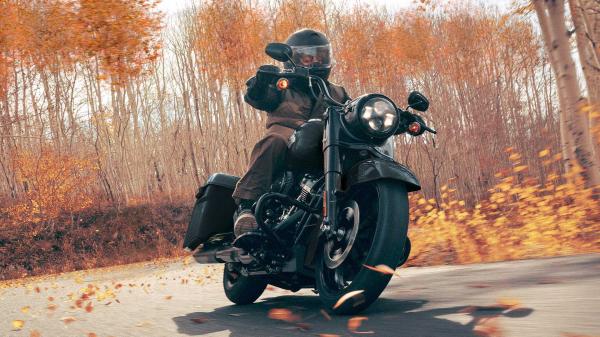
The Harley Road King Debuted In The 90s And Is In Production Ever Since
The Road King’s enduring design proves that true classics never fade
The Harley-Davidson Road King Is The Touring Bike That Refuses To Lose Its Value

The bike that has served as the unsung hero of Harley’s touring lineup for three whole decades is proof that some bikes simply offer more value than most. Introduced in 1994 to replace the Electra Glide Sport, the Road King took the full touring chassis, stripped away the heavy front fairing, and left a clean, classic profile defined by a detachable windshield, a big chrome headlamp nacelle, and hard saddlebags. That classic bagger silhouette has barely shifted since, and a 2005 example as well as a 2022 one share more than they differ.

The Road King has long sat near the top of Harley’s touring ladder while carrying the least that can go wrong. No batwing or sharknose fairing, no touchscreen infotainment, no speaker arrays to fail a decade on, that’s the beauty of simplicity, and the Road King sets a great example of it. Riders who want long-haul capability without the full-dresser bulk have it as one of the very few remaining choices in the modern tech-heavy motorcycling world, and that narrow, loyal demand is what holds the resale value up. The current 2025 Road King Special is easy to overlook, but it carries the same old-school logic forward, built on the proven Milwaukee-Eight 114, priced from $24,999, and designed to age in the same graceful way that its predecessors have.
The Milwaukee-Eight Era Vs The Twin Cam Years

The engine generation splits the used market with Road Kings from 1999 through 2016 that ran the Twin Cam, in 88 cubic-inch, 96 cubic-inch, and finally the 103 cubic-inch form. And 2017 onward, that brought the Milwaukee-Eight in its 107 guise, with the 114 arriving on the Special. Twin Cam bikes are the budget entry, plentiful on the market, proven reliability, and cheap, though the earliest examples beg a careful look at cam-chain tensioner condition.
The Milwaukee-Eight bikes command a premium for their smoother, cooler-running, torquier character, and they’re the ones whose values have held the firmest. The one caveat sits at the very start of that era, where the 2017 and 2018 bikes carried an early oil-pump “sumping” issue that Harley corrected under warranty, so a verified fix is worth confirming when buying used.
How The Road King Evolved Over The Years

Buyers aren’t only paying for an engine, they’re paying for steady, sensible refinement of the model over the years as Harley put “why fix it, if it ain’t broke?” to practice. The 2017 Milwaukee-Eight changeover was the big one, as it brought chassis upgrades the model was long overdue for. Showa dual-bending-valve front forks and easy-adjust rear shocks replace Harley’s older suspension units, plus optional Reflex-linked Brembo brakes with ABS.
Through it all, the Road King held its line, keeping the detachable windshield, the one-touch locking hard bags, the six-gallon tank, and the fairing-free simplicity that has always defined it. That consistency in a model is the whole point, because a bike that improves where it counts while staying true to its template makes for Harleys built to last practically forever.
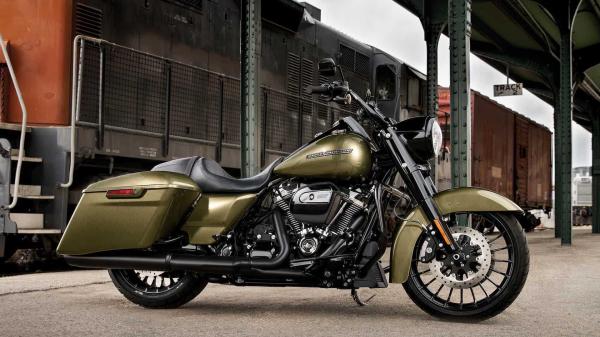
How Much A 7-Year-Old Harley-Davidson Road King Special Is Worth Today
Introduced back in 2017, the Road King Special has remained largely unchanged since then and a 7-year-old model offers good value
Used Prices Over The Years And What The Depreciation Actually Looks Like

The Road King depreciates just like every motorcycle does, but the shape of its depreciation curve is unusually kind to anyone who buys one and holds on to it. As is the case with any new machinery, the steepest drop happens early, in the first few years, when every new bike absorbs a hit to its value, after which the line flattens and stays so for a remarkably long stretch. Clean, well-kept examples only start shedding value heavily once they cross the decade mark, which is when the oldest of them turn up among the used Harley touring bargains of 2026. That means the rider who keeps one for ten years rides out almost the entire useful life of the bike on the gentlest part of the money-losing curve.

The numbers back the theory up. A 2017 Road King carries a trade-in value near $8,430 in good condition, and a 2017 with 8,100 miles lists at $12,500. Look back far enough, and the earliest, highest-mileage examples slip under the threshold of used Harley touring bikes worth under $5,000, while late, low-mileage bikes reach nearly $19,000, with the average across the market landing near $14,000. Supply is deep rather than scarce, with over a thousand listed nationally at any given time, yet the prices hold steady, a sign that demand is keeping genuine pace with availability rather than the market simply being flooded. Buy the right one, keep it, because why would you ever trade a Road King away?
Sources: Harley-Davidson, KBB, Cycle Trader

Related posts

Latest Post


No Comments