The Mainstream SUV That Quietly Outsmarts Luxury Rivals
12 minutes reading
Sunday, 26 Jul 2026 22:00 0 76 autotech
The market is awash with SUVs. Both the luxury segment and the mainstream segment are very well catered for today, and while luxury brands still have badge appeal on their side, things aren’t as clear-cut as they used to be. Once upon a time, a Cadillac badge or BMW badge would have been the be-all and end-all for some compared to a Kia badge or a Mazda one.
Mainstream SUVs are now encroaching on luxury SUVs in terms of style, comfort features, and tech, and this Hyundai SUV proves you don’t need to spend a lot to get a lot.
Luxury SUVs Aren’t The Only Way To Get A Premium Experience
Front 3/4 shot of 2026 Mazda CX-90 parkedMazda
The idea that you need a luxury badge to enjoy a genuinely premium SUV is becoming outdated. For 2026, mainstream marques have reached a point where they’re offering features that, not all that long ago, were reserved for vehicles costing $20,000 or even $30,000 more.
Heated seats, Nappa leather upholstery, panoramic glass roofs, ambient lighting, and power-folding third rows are becoming surprisingly common in the upper trims of family SUVs and mainstream models. The market has undergone a massive shift.
Front 3/4 action shot of F2027 Kia Telluride drivingKia
Take the 2027 Kia Telluride as an example. The redesigned three-row SUV brings features that would have looked right at home in a BMW showroom just a few years ago, including dual 12.3-inch displays, available dual wireless smartphone chargers, a full-color HUD, Digital Key functionality, and a Bose audio rig.
The new CX-90 is the same story: Nappa leather, real wood trim, and a 12-speaker Bose system are all available. The mainstream is now stepping on the toes of what luxury used to be, and it isn’t gimmicky either; these models get upscale features you’ll actually use.
Technology And Refinement Have Gone Mainstream
Shot of 2026 Kia Sorento Hybrid interior showing front cabinKia
Tech used to be one of the main reasons for some to buy a luxury SUV, but tech has now become one of the biggest reasons some mainstream SUVs feel more expensive than their sticker price would suggest. Large, high-res infotainment systems have effectively replaced the small, cluttered displays that dominated the segment just a few years ago.
Many 2026 and 2027 mainstream SUVs now feature wireless Apple CarPlay and Android Auto as standard; cloud-based navigation is included in many models, and features like voice-assistant integration, USB-C ports, wireless phone charging, and OTA updates are increasingly common.
Shot of 2025 Mazda CX-90 front cabin showing dashboardChris Chin | TopSpeed
Then there is the fit and finish. Some mainstream SUVs used to be questionable at best when it came to quality. The market has shifted from purely utilitarian to a softer, more refined experience. We are now seeing more sound-deadening, laminated windows, and better suspension tuning in non-luxury-badged SUVs.
Models like the Mazda CX-90 have a rear-wheel-drive-biased setup, which offers a composed ride to complement the calm interior quality, while the new Toyota Grand Highlander Hybrid makes for an ideal family SUV, thanks to exceptional ride comfort and interior space. The market is a very different place compared to when an SUV just meant it could tow and haul.
Value Has Become The Biggest Luxury Of All
2025 Mazda CX-30 Turbo Premium Plus rear 3/4 shotLyndon Conrad Bell | TopSpeed
What has really changed, though, is the value-for-money equation. A well-equipped mainstream SUV can now deliver most of the comfort, tech, and refinement of some entry-level luxury models from traditional brands, while costing tens of thousands of dollars less to buy, and generally being cheaper to insure, maintain, and run.
For many of us, that is becoming the meaning of luxury. It is less about paying for a prestigious badge and more about getting features that genuinely improve everyday driving. Whether it is ventilated seats on hot days, hands-free driving on the highway, or a decent sound system that makes traffic more bearable, today’s best mainstream SUVs prove that you don’t need to spend Mercedes money for a similar experience.
The 2026 Hyundai Santa Fe Is Leading The Charge
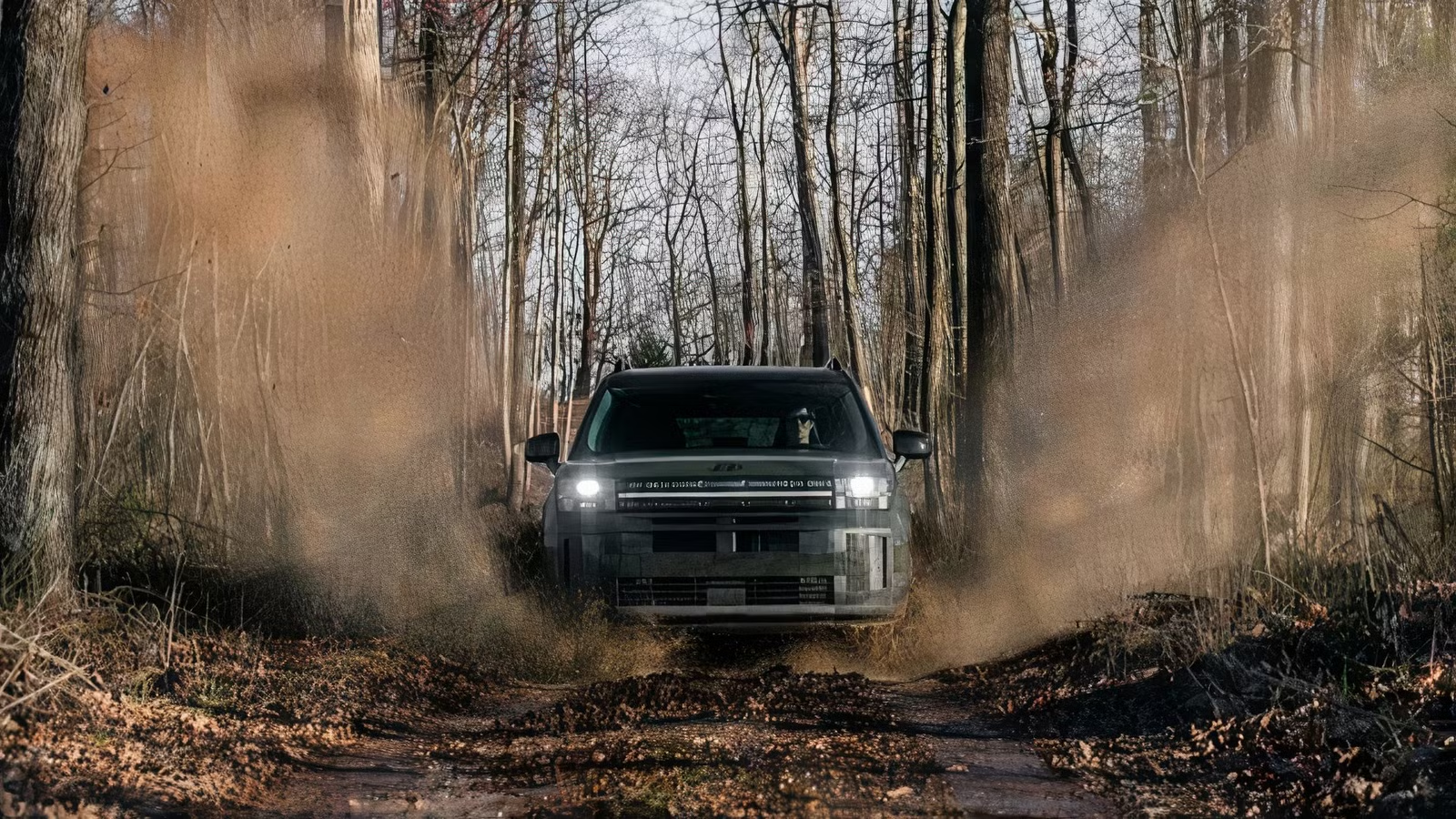
Front 3/4 action shot of 2026 Hyundai Santa Fe driving on roadHyundai
At the forefront of mainstream SUVs stepping into luxury territory and quietly providing most things we could want from a plush SUV is the 2026 Hyundai Santa Fe lineup.
Hyundai does not have the same prestige as Lexus, BMW, Mercedes-Benz, or Cadillac, but the well-priced, comfortable, capable, and well-equipped new Santa Fe and Santa Fe Hybrid models are doing a strong job of drawing attention away from traditional luxury rivals.
There are five trims of the new Santa Fe: the SE, the SEL, the XRT, the Limited, and the Calligraphy. The Santa Fe Hybrid comes in four trims: the SE, the SEL, the Limited, and the Calligraphy. The Santa Fe trims range between $35,050 and $47,600, while the Santa Fe Hybrid lineup ranges from $36,400 to $48,700.
Close-up shot of 2026 Hyundai Santa Fe engine bayHyundai
There are two powertrain options for the new Santa Fe. The non-hybrid models get a 2.5-liter turbo-four, while the hybrid models use a smaller, more efficient turbo-four. They have the following specifications.
Gas models come standard with front-wheel drive, while the Hyundai HTRAC all-wheel drive system is optional across most of the trims, but comes standard on the XRT. The Santa Fe Hybrid mirrors this, and you get a choice of both FWD and AWD to suit what kind of driving you do.
Upscale Design Feels Far More Expensive Than It Is
Rear shot of 2026 Hyundai Santa Fe parkedHyundai
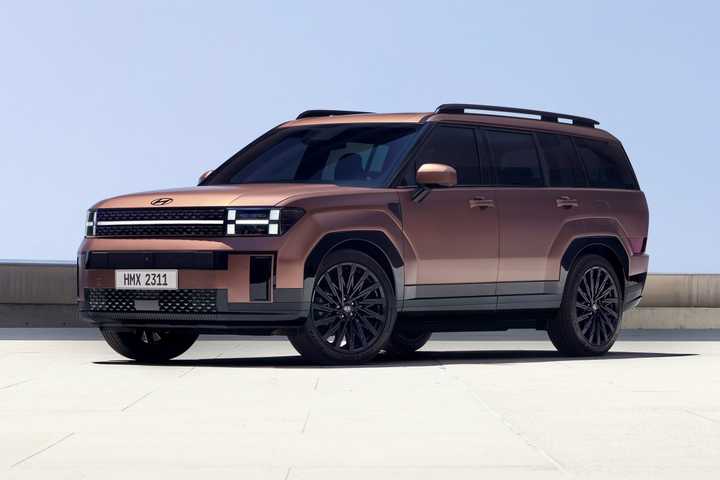
Hyundai has taken a bold approach with the latest Santa Fe, which was redesigned in 2024, and it pays off. Instead of the rounded, anonymous styling that adorned so many Hyundais in the past, the new Santa Fe gets a boxy, tough-looking silhouette with a longer wheelbase, upright proportions, and strong body lines (a significant improvement over the rounded look of the fourth-gen models).
Distinctive H-shaped LED daytime running lights and taillights are recognizable in a sea of modern SUVs, while a wide tailgate opening and a squared-off rear end are more than just a nice styling exercise; they create an easier space to load bulky things.
Modern Tech And Everyday Practicality Make It Stand Out
Interior of a 2026 Hyundai Santa Fe Hybrid Calligraphy showing front cabinIsaac Atienza | TopSpeed
Where Hyundai seems to have nailed it is actually providing the two things that have become synonymous with modern SUVs: tech and practicality. The SE and SEL come standard with a curved 12.3-inch display, wireless Apple CarPlay and Android Auto, OTA updates, and the Hyundai Smart Sense safety suite, which includes Forward Collision-Avoidance Assist, Blind-Spot Collision Warning, Smart Cruise Control, and Lane Following Assist. In short, even the entry-level models feel very modern inside.
The Limited trim adds a 12-inch HUD, Blind-Spot View Monitor, Remote Parking Assist, and a 12-speaker Bose audio rig. Right at the top of the tier is the Santa Fe Calligraphy; among other things, it has the best tech in the lineup. You get dual wireless smartphone charging pads, a full-display digital rearview mirror, fingerprint authentication, and Hyundai’s UV-C sterilization compartment.
Rear shot of 2026 Hyundai Santa Fe cargo areaHyundai
Then there is the practicality of the 2026 Santa Fe. Hyundai calls it a compact crossover SUV; however, its dimensions of 190.2 inches by 74.8 inches and a 110.8-inch wheelbase nudge it closer to the mid-size segment. Either way, you get up to 25 cubic feet of storage space with all seats in place and a maximum cargo capacity of 79.6 cubic feet.
On top of that, towing capability is impressive. If you opt for the AWD XRT, the maximum towing capacity is 4,500 pounds (with trailer brakes); the other gas-engine models can tow up to 3,500 pounds, and the hybrid models 2,000 pounds when fitted with trailer brakes.
The Santa Fe Holds Its Own Against Luxury Rivals
Profile shot of 2026 Hyundai Santa Fe parkedHyundai
It is not just the fifth-gen looks, the impressive array of techy features, and the low prices that make the new Santa Fe a sensible choice for a mainstream SUV that takes on the luxury market, but also how it rides, how the cabin feels to be in, and how it is rated by owners.
According to J.D. Power, the 2026 Santa Fe is rated 82 out of 100 overall, which includes a rating of 88 out of 100 for driving experience. Owner reviews on Kelley Blue Book are more mixed; it is rated 3.2 out of 5 overall, with 50 percent of the 19 owners recommending it, but it scores 4.5 out of 5 for comfort and 4.8 out of 5 for styling.
Premium Comfort And Materials Come Without The Premium Price
Shot of 2026 Hyundai Santa Fe cargo areaHyundai
This year’s Santa Fe may not be the smallest SUV, and it is by no means the biggest, but you do get a good amount of space over three rows for you and your passengers. It is worth noting, though, that the third row may be a little cramped for taller passengers, but it does still give you an option to carry an extra two people around with you.
The entry-level trim avoids the plasticky feel of other base models but is the simplest in terms of features. It has cloth upholstery, dual-zone climate control, and a manually adjustable driver’s seat. The SEL gets H-Tex synthetic leather upholstery, a leather-wrapped steering wheel, and heated front seats that make it a noticeably nicer place to sit in traffic.
The XRT trim leans into a more rugged look, with unique trim finishes and durable upholstery better suited to outdoor use, while both the Limited and Calligraphy trims go all-out for mainstream luxury. You get Nappa leather seating, soft-touch materials on the dash and door panels, and a microfiber suede headliner.
Profile shot of 2026 Hyundai Santa Fe Limited interior showing front cabinHyundai
The Calligraphy goes even further, with exclusive quilting, refined cabin accents, heated and ventilated second-row seats, and Hyundai’s Ergo Motion driver’s seat. Throughout the lineup, the attention to detail and fit and finish is impressive for the price point.
Low Ownership Costs Give It An Advantage Long After You Buy It
Side profile of a 2026 Hyundai Santa Fe Hybrid CalligraphyIsaac Atienza | TopSpeed
Owning a luxury SUV used to mean accepting the fact that it would cost a lot of money beyond the showroom. The Santa Fe combines upscale features with Hyundai-grade running costs. Compared to the generally expensive running costs of German vehicles, this is just another point in the South Korean marque’s favor.
According to the 2026 Vehicle Dependability Study (VDS), Hyundai (brand-wide) experiences 198 problems per 100 vehicles (PP100), and while that is the same as BMW, it is still better than the 204 PP100 market average and the likes of Mercedes (235 PP100), Audi (244 PP100), Land Rover (274 PP100), and maybe surprisingly, Volvo (296 PP100).
Front 3/4 action shot of 2026 Hyundai Santa Fe driving on highwayHyundai
The 2026 Santa Fe, though, does very well in terms of reliability ratings. On J.D. Power, it is rated 81 out of 100, while iSeeCars rates it 7.2 out of 10 for reliability and estimates that it has an average lifespan of 136,200 miles. RepairPal estimates that it will cost you $515 a year to maintain, which makes it some way cheaper than the market average of $652, and CarEdge says it will cost you $55,051 to own over five years.
Then there is fuel efficiency; while CarEdge has provided a figure of close to $7,000 over five years, the EPA has broken it down further. According to the EPA, the least fuel-efficient 2026 Santa Fe model is the AWD XRT, which can achieve 21 combined mpg (19 mpg city/25 mpg highway), and will cost you $2,950 a year for gas.
The other trims of the gas-model Santa Fe can achieve between 23 and 24 combined mpg, costing you between $2,600 and $2,700 a year for gas, while the Santa Fe Hybrid looks to be worth the extra bit of money at build, thanks to its lower predicted fuel costs.
The 2026 Hyundai Santa Fe Proves You Don’t Need A Luxury Badge To Drive A Luxury SUV
Front 3/4 action shot of 2026 Hyundai Santa Fe driving in desertHyundai
A new Santa Fe isn’t going to match the sprint times of a BMW XM Label; it can hit 60 in between 6.3 and 7.2 seconds, while the XM Label has been clocked at around 3.6 seconds. Nor will it match the immense cabin plushness of the Escalade, but if you are looking for a smart, comfortable, well-appointed, and genuinely luxurious ride, the new Santa Fe proves you don’t need to pay the badge premium.
An entry-level 2026 BMW X5 has an MSRP of $68,300, and while it may command more prestige on the road, it costs significantly more up front and carries an estimated five-year cost of $93,275.
Front 3/4 view of a 2026 Hyundai Santa Fe Hybrid CalligraphyIsaac Atienza | TopSpeed
Shot of 2026 Hyundai Santa Fe interior showing front cabinHyundai
The same goes for the new Jeep Grand Cherokee; it costs $38,920 to start, making it comparable to much of the Santa Fe and Santa Fe Hybrid lineup, but CarEdge estimates it will cost just shy of $60,000 over five years, and there is no longer a hybrid option (Grand Cherokee 4xe) to help reduce fuel costs.
Luxury is becoming less about exclusivity and more about execution. The new Hyundai Santa Fe proves that careful engineering, thoughtful packaging, capable technology, efficient powertrain options, a good balance between comfort, practicality, and lower ownership costs, and a well-finished interior can create a genuinely luxurious feel without the deep pockets required for traditional luxury SUV models.
Base Trim Engine
2.5L Smartstream I4 ICE
Base Trim Transmission
8-speed automatic
Base Trim Drivetrain
Front-Wheel Drive
Base Trim Horsepower
277 HP @5800 RPM
Base Trim Torque
311 lb.-ft. @ 1700 RPM
Make
Hyundai
Model
Santa Fe
Segment
Midsize SUV
Sources: Hyundai, CarEdge, J.D. Power, Kelley Blue Book, FuelEconomy.gov, and iSeeCars










No Comments