
The Adventure Motorcycle That Makes Big ADVs Feel Excessive

Adventure motorcycles have come a long way in the U.S. market. What started as a fairly simple idea — a bike that could handle pavement, gravel, and the occasional bad decision — has split into a full spectrum of machines. They range from heavy flagship tourers to approachable middleweights and smaller-displacement options.

All of these are impressive in their own way, but they have also drifted far from the original do-everything formula. The biggest ones now feel like long-distance luxury tools that just happen to have off-road tires. They offer huge engines, big screens, radar-style tech, tall wind protection, and enough electronic polish to make a fighter jet jealous. That sounds appealing until the pavement disappears, and the terrain gets ugly. This is when you realize that you need something smaller with lesser stakes.
What Makes Flagship ADVs Feel Excessive
The problem with big-displacement adventure bikes is that they can be too much of everything. Too much mass to wrestle when the trail gets slow. Too much to balance when the surface turns loose. Too much motorcycle to confidently paddle around with your feet when the line ahead gets awkward. Even the best riders feel that weight, especially once a bike is tilted slightly off balance in sand, mud, or baby-head rocks. At that point, the machine stops feeling like a passport to freedom and starts feeling like a physics problem with a seat height attached.

That weight changes behavior before the ride even begins. Heavy bikes quietly discourage exploration because every unfamiliar trail starts to look like a potential pickup drill. A rider who might happily dive a narrow forest road on a lighter machine will think twice when on board a full-size flagship ADV. The fear is not irrational. When a motorcycle is large, expensive, and top-heavy, the margin for error shrinks fast, and once the ride becomes a balancing act rather than an adventure, the fun starts leaking out of it.
Financial and Psychological Burden Add To The Stress

Big ADVs also bring a second kind of pressure — cost. Their entry prices are high, maintenance tends to be more premium, and replacement parts are rarely cheap. Add in wide fairings, large screens, integrated electronics, and the kind of polished bodywork that looks amazing in a showroom, and a simple trail tip-over suddenly feels much more serious. Even if the bike rides beautifully on the road, the mental path on a rocky trail can get exhausting. Every new scratch feels expensive, and every awkward moment on the trail has a price tag attached to it.
The KTM 390 Adventure R Makes Big ADVs Feel Excessive
Base Price: $7,699

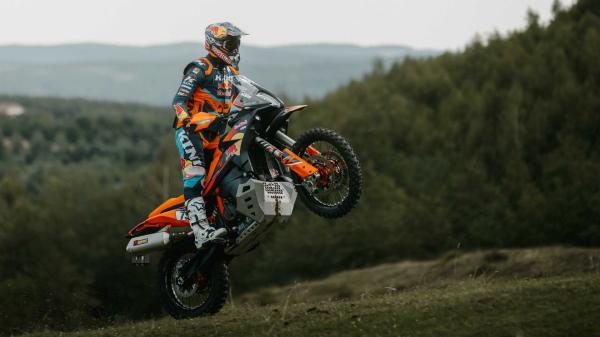
That is exactly why the KTM 390 Adventure R feels so refreshing. It strips the adventure equation back down to the useful parts: lightweight feel, real off-road geometry, proper suspension travel, and a price that does not require a deep breath before signing the paperwork. KTM itself frames the bike as the “most off-road capable middleweight adventure bike” in its segment, and the basic formula makes sense the moment you look at the spec sheet. It is a rally-inspired machine that still lives in the real world.
At $7,699 before freight, the R lands in a place that feels almost old-school in today’s market. You are not paying flagship money for flagship-sized compromises. Instead, you get a motorcycle designed around agility and confidence, not brute force. That matters because true adventure is not measured by engine size alone. It is measured by how willingly a bike lets you take the harder path, and how little drama it creates when the surface turns ugly. The 390 Adventure R is built around that idea from the start.
The Motorcycle That Feels Built For Real Life
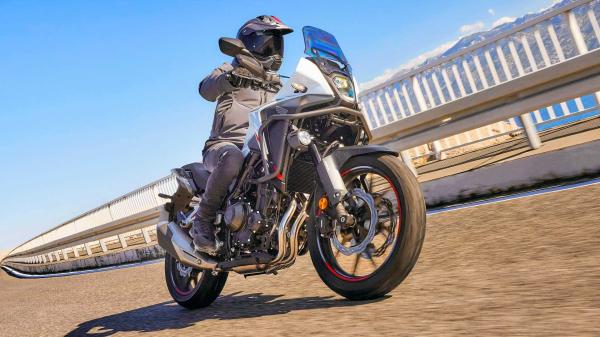
Big adventure bikes are cool, but this approachable Honda adventure-tourer proves simpler, lighter motorcycles make more sense for real life.
The Single-Cylinder Thumper That Can Do It All

Under the bodywork sits a 398.7cc liquid-cooled single-cylinder engine that pushes out 45 hp and 28.8 lb-ft. On paper, those numbers are modest compared with the big twins and in-line fours that dominate the premium ADV conversation. On the road, though, the character is what counts. A single-cylinder engine tends to deliver its punch in a cleaner, more immediate way, and that makes the bike feel lively rather than intimidating.
That punchy, high-revving nature is also part of what makes smaller adventure bikes so good off-road. Throttle response feels easier to read. Rear-wheel traction is less likely to turn into a surprise power event. And when the trail is slick or rutted, a single’s more predictable delivery can be a real advantage. You are not trying to tame a fire-breathing engine out in the dirt. Instead, you are managing a bike that wants to help you, not fight you. The 390 Adventure R’s six-speed gearbox and Bosch ride-by-wire management reinforce that same approachable, no-nonsense personality.
Electronic Safeguards That Defy The Budget Label

KTM also deserves credit for refusing to cheap out on the electronics. The 390 Adventure R gets Cornering MTC, Cornering ABS, and Offroad ABS. In plain English, that means the bike not only helps you on asphalt; it also gives you the kind of braking and traction logic that makes dirt riding less stressful. The Offroad mode allows rear-wheel slip, and KTM says Offroad ABS stays active in that mode so riders can lock the rear wheel to help slide into corners while still keeping useful control at the front. That is a serious feature set for a bike at this price.
Premium Architecture Without The Flagship Price

The chassis is where the 390 Adventure R really starts to separate itself from ordinary entry-level machines. KTM equips it with a steel trellis frame, a bolt-on rear subframe, and 21-inch front and 18-inch rear spoke wheels. That wheel size matters because it brings real off-road credibility, not just styling cues. The bike also wears a 43 mm WP APEX open-cartridge fork and a WP Apex rear shock, both with 9 inches of travel. Up front, compression and rebound are adjustable at 30 clicks; out back, the rebound gets 20 clicks, with preload adjustment handled by the tool. This is not pretend adventure hardware but a properly sorted suspension setup.
The WP Apex Suspension Has Genuine Off-Road Integrity

That suspension travel changes the entire tone of the bike. Instead of bouncing off sharp hits or falling apart over washboard roads, the 390 Adventure R should stay composed when the terrain gets messy. The numbers back that up: 9 inches of travel at both ends, 10.7 inches of ground clearance, and a seat height of 34 inches. Those figures tell you KTM did not build this machine to merely survive gravel roads. It was built to stand up to real trail work, the kind that exposes weak damping and lazy geometry in a hurry.
KTM also gives the bike a 14-liter fuel tank, a full-color 5-inch TFT display, and a USB-C port. The package feels thoughtful in a way that matters on long rides. It is not overloaded with gadgets for the sake of it, but it still brings enough tech to feel modern. Even the model’s rally-inspired bodywork and upright ergonomics are there for a reason: to let the rider move around freely when standing on the pegs and stay relaxed when the miles pile up.
The Adventure Bike Built For Riders Who Push Limits
The quickest way to live out your rally raid dreams.
Shedding Weight Changes The Entire Equation
Weight is where the 390 Adventure R makes its strongest case. KTM lists it at 364 pounds dry and about 388 pounds ready to ride. That is a major reason the bike feels so approachable compared with the huge flagship ADVs that inspire both admiration and caution in equal measure. Less weight means easier recovery after a stall, less stress when the bike needs to be manhandled around an obstacle, and far more willingness to attack a difficult trail without second-guessing every move.
And that is really the point. The KTM 390 Adventure R does not try to win the adventure game by being the biggest. It wins by being the one that invites more riding and less hesitation. It gives you enough power for highways, enough suspension for bad roads, enough electronics to feel current, and enough lightness to keep the ride fun when the route stops being scenic and starts being technical. In a market full of overbuilt giants, that restraint feels almost radical. This is not trying to replace a flagship ADV for every kind of rider. It is trying to remind riders that adventure motorcycles do not need to be enormous to be serious.
Source: KTM USA

Related posts



Latest Post


No Comments