
The Luxury Cruiser That Nails Plush Comfort, Strong Performance, And Simplicity
Over the years, we have seen the cruiser motorcycle market evolve into one of the most diverse motorcycle segments. From small beginner-friendly singles all the way up to advanced power-cruisers, there is something out there for everyone. When it comes to luxury models in particular, we are spoiled for choice.

European and Japanese brands have brought out some exceptional metric bikes in recent times, all offering something different to different kinds of buyers. All is a far cry from the chrome-clad wannabes of yesteryear. But at the premium end of the market, it is the two American brands that dominate.
More Muscle And Modern Features Make These Two Cruisers Worthy Adversaries
For decades, the Indian brand changed hands several times and essentially lay dormant before Polaris acquired the name back in 2011. Since then, the brand has experienced something of a rebirth. The Indian Chief Dark Horse is one of the many great bikes to be developed under their tutelage, and offers several modern features to go along with its authentic air-cooled V-twin. Unfortunately, Polaris has since sold the company to a private equity firm, and there is still some uncertainty surrounding the brand’s future.


Of all the metric brands, BMW has long since been the most desperate to get a piece of the luxury cruiser pie. While the Germans have found success in pretty much every other segment, the R 18 has failed to win over cruiser customers, no matter how refined it is. It is a very good bike that really has a lot to offer the right buyer, but remains a niche model largely thanks to how different it looks. From the side, it offers familiar cruiser lines, but the German brand chose to use an enormous air-cooled boxer engine as the centerpiece of the design. It is a design feature that certainly won’t leave anyone on the fence. You will either love it – and the rocking motion it creates – or hate it.

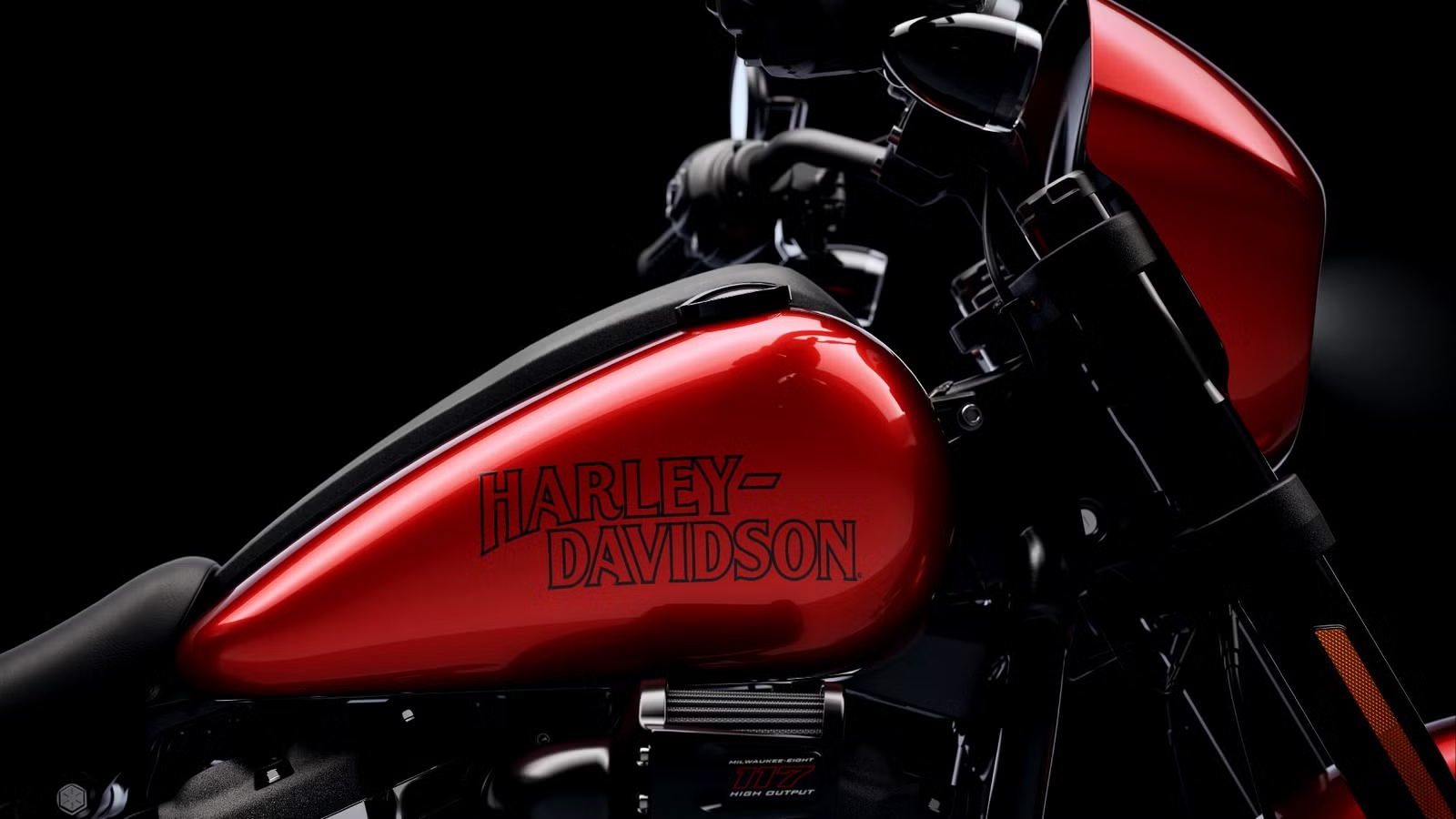
Apart from Indian’s uncertain future and BMW’s brave yet unconventional choices, both the Chief Dark Horse and R 18 still leave a lot to be desired. They don’t strike the balance of performance, simplicity, and comfort that many of us expect from our luxury cruiser motorcycles. For that, you’d have to consider their primary rival, a Harley-Davidson Softail cruiser that offers not just big twin performance, simplicity, and comfort but also authentic cruiser styling. The bike in question is the Harley-Davidson Low Rider S.
The Harley-Davidson Low Rider S Is The Ultimate Modern Cruiser
MSRP: $18,999

With more neutral mid-controls and a modern blacked-out option, the Low Rider S is a cruiser with broad appeal. One thing it is not is cheap, though. At this end of the market, much is expected, and for the most part, Harley is able to deliver. It offers all the modern amenities we have come to expect from a $20k motorcycle, yet retains a certain elegant simplicity. In short, you get what you pay for. Oh, and in 2026, the base bike—with the chrome engine bits—costs $18,999. That’s $1,000 less than the blacked-out one-up version.
|
Engine Type |
Milwaukee-Eight 117 High Output |
|---|---|
|
Displacement |
1,917cc |
|
Horsepower |
114 HP @ 5,000 RPM |
|
Torque |
128 LB-FT @ 4,000 RPM |
|
Lean Angle |
31.3 degrees, both sides |
|
Seat Height |
27 in. |
|
Weight |
670 pounds (in running order) |
A High Output Milwaukee-Eight V-Twin Powers The Low Rider S
Power: 114 Horsepower

Before the Milwaukee-Eight engines were developed, Harley-Davidson motorcycles were largely seen as underpowered. With the exception of the liquid-cooled V-Rod range, none of the air-cooled bikes were able to make over 100 horsepower without serious modification. The latest crop of air-cooled twins is vastly different, and the 117 High Output motor certainly adds some serious bite to the platform. While its 114 horsepower is impressive, that is not a figure that will get traditional cruiser fans excited – the 128 pound-feet of torque is what will interest them. With all that low-down grunt, the Low Rider S is exceptionally quick off the mark.
A Simple, Potent Air-Cooled Twin

As much as liquid-cooling has its advantages, there is a good reason why stout Harley fans prefer air-cooled engines. For one, the relative simplicity of these engines means that, with basic maintenance, they basically last forever. As much as people love to joke about older Harleys leaking oil everywhere, they keep leaking oil for well over 100,000 miles. If anything, these newer twins will last even longer, and hopefully leak a little less. Another reason why air-cooled engines remain popular is because of how easy they are to modify. Harley encourages this kind of thing with a long list of approved bolt-on engine upgrades. Not that this bike “needs” any more power.
Sporty Underpinnings Keep It Light On Its Feet

Like any other Softail Harley-Davidson, the Low Rider S uses the same frame but stands out with its retuned suspension setup that is said to improve control and comfort. For example, the 43mm forks up front are of the inverted kind with an aluminum fork triple clamp, and the rear features a free-piston monoshock, both of which should soak up bumps while maintaining the bike’s composure. Compared to its predecessor, this setup should offer better cornering clearance, composure, and steering response.

Combine that with the frame geometry and active ergonomics, and the Low Rider S should feel pretty dynamic on the road. That makes the Low Rider S the kind of bike that can do a lot of things fairly well, whether it’s commuting, cornering, or cruising around on the highway. The sporty yet comfort-tuned underpinnings perfectly complement the powerful M8 117 engine on the Low Rider S.
An Elegant Design And Modern Features Come Standard

As is the case with just about any premium cruiser, there are several colors to choose from and a couple of different trims. Up until this year, the Low Rider S was only available in a blacked-out trim, but Harley added a chrome option, which is actually cheaper, for the 2026 model year. While there will be those who prefer this retro aesthetic, the blacked-out trim is well worth the extra expense, in our opinion.

We also appreciate the fact that Harley has resisted the temptation to add a TFT dash. The simple round analog speedometer is a touch of class, and the well-integrated LCD is functional. Beneath the simple, elegant surface lies a thoroughly modern motorcycle. You get cornering ABS, lean-sensitive traction control, and ride modes all as standard.
Active Ergonomics, But Only Comfortable For One

Ergonomically, the Low Rider S offers a balance of comfort and engagement. It features mid-high-pegs and club-style handlebars that should put most riders in an upright stance; the deep seat should offer good support, too. As a result, it should keep you relaxed yet engaged on your weekend rides. Still, some riders may find the handlebars a bit too far or the pegs too high, depending on their height.

No bike is perfect, and the Low Rider S most certainly won’t be for everyone, or should we say, anyone who plans to ride with a passenger. There are aftermarket seats, and you can add passenger foot pegs, but in terms of design, this is very much a motorcycle that was developed with solo riders in mind.

While it is understandable that the overall design of this particular model is put front and center, functionality quite literally takes a “back seat” here. Harley will gladly point you to another model if you dare say you plan on riding with a passenger, but a passenger seat should never be optional, even on a bike like this. Harley is not the only manufacturer guilty of doing this, and in the greater scheme of things, it is only a minor gripe that detracts from what is an otherwise compelling package.
Source: Harley-Davidson

Related posts
Latest Post


No Comments