
The One-Year Mustang That Quietly Became A Collector Legend
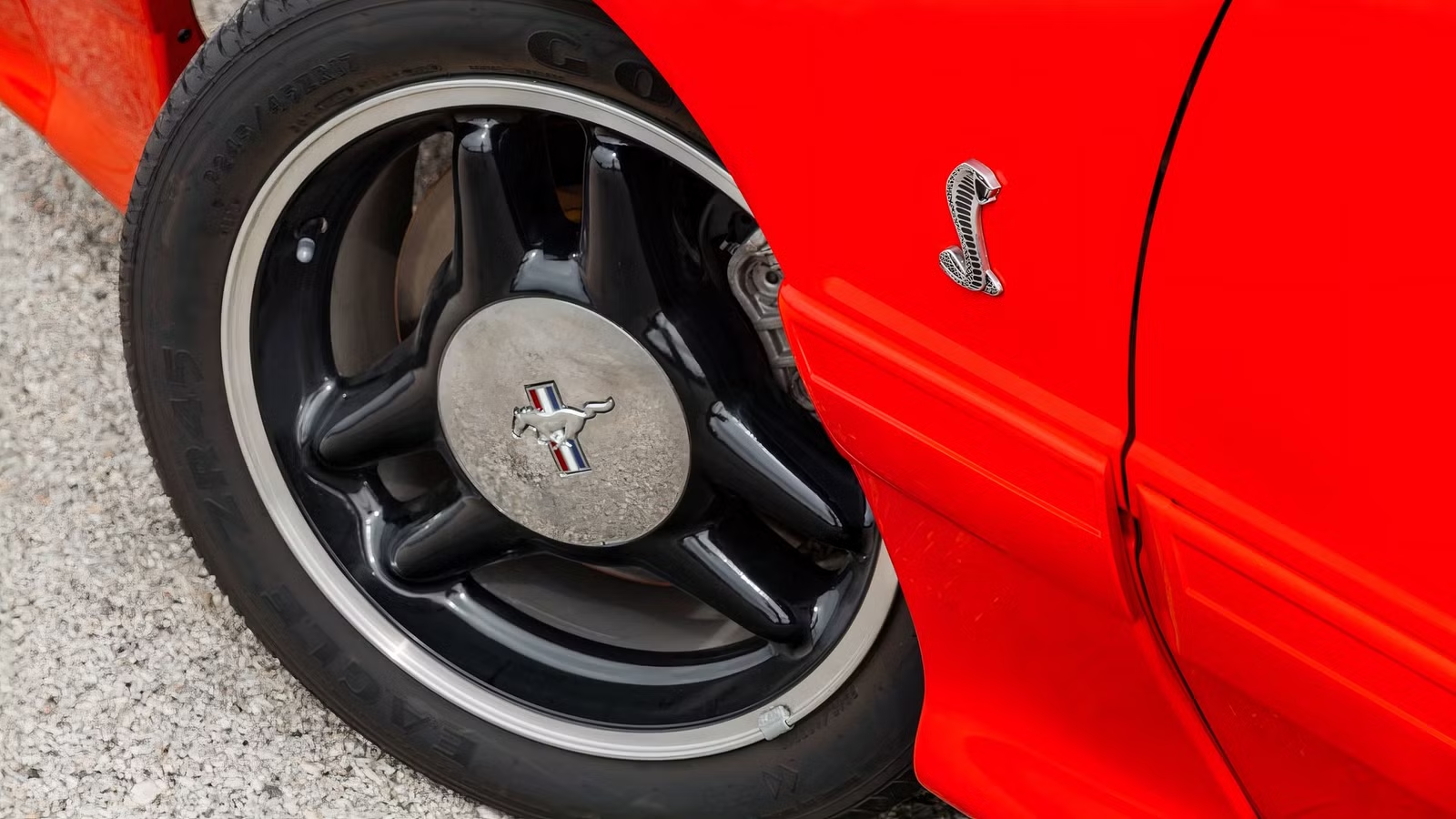
Ford built a Mustang with no factory warranty, no ad campaign, and almost no paper trail, then sold it quietly, straight to performance buyers, for a single model year. Ford didn’t even try to keep it out of collectors’ hands, and that is exactly how it ended up in theirs. Then it vanished from the lineup as fast as it arrived. Today it is one of the most valuable Fox-body Mustangs you can buy at auction, and it is a holy grail of Mustangs among enthusiasts.
A Factory Performance Car With No Advertising Campaign

It feels strange for a car to launch with zero advertising. Is Ford hiding something? Not exactly. Ford built this as a halo model, sitting above its own hottest factory Mustang, and a halo car aimed at a tiny audience does not need a TV spot. Cutting the numbers and keeping quiet was the point, not an oversight. For Ford’s engineers, it was among the most sophisticated street-legal machines they had built in years.
Why Some Of Ford’s Best Works Never Reached A Dealer Lot

Ford handed this project to its brand-new Special Vehicle Team, founded in 1991, in just the division’s second year of existence. It was one of three vehicles SVT launched that year, alongside a performance truck and a more street-friendly Mustang. When it finally announced the car in April 1993, the company called it a way to send the Fox-body Mustang out in style, a best of the last. Mainstream media didn’t talk much about it, and there was no dedicated dealership push behind it either. No newspaper ads, no dealer brochures, no showroom floor plan built around it. If you wanted to know this car existed, you had to go looking for it at an auto show or stumble onto it in period press and media coverage—which is a strange way to learn your own company built something this serious.
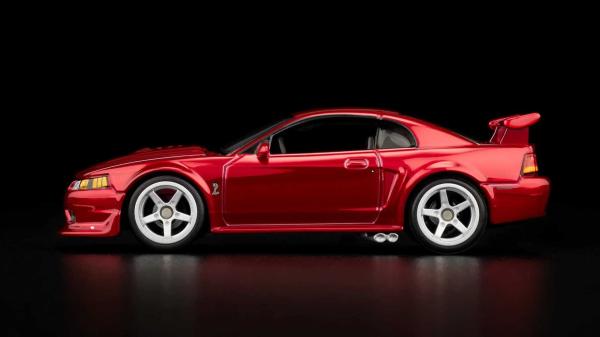

Hot Wheels Is Celebrating Ford’s Most Famous Apology To Its Customers
Just 300 Were Built In 2000
One Year Of Production And It Disappeared Like It Never Existed

The rarity was not an accident, and it was not just about exclusivity either. Ford built this car for one model year, then walked away from it completely. There were real corporate reasons behind both the limited numbers and the quiet around them, and timing explains a lot of it. This rolled out in the early 1990s, right as automakers across the industry were quietly backing off hard-edged performance cars under pressure from rising insurance costs and tightening liability exposure.
The Limited Run Versions Were Corporate Headaches

Rising insurance costs and tightening regulations made performance cars a harder sell across the board in this era. Most automakers either pulled their hottest models or quietly detuned them to fit the new math. A different problem showed up with cars built specifically for racers, though. These limited runs were aimed at people who wanted the racing pedigree on the street, and they typically sold out within days of being announced. The trouble was where they landed afterward. Cars built for the track kept disappearing into private collections instead of showing up at the circuit. Brands noticed the pattern, and the next version of a car like that usually came with tighter rules on who was allowed to buy it.
The Mustang Ford Hesitated To Sell Was The SVT Cobra R

This is the 1993 Ford Mustang SVT Cobra R. Built by Ford’s new Special Vehicle Team as a stripped-down track car and street version of the standard SVT Cobra, it shipped with no back seat, no radio, and no air conditioning. The car was rogue from the factory, and SVT went all in on it.
Mustang SVT Cobra R Engine Specs
|
Displacement |
Horsepower |
Torque |
|
302 Cubic Inches |
235 HP |
280 LB-FT |
Under the hood sat the same 302-cubic-inch (5.0-liter) Windsor V8 as the regular Cobra, rated at 235 horsepower and 280 lb-ft of torque, but everything around that engine was built for a racetrack instead of a commute. Ford was hesitant to sell it at all. It sold it anyway.
The Race Car That Was Forced On The Road

Everything not essential to lapping a track was gone. No back seat, no air conditioning, no radio, not even sound deadening. What was left was an engine, two seats, a steering wheel, and a chassis stripped to the essentials needed to stay street legal. The seats themselves were lightweight cloth buckets borrowed from the base Mustang LX, and a thin piece of carpet held down with Velcro covered the bare hatch where a back seat used to be. The deletions cut about 450 pounds, bringing curb weight down to roughly 3,089 pounds. If that backstory was not strange enough, wait until you get to the production numbers.
Built For Racers, Bought By Collectors

Ford reportedly planned a run of 100 units, but a handful of extra orders pushed the final count to 107, all of them finished in Vibrant Red Clearcoat. Ford wanted to sell them to racing professionals and get them to the track, but most ended up in collectors’ hands as garage gems. Some reportedly never even left the dealer’s lot before being tucked away, still wrapped in factory shipping plastic. The standard Cobra came in three colors that year. The R came in exactly one. A handful did make it to the tracks, among those that ended up in the hands of racing drivers.
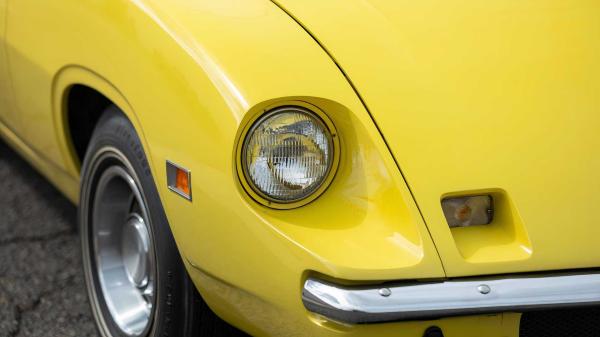
The Ford Muscle Car That Was Rarer Than A Boss 429
Technically this rare car is a failed project, but collectors still throw insane amounts of money at it’s massive Big Block V8 power.
What Made It More Than Just A Stripped-Out 5.0 V8?

At a glance, this looks like a stripped Mustang with a stripped V8 bolted in. Shove a race-tuned engine in a gutted chassis and call it a day, right? Not quite. Several of the car’s biggest upgrades were borrowed from parts that were not even on dealer lots yet, including front spindles, lower control arms, and wheels pulled from the still-unreleased 1994 Mustang GT, repainted gloss black with chrome lug covers and mounted on Goodyear Gatorback tires. The chassis got extra stiffening too, with a strut tower brace and a pair of V-braces borrowed from the Mustang convertible to tie the subframes together. None of it was about raw horsepower.
Horsepower Was Never The Point

The 302 V8 made the same 235 hp and 280 lb-ft of torque as the standard Cobra, and that was never going to win a horsepower fight. The Chevrolet Camaro Z28 of the same era ran a 275-hp LT1, and Ford could not match that on paper no matter what SVT bolted to the 5.0. So SVT stopped trying to out-power it and started trying to out-engineer it. The team used cylinder heads, an intake, and a camshaft from the GT40, added an engine oil cooler, a power steering cooler, and a larger aluminum radiator built for sustained track use, and sent power through the same Borg-Warner T-5 five-speed manual as the standard Cobra, internally reinforced to handle the added strain.
Upgrades Brought From Racing Department

Even the radiator had its own quiet story, sourced from a pair of recently discontinued Lincoln models rather than anything off a Mustang shelf. SVT’s own figures put the 0-60 sprint at 5.7 seconds, with a quarter mile in the low 14s. The real difference-maker was the brakes. SVT fitted 13-inch Kelsey-Hayes vented discs up front and 10.5-inch vented discs in back, reportedly the first big-brake package on a production Mustang. Ford’s executive director of vehicle engineering, Neil Ressler, reportedly pulled the money for that upgrade straight out of his own engineering budget rather than fight the official program for it, because he wanted a fast car that could actually stop. Eibach springs and adjustable Koni shocks rounded out the suspension, tuned for a racetrack instead of a daily commute.
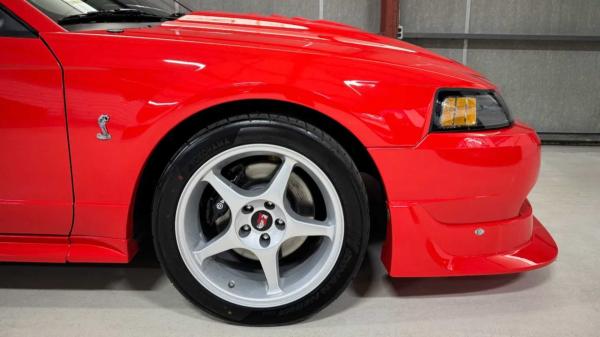
A 2000 SVT Cobra R With 2,200 Miles Proves Late-’90s Halo Cars Are Hotter Than Ever
Ford’s wildest factory New Edge Mustang is back on the market, and the mileage makes it even rarer.
The Verdict The Foxbody Left For Itself

The Fox-body name comes from the platform underneath it, the chassis that carried Ford’s pony car for fifteen years. The 1993 Cobra R was the first of three, and it set the template every later version had to answer to. SVT brought it back in 1995 with 250 units, a 5.8-liter V8 making 300 hp and 365 lb-ft, and this time a competition license requirement to keep them off the collector market. That did not fully work either. The 2000 Cobra R closed it out with 300 units and a 5.4-liter V8 making 385 hp.
How The Foxbody Stole The Auction Spotlight

The base 1993 SVT Cobra carried a sticker price of about $18,505. The Cobra R cost more at $25,692, a steep price for a car with no radio or rear seat. None of that matters anymore. Auction data from Classic.com shows the 1993 Cobra R has sold for as little as $131,000 and as much as $211,000, with an average closer to $164,000. That makes it the highest-valued Fox-body Mustang on the market today. Limited to 107 examples, built for the track, and sold as the last Fox-body special before the platform retired, it checks the boxes collectors look for. Whatever you would pay for one now, it is probably going to look cheap in a few years.
Sources: Ford, Mecum, Bring A Trailer, Classic.com

Related posts

Latest Post


No Comments