
The Lexus SUV You’ll Want After Seeing Range Rover Repair Bills
Used luxury SUVs tend to look pretty convincing once depreciation’s taken its bite. Yesterday’s six-figure status symbol can suddenly cost less than a new mainstream crossover, which makes the classifieds a very persuasive place after midnight.

The purchase price, however, only gets an SUV into your driveway. What happens after the factory warranty has expired is where the difference between a bargain and a massive financial headache starts getting interesting.
Range Rover Luxury Can Come With An Ugly After-Warranty Hangover
The previous-generation Range Rover provides a particularly uncomfortable example of what used luxury SUV ownership can look like once somebody else is no longer paying the repair bills. In a major reliability index covering used vehicles less than 10 years old and outside their manufacturer warranties, the Range Rover finished at the very bottom with a score of just 20.2 out of 100 on MotorTrader.

That may be just a number, but the money makes it real. The average Range Rover repair cost in the study worked out to roughly £1,607 (or about $2,000). The largest recorded repair bill was approximately £23,890 (roughly $32,580), a figure large enough to make an inexpensive used car purchase look like petty cash.
Depreciation Is Only Part Of The Story

That maximum repair cost obviously doesn’t mean every used Range Rover has a $30,000 surprise waiting underneath it (although let’s not tempt fate). It does show how high the financial ceiling can become when something expensive goes massively wrong. Repair frequency and repair cost both contributed to the Range Rover’s poor showing, which matters enormously for people looking at used luxury SUVs after the original warranty has disappeared.
For buyers in the USA, that’s the more useful lesson than simply declaring one luxury brand reliable and another unreliable. A Range Rover can lose a huge chunk of its original purchase price through depreciation, but its components don’t suddenly become economy car parts because the second or third owner bought the SUV on the cheap. Depreciation is happy to help at the dealership, but the service department tends to have other plans.
A Cheap Used Luxury SUV Can Become An Expensive One Fast

If it wasn’t obvious, that mismatch between used car value and repair exposure is what makes older luxury SUVs so tempting. A car that started life well outside somebody’s budget can eventually sit next to ordinary family SUVs on the used market. Suddenly, the vehicle with the cool badge looks like the better deal, doesn’t it?
The problem is that ownership costs most certainly don’t depreciate in the same way. Labor remains expensive, and aging luxury hardware can demand repairs that have little relationship to the amount paid for the vehicle. Saving thousands on the purchase price feels like a victory until one major repair starts returning some of those savings to the automotive industry.
That’s particularly relevant when shopping for a used Range Rover because the reliability data focused on vehicles already outside the factory warranty. These are exactly the SUVs bargain hunters tend to notice because depreciation has done its most attractive work. For a North American used luxury SUV buyer planning to keep a vehicle for several years, the smarter calculation needs to include what happens after the keys change hands.
The Lexus RX Makes Sensible Look Pretty Good

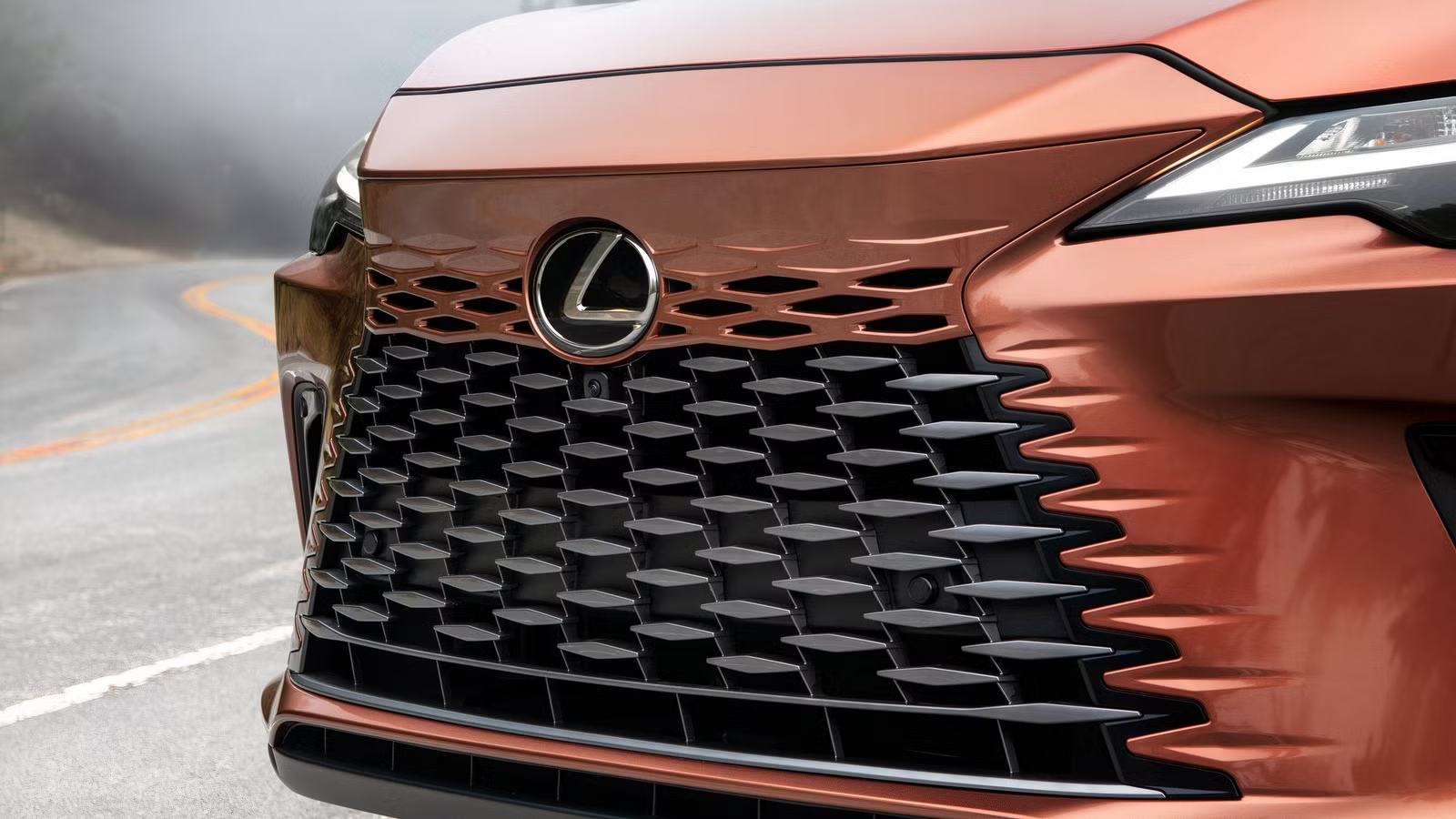
Given all that, this is where the Lexus RX starts looking awfully appealing. The RX has never needed to shout quite as loudly as some European luxury SUVs, and that restraint can seem a little dull when every vehicle on the shopping list is freshly detailed. Give the ownership experience a few years, though, and boring has a habit of developing excellent financial manners.
Lexus recorded 135 problems per 100 vehicles in the 2024 U.S. Vehicle Dependability Study, the lowest score of any brand. The industry average stood at 190 problems per 100 vehicles. To be clear, lower is better here, and the difference gave Lexus a sizeable advantage in one of the most important metrics for anyone researching reliable luxury SUVs in America.
Backed By Data

The PP100 figure also needs some context. It measures the total number of reported problems across 100 vehicles rather than counting how many individual vehicles failed. The study examined three-year-old vehicles and covered 184 specific problem areas, so it gives used SUV buyers a much better picture of how vehicles behave after the new-car smell has started losing the fight.
The Lexus RX also earned model-level dependability recognition, meaning its case doesn’t rest entirely on Lexus having a strong brand average. That’s important for anyone searching for a reliable used Lexus RX rather than simply assuming every vehicle wearing the badge will behave perfectly. For people comparing used luxury SUVs in the USA, the RX has actual ownership data backing up its reputation.
Even The Lexus RX Has A Few Skeletons In The Glovebox
Perfect reliability still isn’t part of the deal. The fifth-generation Lexus RX arrived for the 2023 model year, so newer examples haven’t accumulated the same long-term ownership history as older RX generations. That makes it sensible to separate Lexus’s broader reliability reputation from what can currently be proven about the newest version.
The 2024 Lexus RX has performed well for reliability relative to other vehicles from its model year, but it’s also been affected by recalls. More recent fifth-gen examples have faced recall attention involving areas such as display hardware and certain front-suspension fasteners, while some owners have reported issues involving driver-assistance systems.
Do Your Research

Infotainment is another area worth watching across modern luxury vehicles generally. In the same 2024 U.S. dependability study, infotainment generated 49.1 problems per 100 vehicles, making it the industry’s most troublesome category by a considerable margin. Even a Lexus can occasionally remind its owner that adding a giant screen to something doesn’t automatically make life easier.
However, none of that ruins the RX’s case as a dependable luxury SUV. It simply keeps the argument grounded. A used Lexus RX still deserves a proper inspection, completed recall work, and a service history worth reading. Reliability rankings improve the odds, but they don’t grant immunity from warning lights.
The Best Luxury Feature Might Be A Smaller Repair Bill

No one is doubting that a Range Rover offers something the Lexus RX approaches very differently. There’s more visual theater to the British SUV and considerably more status attached to the name for some buyers. When depreciation puts one within reach, it’s easy to understand why a used Range Rover can become difficult to resist.
The Lexus RX makes its pitch further down the ownership timeline, though. Lexus’s 135 PP100 result and the RX’s own dependability recognition point toward a much stronger reliability picture, while the Range Rover’s 20.2/100 score and enormous maximum recorded repair bill reveal the opposite end of used luxury SUV ownership.
Long Term Gain

Neither dataset can predict exactly what one individual SUV will do. A meticulously maintained Range Rover could provide years of good service, while a neglected RX could make its next owner regret believing everything they’ve ever heard about Lexus reliability. Used car condition still matters enormously, which is why a pre-purchase inspection and documented maintenance history should remain part of the buying process.
For North American luxury SUV shoppers planning to keep their next vehicle beyond the warranty period, though, the RX makes an increasingly persuasive argument. A Range Rover might win the beauty contest in the parking lot, but the Lexus RX has the sort of reliability record that can become much more attractive when the SUV is older and every repair bill belongs to you. After all, there are worse outcomes than spending less time getting to know the service advisor.
Sources: MotorTrader, JD Power, Consumer Reports, Lexus

Related posts





Latest Post


No Comments