
The Legendary Pickup That Officially Dodged Catalytic Converters By Being Rated Too Heavy
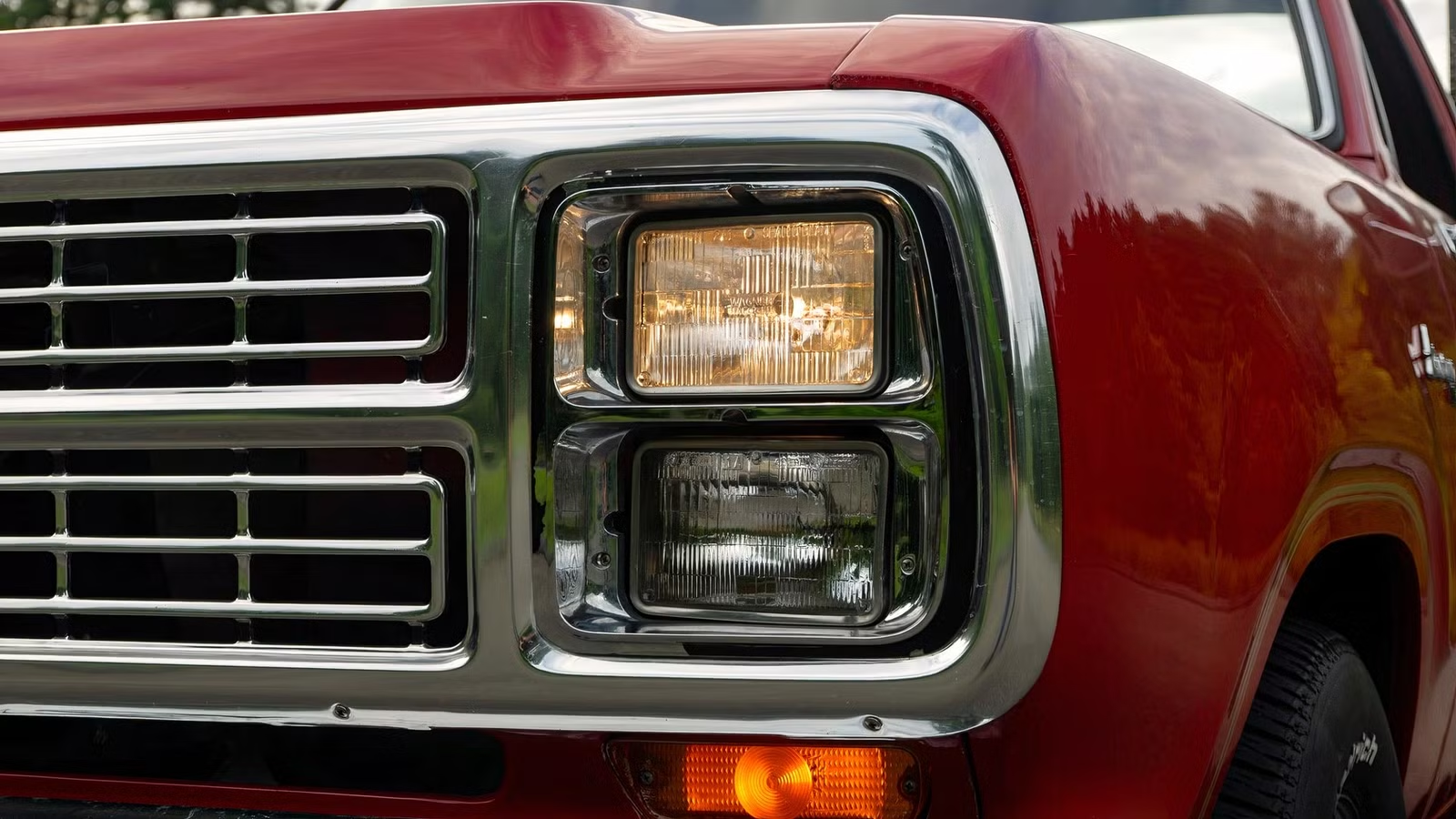
Back in the late 1970s, there existed a Dodge pickup truck that could out-accelerate a Ferrari. Yes, really. This truck may have had a pickup-truck image—it even had vertical smokestacks—but it had sports-car thrust.

Contemporary car magazines confirmed that not only did this truck outrun a Ferrari 308 from 0-60, but it was also the fastest production vehicle from 0-100 MPH that year. It’s natural to wonder how a truck could manage this, and what’s even more significant is that this truck achieved the feat at a time when ever-tightening emissions regulations were strangling performance.
How?
The Malaise Era’s Most Unlikely Muscle Machine

The late 1970s were a tough time for performance vehicles. Tightening emissions requirements meant that cars were less powerful and performance was compromised. Meanwhile, Dodge was busy deciding to turn its D150 Utiline truck into something more akin to a factory hot rod than your usual work truck.
It looked the part, thanks to bright red paint, vertical exhaust stacks that made onlookers think of big rigs, gold accents, and a wood-trimmed pickup bed. To say the look was “unique” is an understatement.
Dodge included the truck, dubbed the Lil’ Red Express, in its cheeky “Adult Toys” ad campaign, along with the Warlock, Power Wagon, and Street Van.
Just because the truck looked cool, and perhaps a little silly, doesn’t mean the engineering underneath wasn’t serious.
Serious enough that when tested by Motor Trend, the truck outpaced the Ferrari 308.
The Magic Number Was 6,000 Pounds

Dodge was able to put this truck together because it knew how to play the rules. In 1978, federal emissions requirements were different for heavier trucks than lighter ones. Since the D150 Utiline’s gross vehicle weight rating (GVWR) was between 6,050 and 6,100 pounds, the truck was not subject to catalytic-converter requirements that would apply to lighter vehicles.
GVWR is a vehicle’s rated maximum loaded weight, not what it weighs while empty. Since the truck could dodge (pun intended) catalytic-converter requirements, Dodge was able to use an engine/exhaust combination that wouldn’t be strangled by emissions regulations.
EH1, E58, and the Art of Working Within the Rules

Tom Hoover, an influential figure in Chrysler’s performance engineering, helped develop the truck. It started with a modified version of the EH1 360 cubic-inch V8, which itself was based on the E58 police-spec 360 cubic-inch V8. It had a Carter four-barrel carburetor and an air intake from the police-spec V8. From the factory, that made for 225 horsepower at 3,800 RPM and about 295 lb-ft of torque—though that figure is somewhat unclear. There is some debate over whether the engine used the camshaft from a 1968 340 cubic-inch engine or whether the cam came from the police-spec 360. This is because the duration specs do not match the former.
Chrysler and Dodge had to be careful here to make sure modifying an already-certified engine wouldn’t trigger a new emission-certification cycle.
Hoover and Dodge realized that there was no limit on the number of components that could be changed before triggering a new 50,000-mile recertification cycle. Instead, it was a matter of which components. Avoid messing with those, and there’d be no need to recertify.
The end result of all of Dodge’s efforts? A quarter-mile time of 15.7 seconds at 88 MPH.
The Loophole Tightens, but Demand Takes Off

By 1979, the situation had grown complicated for the Lil’ Red Express. The truck was finally slapped with catalytic converters and the engine was also given a milder camshaft. Yet sales went up from 2,188 in the first model year to 5,118 in 1979.
Since the version with more emissions equipment sold better, it’s clear that the Lil’ Red Express drew enough interest in its first year that demand carried over into the next, and that demand was substantial.
All told, 7,306 units were sold over the two model years.
The truck’s performance and looks gave it a level of appeal that wouldn’t be diminished when it was saddled with more emissions gear.
More Than a “Faster Than a Ferrari” Trivia Fact

It’s hard to imagine, unless you’ve seen grainy video or old magazine photo shoots, a Lil’ Red Express roaring down a dragstrip, dusting off the vehicles that represented what was left of the muscle-car era. All because Dodge found a way to use engineering prowess to modify an engine that was already available in-house and exploit an emissions loophole to create an awesome sports truck.
Yes, it’s impressive to beat Ferrari and set a 0-100 MPH record, but it wouldn’t have happened without holes in the emissions regulations.
The Lil’ Red Express’s appeal has endured to this day. Some of that is because of the performance, some of it is because of the unique style, and some of it is because Dodge was able to find a regulatory loophole. Some admire Dodge for its ingenuity, while others—either frustrated with emissions rules specifically or government regulation generally—saw the truck’s existence as a pointed gesture aimed at the government.
Sometimes the most consequential performance modification starts on a government form, not in the engine bay.
Sources: Motor Trend, Dodge

Related posts


Latest Post


No Comments