
The Last SUVs Available With A Manual Transmission In 2026
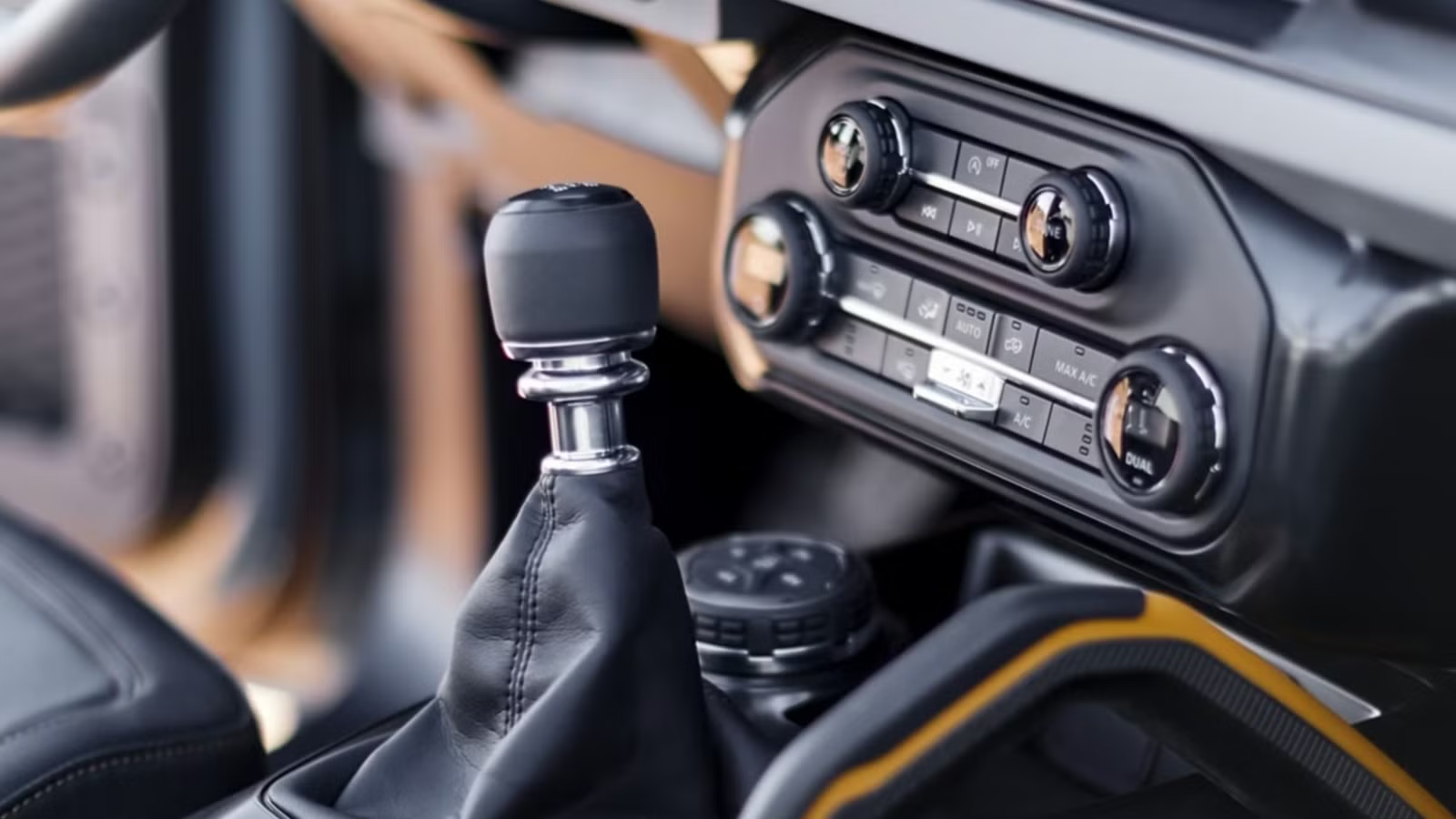
The manual transmission has never been easier to eulogize — and yet it refuses to die. In an era defined by dual-clutch automatics, electrification, and hands-free driving assists, a stubborn handful of drivers still want to row their own gears. For SUV buyers, that choice has narrowed dramatically: only two models on the market still offer a traditional stick shift. If you want a body-on-frame off-roader with a clutch pedal, the field is exactly that small — and knowing which trims and engines actually qualify can save you a frustrating trip to the dealership.

These manual-equipped SUVs deliver a compelling mix of rugged off-road capability, sporty character, and an old-school driving feel that appeals to anyone who wants to be fully involved in every shift. Unfortunately, two options are all that remain. It is clear that automakers are pursuing other avenues, especially as electrification accelerates. There’s only one manual-transmission pickup truck left in 2026, so having two SUV choices is something worth appreciating.
The 2026 Jeep Wrangler And Ford Bronco Are The Last Manual SUVs Standing
As automatic transmissions have become the standard across most vehicle segments, the Jeep Wrangler and Ford Bronco remain the last two SUVs still offering a manual transmission. Both models appeal to off-road enthusiasts who prefer the engagement and control of a manual gearbox. The Wrangler has long been associated with a stick shift, carrying the tradition from its military roots. The Bronco, which returned in 2021, likewise continues to cater to drivers seeking a more hands-on off-road experience.

One of the main reasons these two SUVs still offer a manual is their design philosophy. Off-road enthusiasts often favor manual transmissions to better control challenging terrain, particularly during low-speed crawling. While modern automatics have improved significantly, some drivers still prefer the mechanical simplicity and direct control of a manual setup.
Manual Transmission Fun Facts
- In the right hands, a manual transmission can shift faster than some early automatic transmissions, giving drivers more control over performance.
- Many car thieves avoid stealing manual cars simply because they don’t know how to drive them.
- A well-maintained manual transmission can last longer than an automatic since it has fewer complex components.
Jeep and Ford recognize that offering a manual transmission adds to the appeal of their vehicles for purists. While manual take rates have declined, both brands understand that a dedicated segment of their customer base still values the option. The reality is that manual transmissions are becoming increasingly rare due to advancements in automatic technology, emissions regulations, and shifting consumer preferences.
Why The Jeep Wrangler Still Offers A Stick Shift
The Jeep Wrangler has a long-standing reputation for offering a manual transmission, and it continues to do so for a few key reasons. First and foremost, the Jeep Wrangler is an off-road-oriented vehicle, and many off-road enthusiasts appreciate the precision and control that a manual transmission provides. Jeep understands that part of the Wrangler’s appeal is its heritage, and a manual gearbox remains a central part of that identity.
You can opt for the manual transmission on the following trim levels when paired with the 3.6-liter Pentastar V6:
- Sport – $37,290
- Sport S – $40,295
- Willys – $44,790
- Rubicon – $52,050
- Rubicon X – $62,000
The Wrangler Sahara only has the 8-speed automatic transmission because it exclusively comes with the 2.0-liter inline-4 engine.
|
Spec |
2026 Jeep Wrangler |
|
Engine |
3.6-liter Pentastar V6 |
|
Transmission |
6-Speed Manual |
|
Horsepower |
285 HP |
|
Torque |
260 lb-ft |
Jeep also benefits from a customer base more likely than the average car buyer to choose a manual. While the take rate for manuals in most cars is below 2%, in the Wrangler it is significantly higher, particularly in base and mid-level trims. The availability of a six-speed manual with the 3.6-liter V6 ensures that Jeep keeps catering to these buyers while maintaining a relatively straightforward powertrain configuration.
Another reason Jeep still offers a stick shift is cost. A manual transmission is generally cheaper to produce and repair than modern automatics, particularly those laden with complex electronics. While automatic transmissions — such as Jeep’s eight-speed — are more efficient and quicker-shifting, the manual option allows Jeep to market an affordable entry-level Wrangler with a classic driving feel. Ultimately, the Jeep Wrangler retains a manual transmission because it aligns with the vehicle’s rugged, enthusiast-driven character. While the future of manual transmissions remains uncertain, Jeep’s commitment to offering one reflects the brand’s deep understanding of its customer base and heritage.
Check Out The Manual Ford Bronco

The Ford Bronco made its highly anticipated return in 2021, bringing with it a six-speed manual transmission option. That option remains available on select trims. The Ford Bronco’s manual transmission is paired exclusively with the 2.3-liter EcoBoost turbocharged four-cylinder engine, meaning those who want a stick shift must forego the larger 2.7-liter EcoBoost V6, which comes only with an automatic.
The Ford Bronco can be configured with a manual transmission when paired with the 2.3-liter EcoBoost inline-4 in the following trims:
- Base – $37,995
- Big Bend – $40,370
- Heritage Edition – $49,475
- Badlands – $50,095
The Outer Banks, Stroppe, and Raptor models can only be configured with the 10-speed automatic. There is the option of a 2.7-liter EcoBoost V6 on some trim levels.
|
Spec |
2026 Ford Bronco |
|
Engine |
2.3-liter EcoBoost Inline-4 |
|
Transmission |
7-Speed Manual |
|
Horsepower |
300 HP |
|
Torque |
315 lb-ft |
One of the most interesting features of the Bronco’s manual is the available “crawler” gear, which effectively makes it a seven-speed when you count the ultra-low first ratio. That extra-low gear is particularly useful for off-road driving, enabling precise throttle modulation when navigating rocky or steep terrain — a clear signal that Ford designed this gearbox with technical trail use in mind.
However, the manual Bronco has its limitations. The biggest drawback is that it’s not available on every trim level, most notably the high-performance Raptor. Additionally, as automatic transmissions become more refined and capable, fewer buyers choose the manual, which could threaten its long-term viability.
Why These SUVs Keep The Manual Alive

The Jeep Wrangler and Ford Bronco keep the manual transmission alive because they cater to buyers who value control, simplicity, and engagement. While most modern vehicles have moved away from manuals in favor of quicker, more efficient automatics, these two off-road SUVs continue to offer a stick shift for several key reasons.
First, off-road enthusiasts often prefer manuals for their ability to modulate power delivery in technical terrain. Secondly, the appeal of tradition plays a big role. The Wrangler has offered a manual transmission for decades; for many buyers, that’s part of the experience. While newer in its modern form, the Bronco follows a similar philosophy of appealing to purists. By keeping a manual option available, Jeep and Ford differentiate these vehicles from the growing number of crossovers and SUVs that prioritize convenience over driver involvement. Finally, manuals are typically cheaper to produce and repair, which helps keep base-model pricing attractive.
Will Manual SUVs Survive Beyond 2026?
The future of manual SUVs is uncertain. With fewer vehicles offering a manual transmission each year, the trend is clearly moving toward full automation. One possibility is that as long as the Jeep Wrangler and Ford Bronco continue to attract a loyal customer base, the manual transmission may survive in these models. However, demand for manuals has been steadily declining, and stricter emissions regulations — combined with the accelerating shift toward electrification — could make it harder for manufacturers to justify keeping them.
Electrification is another major challenge. As more SUVs transition to hybrid or fully electric powertrains, the need for traditional manual transmissions disappears entirely. EVs operate without multi-gear transmissions, meaning a manual gearbox would serve no functional purpose. While some companies have experimented with simulated manual gearboxes in EVs, these are more a nod to nostalgia than a genuine engineering necessity.
Ultimately, the days of the manual SUV are numbered unless there is a resurgence in demand or a breakthrough that keeps them viable in an increasingly electric world. The Jeep Wrangler and Ford Bronco may be the last to offer them, but even they may eventually have to let go of the stick shift.
Sources: Ford, Jeep.

Related posts



Latest Post


No Comments