
The Last Great Analog Superbike Is Becoming Painfully Expensive
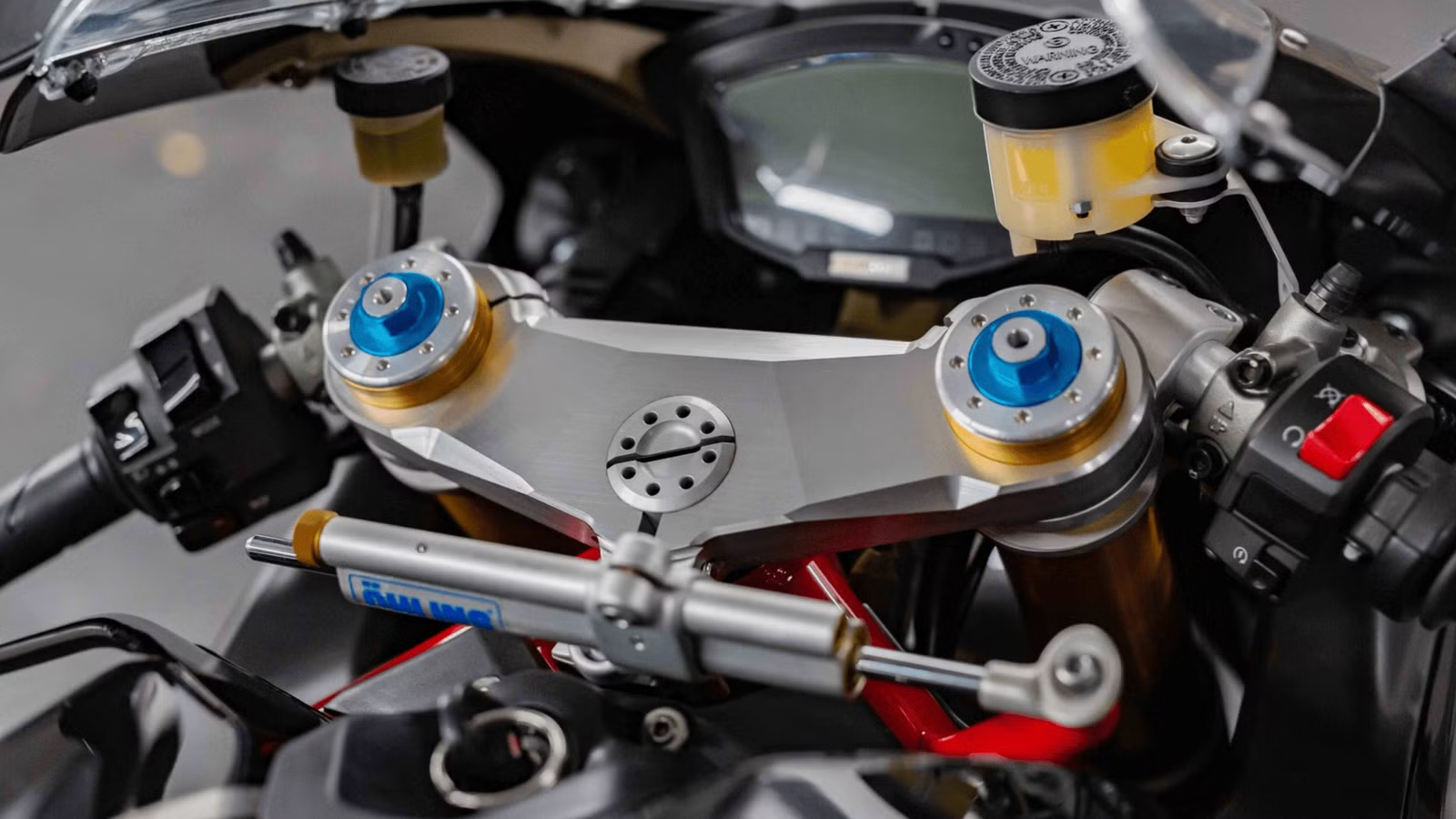
There was a time in the superbike world when outright supremacy was dictated by mechanical engineering rather than complex electronics and rider aids. Right before digital rider aids pushed the performance envelope beyond human capabilities, there was a raw, lightweight mechanical masterpiece that represented the pinnacle of analog motorcycle performance. It relied on absolute mechanical engineering, tight suspension tune, and expert levels of rider skills to control the motorcycle’s heady performance. Today, as expert riders bemoan the lack of that emotional connection due to heavy synthetic electronic intervention, this forgotten track weapon has moved from a used bargain to an unattainable collector’s item, with pristine examples commanding sky-high prices.
Unmatched Raw 1198 cc L-Twin Performance

Underneath its razor-sharp bodywork sits an exquisite 1,198 cc Testastretta Evoluzione L-Twin powerplant that delivered an impressive 170 horsepower at a low 9,750 rpm, and 97 pound feet of torque at 8,000 rpm. This Desmodromic motor delivers instantaneous unadulterated violence, and unlike modern inline-four motors that require sky-high revs to deliver performance, this L-Twin powerplant offers massive low and mid-range grunt with minimal lag, and that’s without electronic traction control to save you.
What truly sets this powerplant apart from modern machines is its sheer mechanical soundtrack. It has a aggressive dry clutch that produces an iconic mechanical rattle at idle. It’s a visceral hallmark of this Italian bikemaker that’s disappeared in its modern flagship offerings. This motor featured an aluminum fuel tank that helped keep the weight low at just 370 pounds (dry). This gave the motorcycle an insane power-to-weight ratio, allowing it to deliver brutal, wheelie-inducing acceleration in virtually any gear. Every time you blipped the throttle, the motorcycle felt alive, scary, but deeply engaging. It required total focus, a precise wrist action, and extreme respect from to rider, to be able to tame that raw, unfiltered torque on the open road.
The Ducati 1198 SP: The Ultimate Analog Track Weapon


The Ducati 1198 SP was the last of its kind — a pure, unfiltered analog track weapon unshackled by electronic intervention. While modern sportsbikes rely on cornering ABS and traction control, anti-wheelie tech, and electronic semi-active suspension to maintain a fast but safe pace, the Ducati 1198 SP kept things brilliantly simple and analog. The highly coveted “SP” designation added track-focused hardware, including 43mm Ohlins NIX30 forks, a fully-adjustable Ohlins TTX monoshock, and an Ohlins steering damper. Instead of microprocessors calculating dampening rates, the 1198 SP’s chassis relied on manual adjustments, spring rates and precise valves that rewarded a clean setup and mechanical tuning.
It even got top-hardware of its time for stopping power. The 1198 SP got large dual 330mm front discs with Brembo monobloc radial calipers that delivered strong bite and almost telepathic feedback. It also had lightweight forged aluminum Marchesini wheels that significantly reduced unsprung weight and rotational inertia, allowing the motorcycle to transition from side to side with insane agility. With no electronic intervention to save you when you go hard on the brake or gas, the 1198 SP forces the rider to be in charge of managing mechanical drip, trail braking and precise throttle control. It demanded your full attention, turning every track section into a masterclass in riding technique, identifying mechanical feedback and improving raw human skill.
Ducati 1198 SP vs Panigale 1199: Trellis Frame vs Monocoque Era

The 1198 SP’s successor, the Panigale 1199, arrived in 2012, ushering in a radical monocoque chassis and frameless engine layout, effectively making the 1198 SP the last flagship Ducati to feature a trellis frame. While the new Panigale was lighter and faster on paper, it sacrificed tactile road and chassis flex feedback, traits that made its predecessor a legend among sportsbike purists. The older trellis-frame chassis communicated front-end load directly to the rider’s wrists and seat, giving them a pure sensation of available tire traction when riding the motorcycle at its limits.
By contrast, the newer monocoque frame turned out to be notoriously rigid, and difficult to set up for track day enthusiasts without the help of a professional pit crew. The shift from traditional trellis frame chassis also changed how the motorcycle behaved mid-corner. The older generation’s trellis frame’s flex allowed the motorcycle to absorb mid-corner bumps, keeping the motorcycle leaning into corners. Without this flex, the new motorcycle could easily get unsettled even with the smallest mid-corner undulation. Because of its combination of chassis feedback, mechanical symphony, and emotional connection, Ducatistas consider the 1198 SP generation to be the absolute peak of Italian chassis engineering before electronic intervention took over pure riding experience.
Used Ducati 1198 SP: Price Trends And Collector Market Value

For years, used examples of the Ducati 1198 SP have been sold for a relatively accessible price point as casual buyers gravitated towards more modern, tech-heavy motorcycles equipped with lean-sensitive electronics. However, the pre-owned market has undergone a radical correction. Motorcycle enthusiasts and serious collectors have come to realize what this flagship Ducati represents — the end of a legendary era of top-tier, homologation-special superbike featuring a mechanical dry clutch, a traditional steel trellis frame, and a raw, analog riding experience.
Well-documented, low-mileage examples of the 1198 SP that previously used to sell for modest secondhand money, now command anywhere from $18,000 to $25,000 at auctions. Pristine, mint-condition collector-grade specimens can go for even higher. As clean, unmolested examples are scarce due the frequency of track abuse and excessive modifications, the 1198 SP’s market demand continues to exceed available options. This is further compounded with enthusiasts scrambling to get these once overlooked mechanical marvels, before prices skyrocket further. So if you have been thinking about getting one, waiting longer could mean owning one of the last truly analog Italian superbike could turn into an unattainable dream.

Related posts
Latest Post


No Comments