
The Kia Telluride Years Worth Buying And The Ones To Avoid
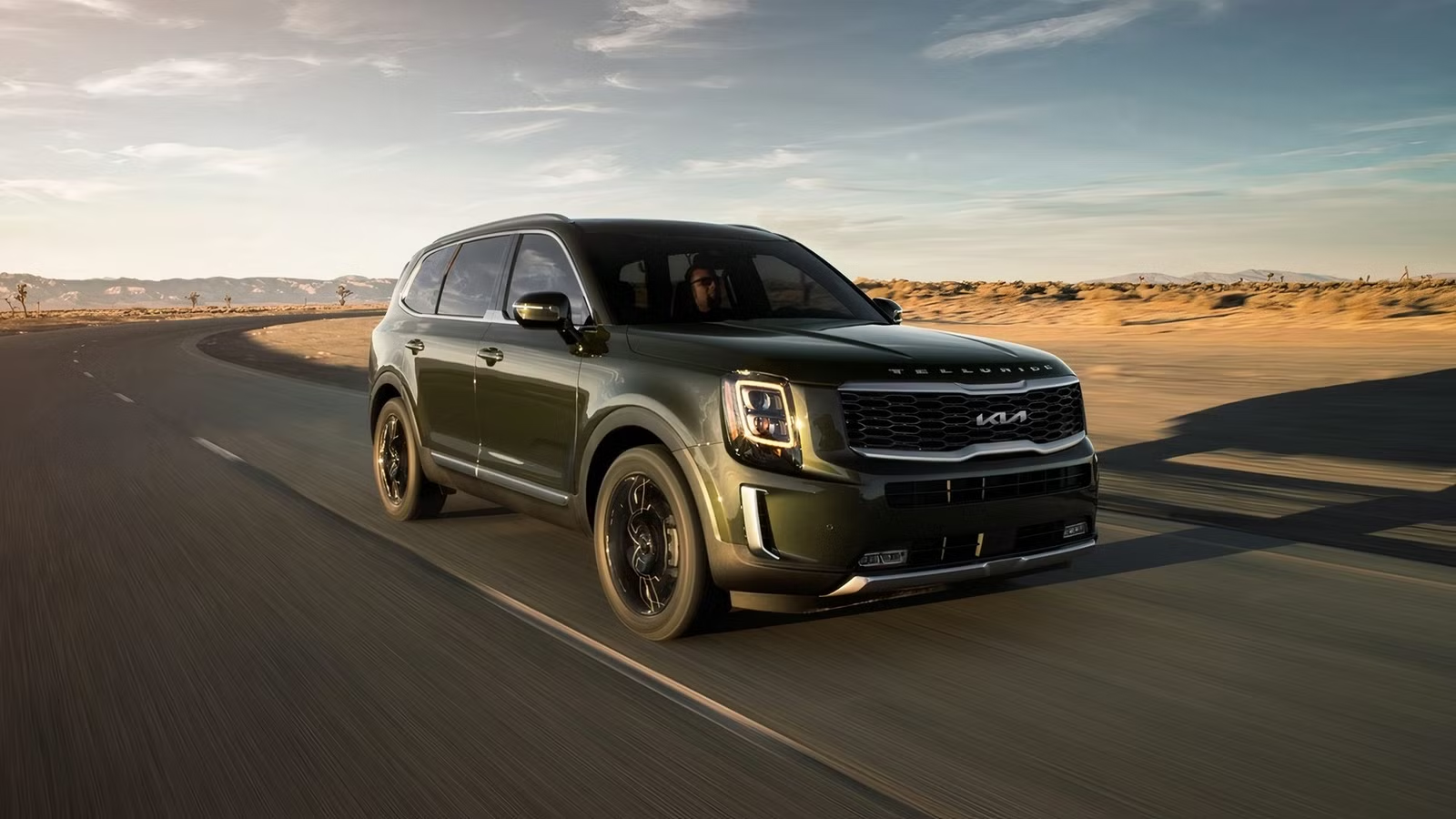
The Kia Telluride has been the default answer to the three-row SUV question since 2020, which is why used examples are everywhere and why asking prices can feel steep. But Kia built this generation across six model years, and they are not equal. Recalls, owner complaints, and a mid-cycle refresh split the run into very different ownership propositions. Some years carry a surprisingly clean record, while others come with a paper trail worth reading before you hand over a deposit. Here is how the data sorts them.
Why 2020 Was A Strong Debut But Not The Safest Starting Point

The 2020 Telluride earned a five-star overall NHTSA crash rating and still logged the most owner complaints of any year. Crash protection was never the problem; launch-year build quality and electronics were. Kia pulled in nearly 87,000 vehicles for a tow-hitch problem that affected trailer brake lights. A separate campaign covered 2020 models with Smart Cruise Control, issued in September 2020. Then came the one that matters most to anyone buying today. An August 2022 recall of about 36,400 Tellurides from the 2020 to 2022 model years, for a genuine Kia four-pin tow hitch harness that posed a fire risk. On some trackers a 2020 Telluride shows six separate recall campaigns on file.

Beyond recalls, owners reported cracked windshields, a pattern that shows up across the 2020 to 2022 model years in NHTSA complaints. Noisy self-leveling rear shocks also came up regularly on 2020 and 2021 vehicles. These are not catastrophic faults, but they are the kind of annoyances that turn a $30,000 used bargain into a string of dealer visits.
None of this makes the 2020 model a lemon. The 3.8-liter V6 produced 291 hp and 262 pound-feet, driving an eight-speed automatic, and the recalls that made headlines were mostly electrical or assembly matters rather than failures of the engine itself. The cabin, space and ride quality that made the Telluride famous were all present from day one. A 2020 with every recall completed, a documented service history and a clean inspection can still be a good buy. A 2020 with an unknown past, or one where the tow harness was fitted and never checked, is a gamble. The cheapest ticket into the Telluride club is also the one that demands the most homework.
The 2021 And 2022 Tellurides That Quietly Fixed The Early Flaws

If the 2020 model was the proof of concept, 2021 and 2022 were the correction. The headline number tells the story: complaints fell from the high hundreds on a 2020 to roughly 300 for the 2021 and just under 300 for the 2022, depending on the tracker. The honest version, though, is that “quietly fixed” is only partly true. Kia did smooth off some of the launch rough edges, but these years picked up fresh issues of their own.
The 2021 Telluride carries a few owner-reported engine concerns. Some owners describe mechanical knocking sounds, and others report fuel rail pressure codes such as P0087. These are anecdotal and not a pattern Kia has acknowledged as a defect, but they are worth a compression and codes check during a pre-purchase inspection. The 2021 also logged four to five recall campaigns, including the shared tow-harness fire recall.

The 2022 model is where the screens started causing trouble. Kia issued separate recalls for LCD info screens and instrument clusters failing on 2022 Tellurides, and owners also filed complaints about backup camera failures. Kia initiated those recalls voluntarily rather than being pushed by NHTSA, which counts in its favor, and software updates resolved many cases. Still, a dark display on a modern SUV is more than an annoyance, because it takes the camera, the climate controls and the safety alerts with it.
Between the two, the 2022 is the stronger pick. It has had longer for its recalls to be completed, it was the first Telluride year with a broader factory fix for the anti-theft story discussed below, and its complaint count is lower. The 2021 is workable if the price is right and the history is spotless, but it is the year where the benefit of the doubt runs thinnest. Neither year is a bad vehicle. Both simply sit in the middle of the quality curve, better than 2020 and not yet as settled as what followed.
The Anti-Theft Gap That Makes Some Model Years Harder To Live With
This is where the Telluride story needs separating from the wider Kia story. The “Kia Boys” thefts that began circulating on social media in 2021 targeted models with a conventional keyed ignition and no engine immobilizer. Those were mostly older and entry-level Kia and Hyundai cars from roughly 2011 to 2021. Push-button start models, the Kia Telluride among them, came with an immobilizer as standard, and Kia made immobilizers standard across the lineup from the 2022 model year. So the Telluride does not have a hardware anti-theft gap in the way a 2019 Forte does. The USB cable trick that made headlines was not the Telluride’s problem.
The gap that does exist is financial and reputational. When insurers tightened underwriting or raised premiums on Kia and Hyundai models in high-theft cities, the badge sometimes took the hit rather than the specific model. Some insurers restricted new policies on vehicles without immobilizers, and a buyer shopping a 2020 or 2021 Telluride can still find quotes priced as though the vehicle shared the weaknesses of its cheaper siblings.

The practical advice is simple: get an insurance quote on the exact VIN before you commit, particularly on a 2020 or 2021 and particularly in a city with high Kia theft rates. Confirm the smart key and immobilizer function normally, since a replaced or aftermarket key can complicate things. And do not pay a premium for 2022 or newer purely on theft grounds, because for the Telluride, the immobilizer was already there. In other words, the earlier years are not harder to live with because they are easier to steal. They can be harder to live with because the paperwork around them, from quotes to recall completion to history reports, takes more effort to get right.
What The 2023 And 2024 Updates Changed, For Better And Worse

The 2023 model year was the real mid-cycle refresh, and it changed more than the photos suggest. The exterior got new front and rear bumpers, vertical LED headlamps, a redesigned grille and new wheel designs. Kia also added the X-Line and X-Pro trims, with ground clearance up from 8.0 to 8.4 inches, a standard all-wheel-drive layout on those trims, and, on the X-Pro, all-terrain tires and an extra 500 lb of towing capacity for a 5,500 lb maximum.
The tech upgrade was significant. A 12.3-inch navigation display replaced the older 10.3-inch unit, an optional curved dual-screen setup brought a digital instrument cluster, and Kia introduced Highway Driving Assist 2, a more capable adaptive cruise and lane-centering system. Other additions included turning collision avoidance, a power liftgate with auto-close and a Wi-Fi hotspot that requires a Kia Connect subscription.

The cost of all that screen real estate shows up in the complaint files. Kia issued a recall for the LCD screens in the 2023 model year, and owners have reported black digital clusters that refuse to wake. The 2023 model also sits at around 170 complaints and five recall campaigns, so the refresh improved the experience when it works and added fresh failure points when it does not. One quirk worth knowing is that some early 2023 builds shipped without a tow package because of the tow-harness recall, so a used example advertised as “tow-ready” deserves a physical check.
The 2024 model was a very light update. Standard amber daytime running lights across the range and a $100 price increase were the headline changes. Complaint numbers rise slightly relative to 2023 on some trackers, and owners report cracking windshields and navigation map update frustrations. The big recall affecting 2024 is the driveshaft one, covered in the next section. Both years benefit from being newer, and both come with the best electronics of a generation. What they do not benefit from is a clean sheet. The refreshed Telluride is the nicer vehicle to own when everything works, but it is not the trouble-free choice that the glossy reviews implied.
The Telluride Years to Buy Now and the Ones to Walk Away From

The most important recall for any used buyer is the 2024 campaign covering more than 427,000 Tellurides from 2020 to 2024. Kia identified that the intermediate shaft and right front driveshaft may not be fully engaged, which can allow a vehicle to roll away while parked. Kia estimated that about 1% of the affected vehicles actually have the defect. It is a cross-year issue, so no single model year escapes it, but it is easily checked. Run the VIN through NHTSA or Kia’s recall lookup and confirm the remedy was done.
With that in mind, here is how the years rank. The best buys are the 2023 and 2024 models. These carry the most up-to-date tech and safety content, and most of their recalls have had time to be remedied. The 2023 offers the X-Pro for anyone who tows or heads off the pavement, while the 2024 is nearly identical, usually a little pricier, and has the longest remaining factory coverage. Check the cluster, the screens and the windshield before signing. The 2022 is the good-value pick, the sweet spot for buyers who want a lower price without gambling on launch-era quality. Its recalls have been in circulation the longest, its complaints are lower than the 2020 and 2021, and the V6 and eight-speed combination is proven.

The 2021 calls for caution. It is reasonable if the price is meaningfully below a 2022 and the service history is complete, but have a mechanic check for engine noise and fuel system codes, and insist on proof of recall completion. The 2020 is the year to walk away from unless the history is perfect. It has the highest complaint count, the most recalls and the oldest components. A well-documented 2020 at the right price can be a bargain, but an undocumented one is the year most likely to cost you time and money. In any year, avoid anything with open recalls, a missing service record, a replacement or aftermarket tow harness fitted without documentation, or screens that flicker or blank during the test drive.

Kia’s famous 10-year, 100,000-mile powertrain warranty applies to the original owner, and subsequent owners typically receive a shorter term, so buying a certified used example from a Kia dealer can be worth the extra cost. Used Telluride values have stayed strong, which means a good one will hold its price but a bad one costs you the premium you paid for the badge. Buy the history as carefully as you buy the vehicle.
Sources: Kia U.S., NHTSA

Related posts





Latest Post


No Comments