
The Inline-Four Tourer That’s More Comfortable Than An American V-Twin
Touring in the US requires a special kind of motorcycle. And for the most part, American brands is where you need to look. After all, they make their bikes in America for America, realizing the needs of Americans. They also have V-twin engines tuned for riding effortlessly at freeway speeds with ample passing power all over the revs. So if you want a comfortable touring bike, an American V-twin example–either cruiser or tourer–makes the most sense more often than not.

However, a different world of touring bikes opens up when you look past these American examples. These can not only match the American examples in certain criteria but also beat them fair and square in others. Some of them also bring the buttery smooth ride on an inline-four with them. If that sounds interesting, here’s a prime inline-four example that can beat American V-twins at their own game.
American V-Twin Bikes Usually Promise Comfort In Traditional Ways
Comfort means different things for different bikes. For instance, an adventure bike ensures comfort by adding automatic seat-lowering tech with ample suspension travel for taking varying terrains with ease. For American V-twins, comfort often refers to the traditional definition. There’s a large fairing to keep windblast away from the torso, while your feet rest on large floorboards.

You also get large-capacity air-cooled engines plonked inside heavy steel frames. The former brings dollops of torque for the real world, while the latter ensures rock-solid stability when you pass semi-trucks at speed. Hard saddlebags are part of the package, too.
But That Can Bring Some Obvious Misses

As charming as that package is, there are limitations. For instance, electronic suspension control is uber rare. Harley simply doesn’t offer that on its Grand American Touring range, while Indian only offers that on its near-flagship machines. Speaking of pricey, American V-twin tourers cost serious money. $25,000 is the tip of the iceberg, and then sky is the limit.
Finally, the engine tech is basic more often than not. Liquid cooling is rare, so heat is almost always an issue, whereas the performance is torque-oriented with barely any high RPM fun. So what do you do if you want none of these misses but all of the comfort? Well, you consider something like the Yamaha below.
The Yamaha FJR1300 Has Bagger-Like Comfort With Inline-Four Smoothness

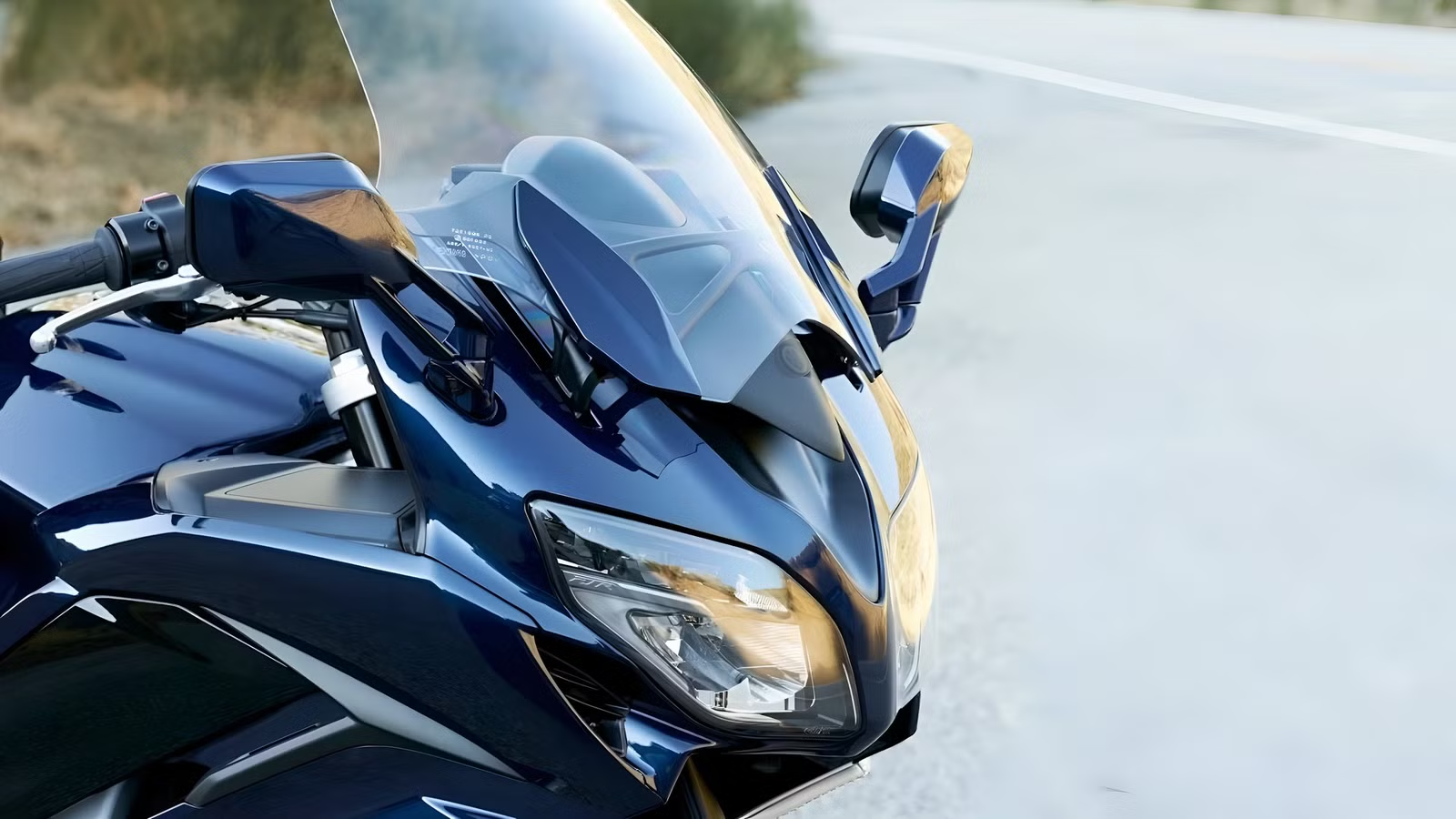
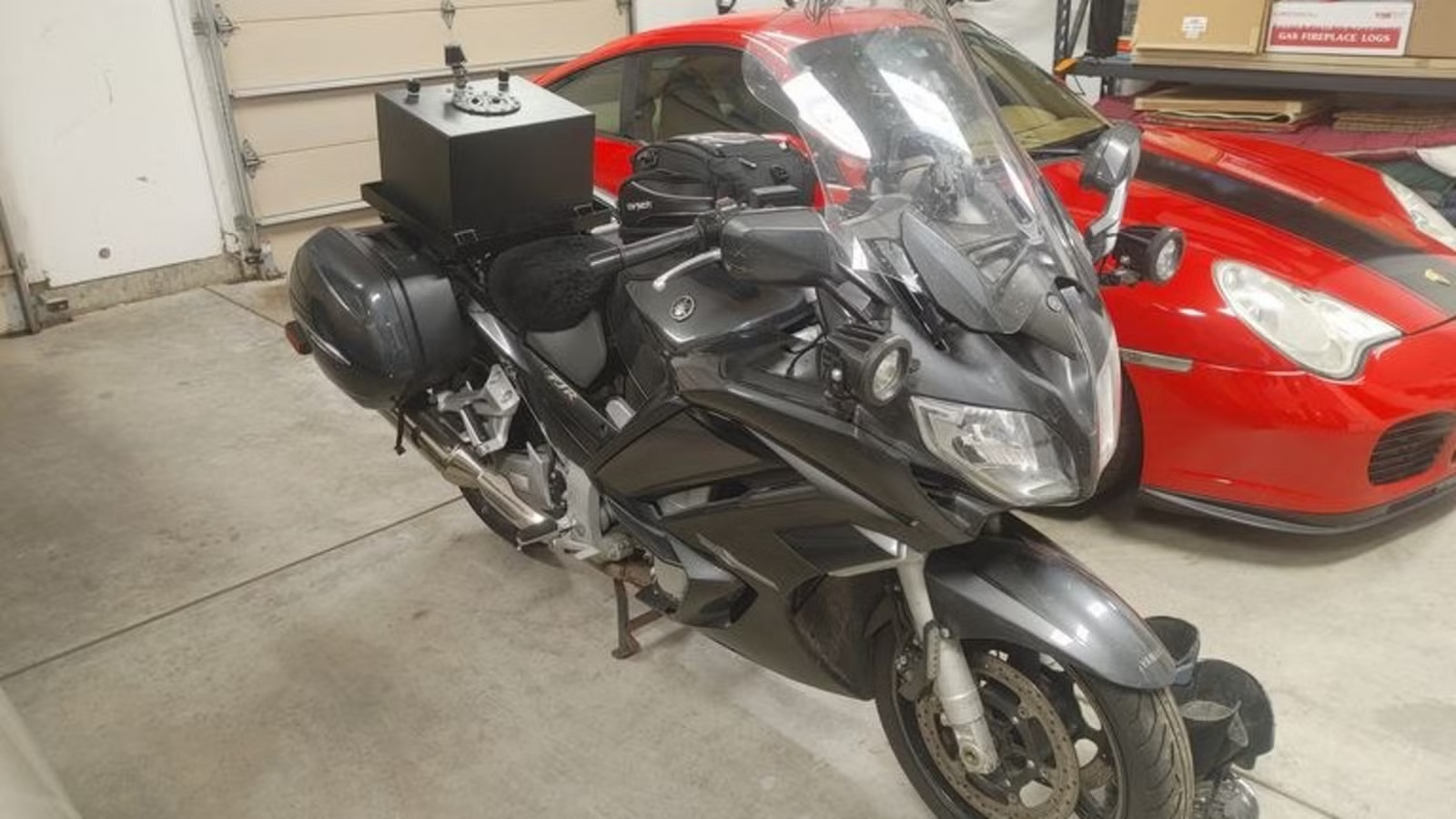
We’re talking about the FJR1300. This is Yamaha’s proper comfort-oriented touring bike, built with the regular bagger formula in mind but with a focus on modern-day performance and comfort. So you get a low stance with a front fairing and hard saddlebags, topped with a smooth, understressed inline-four engine and electronic suspension adjustment. The result is an inline-four tourer that can beat American V-twins in terms of modern-day comfort.
To make matters sweeter, the FJR can be had for really cheap. Since Yamaha doesn’t sell it as a new bike today, a clean 2020 example of the FJR should be between $10,000 and $13,000. Or you could pay a little more to find an even newer example. Whatever you do, you’ll save around $10,000 over a new American V-twin tourer.
There’s Plenty To Like On The Yamaha FJR1300

Despite being old and discontinued, the FJR1300 makes a solid case for itself when you look at its details. Part of that is because it was ahead of its time in a way. Oh, and the package is so proven, several police forces trusted the FJR as their partner in (stopping) crime. Here’s a lowdown.
The Inline-Four Engine Has Over 140 HP

Starting with the engine, the FJR1300 features Yamaha’s 1,298cc liquid-cooled inline-four powerhouse. The mill uses learnings from Yamaha’s racing world to feature lightweight forged pistons with carburized connecting rods while favoring its touring application. So there’s 145 horsepower and 101 pound-feet of torque, kicking in at 8,000 RPM and 7,000 RPM, respectively. That’s really low in the rev range by conventional inline-four standards. In case you’re curious, the FJR does freeway speeds effortlessly at just 3,500 RPM in its sixth gear. Another notable detail is the final shaft drive–even more maintenance-free than the usual belt-pulley we see on V-twins in America.
Electronic Suspension Brings A Solid Advantage

While touring, you’ll appreciate the FJR’s surprisingly modern suspension. The 48 mm USD forks and monoshock are electronically adjustable, letting you choose between four pre-load settings, three damping presets, and an additional seven damping settings. That means you won’t need to get off the bike and fiddle with the settings here as you would on an American V-twin. Elsewhere, the suspension attaches to an aluminum chassis and a sturdy subframe for handling luggage and pillion heft. The 17-inch alloy wheels, housing dual 320 mm front discs and a 282 mm rear disc, round things off.
The Feature List Isn’t Fancy, But It Checks Key Boxes

American V-twin tourers have thoroughly upped the ante in terms of features. So the FJR feels a bit dated here. However, the necessary sport-touring inclusions are all present. Up top, you find a three-gauge instrument cluster. There are two LCDs and one analog dial, where the former helps you enjoy a plethora of information while also letting you toggle through the electronics.
These electronics work via ride-by-wire and a six-axis IMU, allowing traction control, two throttle maps, ride modes, and cruise control. The IMU also helps the cornering lights tweak the throw. Rounding all that off is a set of hard saddlebags, a fairing-integrated cubby space, a charging socket, heated grips, and Yamaha’s Unified Braking System.
Source: Yamaha Motorsports

Related posts
Latest Post



No Comments