
The Nissan Hot Hatch You’ve Never Heard About Was A Proper Supercar Killer
Nissan‘s performance heritage is often viewed through the lens of icons like the Skyline GT-R, 300ZX, and Silvia, cars that have earned global recognition for their speed, engineering, and motorsport success. Yet those headline acts also cast a long shadow over several lesser-known models that deserve far more attention.

Throughout the 1990s, Nissan reserved some of its most focused performance machines for select markets, leaving enthusiasts elsewhere to admire them from afar. For American buyers especially, these Japan-exclusive specials became automotive forbidden fruit, building a cult following long before they were ever eligible for import.
Nissan Built 14,613 Of These Cars For A Rule That Only Required 5,000
The early 1990s produced some of the most focused performance cars Japan had ever created, and Nissan was determined to prove its engineering ability on both the road and the rally stage. One of its most ambitious projects was developed to meet the demands of Group A competition, where manufacturers were required to produce a minimum of 5,000 road-going examples of a competition-based model. However, Nissan did far more than simply meet the requirement.

Between 1990 and 1994, the company produced 14,613 units, demonstrating that this was not merely a regulatory obligation, but a genuine performance program. Built with the same motorsport mindset that defined Nissan’s most celebrated machines, this compact performance model belonged in the same discussion as the Skyline GT-R. It was a factory-built weapon designed to bring rally-bred technology to the street, yet it remained overlooked by many enthusiasts for decades.
The SR20DET Turned The Humble Pulsar Into A Giant Killer

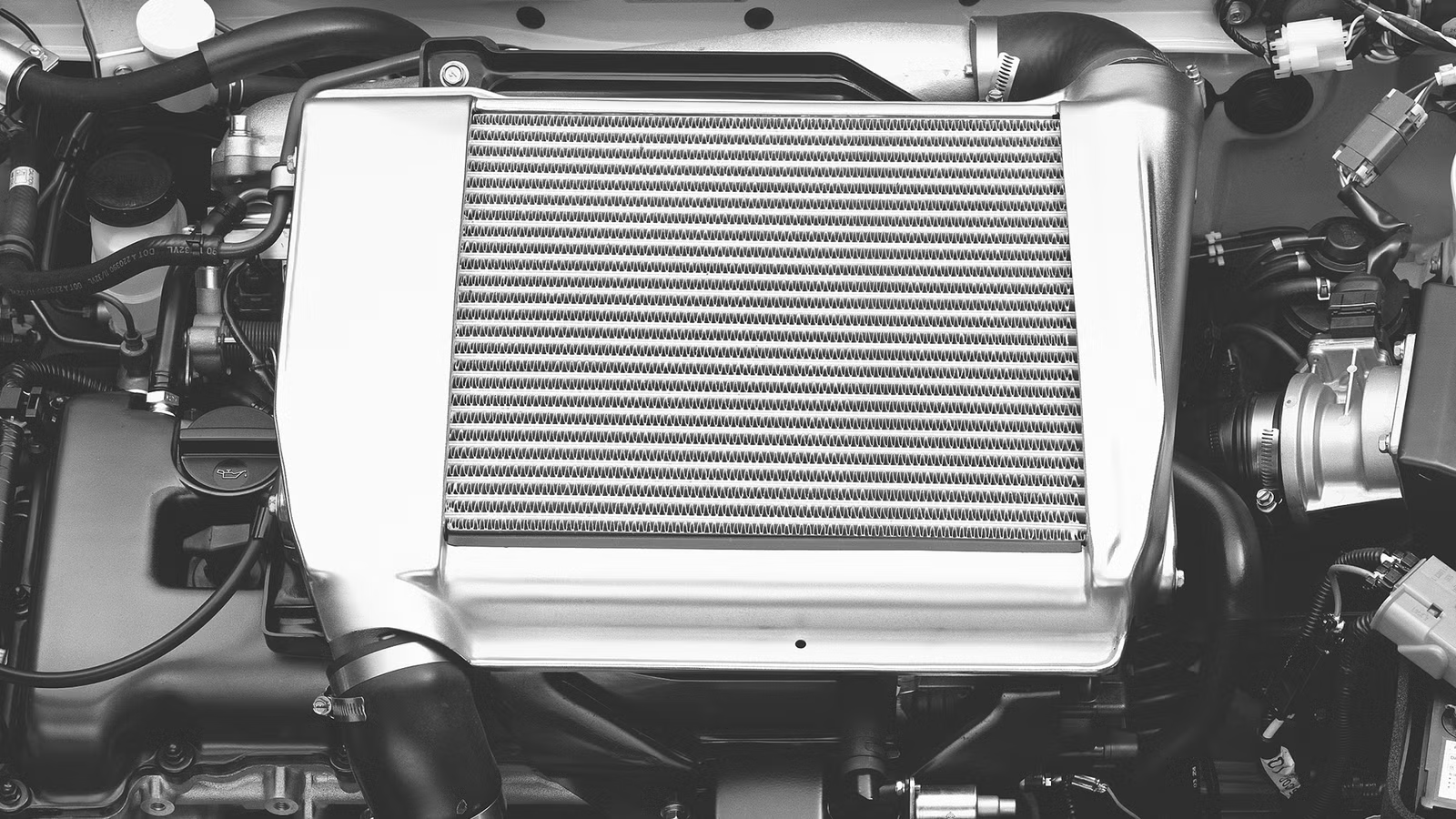
The car hiding behind Nissan’s rally ambitions was the Pulsar GTI-R, a machine that transformed the company’s compact hatchback into a genuine performance threat. At the heart of the GTI-R was the 2.0-liter turbocharged SR20DET engine, producing 169 kW (227 hp), a figure that placed it among the quickest hot hatches of its generation. Unlike the naturally aspirated engines used in regular Pulsar models, the GTI-R’s powerplant was built with serious performance hardware, including strengthened internals, a turbocharger, an intercooler, and engineering focused on surviving competition demands.
The result was a compact Nissan that delivered the kind of performance normally associated with larger sports cars. The SR20DET gave the GTI-R explosive acceleration and the ability to compete against far more established performance machines. It was not simply a Pulsar with more power; it was a purpose-built rally weapon disguised as a practical hatchback.
Its ATTESA AWD Came Straight From The Skyline GT-R Playbook

The Pulsar GTI-R’s performance was not only about horsepower. One of its biggest advantages was the ATTESA all-wheel-drive system, technology closely associated with the legendary R32 Skyline GT-R. Adapted for the compact hatchback platform, the system gave the GTI-R the ability to put its turbocharged power down effectively, providing the traction needed for both rally stages and challenging road conditions.
The drivetrain was supported by a close-ratio manual gearbox, a performance-focused suspension setup, and limited-slip differentials that helped maximize grip when driven hard. Combined with its lightweight body and aggressive turbocharged engine, the GTI-R delivered a driving experience far beyond what its small hatchback dimensions suggested. This combination of Skyline-inspired technology and compact aggression earned it the nickname “Baby Godzilla” among enthusiasts. It was a small Nissan carrying some very serious hardware, proving that performance did not always require a large sports car silhouette.
The WRC Dream Never Lived Up To Nissan’s Expectations

Despite the Pulsar GTI-R’s impressive engineering, Nissan’s World Rally Championship campaign failed to deliver the success the company had hoped for. Entering the 1991 and 1992 WRC seasons, Nissan competed with a factory-backed effort, using the GTI-R as its Group A challenger against some of the strongest rally machinery of the era.
The competition was fierce, with manufacturers such as Lancia, Toyota, and Subaru developing highly advanced all-wheel-drive turbocharged rally cars that were already proving their capabilities. While the GTI-R had strong performance hardware, it struggled with areas such as chassis balance, handling, and overall development compared with its rivals. The car showed flashes of potential but could not consistently challenge the established front-runners.
Nissan eventually ended its factory WRC involvement earlier than planned, leaving the GTI-R without the championship legacy that its engineering deserved. Its rally career may have been short-lived, but the technology developed for the program helped cement its reputation as one of Japan’s most interesting homologation specials.
But Why Did Nissan Leave America Out Of The Party?

For American enthusiasts, the biggest frustration with the Pulsar GTI-R was not its performance, but its absence. Nissan never officially offered the rally-bred hatch in the United States, largely because bringing a low-volume Japanese-market model to America would have required expensive certification work, emissions compliance, and safety modifications. The GTI-R was also developed as a right-hand-drive vehicle, limiting its practicality for Nissan’s US-market lineup.
Instead, American buyers received performance models such as the 240SX, Sentra SE-R, and Altima, all capable cars but aimed at different segments. While those models built their own followings, Japan was enjoying a far more specialized Nissan: a compact hatchback engineered around turbocharged power and rally competition. The GTI-R represented the kind of focused performance machine that American enthusiasts would not experience until decades later, making it one of Nissan’s biggest missed opportunities in the US market.
Today The GTI-R Is Finally Legal—And Buyers Are Catching On

For decades, American enthusiasts could only admire the Pulsar GTI-R from a distance, but the arrival of the 25-year import rule changed that. Under US regulations, vehicles that are at least 25 years old can be imported without meeting all modern federal safety and emissions requirements, opening the door for forgotten Japanese performance cars. With the earliest GTI-R examples now well beyond that threshold, collectors can finally experience Nissan’s rally-bred hatchback legally.
Values have steadily increased as more enthusiasts discover what was missed. Recent Bring a Trailer auctions have shown clean, imported GTI-R examples trading in the $17,000–$25,000 range, with exceptional cars commanding more depending on condition, mileage, and history. While still below some headline JDM icons such as the Skyline GT-R, the GTI-R’s combination of rarity, motorsport heritage, and engineering makes it one of the more affordable entry points into 1990s Japanese performance ownership.
The Pulsar GTI-R Deserves Far More Than Cult Status

The Nissan Pulsar GTI-R has all the ingredients that define a true enthusiast icon: a 227 hp SR20DET engine, an ATTESA all-wheel-drive system, genuine homologation roots, and the rarity that comes from being largely unavailable outside Japan for much of its life. While it never achieved the global fame of the Skyline GT-R, the GTI-R followed the same philosophy of turning motorsport technology into a road-going machine.
Its relatively small production run of 14,613 examples means it remains a rare sight, especially outside Japan, as enthusiasts spent decades wondering what they were missing. American buyers never had the chance to experience one when new, leaving a gap in Nissan’s performance story. Today, collectors have the opportunity to own one of Nissan’s most focused 1990s creations before rising interest pushes values higher. The GTI-R was never just a forgotten Pulsar; it was one of Nissan’s greatest hidden performance weapons.
Sources: Hagerty, Bring a Trailer, Nissan

Related posts

Latest Post


No Comments