
The Japanese Motorcycle That Quietly Beats Premium Rivals
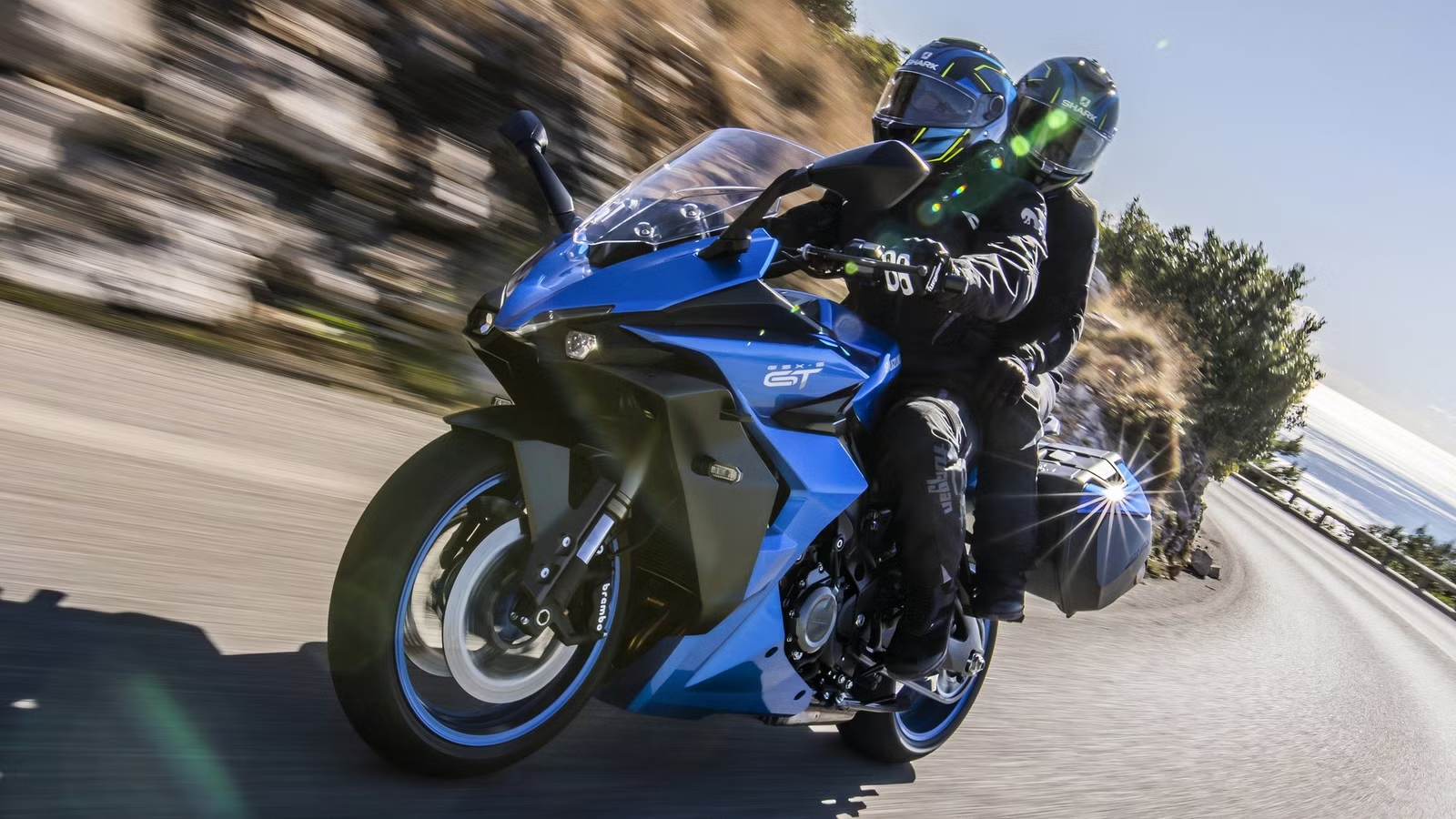
Spend enough time shopping for a serious touring motorcycle, and going European starts looking like the default choice. BMW, Ducati, and their premium peers dominate this space with huge performance, sophisticated electronics, long-distance comfort, and the sort of badges people expect to pay extra for. But price and prestige aren’t always the same thing as capability, especially when one of Japan’s more understated offerings can match some expensive machinery where it actually counts.
Premium Sport-Tourers Have Become Seriously Expensive

Sport-tourers used to follow a pretty simple recipe. Take a fast motorcycle, relax the ergonomics, add wind protection and luggage, then point it toward the horizon. These days, the category has become a showcase for semi-active suspension, radar-assisted electronics, heated equipment, configurable riding modes, smartphone connectivity, and increasingly elaborate option packages.
None of that stuff is useless. Adaptive cruise control can make highway miles easier, electronic suspension can give one motorcycle several distinct personalities, and heated equipment is wonderful when the temperature drops. But all that sophistication costs money. A modern sport-tourer can quickly end up priced closer to a luxury touring rig once you’ve added the equipment required to turn it into the motorcycle you actually wanted.
The Best Sport-Tourer Needs To Be Two Motorcycles At Once

That’s what makes this category tricky. A genuine sport-tourer has to be comfortable enough that a 400-mile day doesn’t become an endurance event, yet entertaining enough that reaching a mountain road doesn’t make you wish you’d brought something lighter and faster. Lean too hard into touring and the bike becomes heavy and detached. Lean too far toward sport and your wrists and lower back eventually start negotiating terms.

One Japanese manufacturer has been selling exactly that combination without making much noise about it. There’s no radar system, no electronic suspension, and no sprawling catalog of premium packages. Instead, there’s superbike-derived power, real touring equipment, surprisingly manageable weight, and a price that makes some European alternatives look distinctly indulgent.
The Suzuki GSX-S1000GT+ Can Beat Premium Touring Rivals

The motorcycle in question is the Suzuki GSX-S1000GT+, and it starts at $14,399 in the US. More importantly, it’s already equipped like a motorcycle intended to travel. The GT+ comes standard with integrated hard side cases, so you’re not buying a relatively bare platform and immediately heading into the accessories catalog just to make it useful for a weekend away. Cruise control, ride-by-wire throttle, power modes, five-level traction control, ABS, Easy Start, and Low RPM Assist are standard. And you can access bits via a 6.5-inch TFT with smartphone connectivity.
The chassis combines an aluminum twin-spar frame with an aluminum swingarm, an inverted fork, and a link-type rear shock. Dunlop Roadsport 2 tires measure 120/70ZR17 up front and 190/50ZR17 at the rear. For touring duty, you get a five-gallon fuel tank, a 31.9-inch seat height, a 57.5-inch wheelbase, and 5.5 inches of ground clearance. Suzuki lists the GT at 498 pounds before the side cases are installed, which is pretty tidy for a fully faired liter-class machine capable of carrying a passenger and enough luggage for a proper trip.
Old-School Superbike DNA Still Makes A Fantastic Road Engine

The engine is the part that makes the value argument especially interesting. Power comes from a 999cc inline-four derived from the GSX-R architecture, paired with a six-speed transmission, slipper-assist clutch, chain final drive, and standard bi-directional quickshifter.
Suzuki rates the four-cylinder at roughly 150 horsepower and 78 pound-feet. Instead of chasing massive low-end torque from an enormous twin, the GT+ delivers the smoothness and rev-happy character that made Japanese inline-fours such fantastic road engines in the first place.
It doesn’t need to live near redline to work as a tourer, either. There’s enough midrange to handle highway passing without drama, while opening the throttle farther still gives you the high-rpm rush you’d expect from something with GSX-R blood in its family tree. It’s civil when you’re covering distance, then properly exciting when the road finally gives you a reason to use the rest of the tachometer.
Even The BMW R 1300 RS Isn’t An Automatic Upgrade

That brings us to the BMW R 1300 RS, perhaps the clearest premium benchmark. It starts at $17,095 and uses BMW’s 1,300cc boxer twin producing 145 horsepower and 110 pound-feet of torque. You also get shaft drive, Dynamic ESA electronic suspension, sophisticated ABS, keyless operation, and access to an extensive catalog of rider aids and optional equipment. All that means the BMW unquestionably has advantages.
It makes much more torque, shaft drive reduces maintenance, and electronic suspension offers flexibility the Suzuki’s conventional setup can’t match. BMW can also add adaptive cruise functionality, luggage, and even its Automated Shift Assistant if you’re willing to keep adding options. But this is where things get awkward. The Suzuki makes slightly more peak horsepower on paper, its listed 498-pound curb weight undercuts the BMW’s 540-pound road-ready figure, and the GT+ already comes with luggage. It also starts nearly $2,700 cheaper before either motorcycle’s fees or the BMW’s tempting options enter the equation.
The Suzuki Might Actually Be The More Comfortable Kind Of Fast
The GT+ also approaches performance from a distinctly touring-friendly direction. Its relatively upright ergonomics, full fairing, broad seat, cruise control, five-gallon tank, and integrated luggage are fundamental parts of the package rather than accessories designed to transform it after purchase. Suzuki even offers heated grips and a taller touring screen if you want to push the bike farther toward long-distance duty.
The BMW can undoubtedly be configured into an outstanding traveling companion, and some riders will prefer being able to tailor virtually everything. But that also highlights the Suzuki’s greatest strength. You don’t have to configure much at all. The bike already combines the speed, comfort, carrying capacity, and everyday usability that define a sport-tourer before the accessories catalog gets involved.
Maybe Premium Isn’t About The Badge After All

Perhaps that’s the GSX-S1000GT+’s most convincing trick. It forces you to separate premium equipment from a premium riding experience. There’s no radar cruise control, semi-active suspension, shaft drive, or encyclopedic options list. Instead, you get roughly 150 horsepower, strong brakes, a quickshifter, cruise control, useful luggage, decent wind protection, and enough comfort to actually exploit all of that performance somewhere far from home.
The BMW’s enormous torque, electronic suspension, shaft drive, and technology will absolutely justify the additional money for some riders. But the Suzuki turns spending more into a choice rather than a requirement. It fulfills the basic sport-touring mission so comprehensively that stepping into something more expensive becomes about wanting additional sophistication rather than correcting some major shortcoming.

For someone who primarily wants to go fast, go far, and remain comfortable doing both, that’s a compelling proposition. The surprising thing isn’t simply that the GSX-S1000GT+ costs $14,399. It’s that once the luggage is packed and the road starts curling into the mountains, explaining exactly what thousands of extra dollars would improve becomes considerably harder.
Source: Suzuki Cycles

Related posts

Latest Post


No Comments