
The Most Reliable BMW M Car Ever Produced
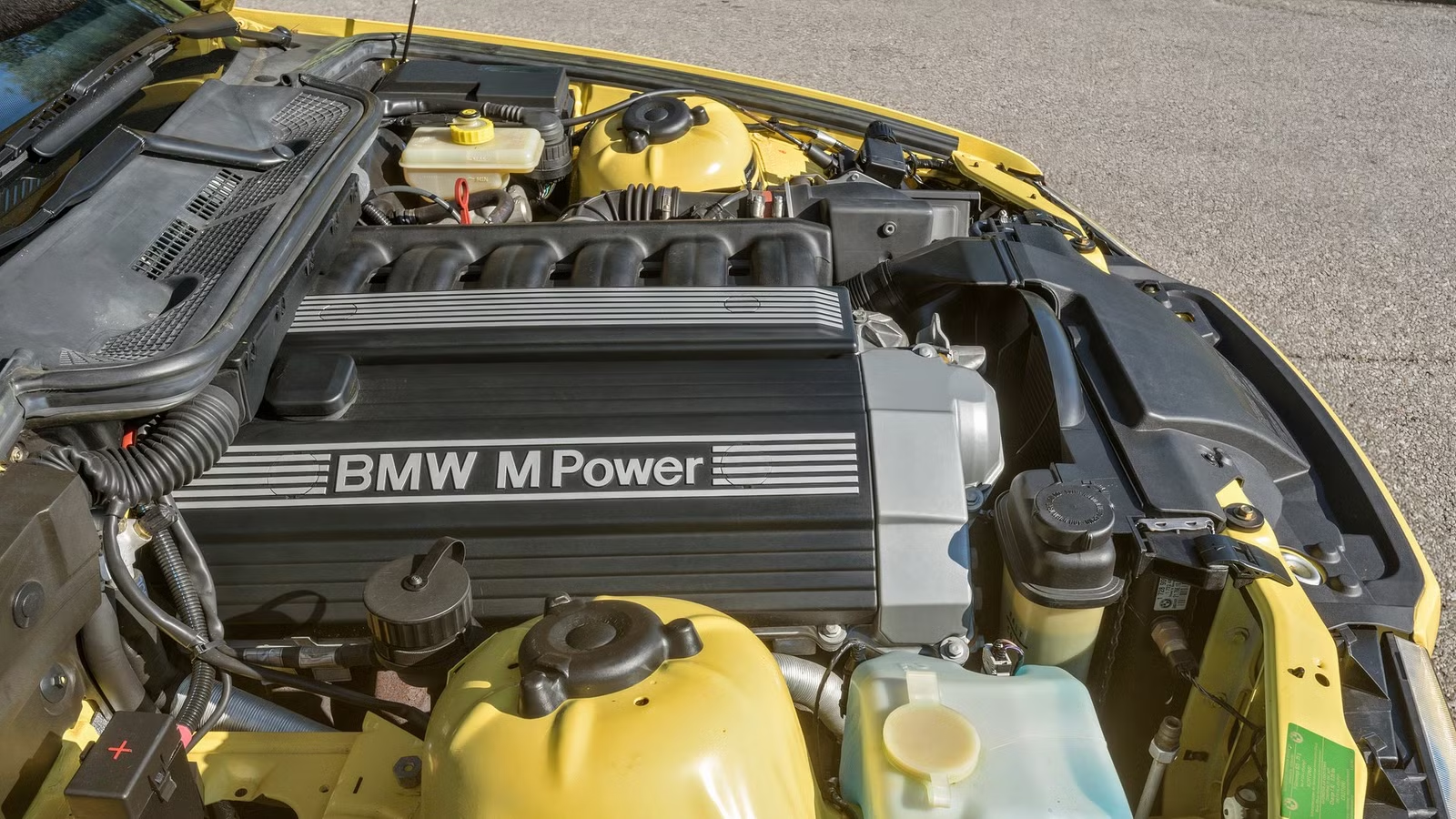
Determining the most reliable BMW M car is no easy task. BMW‘s M division has produced a variety of high-performance vehicles, each with its strengths and weaknesses. Of course, reliability varies based on factors like maintenance, driving style, and engineering quality. While some M cars have gained a reputation for longevity, others have struggled with mechanical issues.

After reviewing countless owner experiences, forum discussions, and long-term reliability reports, we’ve reached a conclusion. One M car stands above the rest when it comes to dependability. It avoids the common pitfalls of later models while still delivering the thrilling performance expected from an M vehicle.
To find the most reliable BMW M car ever, HotCars looked at data available from J.D. Power, RepairPal, and CarEdge. We also used a lot of owners’ feedback to determine which BMW M car could be considered the most reliable.
The BMW M3 E36 Is The Most Reliable BMW M Car
BMW M3 E36 Key Specs
 67 autotech Engine |
3.2-liter inline-six (North American-spec) |
|
Transmission |
5-speed manual and 5-speed automatic |
|
Power |
240 – 321 hp |
|
Torque |
236 – 258 lb/ft |
|
0-60 |
5.5 seconds (with manual trans) |
|
Top Speed |
136 mph |
|
Drivetrain |
Rear-wheel drive |
The title of the most reliable BMW M car goes to the BMW M3 E36 (1992–1999). This car follows the legacy of the original M3 but refines it into something more usable for daily driving while maintaining BMW’s motorsport DNA.
The E36 M3 is powered by a naturally aspirated inline-six engine, available in 3.0-liter (S50B30) and 3.2-liter (S50B32 in Europe, S52B32 in North America) versions. Unlike later BMW M models, it lacks complex turbochargers or excessive electronic systems, which significantly reduces the likelihood of expensive failures. Additionally, the E36 M3 features a strong manual transmission, a well-built chassis, and relatively low maintenance costs compared to its successors. These factors combine to make it one of the most dependable performance cars BMW has ever produced.
When assessing the reliability of the M3 E36, it’s important to note that specific data from J.D. Power and RepairPal for this particular model is limited, primarily due to its age. For the M3 lineup in general, RepairPal gives a poor reliability rating of 2.0 out of 5.0, placing it 29th out of 31 for luxury midsize cars. The average annual repair cost is approximately $1,161, according to RepairPal, though it’s very important to clarify that these calculations include only the newer models. However, individual experiences often reflect a way more positive outlook, especially when the vehicle is properly maintained, and the E36 M3 stands out when it comes to owners’ reviews and feedback.
Why Is The M3 E36 The Most Reliable BMW M Car?
The inline-six engines in the E36 M3 are known for their robust construction and long-lasting performance. While later M3 models struggled with engine issues – such as the rod bearing failures in the E46 M3 or the throttle actuator problems in the E90 M3 – the E36’s naturally aspirated unit proved to be more durable.
In North America, the S52 engine is particularly well-regarded for its iron block, which adds extra durability. Unlike newer M engines, it does not suffer from major design flaws that could lead to major issues like overheating. The fact that many race and drift cars are still based on the E36-generation of the sports car is another proof that the concept is strong and proven in time. The lack of turbochargers, direct injection, or complex dual-clutch transmissions also helps lower the risk of mechanical issues.
While all BMW M cars require upkeep, the M3 E36 is cheaper to maintain than its successors. Many of its parts are shared with other non-M BMW models, making them easier to source and more affordable to replace.
Maintenance Of High-Mileage BMW M3 E36s

Many E36 M3s have crossed 150,000 to 200,000 miles with minimal issues. Owners frequently report that these cars remain reliable with regular maintenance and preventative care. One owner mentioned that their M3 had 130,000 miles with no major issues, and the new owner continued to enjoy the car without significant problems. Another user shared that their E36 M3 had 159,000 miles, still ran beautifully, and used no oil between services.
Still, like any other high-mileage car, M3 E36s require care and attention to stay on the road. Some of the most common issues include the factory-installed plastic components in the cooling system, such as the water pump impeller and thermostat housing, which are prone to failure. Thankfully, there are aftermarket upgraded versions of those parts. In addition, some owners have reported issues with the variable valve timing system (VANOS), particularly in higher-mileage vehicles. However, these problems are often manageable and not universally experienced.
One E36 M3 owner documented approximately $11,000 in maintenance and repairs over nine years, averaging about $1,200 annually. This total encompassed routine services such as oil changes, tire replacements, and significant repairs like suspension work and clutch replacement. Another enthusiast estimated spending between $450 to $600 annually on basic maintenance items like oil changes.
Comparing this to owners of newer M3 models, the E36 generation is more affordable to maintain. One E90 M3 owner mentioned spending over $6,000 in maintenance over 2.5 years and 23,000 miles after the warranty period, excluding significant repairs like throttle actuator replacements and rod bearing issues. This suggests an average of more than $2,400 annually, with potential for higher costs when accounting for major repairs. Discussions around the F80 M3 indicate anticipated maintenance costs of at least $3,000 per year post-warranty.
Other Reliable BMW M Cars
While the E36 M3 finds the sweet spot between high performance, good reliability, and relatively cheap maintenance, a few other M models have also gained a reputation for durability.
BMW E39 M5 (1998–2003)

The E39 M5 is widely regarded as one of the greatest sports sedans ever built. Powered by a 4.9-liter S62 V8 engine, it delivers an exhilarating 394 horsepower while maintaining a strong reputation for reliability. Unlike many newer M cars, it does not suffer from widespread engine failures, but it does require consistent maintenance. Common issues include VANOS system wear, cooling system failures, and timing chain guide wear.
Owners report varying expenses for maintenance. One long-term owner documented an average annual maintenance cost of $1,900, totaling $17,500 over nine years and 100,000 miles. Data from CarEdge indicates that an M5 from that generation may incur approximately $14,727 in maintenance and repair costs over its first 10 years of service, averaging around $1,472 annually.
BMW 1M Coupe (2011)

The BMW 1M Coupe is a rare and highly sought-after model. It features the N54 twin-turbocharged inline-six engine, producing 335 horsepower and 332 lb-ft of torque. The N54 engine is known for its durability, but it does require attention to fuel injectors, high-pressure fuel pumps (HPFP), and turbo wastegates. Despite these potential concerns, the 1M Coupe benefits from a lightweight chassis, simple manual transmission, and a strong enthusiast community, making it a relatively reliable M car compared to its more complex successors.
Owners of these models have reported annual maintenance costs ranging from $1,000 to $1,500, depending on factors such as mileage and driving conditions, but that’s only for the most basic maintenance.
BMW M2 Competition (2018–2021)

The M2 Competition takes the lightweight, fun-to-drive nature of the original M2 and enhances it with the S55 twin-turbo inline-six engine, borrowed from the M3 and M4. While the S55 is a high-performance engine, it is known to be more reliable than some of BMW’s earlier turbocharged units. Owners should watch for crank hub spinning issues and charge pipe failures, but overall, the M2 Competition is seen as one of the most dependable modern M cars.
Future owners can expect maintenance and repair costs totaling approximately $4,564 over five years, averaging around $913 annually for the basic service, according to CarEdge.
Sources: BMW, J.D. Power, RepairPal, CarEdge

Related posts

Latest Post


No Comments