
The Ram Diesel Inline-Six That Handles Roughly 700 HP Before Needing Forged Internals
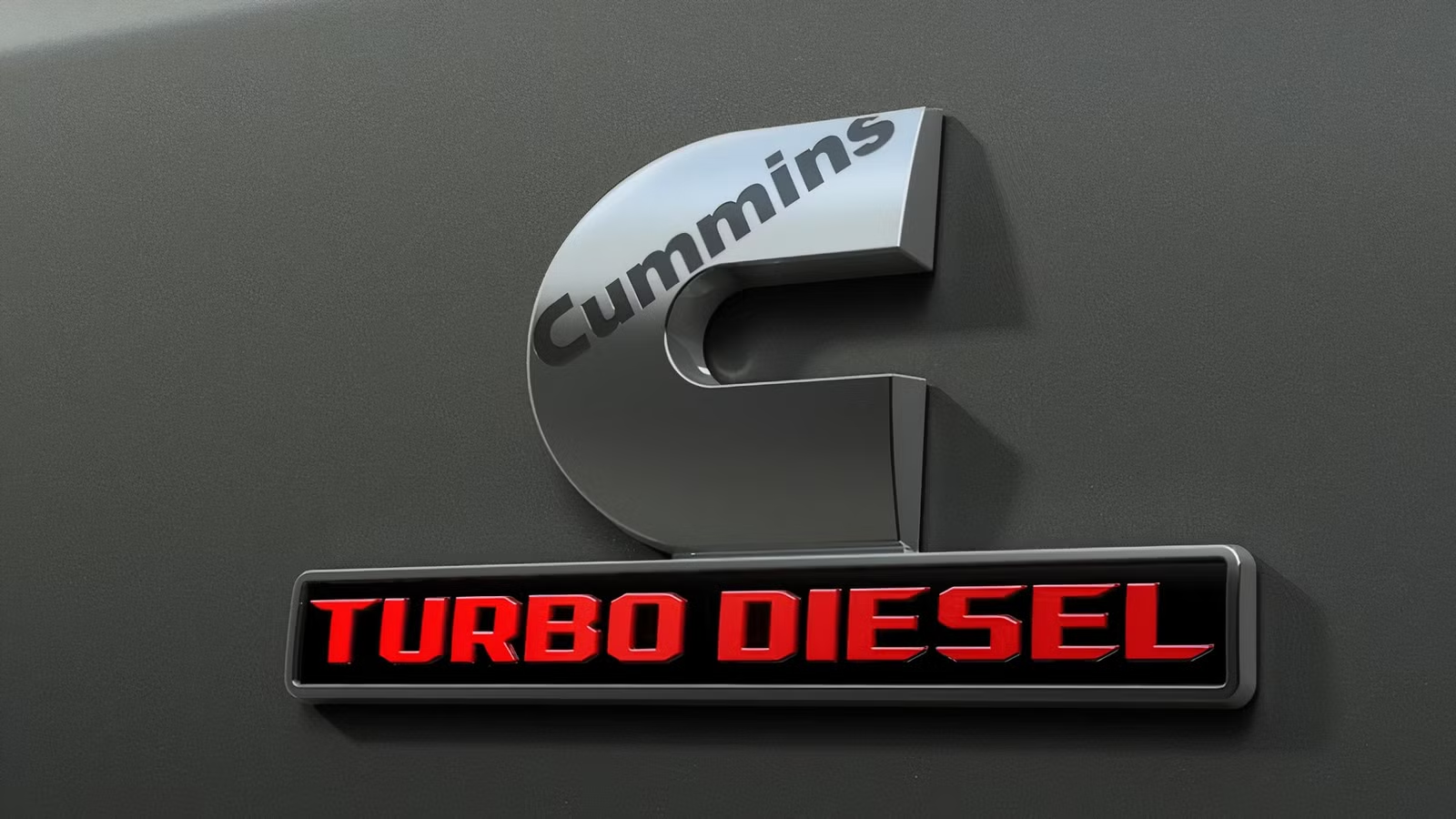
Ford’s High Output Power Stroke makes 500 hp; GM’s Duramax V8 makes 470. Both are factory engine ratings. But pulling a trailer uphill after tuning raises a costlier question: what survives? Ram’s diesel straight-six attracts builders aiming for roughly 700 hp at the wheels on its original bottom end. That’s a cautious target, not a guarantee.

The often-quoted 36% versus 13% tuning-margin comparison is a shop rule of thumb, not a verified industry-wide gap; switch the baseline and they change. A long tow may expose transmission or cooling weaknesses first.
Why Roughly 700 HP Is A Guideline For Stock Internals
According to Diesel Power Products’ upgrade guide, the original bottom end has a cautious target of roughly 650–700 horsepower at the wheels. That’s power reaching the tires, not the factory rating measured at the engine. The crankshaft, connecting rods, and pistons can stay, but the engine’s condition and hardware still count. Mileage, maintenance, and how quickly the tune piles on torque can change the result.

With a trailer hooked up, every firing stroke loads the rotating assembly while the turbo pushes in more air and the fuel system keeps up. The intercooler and cooling system must carry away the heat. A short dyno pull can’t tell you whether that combination will survive hours of towing. The transmission must cope with the extra torque, too.
Then there’s the cylinder head. Higher combustion pressure can overcome the bolts’ clamping force, lift the head slightly off the block, and let the gasket fail. A stronger block won’t fix that. BD Diesel uses ARP studs and additional sealing on high-boost builds. And 40–45 psi isn’t a universal head-lift threshold: boost pressure, combustion pressure, and fuel pressure are different measurements. The tune still decides how hard the hardware works.
Why Balance And Block Strength Matter More Than Specs

An underside view shows the cooling fan and belt-driven hardware at the front of the engine.
Cars & Bids
The straight-six’s layout does something useful before any tuner touches it. Its pistons move in matching pairs along a symmetrical crankshaft, canceling primary and secondary shaking forces and the associated rocking motion. That’s why it runs smoothly without balance shafts. But smooth doesn’t mean the crankshaft is free from stress.
Every firing stroke twists that long crankshaft slightly before it springs back. Fluidampr calls it torsional vibration, and added torque makes it worse. A suitable damper helps control the twisting. The 2019 switch to compacted graphite iron (CGI) addressed a different problem: its stronger block can withstand higher peak cylinder pressures. Stronger iron won’t stop that twisting.
Older Duramax V8 crankshaft failures provide a costly contrast. But calling them unfixable goes too far. Callies offers Durastar replacements made from stronger steel with deeper hardening and revised machining, plus billet crankshafts for higher-output builds. None guarantees survival, and replacing a crankshaft is major engine work.
The 6.7L Cummins Reveals Its Essential Strengths And Risks

The 2025 Ram 2500’s High Output 6.7-liter Cummins provides the article’s engine reveal.
Meet the engine: the 6.7-liter Cummins in Ram’s 2500 and 3500. Its 2025–2026 High Output version makes 430 hp and 1,075 lb-ft. That’s 100 lb-ft more torque than Chevrolet’s 975-lb-ft Duramax V8, despite giving up factory horsepower. And the Cummins delivers peak torque at just 1,800 rpm. That’s proper low-rev muscle.
Inside, Cummins’ 2019 redesign brought a CGI block, a tougher crankshaft, and factory-forged connecting rods. Its common-rail fuel system runs at 29,000 psi, pushing fuel through the injectors. That’s injection pressure, not turbo boost. Those rods were forged at the factory, but stronger replacements can still be necessary.
Why Low RPM Torque Still Threatens The Stock Rods

A close mechanical view accompanies the discussion of boost, torque delivery and internal-engine stress.
Cars & Bids
Diesel Power Products warns those 6.7-liter rods can be more brittle under extreme stress than the older 5.9-liter rods. Add an aggressive variable-geometry turbo tune, and low-rpm torque can split a rod and punch through the block. That is when stronger aftermarket rods and controlled torque delivery make sense.
Hardway Performance recorded 526 wheel hp from a tuned 2019–2024 High Output truck, its torque converter locked on a Dynojet. One truck, one test, not a guarantee of survival on a long tow.
For Tow Rigs, The Transmission Is The Hidden Weak Link

For an older Ram owner, the gamble isn’t always under the hood. A tuned Cummins may still be pulling hard when the stock 68RFE six-speed starts slipping. Every slipping clutch turns power into heat. That’s how a promising build can become an expensive repair before it gets close to the engine’s suggested 650–700-wheel-hp range.
Diesel Power Products details the 68RFE’s clutch and pressure-control weaknesses; Next Gen Drivetrain puts a healthy stock unit’s comfort zone around 400–450 wheel hp, with concerns growing near 450–500. Those are shop guidelines, not a failure countdown. Nor is 800 lb-ft a magic limit: Cummins rated the 2021 standard-output, 68RFE-equipped trucks at 850 lb-ft. The 1,075-lb-ft 2021 High Output used an Aisin six-speed.
The 2025–2026 diesel Ram 2500 and 3500 use the newer TorqueFlite HD eight-speed, so those 68RFE guidelines don’t apply directly. Before chasing a dyno number, budget for the gearbox, cooling, and a towing-friendly tune. Build the drivetrain for the load, and that Cummins becomes the Ram you want in your driveway when the road turns uphill.
Sources: Diesel Power Products, Cummins, Ram, Ford, Chevrolet, BMW, Fluidampr, Callies, BD Diesel, Hardway Performance, Next Gen Drivetrain.

Related posts





Latest Post


No Comments