
Chevy’s Records Never Said If A Plain 1961 Biscayne Got One Of 142 409s
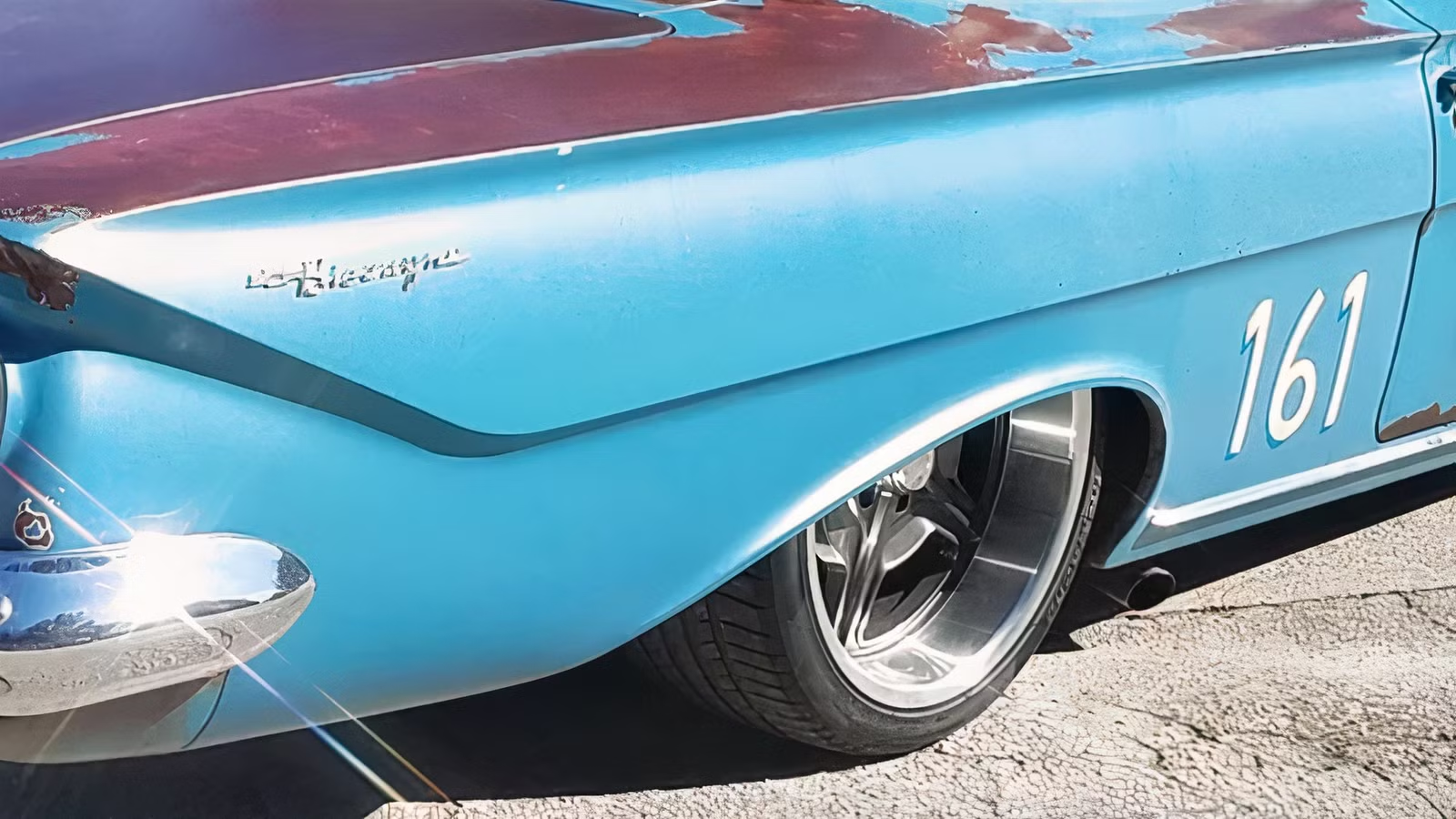
Rubber floor mats and steel wheels didn’t turn heads. Next to the 1961 Impala’s bright trim and triple taillights, Chevrolet’s plainest sedans looked built for errands, not drag racing. Yet one of those hoods could conceal Chevy’s hottest passenger-car V8. The problem? Proving it came that way.

Chevrolet’s reported 1961 total was just 142 409 engines, not 142 of any single model. Its surviving figures don’t say which bodies received them. For collectors chasing a factory sleeper, an engine swap can look convincing, but factory history needs proof.
The 142-Engine Total Leaves A Bigger Question Unanswered
That 142-engine total is useful, but it also hides a trap. Chevrolet counted the first-year 409s without showing which full-size models received them. The number can establish how scarce the engine was, not how many bare-bones sedans were built with one. That’s the difference between a rare motor and a verified factory sleeper.

The 409 arrived after the model year was underway, growing from Chevrolet’s 348 V8 into its new passenger-car performance flagship. The Impala had the trim and showroom presence to wear that reputation. Chevrolet’s Super Sport package cost $53.80, according to columnist Greg Zyla, but that wasn’t the price of the engine or every required extra. Badges and special wheel covers made sure nobody missed the point. Subtlety wasn’t exactly the selling pitch.
Drag racers had other priorities. A cheaper, lighter body left more money for speed and less weight for the engine to move. Chrome doesn’t improve a quarter-mile time, no matter how enthusiastically it shines. But did Chevrolet install it?
The 1961 Biscayne Is Where The Factory Trail Goes Cold

Meet the 1961 Chevrolet Biscayne, with rubber flooring, steel wheels, and modest upholstery that hardly screamed performance. Fleetmasters went further, replacing some chrome with paint. Now picture Chevrolet’s 409 V8 under that hood: 360 gross hp and 409 lb-ft of torque. In a lighter, no-frills body, that meant serious straight-line potential for a driver who cared more about speed than trim.]But how many left Chevrolet that way? Stephen Fogel says all 142 first-year 409s went into Impala SS models. Doug Marion traces the racing history of Butch and Debbie Schultz’s 409-powered Fleetmaster, but explains that Chevrolet never split its V8 body totals into 283s, 348s, and 409s. Marion’s account documents a 409-powered racing car, but that alone doesn’t establish what engine Chevrolet installed when it was new.Chevrolet’s February-revised factory option chart lists the 360-hp 409 as RPO 580 for Biscayne and Fleetmaster V8 models, but that confirms availability, not actual installations. Marion says Allen May, the car’s first owner, set an Oregon class-speed record in August 1961, as reported in National Dragster. When its 409 failed in early 1962, a 348 replaced it.
The Original 360-HP 409 Came Before The Dual-Quad Legend

In 1961, Chevrolet squeezed 360 gross hp and 409 lb-ft of torque from its new 409 V8 using just one Carter AFB four-barrel carburetor. Torque supplied the twisting force to get a big sedan moving; horsepower helped it keep accelerating as revs climbed. That was serious output from a single-carburetor engine, even before the dual-quad version arrived.
Chevrolet enlarged the 348 V8’s bore and stroke to make the 409. Its famous 409-hp dual-quad production version followed in 1962, according to NHRA. Two four-barrels fed more air and fuel; Chevrolet rated the engine 49 hp higher. But a restored 1961 Biscayne wearing dual quads today doesn’t prove the factory installed them. Autoevolution features one; Old Car Memories dates the production version to 1962. Big difference for collectors.
Even the original specifications need care. Chevrolet’s February chart lists 11.0:1 compression, while Old Car Memories gives 11.25:1. Greg Zyla recalls special dual-quad engines supplied to Don Nicholson and Frank Sanders before the February 1961 Winternationals. Super Chevy places some racers’ upgrades later that year. Neither account makes dual quads a normal 1961 showroom option.
Old Reliable Shows Why This Mystery Still Matters Today

In October 1961, a plain Chevy made drag racing history. Dave Strickler drove his 1961 Biscayne, Old Reliable, to a reported NHRA Optional/Super Stock record of 13.24 seconds at 106.64 mph at York, Pennsylvania. Bill “Grumpy” Jenkins helped turn that sedan into a drag-strip threat. Those numbers belong to a prepared race car, not an untouched 360-hp showroom Biscayne. That’s a time slip worth keeping.
That basic-car, big-engine spirit helped shape the muscle-car era. By 1963, Chevrolet’s Z11 drag cars carried the fight forward with 427 cubic inches. Old Reliable had already made its point without looking the part.
But nostalgia isn’t proof. Before paying for a claimed factory 409 Biscayne, demand an original order or build sheet tying that engine to the car. NHRA entries, dated photos, and early ownership records help establish racing history, but can’t prove factory installation alone. Even the period serial number identifies a V8, not its displacement. A recreated sleeper can be irresistible. A documented original? That’s the one you’d want in your garage.
Sources: Chevrolet, NHRA

Related posts



Latest Post


No Comments