
The Hybrid Powertrain That Could Be One Of The Best Long-Term Bets
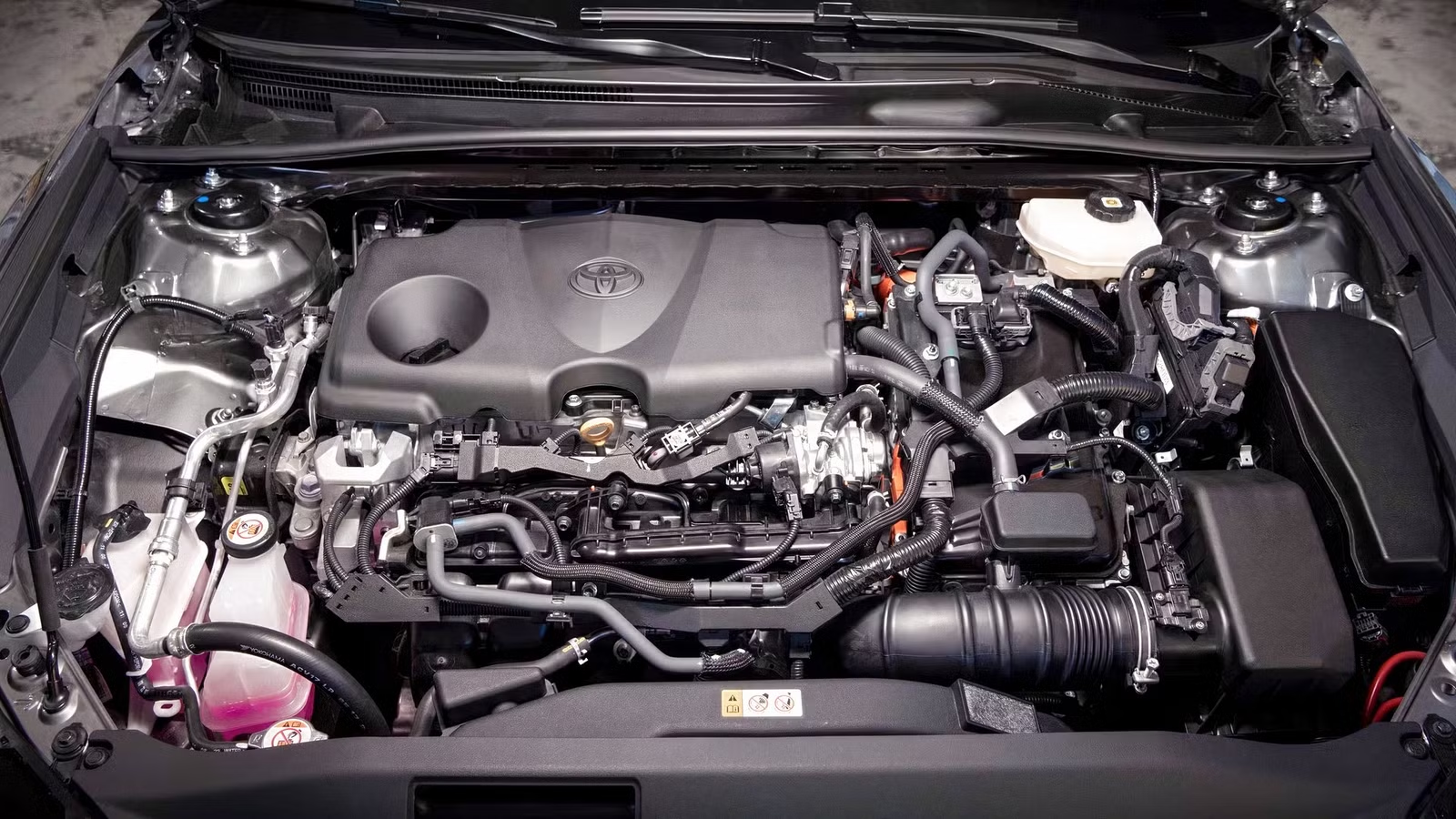
Internal combustion engine development has reached a point of stagnation in recent years, as multiple brands invest significant capital in electric car technology. Just a handful of brands remain dedicated to ICE advancements, with one Japanese giant in particular proving this to be a wise move.

Placing long-term bets in the automotive industry is a significant financial risk. Most brands that have poured billions of dollars into electrification are now struggling to meet financial targets. The decision to stick to ICE technologies through gasoline-electric hybrid technologies deserves credit for being a genius move.
Toyota’s Balanced Approach To Electrification
Toyota maintains a decisive market edge thanks to a multi-pathway strategy that balances battery electrification with hybrid technology. The Japanese brand has continuously refused to commit to transitioning its lineup to fully electric models, even under significant pressure from peers. Instead, it integrates accessible hybrid technology across standard sedans, crossovers, and heavy-duty trucks.

Global and U.S. markets have come to trust this technology due to nearly three decades of real-world refinement and clear consumer benefits. The iconic Prius introduced mass-market electrification in 1997, establishing a track record for long-term mechanical reliability, low maintenance costs, and durable battery performance.
Toyota’s efficient powertrains allow owners to enjoy low operational costs and immediate emissions reductions without requiring exstensive public charging infrastructure. As a result, Toyota commands strong resale values and continues to outpace rivals in hybrid sales volume worldwide.
Toyota’s A25A-FXS Proves ICEs Are Still Relevant

Toyota’s A25A-FXS 2.5-liter four-cylinder hybrid engine forms part of its Dynamic Force engine family. This configuration serves as a primary power unit across the core lineup and is designed specifically for hybrid applications. The engine operates on an Atkinson cycle, holding the intake valves open longer during the compression stroke to extract maximum energy from combustion expansion. The cylinder head features redesigned intake ports with a high tumble ratio that forces incoming air and fuel into a fast, swirling vortex for complete combustion.
Engineers pair this with a high compression ratio of 14.0:1 and laser-cladded intake valve seats. The result is a geometry that allows the unit to achieve up to 41 percent thermal efficiency, among the highest ratings globally for a mass-production internal combustion engine. Engineers prioritize lightweight, durable materials to reduce internal mechanical drag. The block consists of an open-deck aluminum alloy with cast-in iron cylinder liners.

The valvetrain consists of dual overhead camshafts driven by a low-friction timing chain, incorporating variable valve timing with an electric motor on the intake side. It calls this VVT-iE. There’s also a hydraulic actuation on the exhaust side, which it labels VVT-i. Fuel delivery relies on Toyota’s D-4S system, combining high-pressure direct injection into the combustion chamber with low-pressure port injection into the intake runners.
The system alternates or combines injection methods based on engine load to ensure clean combustion, maximum power, and prevention of intake valve carbon accumulation. Reliability stems from stress reduction and simplified mechanical systems. The engine eliminates traditional accessory belt drives entirely, removing components like alternator belts and power steering pumps. An electric water pump and an electronically controlled thermostat manage engine cooling independent of crankshaft rotation, allowing rapid engine warm-up and reduced parasitic drag. A Cooled Exhaust Gas Recirculation lowers combustion temperatures to suppress knock without enriching the fuel mixture.
Electric Motors Blend Perfectly With The A25A-FXS

Toyota’s decision to opt for a power-split series-parallel hybrid system allows drivers to experience the best of both worlds. Electric motors supply instant low-end torque, meaning the gas engine rarely operates under extreme stress at low RPMs. This minimizes internal mechanical wear over extended service lifespans. The electric drive architecture consists of two permanent-magnet synchronous motor-generators integrated into a planetary gear transaxle. This design lets the system function as an electronic continuously variable transmission, omitting the need for a conventional gearbox or torque converter.
The first motor acts as an engine starter and generator, routing excess internal combustion power to charge the battery or power the second motor. The second motor connects directly to the driving wheels, delivering electric propulsion and recapturing kinetic energy via regenerative braking and storing it in the battery. Energy storage uses either a compact lithium-ion or nickel-metal hydride battery pack, depending on vehicle packaging requirements. Managed by high-efficiency power electronics, this system maintains rapid charge-discharge cycles to buffer energy seamlessly without accelerated battery degradation.
Toyota Models Currently Using The Dynamic Force Engine

The 2026 Toyota Camry range is only available with this hybrid engine option. Front-wheel-drive configurations produce 225 net system horsepower. Selecting Electronic On-Demand All-Wheel Drive adds a dedicated rear electric motor, increasing output to 232 hp. Entry LE trims achieve EPA-estimated fuel economy of up to 51 MPG combined in FWD and 50 MPG combined in AWD. SE, XLE, and XSE trims deliver 47 MPG combined in FWD and 44 MPG combined in AWD. Paired with a 13.2-gallon fuel tank, total estimated driving range spans from 580 miles on AWD sport trims up to 673 miles on the LE FWD.

The non-PHEV 2026 Toyota RAV4 front-wheel-drive models deliver 226 net system hp, while all-wheel-drive variants yield 236 net system hp. FWD versions achieve up to 44 MPG combined. AWD models return 41 to 44 MPG combined, depending on the trim level. A 14.5-gallon fuel tank results in a total estimated driving range from 594 miles to 638 miles between refuels.

Base 2026 Toyota Crown models come standard with Electronic On-Demand AWD and generate 236 net system hp. The high-riding premium sedan delivers an EPA-estimated 41 MPG combined. Equipped with a 14.5-gallon fuel tank, the estimated maximum driving range reaches 594 miles. The Crown Signia crossover increases net power to 240 hp. This returns an EPA-estimated 38 MPG combined and 551 miles of range per tank.

The 2026 Toyota Highlander and Grand Highlander hybrid models also come standard with the brand’s Electronic On-Demand AWD. The Highlander produces 243 hp and achieves an EPA-estimated 35 MPG combined. A 17.1-gallon fuel tank provides an estimated total driving range of 598 miles. The Grand Highlander Hybrid generates 245 hp in front-wheel drive guise, while achieving an EPA-estimated 36 MPG combined. AWD variants return 34 MPG combined. A 17.8-gallon fuel tank results in a total driving range that spans from 605 miles for AWD models to 640 miles for FWD models.

Finally, the 2026 Toyota Sienna produces 245 hp across both drive setups. FWD models deliver an EPA-estimated 36 MPG combined, while AWD models achieve 35 MPG combined. An 18.0-gallon fuel tank yields an estimated range between 630 miles in AWD and 648 miles in FWD.
EVs Are Losing Momentum In The U.S.

The rapid deceleration in full electric vehicle adoption, particularly within the U.S., is a result of economic, infrastructural, and legislative changes. High initial purchase prices continue to deter mainstream consumers, as battery-electric models maintain a significant price premium over internal combustion and hybrid alternatives. This affordability gap widened significantly following the expiration of federal clean vehicle tax credits, exposing the unsubsidized cost of EVs and driving mass-market buyers toward more cost-effective options.
Beyond initial acquisition costs, consumer pushback centers on systemic infrastructure limitations. This includes scarce and unreliable charging networks. Range anxiety also remains persistent, creating challenges for households without dedicated home charging facilities. Furthermore, shifts in executive strategies and political policies led legacy automakers to scale back or delay multi-billion-dollar all-electric rollouts. This includes relaxed federal emissions mandates and modified state targets. Because hybrid vehicles deliver immediate fuel savings and lower carbon emissions without requiring lifestyle adjustments or reliance on charging infrastructure, mainstream buyers increasingly favor gasoline-electric hybrids as the pragmatic choice, prompting major auto manufacturers to reallocate capital back into hybrid powertrains.
Toyota Embraces Multiple Forms Of Eco-Friendly Mobility

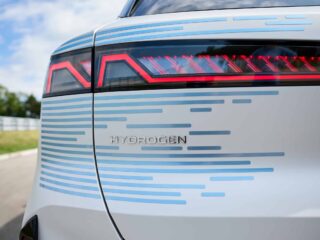
Toyota’s forward-looking strategy centers on decarbonization, while using gasoline-electric hybridization as its foundation alongside battery-electric, plug-in hybrid, and hydrogen fuel-cell developments. Rather than committing exclusively to a single propulsion type, Toyota scales hybrid production across high-volume global segments to achieve immediate, widespread carbon reductions without depending on fully developed public charging infrastructure.
Future mechanical engineering updates focus on next-generation internal combustion engines featuring smaller physical footprints, optimized thermal efficiency, and compatibility with carbon-neutral synthetic fuels. Simultaneously, Toyota is developing advanced plug-in hybrid architectures capable of extending electric driving ranges beyond 100 miles, turning plug-in vehicles into practical daily electric transport backed by gasoline fallback range. By continuously integrating lighter, higher-density battery chemistries and more efficient electric motors into its hybrid platforms, Toyota ensures that its hybridized powertrains remain economically accessible, highly profitable, and technically adaptable to evolving global emissions mandates.
Available Models
Toyota
- Founded
-
August 28, 1937
- Founder
-
Kiichiro Toyoda
- Headquarters
-
Aichi, Japan
- Owned By
-
Publicly Traded
- Current CEO
-
Koji Sato
Sources: Toyota, Motor Reviewer, and the EPA.

Related posts


Latest Post


No Comments