
The Motorcycle Ergonomics Trade-Off Riders Often Discover Too Late
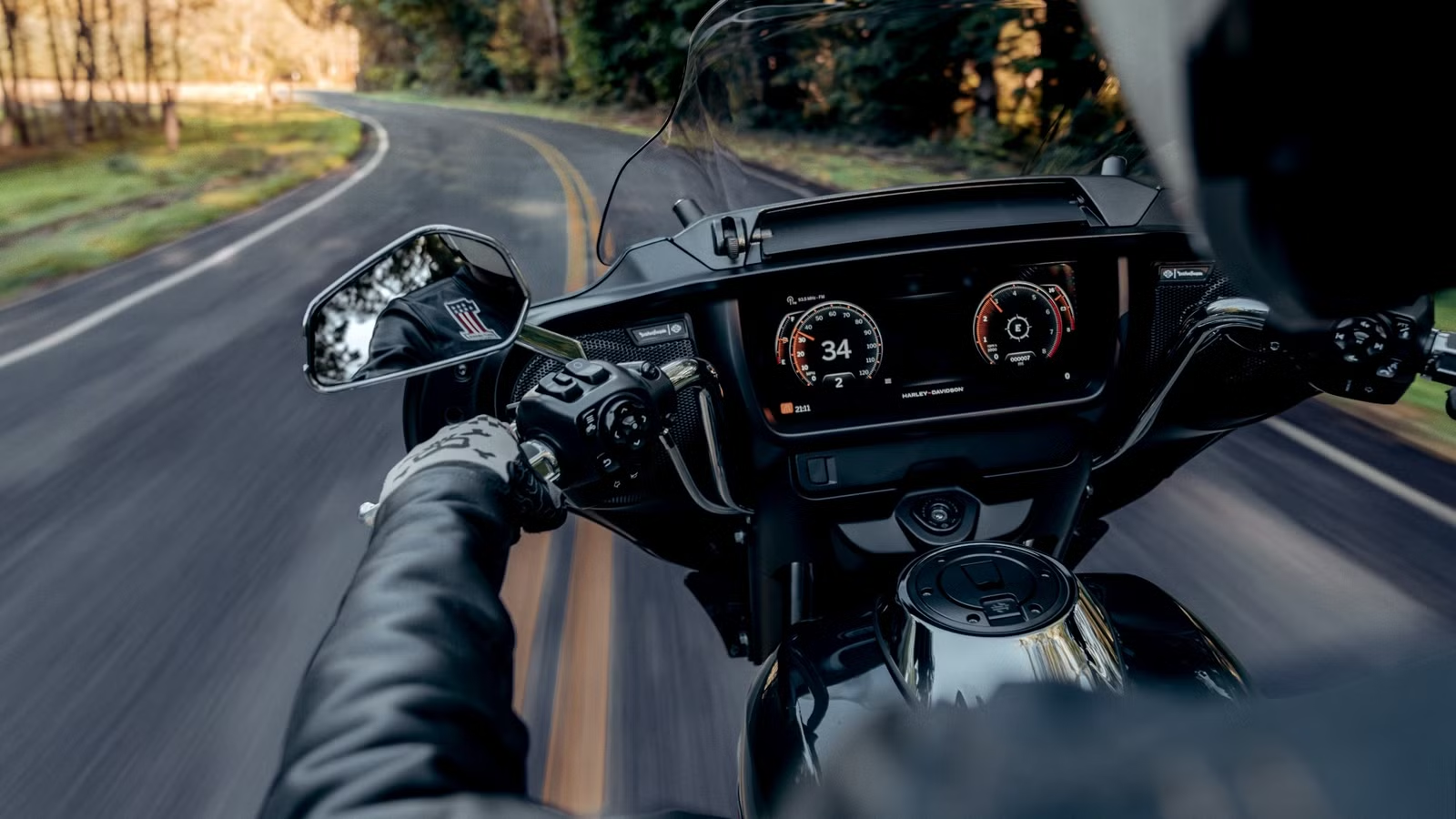
Surprisingly, motorcycles can make a convincing first impression without moving an inch. Excited by the prospect of a new bike, you swing a leg over, reach the bars, settle into the seat, and find both boots planted comfortably, all in the comfy environs of a showroom. Most riders can tell within seconds whether a motorcycle is too tall or its handlebars are awkwardly far away.

Unfortunately, they can also mistake the absence of immediate discomfort for a genuinely good fit. The showroom floor is flat, the motorcycle is stationary, and there’s no reason to brace against braking forces or support your torso against the wind. The sitting position that feels perfectly comfortable at a standstill may be the wrong one on a ride when you’re locked in that position for hours. Here are five ergonomic compromises worth examining before buying.
5
How The Rider Triangle Affects Motorcycle Comfort
A complete measure of comfort is the placement of the contact points in the rider triangle. This is the relationship between the seat, handlebars, and footpegs. Their relative positions determine knee bend, torso angle, arm reach, and how freely you can shift your weight. Two riders of equal height may experience the same motorcycle differently because their inseams, torso lengths, and arm proportions differ, just as different bikes offer different levels of comfort.

That’s why simply asking whether you can plant both feet or comfortably reach the handlebars misses much of the picture. Ground reach matters when stopping, but the riding position needs to remain comfortable with both feet on the pegs for considerably longer. Touring bikes like the Honda NC750X offer great comfort and reasonable seat height at a budget. But some of the most tempting fixes for reaching the pavement create another problem entirely.
4
A Lower Seat Can Cost You The Legroom You Actually Need

The 2026 Honda Rebel 500 has a 27.2-inch seat height, a reassuring number for riders who dislike balancing on tiptoes. Compare that with the BMW F 900 GS at 34.2 inches, and the attraction of a low cruiser becomes obvious. But seat height measures distance from the ground, not the room between your hips and footpegs. If the pegs sit relatively high beneath a low saddle, your knees remain sharply bent. That may be fine for a short commute, but can become unpleasant on a long highway stretch, particularly for taller riders.
A taller bike can offer a more open knee angle, while a narrow seat may make it easier to reach the ground than its published saddle height would make it seem. So before resorting to suspension lowering, check for a narrower or differently contoured seat. Some models have factory low-seat choices, while taller replacement saddles or lower footpegs can create more legroom. However, there are things to consider. Extra seat height changes your reach to the ground, lowered pegs can reduce cornering clearance, and lowering the suspension can compromise ground clearance or travel or even both.
3
Sitting Upright Doesn’t Guarantee Comfort At Speed

The Yamaha MT-07’s wide handlebars and relatively upright stance make sense in traffic, where riders repeatedly look around, steer at low speed, and brake. Its faired YZF-R7 sibling takes a sportier approach that better accommodates a tucked-in position. Yamaha even moved the R7’s handlebars slightly higher and closer for 2026, acknowledging that small changes can improve everyday usability. Now add highway speed. With little wind protection, an upright rider must resist steady air pressure against the chest. A modest forward lean can become more comfortable as airflow supports the upper body, yet the same lean may load the wrists when crawling through town.

A motorcycle-specific windscreen or adjustable deflector can relieve pressure on an exposed naked bike, although a poorly sized screen may simply move turbulence toward the helmet. For sporty machines, alternative clip-ons or bar risers might reduce wrist load, provided they clear the fairing and don’t strain cables at full steering lock. Choose the compromise around your usual speed, not a heroic-looking riding position.

Reaching too far forward often leaves riders stretching their shoulders or locking their elbows. Conversely, bringing the bars excessively close can feel equally restrictive. Footpeg position changes more than knee comfort, since it also affects your ability to rise off the saddle over bumps, brace during braking, and move around in corners. Move the bars and the seat-to-grip relationship changes; move the pegs and the brake and shifter access must still feel natural. So there are things to consider as good ergonomics treats the three contact points as a system, not individual elements.

Kawasaki’s offers a very thoughtful solution. Its Ergo-Fit system provides 18 possible combinations of seats, handlebars, and footpeg positions across Reduced, Mid, and Extended Reach setups. The reduced-reach seat moves the rider two inches forward, while the corresponding handlebar brings the grips an inch closer. The extended setup moves hip support rearward and the pegs forward. Kawasaki offers dealer fitting, making the adjustments part of choosing the motorcycle rather than an aftermarket guessing game. It’s definitely something that other manufacturers should look into offering.
1
Test The Position That You’ll Actually Ride In

A useful test ride should include more than a lap around the block. More saddle time gets you more answers. Spend time at a stop, make tight turns, brake normally and hard, and ride at the speeds you expect to be at most of the time. Notice whether you can relax your grip without slumping, whether your knees have room to move, and whether the wind makes you tense your shoulders. Wear your regular riding boots and protective gear. They can change how easily you reach the controls and how much you can adjust and flex your body to accommodate.
If a dealer can’t offer a long ride, look for a manufacturer demo event or a rental of the same model and trim. Check factory seat and lever adjustments before pricing accessories, and confirm that the proposed parts are compatible. A little discomfort may be correctable, but a riding position that fundamentally conflicts with your proportions or daily use is going to cost you down the line.
Source: Various Manufacturers

Related posts




Latest Post


No Comments