
The Honda Cruiser That Makes Daily Riding Feel Surprisingly Easy
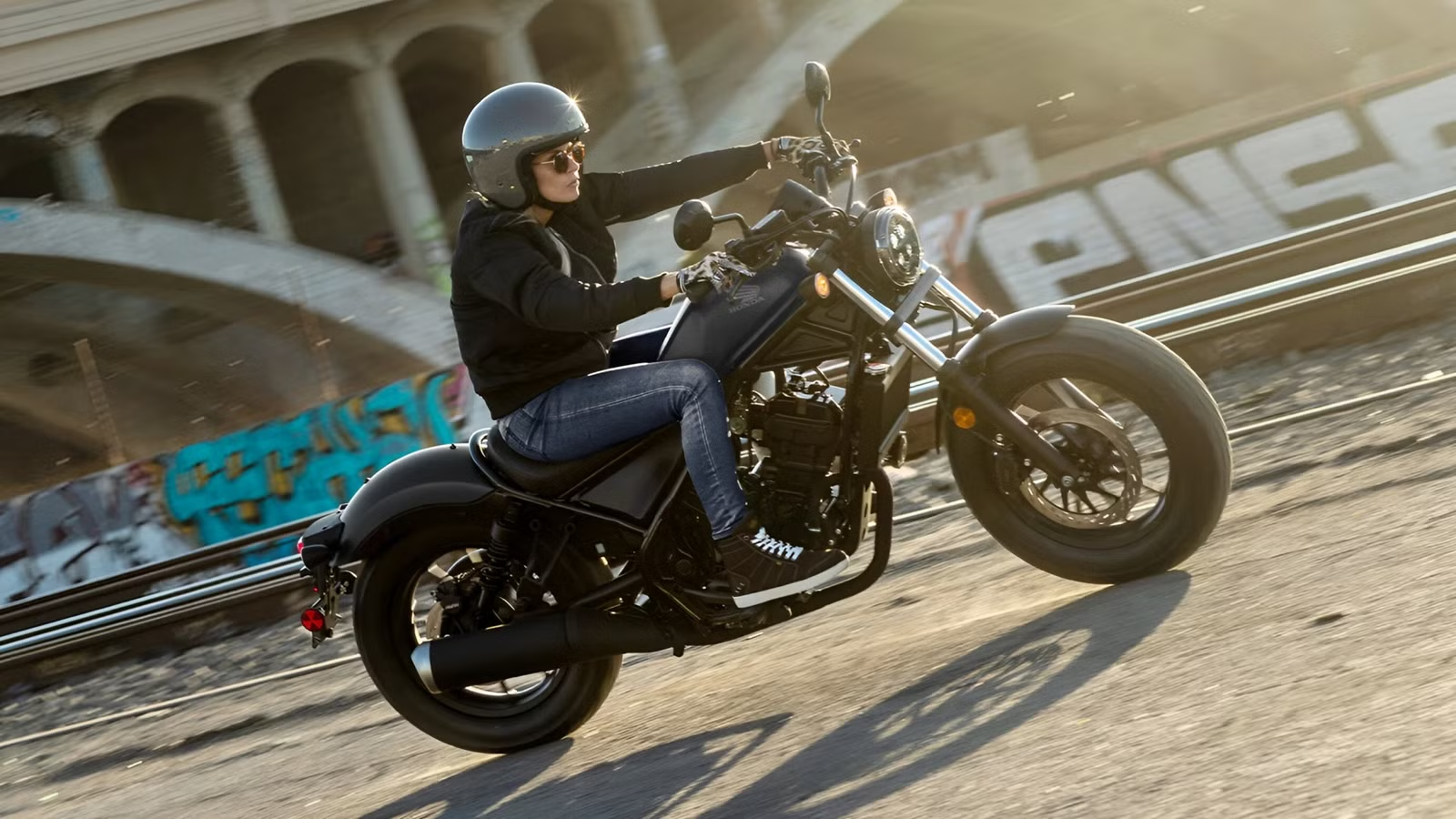
Traditionally, cruiser motorcycles have sold an experience before they sold practicality. Long wheelbases, low seats, chunky styling, and laid-back riding positions gave them presence, even when their size and weight made ordinary errands unnecessarily theatrical. They were motorcycles for arriving somewhere with your boots forward and your engine making an announcement, not necessarily for squeezing through traffic or backing out of a cramped parking space.
Small Cruisers Have Brought A Different Aesthetic To The 21st Century

A lightweight cruiser already has plenty going for it as daily transportation. Its low seat and narrow chassis make stops easier to manage, while relaxed ergonomics and approachable performance reduce the physical effort required in traffic. Those advantages matter most in the city, where riders constantly deal with parking ramps, tight U-turns, uneven roads, and traffic that moves a few feet before stopping again.
But small and approachable doesn’t always mean effortless. Riders still have to coordinate the throttle, clutch, brakes, and shifter through every slow crawl and restart. Experienced motorcyclists may do this instinctively, but repetition creates fatigue, while beginners also have to worry about stalling in front of impatient drivers. That makes the clutch one of the last barriers between a manageable motorcycle and a genuinely easy one, especially for daily use or for first-time riders.
Clutchless Convenience Usually Comes With A Trade-Off

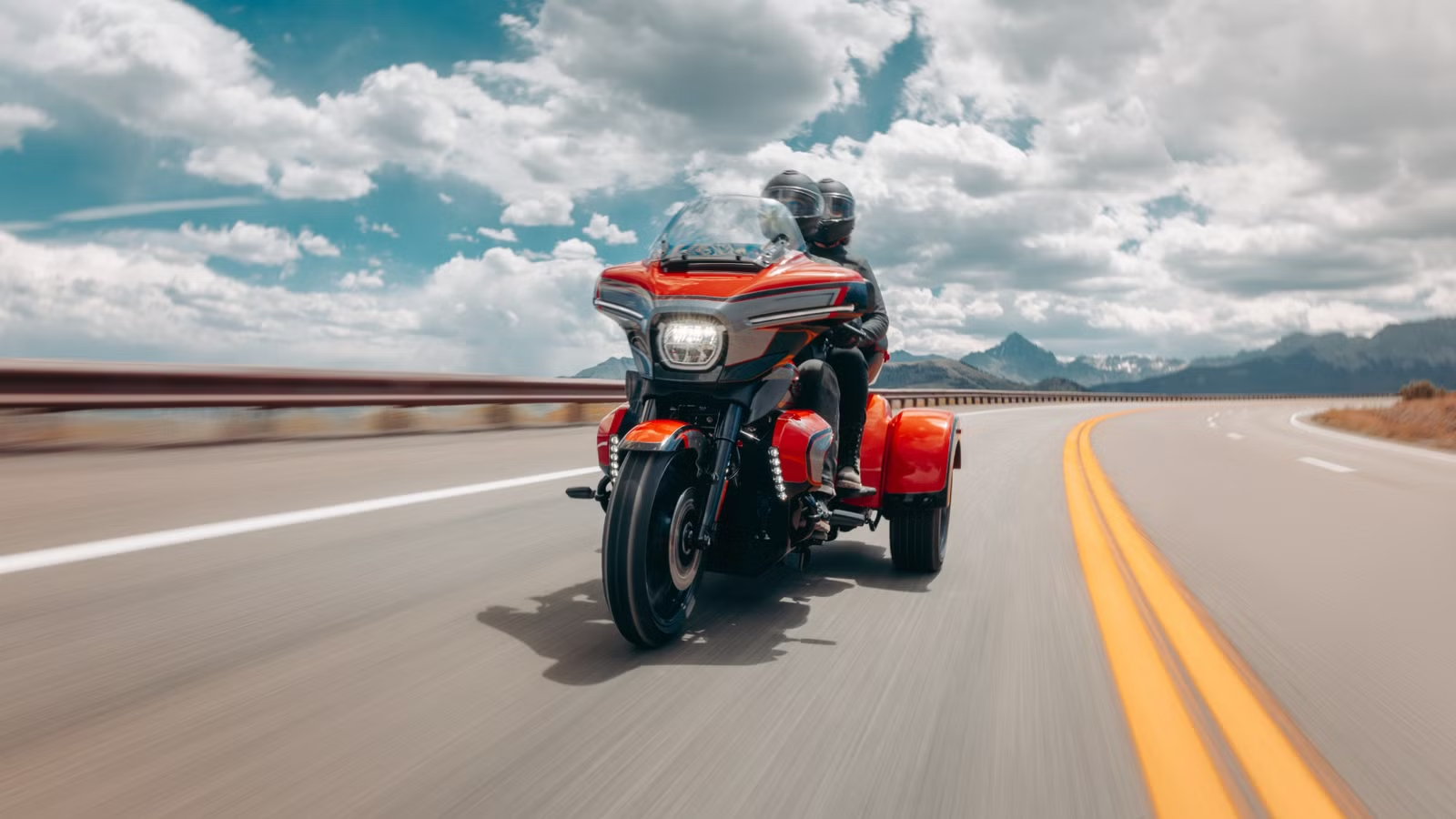
Scooters offer the easiest escape from clutch work, while Honda’s Dual-Clutch Transmission can select and shift gears automatically. Both make commuting easier, but they also change the experience. Scooters use a different layout and continuously variable transmission, while DCT can add weight and cost. Neither perfectly suits riders who want less work without giving up the familiar act of choosing gears themselves.
Honda’s answer is to retain the six-speed manual transmission, clutch lever, and foot shifter while automating only the clutch. Sensors, software, and compact actuators manage engagement during starts, stops, and shifts, but the rider still selects every gear. It’s a useful middle ground that removes repetitive clutch work and badly timed stalls without turning the motorcycle into a full automatic.
Honda’s E-Clutch Makes A Lot Of Sense

Honda E-Clutch initially looked like another performance feature, offering quickshifter-like gear changes and even allowing full-throttle shifts. But it’s far more useful at eight mph behind a delivery truck, where it automatically disengages the clutch at a stop and manages engagement as the rider moves away. That reduces stalls, eases hill starts, and removes much of the repetitive left-hand work that makes congested commuting exhausting.
Crucially, the system doesn’t take control away from the rider. The clutch lever remains fully functional whenever manual input is preferred, and the transmission still uses a conventional foot shifter rather than buttons or an automatic selector. That gives riders the convenience of clutch-free city riding without changing the basic rhythm of operating a motorcycle, making E-Clutch less of a shortcut and more of a useful extra layer.
The Honda Rebel 300 E-Clutch Makes Daily Riding Surprisingly Easy

The bike putting that tech to good use is the Honda Rebel 300 E-Clutch. Its base MSRP is $5,349, with a separate $600 destination charge. That’s $500 more than the outgoing 2025 manual Rebel 300, but it combines E-Clutch with standard ABS rather than treating either feature as part of a more expensive touring or performance package.
Power comes from a 286cc liquid-cooled, counterbalanced single-cylinder four-stroke engine with dual overhead cams and four valves. It uses programmed fuel injection with a 38mm throttle body, a 10.7:1 compression ratio, and a six-speed manual transmission driving the rear wheel through a sealed 520 chain. Honda doesn’t publish official US horsepower or pound-feet figures, which saves everyone from pretending this small cruiser was designed to terrorize a drag strip.

Its chassis is equally straightforward. A 41mm conventional fork provides 5.5 inches of travel, while twin rear shocks offer 3.7 inches. A single 296mm front disc and 240mm rear disc handle braking duties, supported by ABS. Cast 16-inch wheels wear a wide 130/90 front tire and a 150/80 rear, giving the Rebel its chunky proportions without requiring the rider to wrestle with the mass normally attached to that look. The numbers become particularly friendly closer to the ground. Seat height is just 27.2 inches, the wheelbase measures 58.7 inches, and claimed curb weight is 379 pounds with required fluids and a full three-gallon fuel tank.
It Still Shifts Like A Motorcycle, Just Without The Awkward Bits
E-Clutch doesn’t turn the Rebel into an automatic. The rider still presses the shifter to select first gear, works upward through the six-speed gearbox, and chooses when to downshift. What disappears is the requirement to pull the clutch lever for every launch, stop, and gear change. The transmission remains mechanically familiar, but the repetitive coordination surrounding it becomes optional rather than mandatory.
That distinction gives the Rebel an easier learning curve. A beginner can focus on steering, braking, traffic awareness, and gear selection without simultaneously mastering clutch engagement. Once the rider wants more direct control, pulling the lever instantly overrides the electronic system without requiring a menu change. Release it again, and assistance resumes. The bike can therefore teach manual habits without punishing every imperfect start with silence and embarrassment.
Its Modest Performance Is Part Of The Daily-Riding Appeal

A 286cc single won’t match the effortless highway passing power of a Rebel 500 or Rebel 1100, but that limitation helps make the smallest model so approachable. Its predictable power delivery, compact dimensions, low seat, and narrow midsection make it easier to balance, maneuver through traffic, and back into tight parking spaces, while the wide tires preserve the visual weight expected from a cruiser.
The Rebel 300 can handle highway travel, but prolonged high-speed riding isn’t where its engine, basic suspension, or lack of wind protection will shine. Riders who regularly carry passengers, cross states, or need stronger freeway performance will be better served by a larger Rebel. The 300 makes the most sense for commuting, errands, local roads, and relaxed weekend rides.
The Unexpected Value Is Convenience Without Commitment

The Rebel 300 E-Clutch doesn’t ask riders to declare allegiance to manual or automatic motorcycling. They can leave the clutch lever alone in traffic, use it for careful low-speed control, and practice traditional launches whenever they choose. Experienced commuters get relief from repetitive work, while beginners gain time to develop confidence without permanently skipping the skills associated with a manual transmission.
That may be its smartest trick. The Rebel 300 E-Clutch isn’t trying to make riding completely effortless or turn a cruiser into a two-wheeled appliance. It simply reduces the amount of coordination demanded during the least enjoyable parts of a journey. Riders still shift, steer, lean, and choose how involved they want to be. They just don’t have to prove their clutch control at every red light along the way.
Source: Honda Powersports

Related posts
Latest Post


No Comments