
How Much A 2023 Tesla Model 3 Is Worth Today
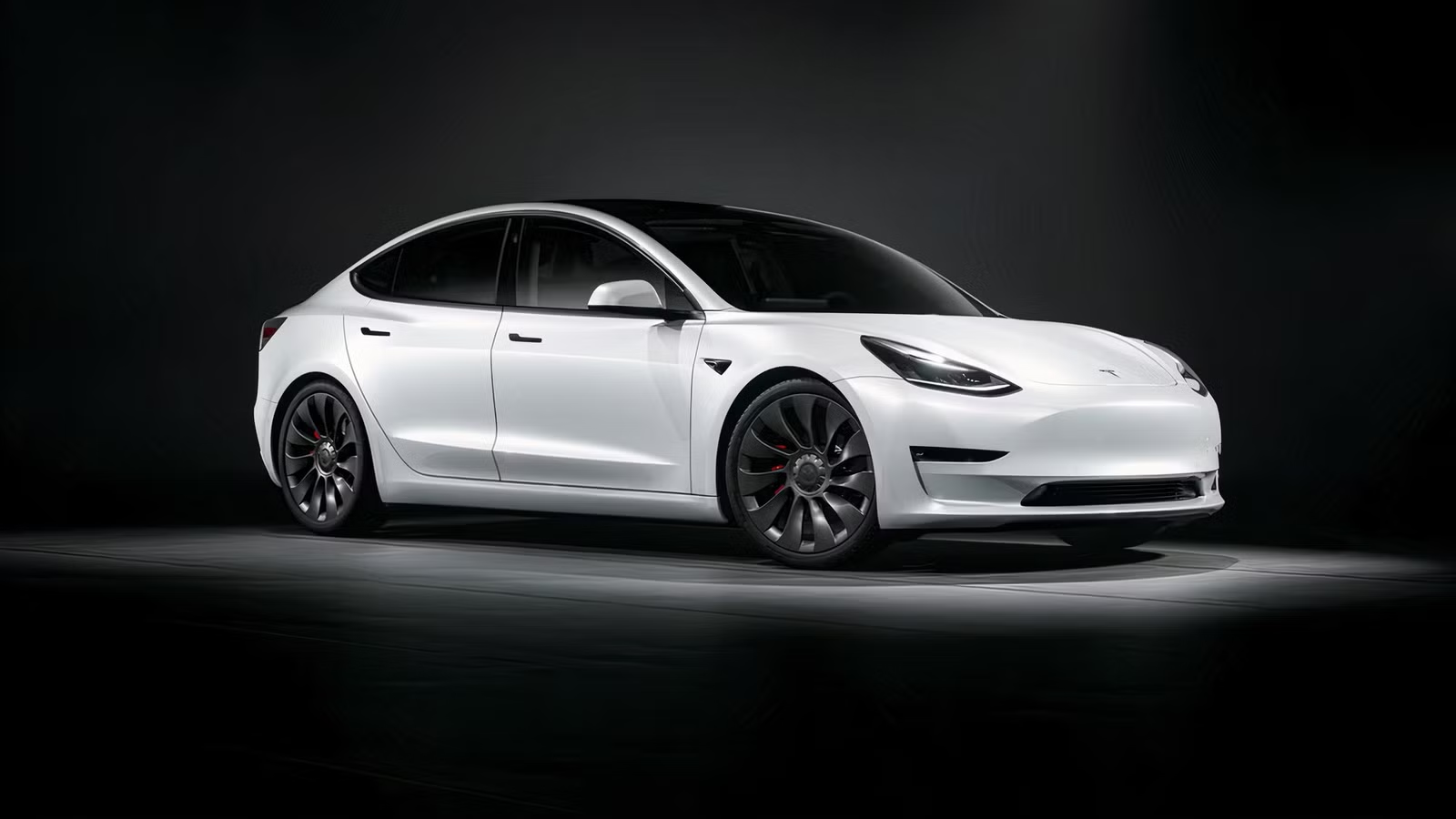
Electric vehicles (EVs) have reshaped the automotive landscape, but one area where they continue to struggle is resale value. Unlike traditional internal combustion engine (ICE) vehicles — and especially hybrids — EVs tend to depreciate faster, and some of the models with the steepest one-year depreciation are EVs. Tesla’s aggressive price cuts in recent years have only compounded the problem, dragging down used EV values across the board. That’s a welcome development if you’re shopping for a pre-owned EV — but a painful one if you bought new.
That said, not all EVs depreciate equally. Tesla’s lineup consistently posts the best resale values among EVs, and the Model 3 leads the pack. According to iSeeCars, the Model 3 lost 42.9 percent of its value over five years — the lowest figure in its segment.
Because the bulk of that depreciation hits hardest in the first year, a 2023 Model 3 can represent a compelling sweet spot. But is a slightly used example actually the smart buy, or does a brand-new Model 3 make more sense? Let’s break it down.
This Is How Much A 2023 Tesla Model 3 Costs

The Model 3 remains the entry point for most buyers into Tesla ownership, though the Model Y has since overtaken it as the brand’s global best-seller. According to KBB, a 2023 Model 3 carries an average used price of $26,000, while a brand-new 2026 base Rear-Wheel Drive (RWD) model — with an EPA-estimated range of 321 miles — starts at $36,990.
How It Compares To Similar Slightly Used Electric Sedans
With that context in mind, it’s worth considering other slightly used EVs as well. As noted, depreciation rates vary significantly across the segment, and some models lose value far faster than others. Below are average one-year-old prices for a selection of comparable electric sedans, sourced from KBB. Note that these figures reflect the used fair purchase prices only — they do not indicate the rate of depreciation from new, nor are the models ranked by depreciation severity.
|
2023 KBB Fair Purchase Prices |
|
|
BMW i4 |
$31,800 |
|
Polestar 2 |
$22,900 |
|
Hyundai Ioniq 6 |
$22,300 |
|
Tesla Model 3 |
$26,000 |
You May Consider Leasing A New Model 3

Even though Teslas hold their value better than most EVs, leasing is an option worth examining under the right circumstances. Here are the pros and cons of leasing a Tesla Model 3, according to FINN.
You Have Less Financial Risk
Recall that EV resale values have been hit hard by Tesla’s own price reductions. The Model 3’s starting price dropped significantly in recent years, pulling used values down with it and pushing buyers toward new inventory instead. Opting for a lease — Tesla offers 24- or 36-month terms — insulates you from any future price cuts Elon Musk might implement.
Additionally, Tesla does not require you to purchase the vehicle at the end of the lease, which makes it a low-commitment way to experience EV ownership. And because Tesla sells directly to consumers without third-party dealerships, its lease terms are transparent and consistent for every customer.
Pros of leasing:
- Immune to potential price cuts
- Competitive and consistent lease terms
- A good choice for those who are experimenting with EV ownership
But Here’s Why Leasing May Not Be For You

If you plan to use your Tesla for ridesharing, a lease is a non-starter — Tesla prohibits it. You’ll also face an annual mileage cap of 15,000 miles at most, which is more restrictive than what some competing brands offer. Transferring a lease is possible if more than 13 payments remain, but the associated fees can be steep. And exiting the lease early carries financial penalties that can also ding your credit score.
Finally, since Tesla does not allow end-of-lease buyouts, anyone who wants to own their EV outright at the end of the term should look at buying new or slightly used instead.
Cons of leasing:
- Can’t use Model 3 for ridesharing
- Difficult and expensive to transfer a lease
- No option to purchase the vehicle at end of the lease
What You Get In A 2023 Tesla Model 3

So, you’ve decided to go with a one-year-old Model 3. That’s a reasonable call — but it helps to know exactly what you’re getting, and where the trade-offs lie.
Plenty Of Value, If You Go For The Non-Performance Models
As discussed, the slightly used route makes the most sense for buyers targeting the base RWD. The non-Performance Model 3 delivers an EPA-estimated 272 miles of range — identical to the facelifted version — and even accounting for minor first-year battery degradation, the real-world difference is negligible. The 5.8-second 0–60 mph time carries over unchanged as well, so you’re not giving up meaningful performance by going pre-facelift.
The 2024 refresh did bring a revised exterior, a cleaner interior, LED ambient lighting, and a 10-inch rear-passenger screen. These are genuine improvements, but they’re more nice-to-haves than must-haves — and they’re unlikely to justify the price premium over a solid used RWD example. Tesla’s user interface remains among the best in the business, even if the ongoing shift away from physical controls is a matter of taste.
But You Won’t Benefit From The Improved Road Manners

The pre-facelift Model 3 was never a bad car to drive, but the 2024 MY did raise the bar for refinement. Most notably, Tesla added extra sound insulation and thicker acoustic glass across all four doors, meaningfully reducing wind and road noise in the cabin.
The 2024 Model 3 also received updated front suspension geometry, revised control arms, frequency-dependent damper valves, and stiffer subframe bushings for a more composed structure overall. The pre-facelift car was fun to drive but not class-leading in ride quality or NVH refinement. The updated model addresses both shortcomings, making it a noticeably more polished compact electric sedan — something worth factoring in if ride comfort is a priority.
|
2023 Model 3 RWD |
2024 Model 3 RWD |
2023 Long Range AWD |
2024 Long Range AWD |
2023 Performance |
2024 Performance |
|
|
Drivetrain |
Single motor, rear-wheel drive |
Single motor, rear-wheel drive |
Dual motor, all-wheel drive |
Dual motor, all-wheel drive |
Dual motor, all-wheel drive |
Dual motor, all-wheel drive |
|
Horsepower |
279 hp |
N/A |
346 hp |
N/A |
455 hp |
510 hp |
|
Torque |
330 lb-ft |
N/A |
376 lb-ft |
N/A |
487 lb-ft |
546 lb-ft |
|
0-60 MPH |
5.8 sec. |
5.8 sec. |
4.2 sec. |
4.2 sec. |
3.1 sec. |
2.9 sec. |
|
EPA Range |
272 miles |
272 miles |
333 miles |
341 miles |
315 miles |
296 miles |
Sources: Tesla, KBB

Related posts





Latest Post


No Comments