
The History And Meaning Of R/T: The Iconic Badge For Dodge’s Legendary Muscle Cars
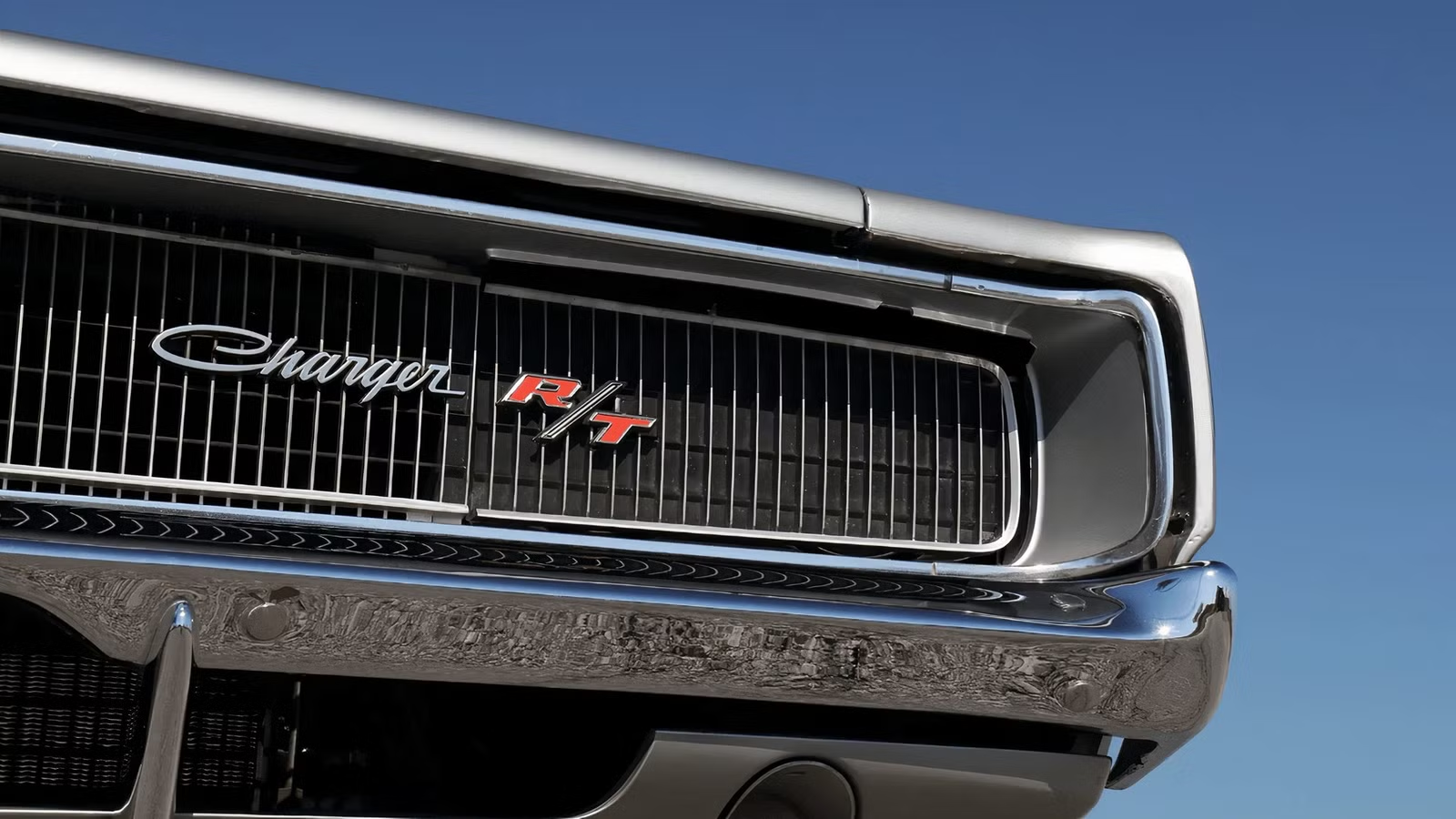
Two letters. That’s all it took to make an entire generation of street racers think twice before pulling up alongside a Dodge at a red light. The R/T badge is one of the most storied performance designations in American automotive history — predating the Hellcat, the SRT, and virtually every modern muscle car benchmark we use today. Whether it was bolted to a Coronet, a Charger, or a Ram pickup, that badge carried a promise: this one is built to go fast. If you’ve ever wondered exactly what R/T means, where it came from, and why it still matters, read on. SRT What does R/T actually mean, though? What do the letters represent? What equipment did it entail a car came with? If it’s so legendary, why did it take a backseat to the SRT cars of recent times? If you’ve been looking for answers to these questions, you’re in the right place. Let’s dive in and shine a light on what R/T means for D odge’s legendary muscle cars.
What R/T Actually Stands For

R/T is an abbreviation that stands for Road and Track. When it first appeared in the late 1960s, it was the highest performance trim package for the model to which it was assigned. It was featured on all of the best Dodge muscle cars of the era, including the Dodge Charger and Challenger, which would wear the badge again when they were revived in the mid-2000s.
As for the specifics of what the R/T badge means in terms of hardware, it really depends on the vehicle it was paired with. In the early years, it signified that a big block or Hemi was under the hood. Later on, it could be accompanied by a Magnum engine or even a spirited 4-cylinder. Beyond the engine, you could expect meaningful suspension upgrades and, in many cases, driveline modifications as well. To put it simply, that R/T badge on a Dodge means serious business.
No, Not Rapid Transit

A common misconception is that R/T stands for ‘Rapid Transit’, which isn’t the case — though the confusion does trace back to a genuine piece of Mopar history.

In 1970, Plymouth wanted to come up with a marketing strategy to rival Dodge’s Scat Pack. The result was its Rapid Transit System, a caravan of custom machines that traveled the country to promote its muscle cars. The members were a ‘Cuda, two Road Runners, and a Duster.
The First Car To Wear The Badge Wasn’t A Charger

When you think of the R/T badge, you likely associate it with the Challenger or Charger. Seeing as the Challenger wasn’t introduced until the 1970 model year, you might even assume the Charger, one of Dodge’s most popular muscle cars of all time, was the first to bear it. That wasn’t the case, though. In fact, the car that first appeared with the R/T badge can be thought of as the Charger’s forefather.
The 1967 Dodge Coronet R/T was the first to wear the badge. Ordering the trim package meant the 375-horsepower, 480 LB-FT 440 4-barrel backed by a 4-speed manual came standard, along with a heavy-duty suspension package and a Sure Grip rear end. A 3-speed automatic was an option, as was the mighty 426 Hemi that produced 425 horsepower and 490 LB-FT of torque. Upgrading to the Hemi brought a substantial jump in both figures. If paired with the 4-speed, adding the Hemi also meant stepping up to a Dana 60 rear end to handle the extra punishment.

For the remainder of the first muscle car era, R/T packaging didn’t change much from what you got on the ’67 Coronet. Even for the Coronet’s fastback offspring, the Charger, you essentially got the same setup. The only major change was the addition of the 440 Six-Pack engine for the 1970 model year.
Speaking of which, R/T was not the only high-performance package available through Dodge’s horsepower wars. Partway through the 1969 model year, it had even been bested by another trim level. The 1969-1/2 Coronet Super Bee A12 was a low-dollar, high-performance trim package that introduced the aforementioned 440 Six-Pack motors. It and its sister car, the Six-Barrel Road Runner, could outrun the baddest factory-tuned R/T cars of the era with the 390-horsepower mills under their hoods.
The Super Bee package would later move to the Charger in ’71. The GTS Darts and T/A Challengers are also notable models to keep in mind when discussing classic Dodge performance. The late 1960s even saw the introduction of the legendary Dodge Scat Pack, which originally encompassed Dodge’s full fleet of high-performance packages.
How Does R/T Stand Up To The Competition?

The 1967 Coronet R/T was a seriously heavy-hitter for its time. With a 426 Hemi under the hood, it could run a 14.5-second quarter mile — a solid number for a midsize muscle car. A 1967 Chevrolet Chevelle SS 396 trailed it with a quarter-mile time of 14.9 seconds. The Ford Fairlane GTA with the 390 under the hood wasn’t even a threat, managing only a 15.7-second pass.
|
Specs |
Coronet R/T Hemi |
Chevelle SS 396 |
Ford Fairlane GTA 390 |
|
Engine |
426 Street Hemi |
396 Big Block |
390 FE |
|
Transmission |
4-speed manual |
4-speed manual |
3-speed automatic |
|
Horsepower |
425 HP |
375 HP |
320 HP |
|
Torque |
490 lb-ft |
415 lb-ft |
427 lb-ft |
|
1/4-Mile |
14.5s |
14.9s |
15.7s |
That does not mean Ford and Chevrolet were easy pickings for Dodge. The 1967 Coronet R/T simply outclassed the competition’s comparable performance packages at the time. Things changed dramatically as the years rolled on and more powerful variants entered the ring from Chevrolet and Ford. In 1970, the Chevelle SS became the most potent of the lot, packing a 450-horsepower 454 LS6 engine capable of a 13.12-second quarter-mile pass.
Modern Muscle: R/T’s Meaning On Chargers And Challengers

When Dodge brought back the R/T badge for the 2006 Dodge Charger and 2008 Challenger, it was no longer a representation of a trim level that featured Dodge’s most powerful engines. It had become a mid-tier performance package, already living in the shadow of the SRT badge by then.
The SRT performance division set its roots in 1989. With the Viper as its debut project, it naturally became the new symbol for Dodge’s most extreme machines. For the first wave of LX Challengers and Chargers, SRT meant your car came with the 6.1-liter Hemi — a motor that paid homage to the Hemis of the first muscle car era, producing a similar 425 horsepower and a respectable 420 LB-FT of torque.
Ordering the R/T badge for these models initially meant you’d get the 5.7 Hemi. While not as potent as the 6.1, it’s still a genuinely strong engine that produced 340 horsepower and 390 LB-FT of torque. The 5.7 Hemi remained in R/T cars all the way until Dodge discontinued V8 muscle cars in 2023. Along the way, it was joined by the 392 Hemi that produced 485 horsepower and 475 LB-FT of torque in R/T Scat Pack trim. That engine’s displacement is a deliberate callback to the largest of the first-generation Hemi engines Dodge produced in the 1950s.
Not Always Tied To Conventional Muscle Cars

Before leaving you with the impression that the R/T badge was used exclusively for big-block V8 muscle cars, it’s worth noting that’s far from the whole story. While the Challenger and Charger may have taken a break for a few decades, the R/T badge kept busy. During that period, it found its way onto many different high-performance cars and trucks — some of which had fewer or more than eight cylinders.
Probably the most notorious of them is the Dodge Viper RT/10, which came swinging with an 8.0-liter V10 capable of dishing out 400 horsepower and 465 LB-FT of torque. Another legend that broke convention was the Dakota R/T, a pickup truck powered by a 5.9 Magnum producing 250 horsepower and 345 LB-FT of torque. Sure, it was an 8-cylinder, but it was more closely related to the 360 LA engines of the ’60s and ’70s than the big blocks, or RB engines, of the first-generation R/T cars. It wasn’t the first to do so, either — the ’70s Aspen R/T also featured a 360.
There were also models like the Stealth R/T, Caliber R/T, Neon R/T, Spirit R/T, and Daytona Iroc R/T, all of which made do with either four or six cylinders. While they might not measure up to modern performance standards, each was a genuine contender for the era in which it was introduced and the class it was built to compete in.
And no, we didn’t forget the time a station wagon got an R/T badge. The modern Challengers and Chargers might steal the spotlight, but there are those who would argue that the Magnum R/T was the king of the streets in the mid-2000s. It was a four-door wagon with a 5.7 Hemi under its hood — practical performance for the whole family. What more could you want? An SRT version? Dodge made that, too.
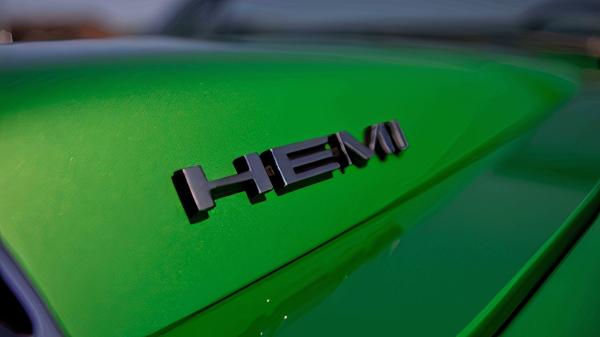
Below is a list of every US production model bearing the R/T badge. Again, not all are V8-powered muscle cars — the badge has appeared across all segments, including minivans. You will also notice it’s present on cars sold outside of the US, like the new Rampage, the Brazilian Dodge Charger, and even the Australian Chrysler Valiant Charger.
- Dodge Aspen
- Dodge Avenger
- Dodge Caliber
- Dodge Challenger
- Dodge Charger
- Dodge Charger Daytona
- Dodge Charger SIXPACK
- Dodge Charger (Brazilian)
- Dodge Coronet
- Dodge Dakota
- Dodge Dart
- Dodge Durango
- Dodge Daytona
- Dodge Grand Caravan
- Dodge Hornet
- Dodge Intrepid
- Dodge Journey
- Dodge Magnum
- Dodge Neon
- Dodge Nitro
- Dodge Phantom
- Dodge Ram
- Dodge Rampage
- Dodge Spirit
- Dodge Stealth
- Dodge Stratus
- Dodge Viper
- Chrysler Valiant Charger
The Rarest Car To Wear An R/T Badge

So, what’s the crown jewel of the R/T family? Sorry, Charger and Challenger fans — the Coronet takes the title once again, with the 1970 model year.
The 1970 Dodge Coronet R/T is a fairly rare car in general, with only a little more than 2,100 produced that model year. For perspective, only about 1,500 A12 models were produced in 1969, and they’re among the most sought-after muscle cars by collectors. That said, the rarest of the batch were convertibles equipped with a 426 Hemi.
In 1970, Dodge produced just two Dodge Coronet R/T Hemi convertibles. Remarkably, one was found in a Canadian junkyard in the seventies and restored to its original condition. Graveyard Carz later gave the car a full refresh. With a 426 Hemi backed by a four-speed manual, power brakes with front discs, and power steering, it’s a true driver’s car — though given its rarity, it will likely see minimal road time.
R/T: Still The Baddest Badge In Muscle Car History

Most recently, the R/T name was assigned to Dodge’s all-new, all-electric muscle car. With the Charger Daytona R/T being discontinued for 2026, we may very well see the badge slip into a hiatus while Dodge navigates its next chapter. Even so, there’s every reason to believe it will return for some form of high-performance car as Dodge reconnects with its performance roots.
Even if it no longer represents Dodge’s most powerful muscle cars, the R/T badge remains one of the coolest performance designations in automotive history. Its legacy will always be tied to the biggest titans of the performance world — including the Charger, the Viper, and the legendary Coronet that started it all.
Source: Dodge, Hagerty, Hemmings, FastestLaps

Related posts


Latest Post




No Comments