
The Bulletproof Japanese Sports Car You Can Actually Daily Drive
There’s a growing myth in the sports car landscape that you can either have excitement or reliability, but never both. Turbocharged engines are pushed to their limits, dual-clutch gearboxes chase milliseconds, and increasingly complex electronics promise performance at the cost of long-term durability. For enthusiasts who actually want to drive their cars every day, not just admire them on weekends, that trade-off is starting to feel unnecessary.

That’s where a new generation of Japanese sports cars quietly rewrites the narrative. Instead of chasing headline-grabbing horsepower figures, they double down on mechanical honesty and proven engineering that prioritizes longevity over bragging rights. It’s a philosophy rooted in decades of Japanese automotive excellence, where durability isn’t an afterthought; it’s the foundation.
At the center of this resurgence sits a Toyota coupe that should feel out of step with the modern performance world. It has no turbocharger, no hybrid boost, no outrageous horsepower figure, and no luxury badge to help justify its price. Yet that restraint may be exactly why it has become one of the most compelling daily-drivable sports cars still on sale.
228-HP Naturally Aspirated Engine
No Turbo, No Complex Electronics, No Problem

At the heart of the 2026 Toyota GR86 lies a Subaru-developed 2.4-liter naturally aspirated flat-four boxer engine. Its 228 horsepower and 184 pound-feet of torque put it 30 hp ahead of the Honda Civic Si while staying naturally aspirated—no turbo complexity like the Volkswagen Golf GTI’s high maintenance forced induction. Known internally as the FA24, this engine represents a meaningful evolution over the earlier 2.0-liter unit. The increased displacement does more than add power. It transforms usability. Peak torque arrives at 3,700 rpm, dramatically improving mid-range response and reducing the need to constantly chase high revs in everyday driving. This change alone makes the GR86 far more suited to daily use than its predecessor.
Equally important is what the engine does not have. There is no turbocharger introducing additional heat and pressure into the system, no complex hybrid assistance, and no overworked components operating near their limits. The naturally aspirated design ensures smoother thermal management and fewer mechanical stress points over time.
The Boxer Layout Itself Contributes To Durability

By lowering the center of gravity, it reduces load transfer and improves chassis stability, which in turn minimizes stress on suspension and drivetrain components. The engine’s linear power delivery also avoids the sudden torque spikes that can accelerate wear in more aggressive forced-induction setups. Power is sent to the rear wheels through either a six-speed manual or a six-speed automatic transmission, paired with a 4.10 final drive ratio. The drivetrain is refreshingly straightforward, relying on a Torsen limited-slip differential to distribute power effectively without relying on complex electronic systems.

The chassis further reinforces the GR86’s bulletproof character. With a curb weight of 2,800 pounds, the car places less strain on brakes, tires, and suspension components. A MacPherson strut front suspension and double-wishbone rear setup provide both durability and precision, while increased chassis rigidity over the previous generation improves long-term structural integrity.
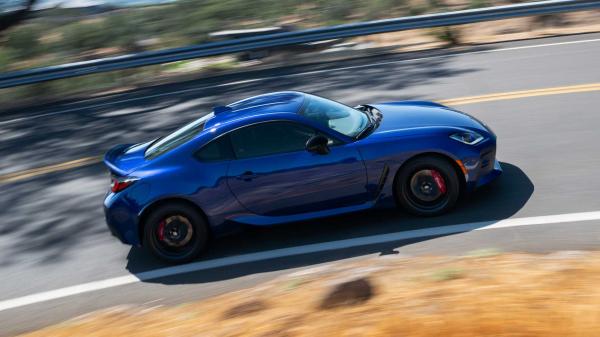
The Daily Driver With Japanese Reliability And Porsche-Level Driving Feel
Discover how the Toyota GR86 delivers a Porsche-like drive at an affordable price—blending reliability with everyday thrills.
Performance That Thrives In The Real World, Not Just The Track

The Toyota GR86’s performance philosophy stands in stark contrast to modern sports cars obsessed with numbers. With 228 horsepower, it is not designed to dominate straight-line acceleration benchmarks, but that is exactly what makes it so usable. The power-to-weight ratio, combined with rear-wheel drive, creates a car that feels responsive and engaging at everyday speeds. Acceleration from zero to 60 MPH takes roughly 6.3 seconds with the manual transmission, quick enough to be entertaining without becoming overwhelming in daily traffic.

The six-speed manual transmission plays a central role in this experience. Its short, precise throws and well-matched gear ratios allow the driver to fully exploit the engine’s power band on regular roads. The improved torque curve means fewer downshifts are required in normal driving, enhancing both comfort and efficiency.
Handling Is Where The GR86 Truly Excels
With near-perfect weight distribution and an exceptionally low center of gravity, the car delivers predictable and communicative dynamics. Steering is direct and unfiltered, offering a level of feedback that has become increasingly rare in modern vehicles. Hit a mid-corner bump and the suspension tuning strikes a careful balance between control and compliance without upsetting your line. This is the kind of real-world composure that turns daily commutes into driving enjoyment instead of endurance tests. But impressive handling is meaningless if ownership costs drain your bank account—which is where the GR86’s biggest surprise reveals itself.

Braking performance is equally reassuring. Ventilated disc brakes provide consistent stopping power, while the car’s relatively low mass reduces thermal stress during repeated use. The result is a system that remains reliable even under demanding conditions. In real-world terms, the GR86 delivers performance you can actually use. It rewards driver input without punishing mistakes, making it both engaging and approachable.
The Cult Hero That Earned Its Reputation The Hard Way

Long before its nameplate existed, its DNA was already cementing itself as a cult phenomenon. The original Toyota AE86 didn’t win fans through outright speed. Instead, they earned respect the old-fashioned way: by being driven hard, daily, and often without complaint. This lineage is critical. Unlike many modern performance cars that arrive engineered for short bursts of brilliance, the platform was designed to be lived with. Owners racked up high mileage, used them for commuting, and pushed them on back roads without the kind of catastrophic failures that plague more complex performance machines.
The Formula Was Deceptively Simple

A front-engine, rear-wheel-drive layout, modest power, and a chassis tuned for balance rather than brute force defined the experience. It wasn’t trying to dominate lap times. It was engineered to reward consistency, and consistency is what builds a reputation for durability. That ethos was carried forward into this modern version. It is not just a sequel, but a refinement of a proven mechanical philosophy where reliability is not a marketing claim, but a natural byproduct of engineering restraint.
Forget The Porsche 911, Get This Car For Your Cheap Thrills
This Japanese boxer is the best cheap alternative to Porsche’s halo sports car.
Running Costs And Reliability That Shame Modern Rivals

One of the most compelling aspects of the GR86 is how little it demands from its owner. In an era where performance cars often come with steep maintenance costs, the GR86 remains refreshingly affordable to run. Fuel consumption is reasonable for a rear-wheel-drive sports car, averaging around 24 mpg depending on driving conditions. This makes it viable for daily commuting without imposing excessive fuel costs.

Maintenance is straightforward, largely due to the absence of turbocharging and complex hybrid systems. Routine servicing, such as oil changes, brake pad replacements, and fluid checks, is relatively inexpensive compared to high-performance European alternatives. According to CarEdge, the GR86 will cost about $4,804 for maintenance and repairs during the first 10 years of ownership, beating the national average for its segment by over $2,500. The same goes for repairs, as there’s a 12.98 percent chance it will need major repairs, making its 5.44 percent better than the average. For comparison, those numbers beat the Ford Mustang, VW Golf GTI, Subaru BRZ, and even the venerable Honda Civic. Compared to models from BMW, Mercedes-Benz, and Audi, the GR86 puts far more money back in your pocket over long-term ownership.
Durable Engineering At Its Finest

The FA24 engine benefits from improved cooling and stronger internal components, enhancing its long-term durability. It is not operating at the edge of its performance envelope, which significantly reduces the likelihood of premature wear or failure. The simplicity of the drivetrain also contributes to lower repair costs. With fewer electronic systems and less reliance on advanced driver aids, fewer components can fail over time. This predictability is a major advantage for owners planning to keep the car for years.

Insurance costs tend to be moderate as well, thanks to the car’s manageable power output and strong safety features. Combined with Toyota’s established reputation for reliability, the GR86 presents a low-risk ownership proposition. In a segment where performance often comes at the expense of peace of mind, the GR86 manages to deliver both. According to CarEdge, the estimated five-year cost of ownership sits at $37,643.
2026 Toyota GR86 Five-Year Cost Snapshot
- Depreciation: $8,096
- Insurance: $11,995
- Fuel Costs: $10,500
- Interest: $5,481
- Maintenance: $1,571
Making all of this even better is the long-term value aspect. The low-risk, high-reward nature of the GR86 creates a perfect storm of superb value retention. According to CarEdge, the Toyota GR86 holds value better than most sports cars, including the Chevrolet C8 Corvette. This means that, even after you’ve enjoyed the GR86 for years, you can turn around and upgrade with little loss of value on your original investment — something very few modern sports cars can boast.
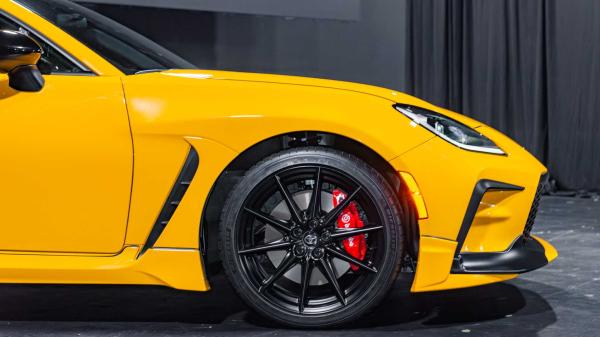
The Reliable Performance Car That You Can Actually Drive Hard
If you want to enjoy spirited driving every day, you need a reliable perfomrance car that can handle your desires. This car has what you’re after.
The GR86 Is Cementing Itself As An Old-School Icon
Which Still Makes For The Perfect Daily Sports Car

The GR86 succeeds because it understands what a daily sports car should be. It is not about chasing extremes, but about delivering a consistent and enjoyable driving experience every single day. Its compact dimensions make it easy to navigate through urban environments and tight parking spaces.

Visibility is good by modern sports car standards, and the cabin layout is intuitive, ensuring that daily usability is never compromised. While the rear seats are limited in space, they add a layer of practicality that pure two-seaters cannot match. The trunk is also usable enough for groceries or weekend luggage, making the car more versatile than its coupe silhouette might suggest.
Not only is the 86 the most rewarding track machine, but it’s easy to get in, both literally and financially. The cabin is rather spacious, and visibility is superb. Plus, the GR86 is affordable.
– Joel Stocksdale, CarBuzz Journalist
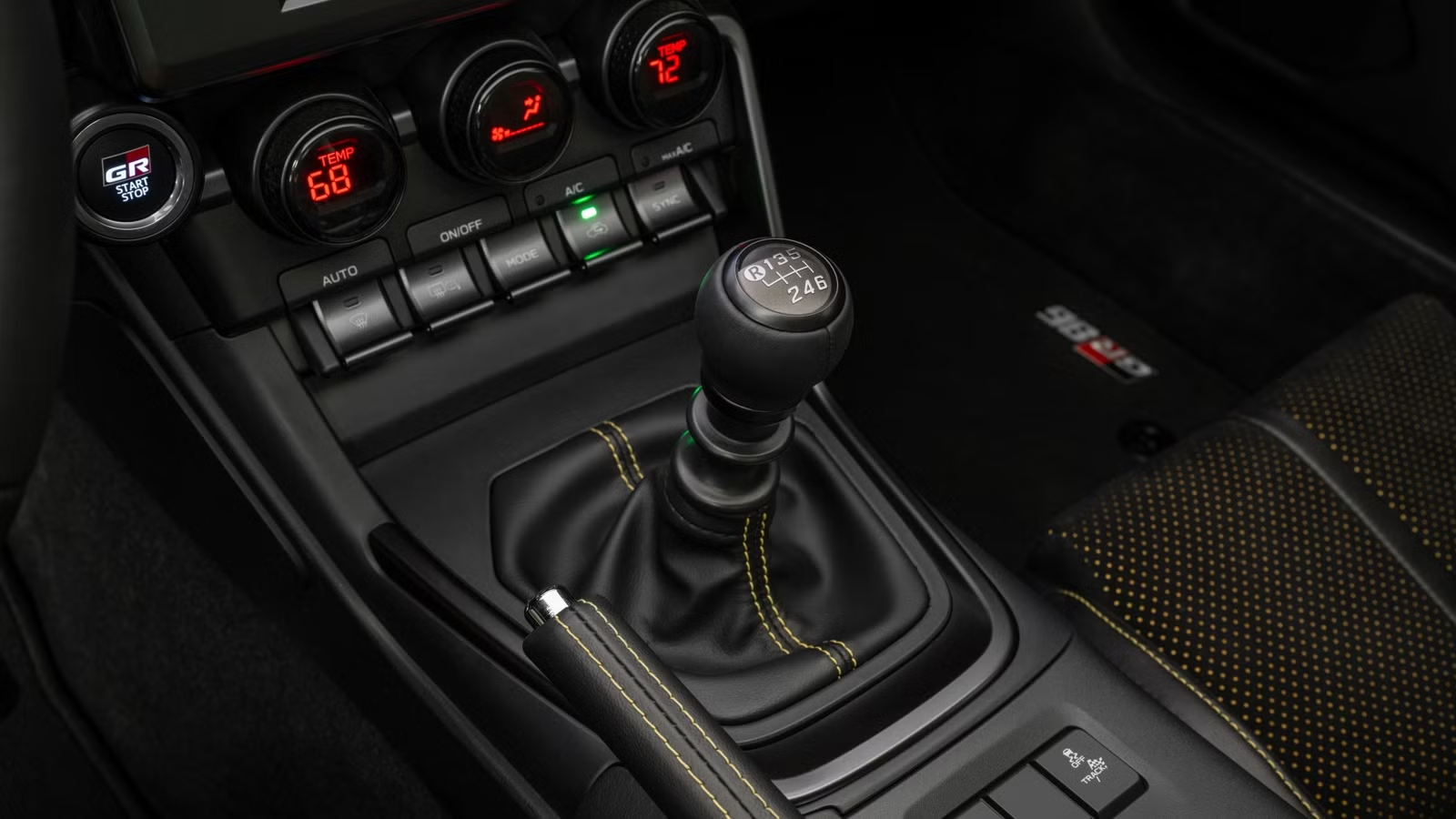
Inside, The GR86 Balances Modern Technology With Driver-Focused Design

The infotainment system is straightforward, and essential features such as smartphone connectivity and driver assistance systems are present without being intrusive. Most importantly, the car delivers a sense of reliability that builds confidence over time. It starts without hesitation, handles traffic with ease, and remains composed in a variety of driving conditions.

When the road opens up, the GR86 reveals its true character. The combination of balanced handling, responsive steering, and linear power delivery creates an experience that feels authentic and rewarding. It is a reminder that driving enjoyment does not require excessive power or complexity. In a market increasingly dominated by overengineered performance machines, the Toyota GR86 stands out as a return to fundamentals. It proves that a well-balanced, thoughtfully engineered car can still deliver both excitement and dependability. For enthusiasts who want a sports car they can actually live with, day in and day out, it remains one of the most compelling choices available today.
Sources: Toyota, The EPA, CarEdge

Related posts


Latest Post


No Comments