
The Harley That Deserves A Massive Comeback
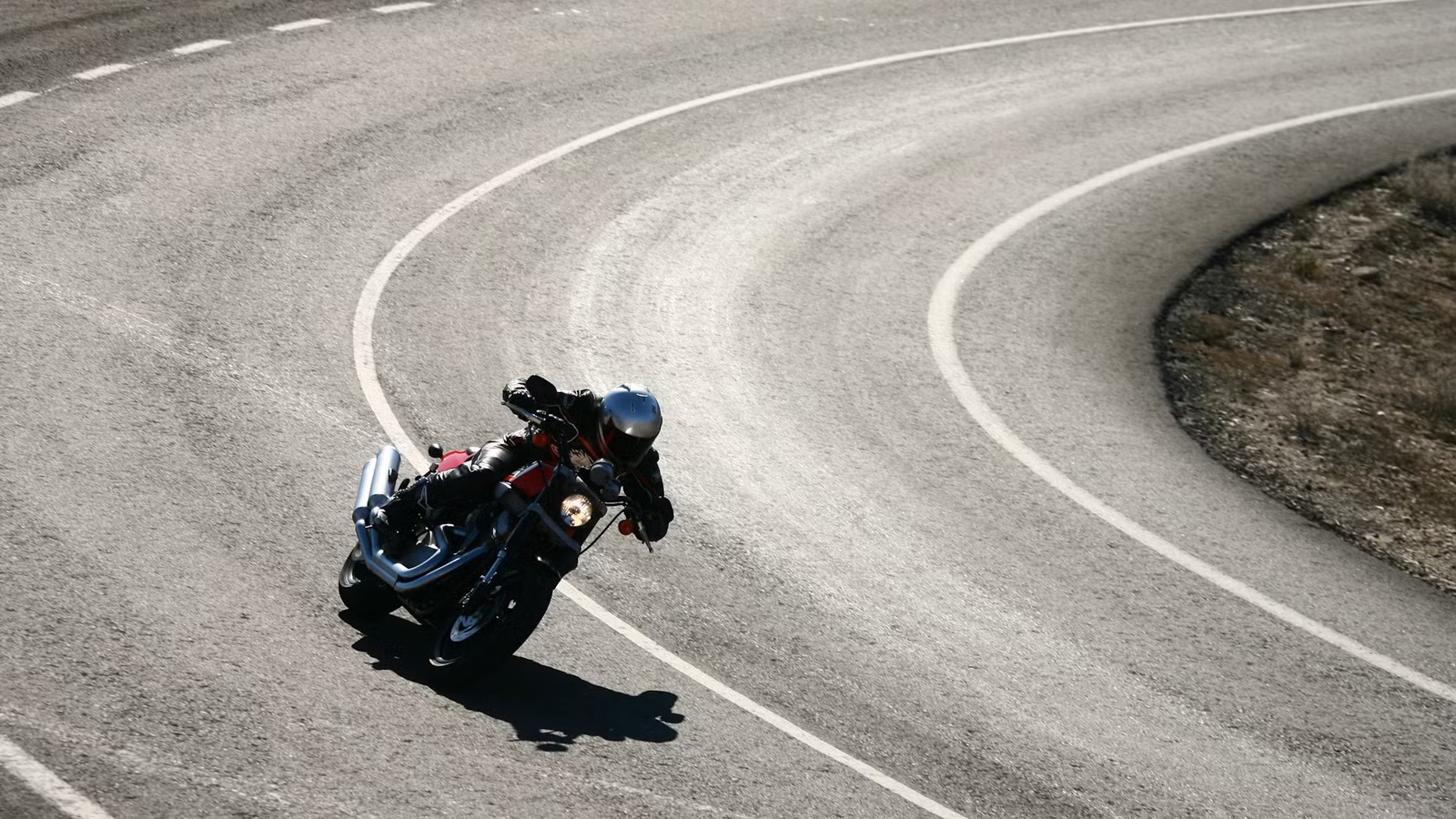
Harley-Davidson has retired plenty of memorable motorcycles over the years, and more than a few have earned loyal followings long after production ended. Some riders still hope for the return of the Road King, while others argue the Forty-Eight or the Dyna family deserved longer lives. With so many worthy candidates, choosing the one Harley that truly deserves a massive comeback isn’t as easy as it sounds.
Plenty Of Harley-Davidsons Deserve A Massive Comeback:

Bringing back a discontinued motorcycle is rarely as simple as reviving a familiar name. Markets change. Emissions regulations tighten. Customer expectations evolve. The MoCo has learned that lesson more than once, choosing to revive some legendary badges while allowing others to remain part of the company’s history. Even so, several discontinued models still generate enough enthusiasm to make a convincing case for a revival.

The Road King is an obvious example. For years, it embodied Harley touring in one of its purest forms, combining classic chrome styling with long-distance comfort and a minimalist approach that let the ride speak for itself. It was the motorcycle that let the scenery, not the bodywork, take center stage.
Not Every Fan Favorite Was Built For The Same Rider

Then there’s the Forty-Eight, a motorcycle that proved Harley could build an entry-level cruiser with unmistakable attitude. Its peanut fuel tank, chunky front tire, and low-slung stance made it instantly recognizable. More importantly, it gave new riders a bike that felt authentic rather than like a compromise. While the Revolution Max-powered Nightster fills the performance role today, it doesn’t capture the same stripped-down, factory-custom personality that made the Forty-Eight such a favorite.


The Dyna family deserves consideration for an entirely different reason. Long after Harley replaced the platform with the Softail chassis, enthusiasts continue debating which rides better. Whether those opinions are driven by engineering, nostalgia, or simply personal preference, the Dyna developed a reputation for raw character that many owners insist hasn’t been duplicated. Few discontinued Harley models command the same level of loyalty years after production ends.
Why None Of Them Quite Earns The Top Spot

Each of these motorcycles has a persuasive argument. They represent touring tradition, classic cruiser styling, and unmistakable V-twin character. If Harley announced the return of any one of them tomorrow, there would undoubtedly be riders lining up to see it. But none of them filled a gap in Harley-Davidson’s lineup quite like another motorcycle that quietly disappeared over a decade ago. Viewed through today’s market, one discontinued Harley looks less like a failed experiment and more like a motorcycle that arrived years before riders were ready to appreciate it.
The XR1200 Is The Harley That Truly Deserves A Massive Comeback

Of every Harley-Davidson that’s disappeared from the lineup, none deserves a second chance more than the XR1200. While motorcycles like the Road King, Forty-Eight, and Dyna family built devoted followings, the XR1200 left behind something even more significant: a role in Harley-Davidson’s lineup that still hasn’t been filled. It wasn’t simply a different-looking Harley-Davidson. It delivered a genuinely different riding experience without abandoning the company’s identity.
A Motorcycle That Arrived Before The Market Was Ready

When the XR1200 reached American showrooms, many riders still viewed motorcycles through a narrow lens. Cruiser motorcycle buyers wanted relaxed ergonomics and traditional styling, while riders seeking sharper handling often looked to European or Japanese brands. Harley’s idea of an upright standard inspired by flat-track racing didn’t fit neatly into either category, making it a difficult motorcycle for buyers to embrace at the time.

Even today, Harley-Davidson doesn’t build another motorcycle that combines flat-track inspiration, capable handling, and upright standard ergonomics in quite the same way. Powered by a reworked version of Harley-Davidson’s air-cooled Evolution V-twin, the XR1200 demonstrated that the company could build a motorcycle that felt just as comfortable carving through winding back roads as it did cruising the highway.
Racing Heritage Gave The XR1200 Real Credibility

Its connection to the legendary XR750 flat-track racer gave the bike an authenticity that couldn’t be manufactured through styling alone. From the sculpted fuel tank and high-mounted dual exhaust to its athletic riding position, every major design element served a purpose beyond appearance.

More than a decade after production ended, the XR1200 feels less like a motorcycle that failed and more like one that arrived too early. Rather than reviving it for nostalgia’s sake, Harley-Davidson would be revisiting one of its smartest ideas at a time when riders are finally ready to appreciate what made it special.
Today’s Motorcycle Market Finally Caught Up With The XR1200

The strongest argument for bringing back the XR1200 isn’t nostalgia. It’s the simple fact that the type of motorcycle Harley-Davidson introduced over a decade ago has grown into one of the industry’s most popular segments. What once seemed like an unusual blend of performance, everyday comfort, and heritage styling has matured into a thriving segment, suggesting Harley wasn’t wrong about the XR1200’s concept.
Harley Was Early, Not Wrong

When the XR1200 debuted, Harley-Davidson was asking riders to embrace a motorcycle that didn’t fit neatly into the industry’s traditional categories. It wasn’t a laid-back cruiser, nor was it a fully committed sport bike. Instead, it combined upright ergonomics, V-twin character, and athletic handling into a package that many riders simply weren’t looking for at the time. Today’s market tells a different story.

Motorcycles like the Triumph Speed Twin, BMW R 12 nineT, and Yamaha XSR900 have proven there’s strong demand for retro sport standards that blend timeless styling with modern capability. The Triumph Speed Twin helped establish the appeal of a retro performance twin. BMW’s R 12 nineT proved that heritage styling and premium engineering could coexist. Yamaha’s XSR900 wrapped cutting-edge performance in styling that celebrated motorcycling’s past. None of them copies the XR1200, but together they validate the formula Harley-Davidson introduced years earlier.
Harley Hasn’t Built Another Motorcycle Like It

Harley’s current lineup underscores that point. The Nightster and Sportster S are both capable, modern motorcycles, but neither fills the same role as the XR1200. Their emphasis is on performance cruisers powered by the Revolution Max engine rather than an upright sport standard inspired by the legendary XR750 that dominated American flat-track racing.

Sometimes the market rejects a motorcycle because the idea misses the mark. Other times, it rejects a motorcycle because the timing isn’t right. Looking at today’s popularity of retro-sport standards, the XR1200 increasingly looks like the second case. More than a decade after it disappeared, Harley’s forgotten experiment feels less like a relic of the past and more like a blueprint that the rest of the industry quietly proved Harley-Davidson had gotten right all along.
Harley-Davidson Has A Rare Opportunity To Get The XR Right The Second Time
Not every discontinued motorcycle deserves a comeback. Some belong to a specific moment in Harley-Davidson’s history, while others have effectively been replaced by newer models that serve the same purpose. The Road King, Forty-Eight, and Dyna family still inspire fierce loyalty and are all worthy contenders, but none makes a stronger case than the XR1200. Their absence is still felt, yet none left quite the same void in Harley-Davidson’s lineup.

The XR1200 wasn’t simply another variation of a familiar Harley formula. It represented a different way of thinking about what a Harley-Davidson could be. By blending the company’s flat-track heritage with upright ergonomics and engaging handling, it offered an experience unlike anything else wearing the Bar and Shield. More than a decade later, Harley-Davidson still hasn’t built another motorcycle that occupies that same space.
Some Ideas Simply Arrive Too Soon

The best comeback stories aren’t about correcting mistakes. They’re about recognizing ideas that never received a fair opportunity the first time around. The XR1200 wasn’t held back by poor engineering or a lack of identity. If anything, it had too much of both for the market it entered. It challenged expectations at a time when many riders still expected Harley-Davidson to build cruisers first and everything else second.

Today’s motorcycle landscape tells a different story. Riders have embraced motorcycles that blend heritage styling, everyday practicality and rewarding performance without forcing them into traditional categories. That’s exactly the space the XR1200 was trying to occupy years before the segment found widespread success.
Harley-Davidson doesn’t need to recreate the original XR1200 bolt-for-bolt, nor should it. What deserves another chance isn’t just the motorcycle, but the philosophy behind it: a machine inspired by Harley’s racing roots, built to be enjoyed on real roads, and designed for riders who value character as much as capability.
Source: Harley-Davidson

Related posts




Latest Post


No Comments