
The Ford F-150 Years Worth Buying And The Ones To Avoid
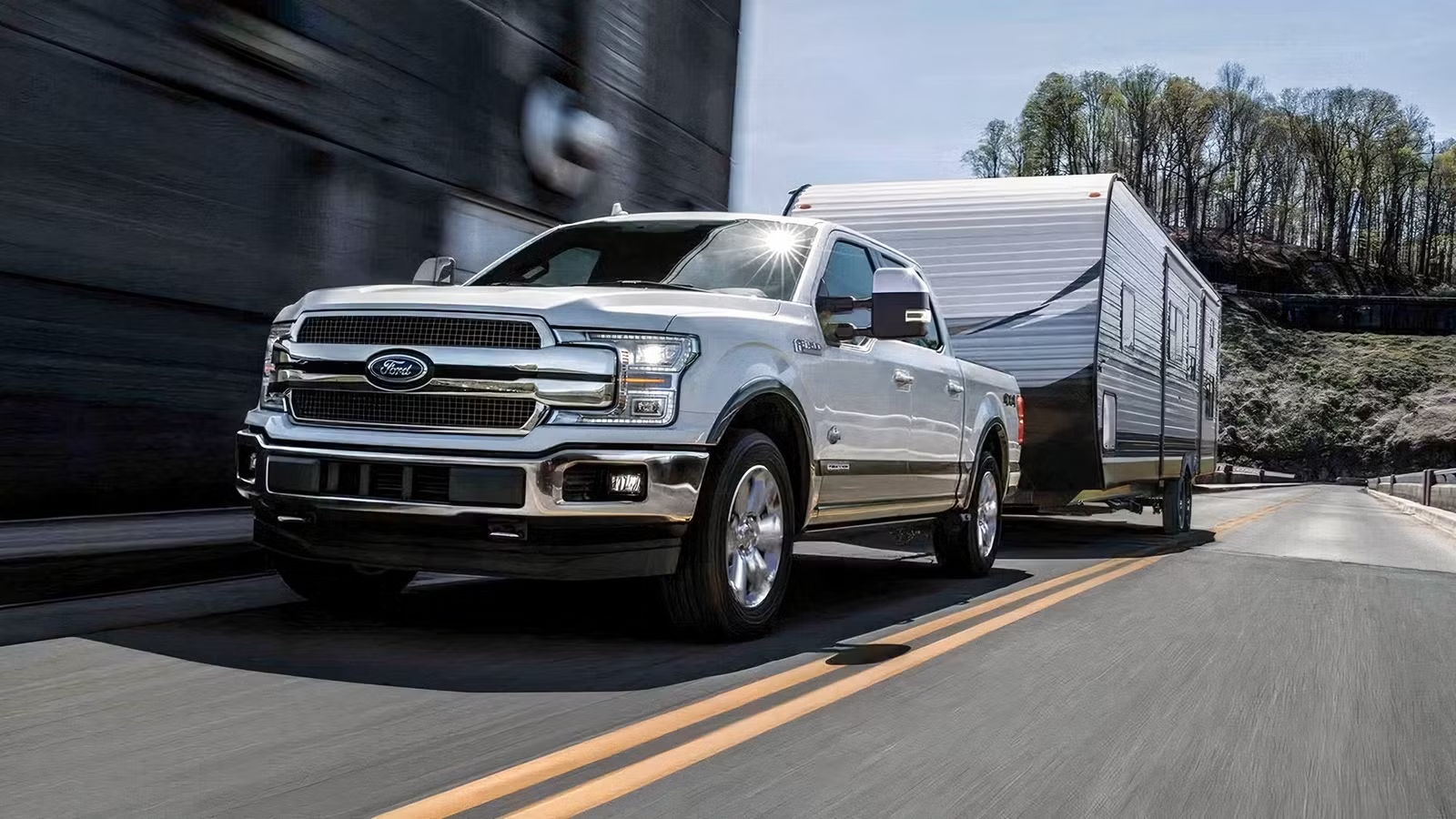
The Ford F-150 has been America’s best-selling vehicle for decades, which means the used market is flooded with choices spanning multiple engine families, two frame materials, and at least four distinct approaches to automatic transmissions. That abundance is a blessing and a curse. It means there’s almost always a well-priced example nearby, but it also means the reliability gap between a great model year and a genuinely risky one can run into thousands of dollars in unplanned repairs. Engine choice matters as much as model year, and a truck that looks identical to its neighbor on a used lot can carry a completely different risk profile under the hood. This guide sorts the F-150’s recent history into the years worth chasing and the ones worth walking past.
5
The 5.4-Liter Triton Years That Can Turn A Cheap F-150 Into An Expensive Project

The 5.4-liter Triton V8 powered F-150s from the late 1990s through 2010, and it’s the single engine most likely to turn a bargain truck into a money pit. The core issue is spark plug ejection: the two-piece plug design used through roughly 2007 could work loose under combustion pressure and blow partially out of the cylinder head, stripping the aluminum threads in the process. Repairing it properly means a Heli-Coil or thread insert repair per cylinder, and doing it wrong can mean pulling the heads entirely. It’s not a universal failure, but it’s common enough that any 5.4-equipped truck from this window deserves a spark plug inspection before purchase rather than after.

Cam phaser wear is the second major weak point, most prevalent on 2004 to 2008 trucks. The variable valve timing system relies on phasers that develop excessive play as they age, producing a distinctive rattle on cold start that gets misdiagnosed as a timing chain problem, a lifter tick, or even a rod knock by less-experienced mechanics. Left unaddressed, worn phasers can jump timing and cause genuine engine damage, and the repair involves replacing the phasers, timing chains, guides, and tensioners as a set—a job that easily clears $1,500 to $2,000 in parts and labor.
Beyond those two headline issues, early 5.4 trucks also saw exhaust manifold bolts that shear off in the manifold, leaving broken fasteners embedded in the head, and intake manifold gaskets that fail and leak coolant into the engine. None of these problems are secret. They’re well documented across owner forums and independent shop write-ups, which means a seller offering a clean-sounding 2004 to 2007 F-150 with the 5.4 should be able to produce maintenance records showing these items were addressed. If they can’t, the “cheap truck” math changes fast once a shop bill arrives.

4
Why The 2009–2014 F-150 Is One Of The Safest Used-Truck Generations To Target

This span covers the tail end of the twelfth generation and the launch of the thirteenth in 2009, and it’s widely regarded as one of the sturdiest windows in the F-150’s modern history. By 2009, Ford had largely resolved the worst Triton spark plug and cam phaser issues, and the introduction of the EcoBoost V6 in 2011 gave buyers a genuinely strong alternative to the aging V8 lineup. The 3.5-liter EcoBoost from this era, particularly 2013 and 2014 models, developed a reputation for solid long-term durability once early turbocharger and intercooler concerns from the 2011 launch year were sorted out through revised hardware and software calibration.
The 5.0-liter Coyote V8, introduced in 2011, is arguably the standout engine of this generation. It largely avoided the Triton’s chronic problems and has proven itself as a genuinely low-drama engine capable of clearing 200,000 miles with routine maintenance. Timing chain guide wear can appear on higher-mileage examples—most reports point to trucks well past 150,000 miles—but it’s a wear item rather than a design flaw, and it’s inexpensive to inspect during a pre-purchase check.

The six-speed automatic transmission paired with these engines is another point in this generation’s favor. It’s conventional, hydraulically controlled, and free of the dual-clutch complexity that has plagued some competitors, meaning most transmission issues in this window trace back to normal wear rather than fundamental design problems. Recalls during this period were relatively minor by F-150 standards, covering things like door latch issues and airbag-related concerns that affected a broad swath of the auto industry rather than being F-150-specific engineering failures.
For a buyer who wants the mechanical simplicity of a steel-bodied truck without the specific Triton risks of earlier years, a 2012 to 2014 F-150 with the Coyote V8 or a well-maintained 2013-2014 EcoBoost represents about as safe a bet as the used truck market offers. Values in this range have also settled into genuinely accessible territory, making it a sweet spot for buyers who want a full-size truck without a full-size loan payment.
3
The Aluminum Revolution Had Some Early Growing Pains, Especially From 2015 To 2017

Ford’s decision to switch the F-150’s body panels to aluminum in 2015 was the biggest engineering shift in the truck’s modern history, and it came with the kind of first-generation hiccups that tend to accompany major technological pivots. The weight savings were real and meaningful for towing and fuel economy, but the early aluminum trucks introduced problems that had nothing to do with the body material itself and everything to do with rushed integration of other systems.
The 2.7-liter EcoBoost V6, new for 2015, developed a reputation for coolant intrusion into the combustion chamber caused by a design flaw in the degas bottle and coolant crossover—an issue that could contaminate engine oil and, in severe cases, lead to catastrophic engine failure if not caught early. Ford eventually revised the design, but early 2.7 owners reported enough incidents that the problem became a recognized pattern rather than isolated bad luck.

The 10-speed automatic transmission, introduced across most trims in 2017, is the other major sore point from this window. Early production units suffered from harsh shifting, hesitation, and in some cases premature failure, problems significant enough that Ford faced litigation over 10-speed reliability in F-150s and Super Duty trucks built through roughly 2019. Software recalibrations helped smooth out shift quality over time, but the earliest 2017 examples carry the highest risk of the bunch.
Aluminum body repair costs also caught the independent repair industry off guard during this stretch. Specialized welding equipment and training were required for proper collision repair, and shops that didn’t invest in that equipment either turned trucks away or performed subpar repairs, which means a used 2015 to 2017 F-150 with prior body damage deserves extra scrutiny into who did the work and how. None of this makes these years unbuyable, but it does mean a pre-purchase inspection should specifically probe coolant levels, oil condition, and transmission shift behavior rather than assuming a clean-looking truck is a clean-running one.
2
The 2018–2020 F-150
Where Ford Finally Ironed Out The Biggest 13th-Generation Problems

By 2018, most of the aluminum era’s early stumbles had been addressed through hardware revisions and accumulated production experience. The 2.7-liter EcoBoost received updated components to resolve the coolant intrusion issue, and by most owner accounts and independent reliability tracking, the problem became far less common on 2018-and-later engines. The 10-speed transmission also matured considerably during this window, benefiting from software updates and internal refinements that reduced the harsh-shift complaints that had defined its 2017 debut.
The 3.5-liter EcoBoost, now in its second generation after a 2017 redesign, emerged as a genuinely strong performer through this period, offering V8-rivaling power with better real-world fuel economy and none of the coolant issues that dogged the smaller 2.7. The naturally aspirated 5.0-liter Coyote V8 also carried forward its reputation for durability, remaining the choice for buyers who preferred simplicity over turbocharged complexity.

This doesn’t mean the window is problem-free. Owners have reported occasional door latch failures across multiple 2015-to-2020 model years, prompting recalls, and some 2018 to 2019 trucks saw driveshaft and transmission-related recalls tied to specific production batches rather than a systemic design flaw. But compared to the turbulence of 2015 to 2017, these are targeted issues rather than pattern-level failures, and they’re generally well documented with clear recall remedies already applied to most surviving examples.
For buyers specifically prioritizing the aluminum body’s weight and payload advantages while avoiding the worst of the growing pains, a 2019 or 2020 model with the 3.5 EcoBoost or 5.0 Coyote represents the generation at its most sorted. Values remain higher than the 2012-2014 window discussed earlier, but the combination of modern safety features, improved fuel economy, and resolved early issues makes the premium defensible for buyers who want a newer truck without gambling on launch-year problems.
1
The Newer 2021–2026 Trucks Offer More Capability
But Their Engines And 10-Speed Still Need Careful Inspection

The fourteenth-generation F-150, launched for 2021, brought a fully redesigned platform, the option of a hybrid PowerBoost powertrain, and a substantially updated interior, but it also introduced a new set of concerns that used buyers should weigh carefully given how recent these trucks still are on the resale market.
The PowerBoost hybrid, pairing the 3.5-liter EcoBoost with an electric motor, has drawn attention for battery and inverter-related issues in early production, along with some reports of unexpected power loss requiring software updates and, in certain cases, component replacement. Ford issued multiple technical service bulletins and at least one targeted recall addressing hybrid system software during the 2021 model year specifically, which makes early hybrid examples worth extra diligence, including a specific check of hybrid-system fault history through a dealer scan tool before purchase.

The standard 3.5-liter and 2.7-liter EcoBoost engines carried over largely unchanged from the well-sorted late-13th-generation versions, and they’ve continued to perform reliably, though the 10-speed transmission behind them, despite years of refinement, has still generated intermittent complaints about rough shifts and occasional hesitation on certain build dates, particularly in early 2021 production before running changes were implemented.
The bigger caution with this generation isn’t a single catastrophic flaw of the kind the 5.4 Triton or the 2.7’s early coolant issue represented. It’s the accumulation of software-dependent systems, from the hybrid battery management to advanced driver assistance features, that makes a thorough pre-purchase diagnostic scan more important than ever. A visual inspection alone won’t reveal a pending hybrid fault code or an unresolved transmission adaptation issue the way it might reveal a Triton spark plug problem.

For buyers considering a 2021-2026 truck, sticking to non-hybrid EcoBoost variants with a full service history reduces risk considerably, while PowerBoost hybrids—though appealing for their fuel economy and onboard power capability—warrant a dealer-level diagnostic check and confirmation that all relevant recalls and software updates have been applied before money changes hands. As these trucks age further and more independent reliability data accumulates, the picture will sharpen, but for now, caution around the earliest hybrid builds and careful transmission evaluation remain the smart approach.
Sources: Ford U.S., SlashGear & Ford Authority

Related posts



Latest Post


No Comments