
Cadillac Is Etching Its Crest Into The Optiq’s Glass Instead Of Using A Sticker, And It’s The Kind Of Detail Buyers Never See
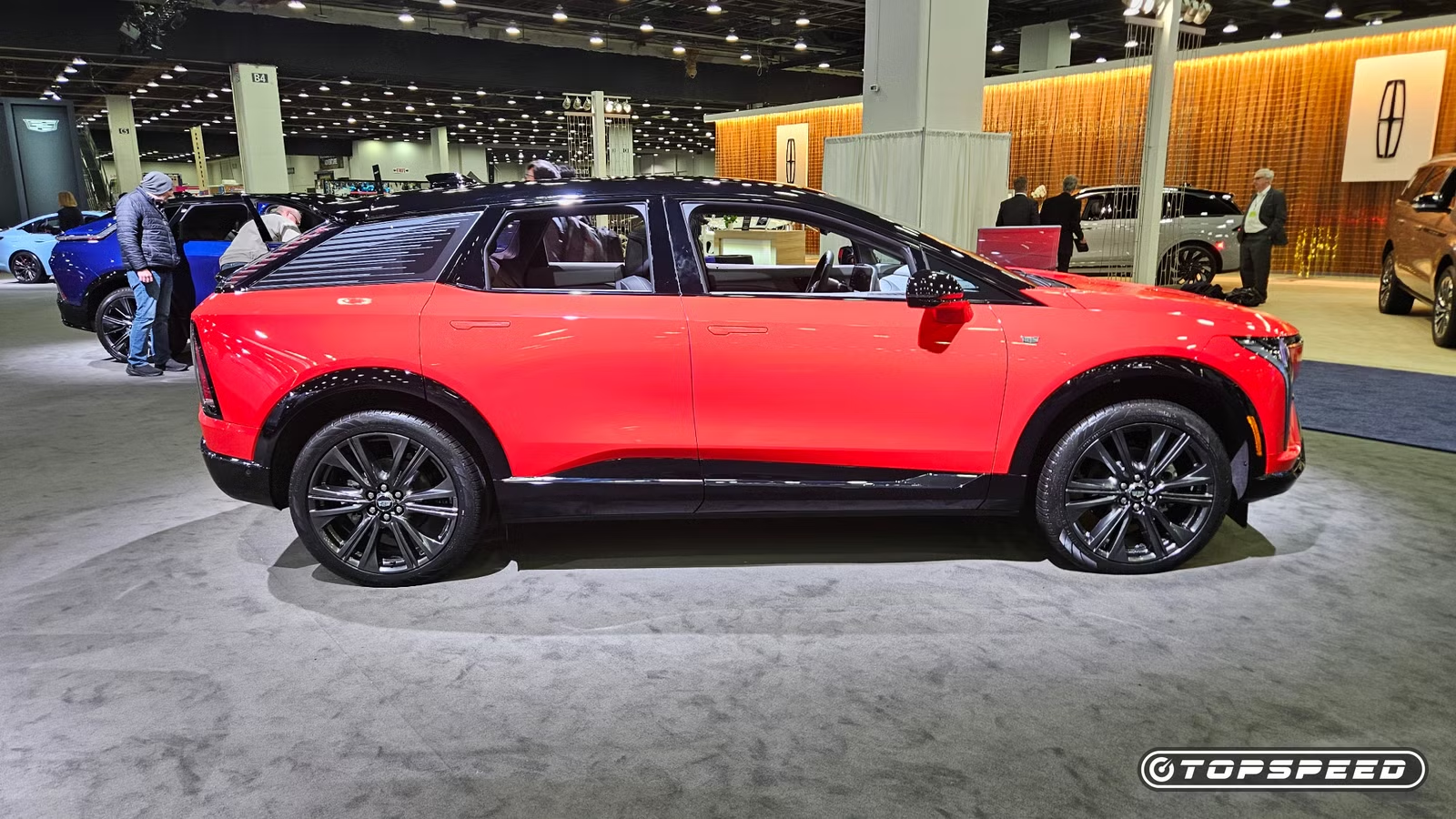
Most buyers will never consciously notice it. But on the rear-quarter glass of the Cadillac Optiq, near the D-pillar, the brand has embedded something that costs considerably more than the obvious alternative: a permanently etched version of its Mondrian-pattern logo, not a decal. The Drive surfaced the detail, and Cadillac has since confirmed the treatment is staying on the 2027 Optiq — with a few trim-specific wrinkles worth knowing about.

For luxury SUV shoppers comparing the Optiq against the BMW X3, Lexus NX, or Genesis GV70, this is exactly the kind of manufacturing decision that doesn’t show up on a spec sheet but does reflect where a brand is actually spending money. It’s a small thing. It’s also a deliberate one.
What the Etching Actually Is — and How It Works
The Mondrian pattern is a core element of Cadillac’s visual identity, present in the brand’s crest as a grid of geometric shapes. On the Optiq, that pattern has been etched directly into the rear-quarter glass rather than applied as a surface graphic. The result is translucent — the strakes from the pattern are visible but don’t meaningfully obstruct the view from inside the cabin, and the glass still functions as a normal window.

The distinction between etching and decal matters more than it might sound. A decal is a surface application — cheaper to produce, easier to apply, and easier to peel, fade, or scratch over time. An etching is a permanent alteration to the glass itself. It won’t bubble, lift, or degrade the way an adhesive graphic can. For a brand positioning itself at the top of the GM lineup, the choice to etch rather than sticker is a quiet statement about material standards.
What Cadillac Confirmed for the 2027 Model Year

The detail came into sharper focus when The Drive asked Cadillac about a related change: the 2027 Vistiq is losing the etched pattern, reportedly in response to feedback from customers and dealers. Cadillac’s spokesperson was clear that the Vistiq update doesn’t signal a broader pullback.
“This change does not represent a broader removal of the design treatment across the lineup,” the spokesperson said. “On the 2027 model-year Cadillac OPTIQ, the etched pattern will remain, with a subtle tint introduced as a mid-model-year update on all trims except the V-Series. The OPTIQ-V will retain the current untinted pattern to preserve clear differentiation for the V-Series model.”
The practical upshot: if you’re buying a standard Optiq for the 2027 model year, you’ll still get the etched Mondrian pattern, but with a light tint applied. If you’re buying the Optiq-V, you get the original untinted version — plus a stripe of blue running along the top edge of the pattern, which ties visually to the blue Brembo brake calipers and select interior surfaces.
Why This Matters for Buyers Weighing the Optiq Against European Rivals

The etched glass logo won’t close a sale on its own. But it’s a useful lens for understanding what Cadillac is prioritizing as it pushes the Optiq into territory occupied by the BMW X3, Audi Q4 e-tron, and Lexus NX 450h+. Those competitors have decades of perceived quality heritage to lean on. Cadillac is rebuilding that perception in real time, and decisions like permanent glass etching — rather than a cost-saving decal — are part of how that case gets made at the manufacturing level.
The V-Series differentiation adds another layer. Keeping the untinted pattern exclusive to the Optiq-V, complete with its blue accent stripe, gives the performance trim a visual marker that’s subtle enough to miss at a glance but meaningful once you know what you’re looking at. It’s the kind of detail that tends to reward owners who sought out the V badge specifically — and that gives the standard Optiq something to aspire toward.
It’s a detail most people will walk past without a second look. But for a brand working to establish that its electric SUVs are genuinely premium — not just priced that way — etching the glass instead of stickering it is exactly the kind of call that adds up.

Related posts




Latest Post


No Comments