
The GT3 S/C Cabriolet Lands Right as Porsche’s Next-Gen GT3 Is Rumored to Go Turbo
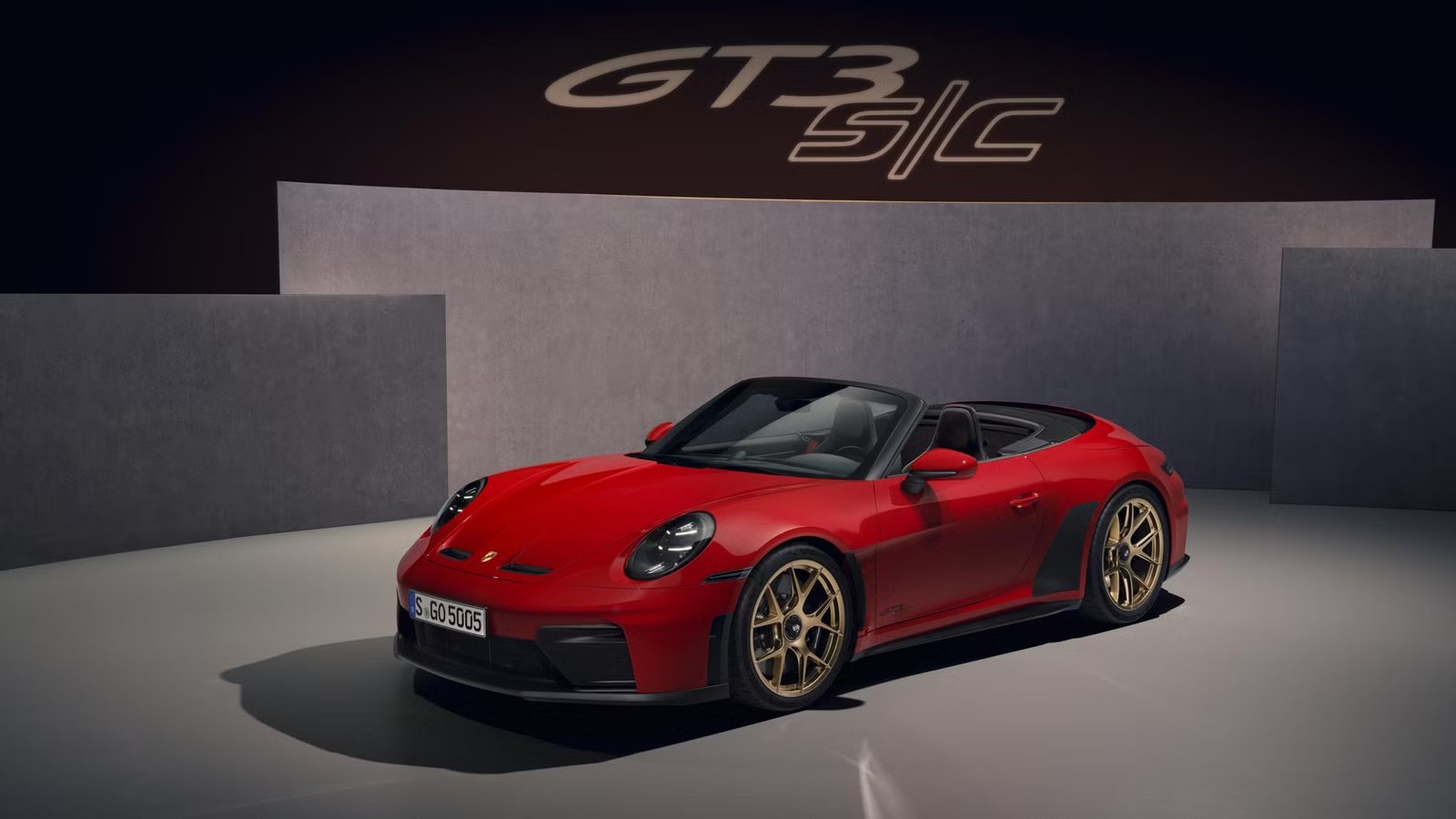
Porsche unveiled the 2027 911 GT3 S/C Cabriolet recently, and the timing couldn’t be more loaded. This is a naturally aspirated, open-top GT3 built on the lightweight S/T formula, arriving right as TopSpeed and other outlets report that Porsche is weighing a turbocharged powertrain for the next full GT3 generation. If that switch happens, the S/C Cabriolet could end up being one of the last new Porsches to offer the high-revving atmospheric flat-six that’s defined the GT3 nameplate since 1999.

The car itself doesn’t lean on nostalgia to make its case. It pairs the naturally aspirated 4.0-liter flat-six from the standard GT3, the lightweight construction of the 911 S/T, and a power-operated fabric roof engineered to keep the S/T’s driving manners intact with the top down. But the backdrop matters here: for buyers debating whether to lock in a current-generation GT3 or hold out for whatever comes next, Porsche just handed them a very compelling reason to stop waiting.
What The 2027 GT3 S/C Cabriolet Actually Brings To The Table
The GT3 S/C Cabriolet runs the same naturally aspirated 4.0-liter flat-six found in the standard GT3, producing 502 horsepower and 331 lb-ft of torque. Porsche built it around the philosophy that made the 911 Speedster and 718 Spyder RS work as open-top driver’s cars: a high-revving atmospheric engine, paired with genuine weight savings, translates cleanly into a convertible without diluting the experience the way a heavier, more insulated cabriolet setup might.

Andreas Preuninger, Porsche’s Director of GT Cars, said the brand had already proven that formula with the Speedster and Spyder RS, and that the naturally aspirated engine’s dynamic character and consistent lightweight construction suit a roofless driver’s car. That’s a notable statement coming from the person who’s steered every modern GT3 variant, and it frames the S/C Cabriolet less as a comfort-focused drop-top and more as a track car that happens to lose its roof.
The Cabriolet-Specific Engineering Details Worth Knowing

Porsche gave the S/C Cabriolet a power-operated lightweight top built with magnesium panels, shaped to mimic a coupe’s roofline even with the roof down. The fabric top stretches in a single arc from the windshield frame back to the convertible compartment lid, a detail meant to preserve the GT3’s silhouette rather than compromise it for a folding mechanism.
It’s also the first 911 convertible to get a retractable rear spoiler with a Gurney flap, a small lip added to the trailing edge that boosts downforce without adding drag, previously seen only on the 911 S/T and the GT3 with the Touring package. That’s a small but telling detail: Porsche isn’t treating this as a softened, boulevard-friendly cabriolet. It’s building in the aerodynamic hardware of its most focused coupes.
Why The Turbo Rumors Make This Launch Feel Like A Deadline

TopSpeed has reported that Porsche is considering turbocharging for the next full GT3 generation, a shift that would end more than two decades of naturally aspirated GT3 engines dating back to the original 996-generation car. A turbocharged GT3 wouldn’t just change the spec sheet. It would change the character that’s made the nameplate what it is: the 9,000-rpm redline, the linear throttle response, the sound that doesn’t need turbo lag or wastegate chatter to get exciting.
That context turns the S/C Cabriolet from a niche variant into something closer to a checkpoint. Buyers who’ve been on the fence about a current-generation GT3, coupe or convertible, are now looking at a car that might represent the tail end of an engine formula Porsche has run since the early 2000s. Whether that makes the S/C Cabriolet more desirable or just adds urgency to a decision that was already expensive depends on how much the naturally aspirated experience matters to the buyer. But it’s no longer an abstract debate. Porsche has effectively put a naturally aspirated GT3 in showrooms at the exact moment its replacement’s engine architecture is in question.
Porsche hasn’t confirmed pricing for the GT3 S/C Cabriolet at the time of this writing, and nothing is official yet about the next-generation GT3’s powertrain. But for buyers weighing whether to commit now or wait, the S/C Cabriolet arrives as a fairly clear signal: if the atmospheric GT3 experience is the whole point, this might be the last obviously good chance to get it in a car built specifically to celebrate it.

Related posts


Latest Post


No Comments