
Hyundai Ioniq 6 N road test: The ultimate electric driver’s car?
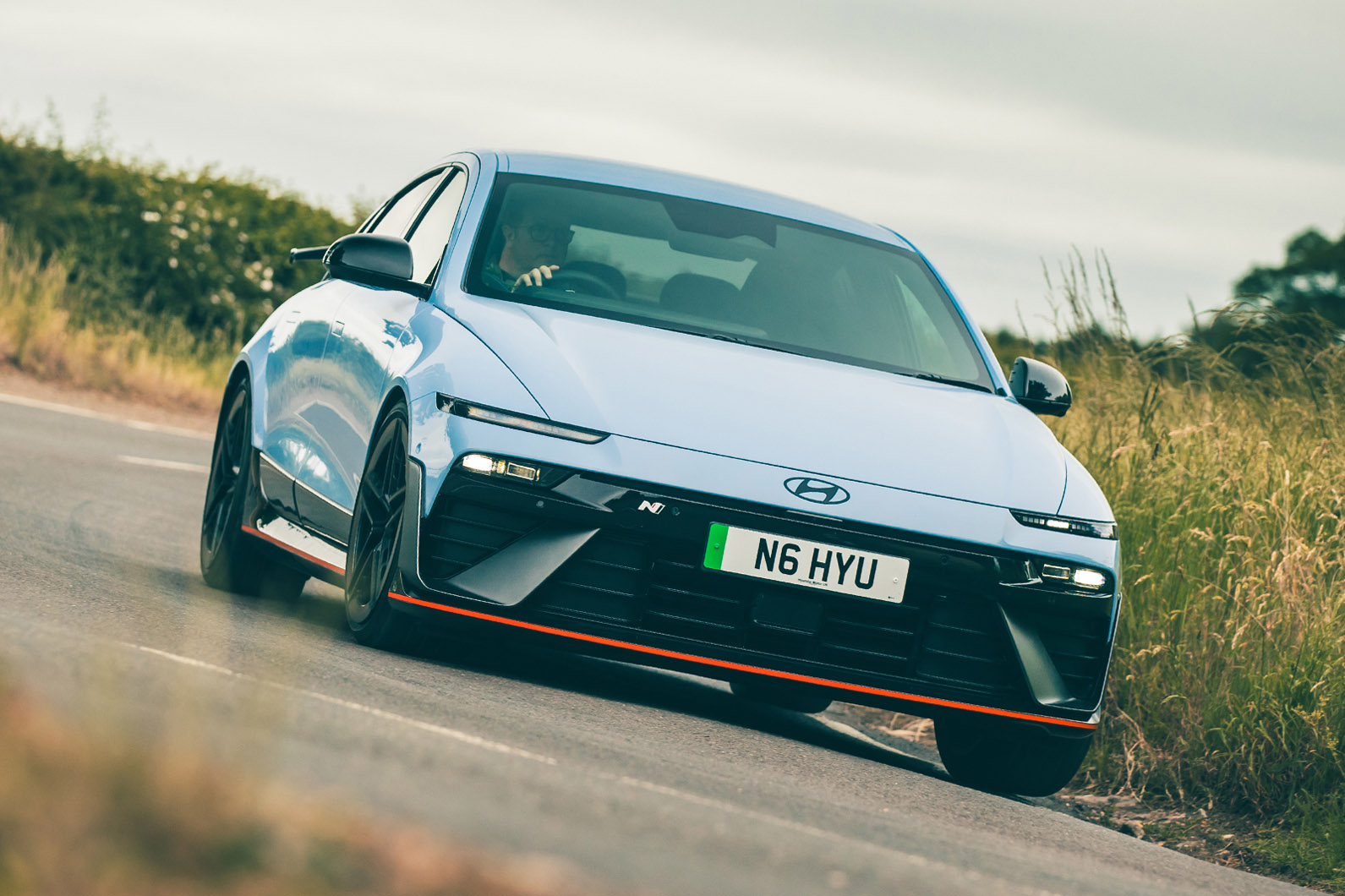
When we road tested the Ioniq 6 in 2023, the packaging of the cabin was one of our chief criticisms. The pre-facelift car simply didn’t offer enough head room.
While it’s no silver bullet, this N version does address the situation. You slide in to occupy a seat that continues to position the driver a little bit higher than you’d ideally like relative to the primary controls, the line of the bonnet, and the waistline of the car at your elbow. The result is that you still feel as though you’re sitting ‘on’ the car, rather than being countersunk low within it.

But it’s a good sports seat – usefully supportive laterally, with appealing upholstery, and most of the adjustment dimensions you’re likely to want. Significantly, a 6ft 3in driver can sit in it comfortably while wearing a racing helmet; whereas the same tester struggled to sit in the pre-facelift Ioniq 6, even sans helmet, without his scalp contacting the rooflining.
The cabin layout is unconventional. There are slim, reductively designed door panels, with Alcantara armrests in front of ridged door mouldings, to draw the eye, reflect the light and invite the touch. But here at least there are no window switches, nor door lock or mirror controls, and only slim lower storage pockets.
You’ll find the window controls displaced to the centre console and, along with the rest of the console, they float above a fairly generous lower storage area, which provides the space that the door pockets lack and more.

A panel of fixed, mostly physical, easy-to-use HVAC controls and infotainment menu shortcut buttons sits on the centre stack, which keeps the 12.3in main touchscreen from diverting your attention more than it really needs to. The touchscreen itself is quite deeply layered but responsive, well presented and easy to navigate – especially once you’ve assigned the two star-marked user shortcut buttons to your advantage.
What will divert your attention is the profusion of buttons sprouting from the steering boss and spokes. There’s one to toggle the car’s primary drive modes (Eco, Normal, Sport); a second labelled NGB (for N Grin Boost, which delivers a temporary 40bhp peak power hike); and two N-labelled set-up shortcut buttons, whose functions can be assigned (the left one, for instance, to activate the à la carte N Custom drive mode you’ve been refining for your favourite road; the right one, if you like, to switch the imitation combustion engine noise on and off).
It’s a lot of complexity to get used to and some of it (N Grin Boost) is rather superfluous. But most of it is there to make setting the car up to your liking quicker and easier, which we applaud. Where the N Custom modes are concerned, however, it’s a pity that some of the car’s dynamic settings – its manually configured front-to-rear torque distribution, for instance – still have to be selected separately.

Related posts




Latest Post


No Comments