
Kawasaki’s 649cc Twin Officially Gets The 21-Inch Front Wheel The Versys 650 Never Had
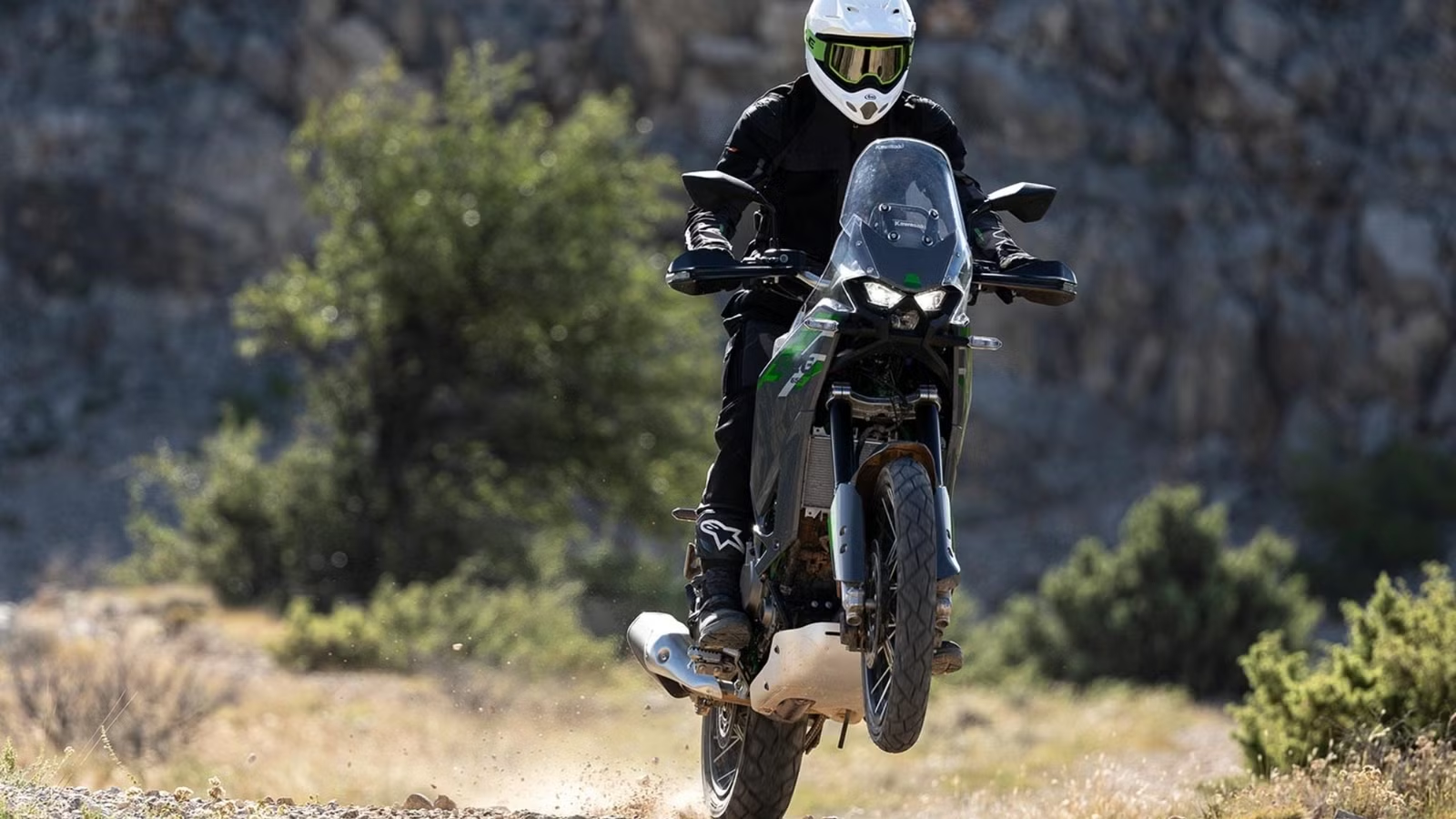
Kawasaki’s 649cc twin has aged well. It’s been around the block for a long time and has since built a serious CV. The manufacturer has spawned everything including Ninja 650, Z650, Vulcan S, and Versys 650 using this engine. The only thing it’s never tackled is proper rough stuff. To be fair, this isn’t the motor’s fault. It’s more about what you wrap around it. If you swap the wheels, lengthen the suspension travel, add a touring kit, things change dramatically. Kawasaki has just made that exact play.
Kawasaki’s 649cc Twin Was Always More Road-Focused Than Adventure-Ready

The Versys 650 is a good example. It’s a no-nonsense bike, a sensible one that has upright ergonomics and offers an easygoing spread of power. But, it sits on a 17-inch front wheel, which is obviously a street bike choice. It’s better suited for tarmac and to handle the twisties. It won’t be as happy on a loose, rutted track with luggage on board. It’s because a smaller front wheel is more likely to drop in holes than roll over them.
However, the middleweight class wants a different recipe. You need a bigger front wheel, suspension that can soak bad surface undulations, and equipment that can make a long day in the saddle manageable. Kawi’s twin has sat outside that recipe. Until now.
The 2027 Kawasaki KLE650 Finally Gets The 21-Inch Front Wheel


October 2026. Enter the KLE650. It’s a middleweight step up from the recently launched KLE500 in the Japanese maker’s rally-inspired KLE family. It houses an updated version of the long-running 649 cc, liquid-cooled twin, now with an electronic throttle. Power output is rated at 70 horses at 8,600 rpm and 64 Nm (47.2 lb-ft) at 7,500 rpm.
The 649cc twin isn’t just a straight carryover. Kawasaki fitted electronic throttle valves and tweaked both the intake and exhaust systems, aiming to fatten up low-to-mid-range torque while smoothing out overall power delivery. However, a couple of details are still up for debate. Kawasaki claims the engine delivers strong low-end torque, though that is hard to square with peak torque arriving at 7,500 rpm. Of course, numbers don’t tell the entire story so we won’t know for sure until we throw a leg over it and see how it behaves in lower RPMs. The chassis is up for debate too, because some reports claim it is an all-new frame while Kawasaki’s own marketing hints that it shares a lot with the KLE500.
The bigger story is underneath. The KLE650 runs a 21-inch spoked front wheel and a 17-inch rear, replacing the Versys 650’s road-biased 17-inch front. That is the exact recipe that turns this motor into a proper adventure setup. It gives the bike a proper identity in the family too: a better dirt performer than the Versys and a stronger long-distance tourer than the KLE500.
Long-Travel Suspension Gives It Genuine Off-Road Intent

Big wheels are only half the battle, and Kawi clearly knows it. Suspension duties are handled by 43 mm KYB USD forks with 210mm of travel up front and a 196 mm Uni-Trak shock out back. That is way more travel than a road-biased middleweight needs, and it is what separates the KLE650 from the Versys out on the trail. It all bolts to a high-tensile steel trellis frame, inspired by the KLE500.
Just to compare, the Versys 650 only has 150 mm of travel in front and 145 mm in the back. Giving the KLE650 an extra 60 mm up front and 51 mm out back is a huge deal once you leave the pavement and hit proper rough stuff.
Kawasaki Adds Cruise Control And Touring Features As Standard

Beyond that, it holds up just as well on the touring bit. You get electronic cruise control and KTRC traction control come standard across the base and SE trim levels. Not to mention it is pretty generous for the money. Fuel capacity sits at 16 litres, and the 870 mm seat can be dropped by 30 mm with an accessory low seat.
Going with the SE gets you a genuinely useful bundle of extras. You get a 5-inch full-colour TFT dash, a bi-directional quickshifter, handguards, and an aluminium bash plate. The spoked wheels are tubeless too. In the US, the SE tips the scales at 467.5 lb ready to ride. This figure is on the heavier side, meaning those extras really have to earn their place. Hence, they had to be practical, useful additions.
Kawasaki’s New Adventure Bike Targets The Tenere 700’s Market

Then there is the sticker price. Stateside, it is $8,799 for the base bike and $9,999 for the SE. The Yamaha Tenere 700 is the rival most people point towards. However, the numbers tell an interesting story. In the US, the base 2026 Tenere 700 is priced at $10,999. That means it is around $2,200 over the entry-level KLE650. Now cruise control is where Kawasaki actually lands a punch. Yamaha only just added cruise control for 2026, and it is stuck exclusively on the $12,999 Tenere 700 World Raid. That creates a $4,200 price gap if cruise control is high on your priority list. Still, the Yamaha hits back with fully adjustable suspension and a 6-axis IMU on the World Raid, so it is not entirely a straightforward apples-to-apples comparison.
The Versys 650’s Engine Finally Gets The Adventure Setup It Needed

Kawasaki could have wasted time designing a brand-new motor, but tweaking an engine they already know inside out and wrapping it in the chassis it should have had years ago is a much smarter play. Rather than looking like a shortcut, it comes across as genuinely sensible engineering.The end result sits in a very different league from the Versys 650. Adding a 21-inch front wheel, long-travel suspension, and real touring kit expands where the bike can actually go. The twin keeps its recognizable feel, except this time Kawasaki wrapped it in the right wheels, suspension travel, and equipment.

Related posts



Latest Post


No Comments