The Midsize SUV That Mixes Toyota Dependability With Volvo-Like Refinement
10 minutes reading
Monday, 28 Sep 2026 12:00 0 5 autotech
Midsize SUVs have become the default choice for buyers who need family-friendly practicality without stepping up to a full-size vehicle. But while many models in this segment emphasize rugged styling, sporty handling, or maximum cargo space, some buyers are looking for something different: a quiet, comfortable SUV that feels a little more expensive than its badge suggests.
That is where Toyota has taken an interesting approach. Rather than building another aggressively styled family crossover, the Japanese automaker created a midsize SUV focused on smooth power delivery, a quiet cabin, premium materials, and fuel efficiency. It also benefits from a hybrid system developed by a manufacturer with decades of experience in electrified powertrains. The result is a vehicle that delivers entry-level luxury without the premium badge, combining everyday practicality with a level of refinement more commonly associated with Volvo.
A Midsize SUV That Puts Comfort Ahead Of Aggression
A More Refined Alternative To The Typical Family SUV
White 2022 Volvo XC60 DrivingVolvo
The midsize SUV market has no shortage of vehicles designed to look tough. Boxy profiles, black exterior trim, oversized grilles, and off-road-inspired styling have become common even among models that will mostly be used for commuting to work or taking the kids to school.
This SUV takes a different approach. Instead of emphasizing ruggedness or outright driving excitement, it prioritizes a relaxed driving experience. The suspension is tuned with comfort in mind, while the cabin is designed to keep road and wind noise from becoming intrusive. That makes it particularly well suited to highway cruising and everyday commuting.
2022 Volvo XC60 Front Seat AreaVolvo
This approach has more in common with the philosophy behind European luxury crossovers than with the increasingly aggressive character of many mainstream SUVs. Volvo, in particular, has built much of its modern SUV lineup around understated styling, comfortable seats, quiet cabins, and relaxed road manners. However, one midsize SUV from Toyota takes this approach a step further, bringing premium characteristics and Volvo-like refinement to the mainstream segment.
The Hybrid Powertrain Keeps Everyday Driving Effortless
Close-up shot of 2026 Toyota Crown Signia Limited engine bayLyndon Conrad Bell | TopSpeed
The comfort-focused character continues underneath the hood. Rather than relying on a large gasoline engine to provide effortless acceleration, the SUV uses a hybrid powertrain that combines a 2.5-liter four-cylinder engine with electric motors. The system produces 240 horsepower and sends power to all four wheels.
The front electric motor handles low-speed propulsion, supplements the 2.5-liter gas engine with 199 pound-feet of torque, and recaptures energy through regenerative braking, while a separate rear motor provides all-wheel drive when needed. The result is a powertrain centered around smoothness and efficiency rather than outright performance. That does not mean it is slow. The SUV can accelerate from zero to 60 mph in around seven seconds, which is sufficient for merging onto highways and handling everyday traffic.
2026 Toyota Crown Signia LimitedLyndon Conrad Bell | TopSpeed
But the powertrain’s real party trick is how little fuel it needs while doing so. Toyota rates it at 38 mpg combined, with 39 mpg in city driving and 37 mpg on the highway. Real-world results can vary, though, and independent testing has produced lower highway figures. That combination of electric assistance, standard all-wheel drive, and strong fuel economy gives this SUV a distinctly different character from many midsize crossovers that rely solely on gasoline engines.
The Crown Signia’s Unusual Bet: Luxury Credentials At A Toyota Price
Why Toyota Gave The Crown Signia A Luxury Crossover Silhouette Instead Of A Box
Front three-quarter tracking shot of a 2026 Toyota Crown Signia in greyToyota
The vehicle behind this comfort-first approach is the Toyota Crown Signia. Introduced for the 2025 model year, it replaced the Venza in Toyota’s lineup and was positioned as a more upscale two-row crossover. The Crown Signia occupies an unusual position within Toyota’s range. It is more luxurious and road-focused than the brand’s traditionally rugged SUVs, while still retaining the familiar Toyota approach to hybrid efficiency and everyday usability.
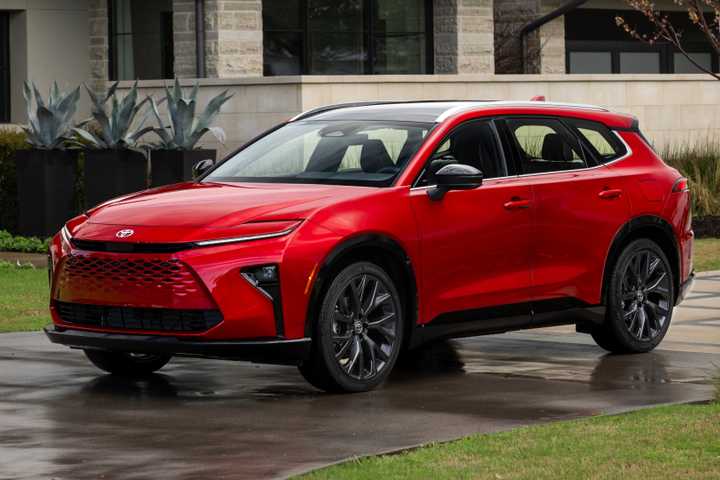
The Crown Signia immediately separates itself from Toyota’s more conventional SUVs through its design. Rather than adopting a boxy, upright silhouette, it uses a sleeker profile with a sloping roofline and proportions that give it more of a luxury crossover appearance. That design also reflects its intended purpose. The Crown Signia isn’t marketed around rock crawling or serious off-road capability. Instead, it is positioned as a comfortable road-going SUV for buyers who want something more distinctive and sophisticated.
A picture showcasing the rear profile of the 2026 Crown Signia.Toyota
The pricing reinforces that positioning. The 2026 Crown Signia has a starting MSRP of $44,690 in the U.S., while the upper Limited trim starts at $49,090. All versions use the same 2.5-liter hybrid powertrain and come with all-wheel drive. That puts the Crown Signia within reach of buyers shopping at the upper end of the mainstream market, while still leaving it below many similarly sized luxury SUVs.
A Cabin Designed To Rival More Expensive European SUVs
A picture of the 2026 Toyota Crown Signia’s dashboard.Toyota
2026 Toyota Crown Signia safety technologyToyota
2025 Toyota Crown Signia Instrument ClusterWilliam Clavey | TopSpeed
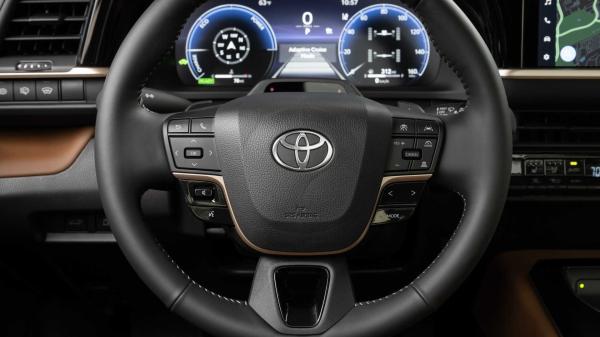
The cabin is arguably where Toyota’s premium ambitions become most obvious. The Crown Signia features a 12.3-inch touchscreen, available leather upholstery, heated and ventilated front seats, and a range of convenience features depending on trim. The overall design is less utilitarian than what buyers might expect from a conventional Toyota SUV.
More importantly, Toyota paid considerable attention to the atmosphere inside the cabin. The combination of supportive seats, restrained styling, quality materials, and a quiet ride gives the Crown Signia a more upscale personality. The two-row layout also leaves it with useful passenger and cargo space, offering up to 25.8 cubic feet behind the second row. With the rear seats folded, the Crown Signia provides up to 68.8 cubic feet of cargo capacity when measured to the roofline.
Shot of 2026 Toyota Crown Signia cargo areaToyota
For comparison, the Volvo XC60 offers up to 63.3 cubic feet of cargo space with the rear seats folded. However, the Volvo carries a higher entry price, with the 2026 XC60 starting at $51,095 in the U.S. The difference does not make the Crown Signia a direct substitute for the XC60 in every respect, but it demonstrates why Toyota’s crossover can appeal to buyers who want some of the qualities associated with a European luxury SUV without paying a traditional luxury-SUV price.
Toyota Reliability Gives The Crown Signia An Important Advantage
The Proven Hybrid Formula Is A Major Selling Point
2026 Toyota Crown Signia Limited Exterior Front 3.25 RightLyndon Conrad Bell | TopSpeed
The Crown Signia combines its 2.5-liter four-cylinder engine with three electric motors and a 230.4-volt nickel-metal hydride (NiMH) battery. Two motor-generators are housed in the hybrid transaxle to drive the front wheels and recover energy through regenerative braking, while a separate electric motor powers the rear axle when additional traction is needed. Toyota’s Electronic On-Demand AWD system eliminates the need for a conventional driveshaft, automatically engaging the rear wheels without requiring driver input.
Toyota’s extensive experience with hybrid vehicles does not guarantee that every Crown Signia will be trouble-free. The nameplate is still relatively new, meaning there is not yet enough long-term, model-specific data to establish its reliability over time. However, the underlying hybrid technology is hardly experimental for Toyota. That history gives prospective owners some additional assurance when considering a model with a relatively sophisticated powertrain.
Lower Ownership Costs Could Strengthen Its Luxury-SUV Alternative Case
The financial argument becomes particularly interesting when fuel and ownership costs enter the equation. CarEdge estimates that a 2026 Crown Signia will cost approximately $42,358 to own over five years, including around $2,041 in maintenance. The estimate also factors in depreciation at $14,200, while insurance, fuel, and interest accounted for $12,545, $6,080, and $7,492.
These numbers are estimates rather than guarantees, since insurance costs, fuel prices, annual mileage, financing, maintenance habits, and depreciation can vary significantly between owners. Still, the Crown Signia’s hybrid system gives it a clear fuel-economy advantage over many comparable luxury SUVs.
The 2026 Volvo XC60 B5, for example, is rated at approximately 26 mpg combined, compared with the Crown Signia’s EPA-rated 38 mpg combined. That 12-mpg difference may not sound dramatic on paper, but it becomes increasingly significant over tens of thousands of miles. For a buyer keeping the vehicle for five years or longer, lower fuel consumption can help offset the cost of ownership.
The Crown Signia, therefore, doesn’t just attempt to offer a luxury-like experience at a lower purchase price. Its hybrid powertrain also gives it the potential to reduce one of the recurring costs associated with vehicle ownership.
Is the Crown Signia the Sweet Spot For Midsize SUV Buyers?
Why The $6,400 Gap Vs. the XC60 Makes The Crown Signia The Rational Choice
The Crown Signia makes the most sense for buyers who value comfort, efficiency, technology, and a premium-feeling cabin more than outright performance. Its standard all-wheel drive provides additional versatility, while the two-row layout gives it enough room for family duties without making the vehicle unnecessarily large. The hybrid powertrain also makes it particularly well suited to buyers who spend significant time commuting or covering highway miles.
Its pricing creates another interesting advantage. The 2026 Crown Signia XLE starts at $44,690 before destination fees, below the 2026 Volvo XC60’s $51,095 base MSRP before options or additional equipment. That price gap gives buyers room to prioritize equipment, accessories, or simply keep more money in their bank account while still getting an SUV with a distinctly upscale character.
The Three Compromises Buyers Accept To Save $6,000 Over The XC60
The Crown Signia’s emphasis on comfort comes with some compromises. It is not designed to be a particularly sporty SUV. The steering and suspension prioritize relaxed cruising rather than aggressive cornering, and the hybrid powertrain can become noticeably louder when the driver demands hard acceleration.
Fuel economy is also dependent on driving conditions. While the EPA rating of 38 mpg combined is impressive, independent testing has demonstrated that real-world highway consumption can fall below that figure. Cargo capacity is competitive but not class-leading across the entire midsize SUV segment, either. Its maximum 68.8 cubic feet is useful, but buyers who prioritize maximum cargo volume may find more spacious alternatives.
2026 Toyota Crown Signia Limited side shotLyndon Conrad Bell | TopSpeed
There is also the question of luxury itself. The Crown Signia can replicate certain aspects of the premium-SUV experience, but it does not completely erase the distinction between a Toyota and a Volvo. Buyers who prioritize premium materials, performance, badge prestige, or a more sophisticated chassis may still find traditional luxury SUVs worth considering. That is ultimately the Crown Signia’s trade-off: it focuses heavily on the things many SUV owners experience every day, comfort, efficiency, space, and running costs, rather than trying to compete with luxury brands on every possible front.
The Toyota Crown Signia occupies an unusual position in the midsize SUV market. It is not as rugged as some of Toyota’s other SUVs, nor is it trying to be a sports SUV. Instead, it takes the quieter, more comfortable, more refined approach typically associated with premium crossovers.
Rear 3/4 shot of 2026 Toyota Crown Signia Limited parkedLyndon Conrad Bell | TopSpeed
Its 240-horsepower hybrid powertrain, standard all-wheel drive, 38 mpg combined EPA rating, and sub-$45,000 starting price give it a combination that is difficult to ignore. More importantly, Toyota’s long experience with hybrid technology gives the Crown Signia a compelling foundation for buyers who intend to keep their SUV for years.
It cannot completely replicate everything offered by a Volvo XC60, particularly when it comes to premium-brand cachet and certain aspects of driving dynamics. But it doesn’t need to. For buyers who want a midsize SUV with a comfortable cabin, understated design, strong fuel economy, and Toyota’s established hybrid expertise, the Crown Signia offers a compelling middle ground between an ordinary family crossover and a traditional luxury SUV.















No Comments