
The 116-HP Honda Magna Was The Benchmark Kawasaki’s Ninja-Engined Eliminator Had To Answer
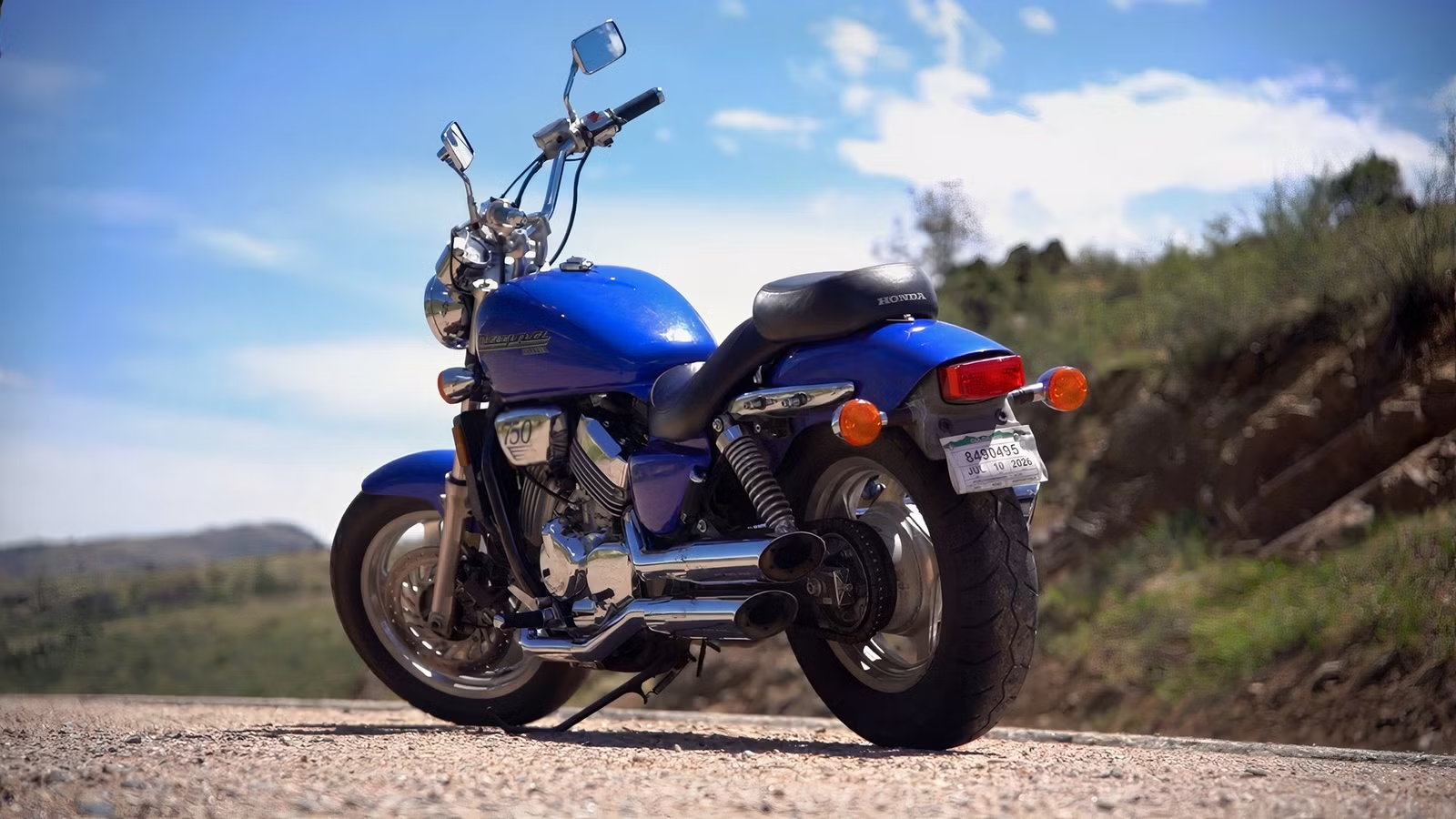
Honda’s early-1980s cruiser lineup offered American buyers something beyond familiar styling. Other than the stepped seats and raised handlebars, the company was installing liquid-cooled, four-cylinder engines with serious performance potential. Kawasaki soon followed with a cruiser powered by an engine developed for its Ninja. The resulting contest brought superbike engineering into motorcycles built around a very different riding position.
Japanese Cruisers Were Entering A Horsepower Race In The Early 1980s

Japanese manufacturers were already competing for cruiser customers, but copying the appearance of an American V-twin wasn’t their only option. Honda’s 1982 V45 Magna combined cruiser styling with a 750cc V4. Its radiator and four-valve cylinder heads represented a different approach from the traditional air-cooled twin.
That 750 still looked the part, with raised handlebars and a seat that stepped up behind the rider. Open the throttle, though, and the V4 could pull through revs that were foreign to the traditional cruiser formula. Honda’s next move was to give it a much bigger engine.
Four-Cylinder Engines Offered A Different Route To Cruiser Performance

Splitting the displacement among four cylinders kept each piston relatively small. That helped the engine rev, while multiple valves let it breathe at higher speeds. For a cruiser, the useful question was how much of that performance a rider could enjoy on an ordinary road.

The engine layouts also shaped the motorcycles around them. Honda tucked its cylinders into two banks; Kawasaki lined all four across the frame. Designers had to fit the intakes around those arrangements and leave room for the rider’s legs.
Honda’s 1983 V65 Magna Put A 116-HP V4 In A Cruiser Chassis

Honda introduced the V65 Magna for 1983, bringing a substantially larger engine to its cruiser range. Cycle World’s April test reported 116 bhp from the 1,098cc V4. Its test motorcycle weighed 579 pounds with fuel, making this a substantial machine even before a rider climbed aboard. The engine made the weight less noticeable during acceleration. Cycle World recorded an 11.07-second quarter-mile at 123.62 mph, with wheelies forcing the rider to reduce throttle. Getting away cleanly required controlling the front wheel as well as finding traction.
Its 1,098cc Engine Combined Liquid Cooling With Shaft Drive

The engine used a 90-degree cylinder layout, double overhead camshafts, and four valves per cylinder. A six-speed transmission sent power through shaft final drive. Honda therefore paired a sophisticated, high-revving engine with a drivetrain that required no exposed chain cleaning or adjustment.
On the highway, sixth acted as an overdrive, dropping engine speed once the hard acceleration was over. The lower gears were there for making use of the V4’s revs. There was some sense in that arrangement: a rider could enjoy the engine without having to keep it spinning hard all afternoon.
Kawasaki Answered With The Ninja-Powered ZL900 Eliminator In 1985

Kawasaki entered the contest with the 1985 ZL900 Eliminator. Its liquid-cooled, 908cc inline-four came from the 900 Ninja introduced the previous year. The engine retained double overhead camshafts and 16 valves, but Kawasaki revised it for the new application.
The conversion required more than fitting different bodywork. Kawasaki replaced the Ninja’s chain final drive with a shaft and installed the engine in a full-cradle frame with rubber mounting. A long wheelbase and low seating position gave the Eliminator proportions closer to a drag bike than its sporting relative.
Smaller Carburetors Shifted The 908cc Four’s Focus Toward Lower-RPM Performance

The Eliminator used 32mm carburetors instead of the Ninja’s 34mm units. Its camshafts opened the valves less far and for less time. HOT ROD’s contemporary test noted the trade: a small loss of peak power, but more at low and middle revs. That put more of the engine’s effort where a rider could use it pulling away from an intersection. There was less need to chase the Ninja’s top-end performance. Kawasaki retained its six-speed gearbox ratios, but strengthened the drivetrain for repeated hard launches.
The Magna And Eliminator Took Different Approaches To Straight-Line Speed

Honda buyers had two years to get acquainted with a big V4 cruiser before Kawasaki arrived. The Eliminator brought a smaller engine, borrowed from a sportbike and reworked for street acceleration. Cruiser customers now had two quite different four-cylinder machines to consider for a trip to the drag strip.
There was a price for starting with 908cc, however. HOT ROD later described the Eliminator’s displacement shortfall against the bigger muscle cruisers, a problem that carburetor and cam changes could only do so much to address. A useful engine on the road still had to earn its reputation against the clock.
Their Cruiser Chassis Brought Compromises Beyond The Drag Strip

Speed came easily enough on the Magna; changing direction took more work at the handlebars as the pace rose. Cycle World liked its handling, but the weight and steering geometry were hard to ignore. So was the wind against an upright rider’s chest, which made long spells of fast riding tiring.
The Eliminator had its own ergonomic shortcomings. Its wide engine pushed the rider’s knees apart, and the seat drew criticism for comfort. Kawasaki’s subsequent larger Eliminator addressed those shortcomings as well as adding displacement, showing that outright acceleration wasn’t the only area needing attention.
Yamaha’s V-Max Made The Muscle-Cruiser Contest Even Tougher

Yamaha introduced the V-Max in 1985, the same year as the Eliminator. Its 1,198cc V4 used V-Boost intake passages that opened at higher rpm, allowing paired carburetors to feed individual cylinders. Yamaha pursued additional high-rpm breathing while Kawasaki had revised the Ninja engine toward lower-speed performance.
With Dale Walker riding, a stock V-Max ran the quarter-mile in 10.64 seconds at 128.57 mph in Cycle World’s testing. Different riders and conditions rule out treating separate tests as a head-to-head comparison. Still, those figures show what Kawasaki faced in 1985: Honda’s early benchmark was already under attack from another, larger V4.
Sources: Honda, Cycle World, HOT ROD

Related posts


Latest Post


No Comments