
The Forgotten LS-Powered Chevy Sedan Now Selling For Corolla Money
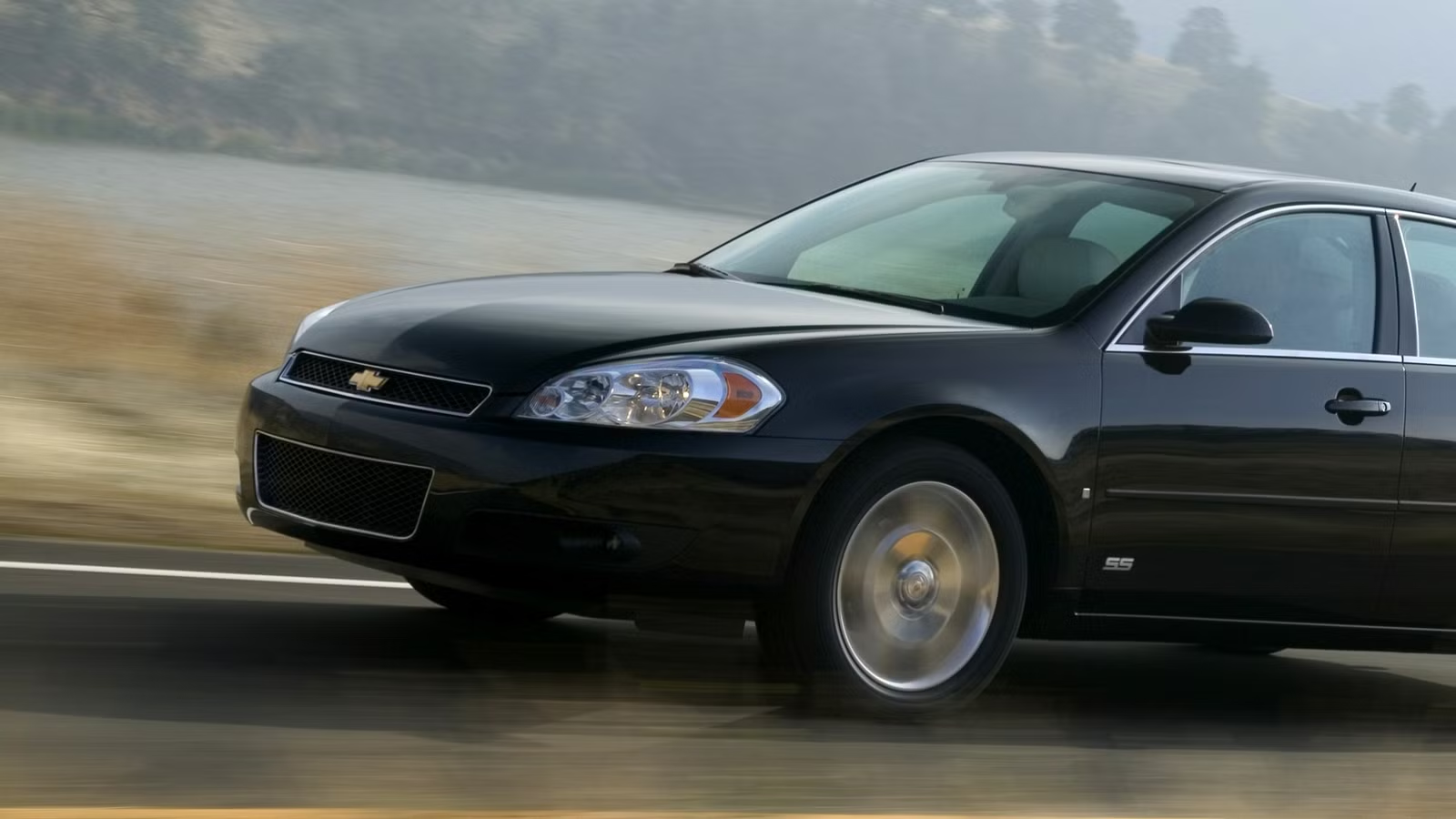
Somewhere in the used-car market sits a plain Chevrolet sedan with four doors, a big trunk, anonymous styling, and an engine that seems to belong in another vehicle. It can run to 60 mph in the mid-five-second range, yet high-mileage examples now trade for the sort of money that buys an old Toyota Corolla. That strange mix of speed, practicality, and low value exists because enthusiasts spent years arguing about the wrong end of the car.
America Used To Hide Serious Horsepower In Seriously Boring Sedans

The 2000s were a good time to want a fast sedan. Pontiac eventually gave America the rear-drive G8, Chrysler’s 300C and SRT8 looked like they had arrived to collect protection money, and Cadillac started turning its sedans into serious performance machines, while BMW, Mercedes-Benz, and Audi kept stuffing big engines into polished four-doors. Most of those cars made some effort to advertise the fun. Big wheels, aggressive bodywork, wider tires, louder exhausts, and expensive badges gave the game away. They may have carried families, but nobody mistook the hotter versions for basic airport transportation. That visibility helped turn several of them into enthusiast cars almost immediately.
The more interesting sleeper took the opposite route. Its basic shape became so common that drivers learned to look straight through it. Versions filled rental lots, corporate fleets, government garages, and police departments. Seeing one in the mirror did not suggest a Saturday morning cars-and-coffee meet. It suggested an expense report, a Hertz receipt, or a very uncomfortable conversation about speeding. That background turned the body itself into camouflage.
That anonymity is part of the fun because enthusiast value comes from more than horsepower. Styling, image, rarity, motorsport links, and the right badge all help convince buyers that a car deserves preservation. Fleet duty does nearly the opposite – conservative bodywork becomes invisible, ordinary plastics and familiar switchgear make a fast car feel cheaper than the numbers suggest. Once thousands of slower versions share the same basic shape, the quick one inherits their reputation. That is how a genuinely rapid sedan can spend years depreciating like office furniture.

A 300-HP V8 Driving The Front Wheels Sounds Like A Bad Idea

Traditional American performance math was simple. Put the engine in front, send the power toward the rear, and let the back tires worry about turning horsepower into smoke. This sedan ignored the formula – more than 300 horsepower and over 320 lb-ft of torque went through the front wheels, meaning the same two tires had to steer, accelerate, and deal with a naturally aspirated V8 trying to empty the engine bay onto the pavement. The front tires basically held two jobs and received no overtime pay. There were good packaging reasons for the layout, but physics does not accept excuses.
The predictable complaints arrived quickly. Wheelspin was easy to find, uneven pavement could make the steering feel busy under power, and the chassis never gained the polished balance of a purpose-built rear-drive sports sedan. It offered impressive grip and braking numbers but criticized the body roll, soft responses, and the way the front end behaved under hard acceleration. Much of the car still felt tuned for commuting rather than carving up an empty mountain road. It could produce sports-car acceleration, but it did not suddenly become a sports sedan everywhere else.
Then there was the transmission. Instead of a five- or six-speed automatic that might have made the powertrain feel more modern, the V8 worked through GM’s heavy-duty 4T65E-HD four-speed. The HD version received stronger hardware for higher-output engines, but four ratios already felt humble next to more sophisticated performance cars of the period. Today it feels even older. The transmission can make the power delivery seem less polished than the engine deserves, and surviving cars warrant careful inspection because twenty years of V8 torque, heat, launches, and questionable previous-owner decisions can be hard on any transaxle. None of this sounds like the recipe for a future collector darling. As it turns out, that is exactly where the opportunity begins.
The 2006-2009 Chevrolet Impala SS Hid A 303-HP LS4 V8

The anonymous sedan was the 2006-2009 Chevrolet Impala SS, and Chevrolet did remarkably little to warn the public about what sat under its hood. The ninth-generation Impala rode on GM’s familiar W-body architecture and shared most of its shape with V6 Impalas that became fixtures of American rental lots and fleet garages. Chevrolet added 18-inch wheels, SS markings, dual exhaust outlets, and a specific rear spoiler, but there was no giant hood scoop or swollen bodywork announcing a serious engine. From 30 yards away, it still looked ready to shuttle someone from baggage claim to a convention hotel.
Under the hood sat the reason the car matters: GM’s 5.3-liter LS4 V8, rated at 303 horsepower and 323 lb-ft of torque. It used an aluminum block, and GM equipped it with Displacement on Demand, later known as Active Fuel Management, which could shut down cylinders during lighter driving. The LS4 came from the weird branch of the LS family tree – it powered front-drive cars including the Pontiac Grand Prix GXP, Chevrolet Monte Carlo SS, Buick LaCrosse Super, and this Impala. That makes the engine less desirable for a conventional rear-drive swap, but much more interesting as a factory engineering oddity.

GM had to rework the package heavily to make that V8 fit sideways. The LS4 used a different bellhousing arrangement for the transverse transaxle, a shorter crankshaft, compact accessories, and a special water-pump setup. GM reduced the engine’s overall length by 13 millimeters compared with a conventional LS package. The starter arrangement and intake packaging also differed from the familiar rear-drive versions. Even better for engine nerds, the 5.3-liter aluminum LS4 used cylinder-head architecture related to the LS6. Engineers built a genuinely specialized LS variant for a job that sounds slightly ridiculous even now.
The result justified the trouble in a straight line. A 2006 Impala SS could launch from 0–60 mph in 5.6 seconds and run the quarter-mile in 14.2 seconds at 101 mph. Those were proper performance numbers in 2006, especially from something wearing the visual vocabulary of a rental car. The front tires could spin, the steering could get busy, body motions reminded the driver that a BMW M5 engineer had not secretly designed the suspension, but none of that changes the joke at the heart of the car: a generic Chevy sedan could hit 60 in roughly the time it took many supposedly sporty cars of the period to start feeling ambitious.
The Flaws That Hurt The Impala SS New Make It A Bargain Today

Of course, nothing about age has magically fixed the Impala SS’s weak points. Hard acceleration can still challenge the front tires, and torque steer and wheelspin remain part of the experience. But those flaws look very different once the window sticker disappears and the asking price lands in used-economy-car territory. The buyer still receives 303 naturally aspirated horsepower, four real doors, useful rear seating, a large sedan trunk, and acceleration that remains legitimately quick. Nobody has to pretend it handles like a CTS-V to enjoy what it does well.
Supply also sits in an interesting middle ground. Contemporary enthusiast research puts total 2006-2009 Impala SS production at nearly 50,000 cars. That hardly makes it a hand-built exotic, but it is far less common than the huge population of ordinary Impalas that surrounded it. Enough exist that shoppers can still hunt for a good one without treating every example like the last helicopter out of town.
At the same time, attrition has been working for almost two decades. Rust, crashes, blown transmissions, modifications, neglect, and ordinary end-of-life scrapping have removed cars from the pool. The Impala SS remains interesting partly because the market has not yet decided it deserves a large nostalgia tax.

As of August 2026, listings show exactly how strange the value equation has become. Higher-mileage SS cars can land around $4,800–6,500, with current examples near $4,995, $5,999, and $6,500. Cleaner cars with mileage below roughly 100,000 can climb toward $10,000, while unusually low-mileage examples may ask even more. Meanwhile, ordinary used Corollas populate the same general price range, including current listings around $5,000–6,000. The comparison is not about running costs or reliability – a Corolla remains a very different ownership proposition – it simply shows what depreciation has done.
The Impala SS Might Be Better As A Forgotten Sleeper Than It Ever Was As A Muscle Car

That makes the Impala SS easier to understand today than it was when new. Judged against a proper rear-drive performance sedan, the compromises arrive immediately. The steering has too much work to do, the chassis lacks delicacy, the automatic has only four gears. A Chrysler 300C, Pontiac G8, or Cadillac performance sedan follows the traditional enthusiast blueprint more closely. But the comparison changes once price enters the picture – around five or six grand, the Impala SS is no longer trying to justify itself against premium sport sedans. It competes with aging commuters, economy cars, tired crossovers, and all manner of questionable marketplace experiments. Against that field, a running four-door with an aluminum-block LS-family V8 starts sounding less like a mistake and more like somebody at Chevrolet managed to sneak a fun project past accounting.
Almost every trait that hurt the SS when new has aged into part of its personality. Rental-car styling now delivers authentic sleeper camouflage, and front-wheel drive kept traditional muscle-car buyers at a distance. W-body roots crushed the mystique and, eventually, the resale value. The LS4 is what remains after those complaints have done their financial damage. It even offers an odd sort of engineering appeal that more conventional LS cars lack. GM had to shorten, rearrange, and repackage one of America’s best-known modern V8 families just to make this strange idea fit. The result may not be the LS-powered car every enthusiast dreamed about, but it might be the LS-powered car almost everyone forgot to notice.

That may be the best fate for it. No guarantee says values will explode, and roughly 50,000 original examples leave plenty of room between “uncommon” and “investment grade.” But inexpensive naturally aspirated V8 sedans keep disappearing as clean survivors age, fuel rules change, and newer performance cars move toward smaller turbo engines, hybrids, and electric power. The Impala SS preserves a very specific piece of 2000s GM weirdness: a big American sedan, an LS V8, front-wheel drive, and styling that could make a beige filing cabinet feel self-conscious.
Source: Chevrolet, Kelley Blue Book

Related posts


Latest Post


No Comments