
Toyota’s Fastest-Growing SUV Isn’t A RAV4, Highlander, Or Land Cruiser
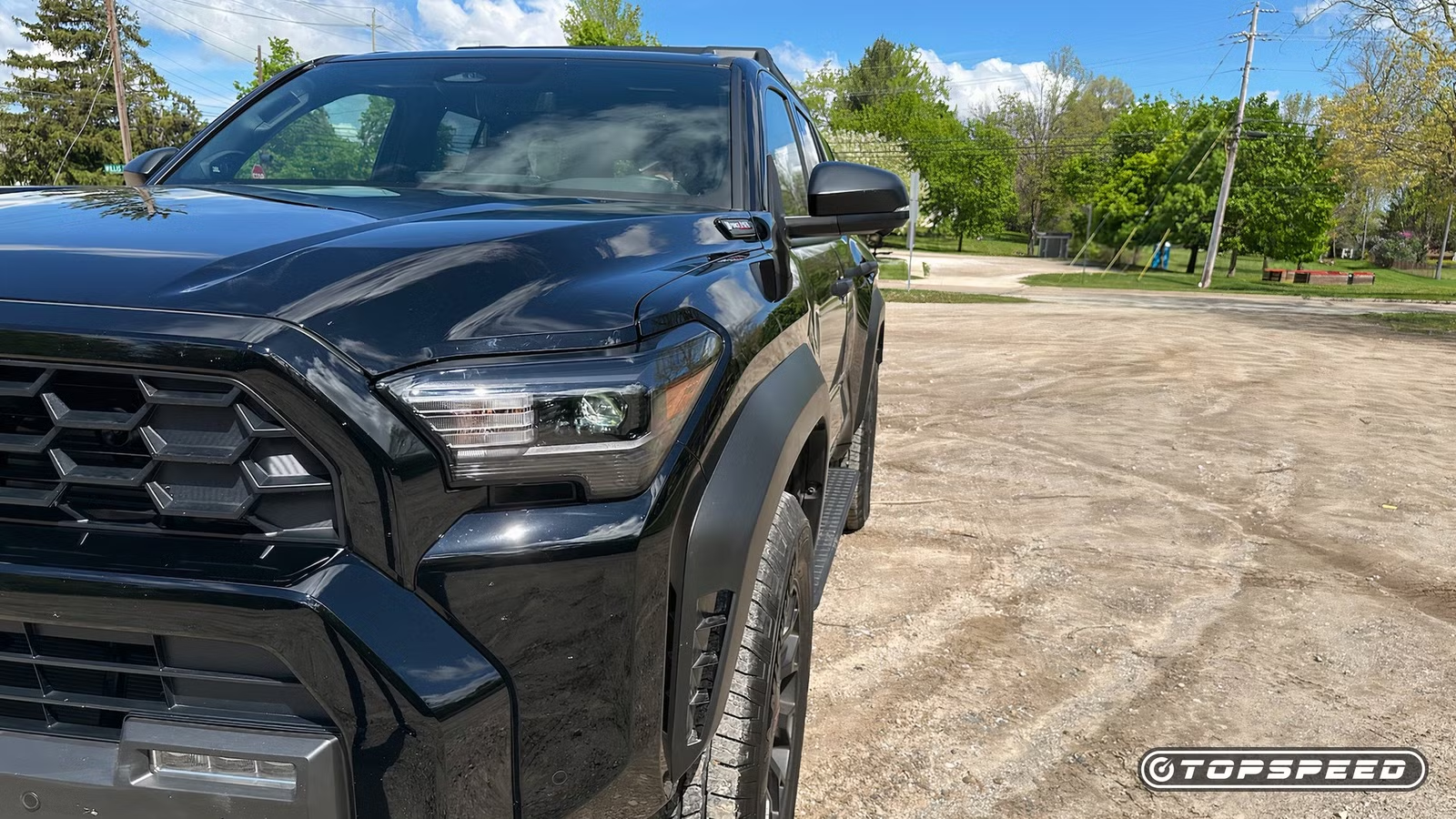
Sales data doesn’t lie, and Toyota’s latest numbers tell a story that few industry watchers saw coming. While the RAV4 and Highlander reliably dominate the brand’s volume charts, a different Toyota SUV posted growth figures that caught even corporate executives off guard — and it’s the one built for buyers who actually want to leave the pavement behind. To be clear, it’s the fastest-growing non-EV vehicle in Toyota’s lineup. If you assumed the hybrid wave was lifting only car-based crossovers, this SUV’s 2026 trajectory is about to change your mind. One off-road midsize SUV Toyota’s RAV4 and Highlander grab headlines as America’s favorite SUVs, but dealers are struggling to keep a different Toyota SUV on lots after it posted growth numbers that surprised even corporate executives.
Toyota’s Rugged SUV Sales Surge Reveals A Bigger 2026 Shift

The target audience has broadened from hardcore overlanders to active families and suburban professionals who prioritize the perceived safety, high seating position, and versatility that body-on-frame construction and advanced suspension systems provide. Today, the landscape is dominated by heavyweights like Jeep, Ford, Toyota, and Land Rover, though the market is seeing a major influx of competition as brands like Hyundai, Kia, and Subaru aggressively expand their lineups with more robust electrified offerings to meet sustained demand for adventure-ready vehicles.
But Toyota’s advantage is not just that buyers want rugged SUVs again; it is that the brand has figured out how to make that toughness feel like a low-risk, high-value purchase.
Why Buyers Still Trust Toyota’s Toughest SUVs In 2026

Toyota’s dominance in the 2026 American off-roading SUV market is built on a decades-long legacy of over-engineered durability that began with its post-war efforts to create rugged, go-anywhere utility vehicles for demanding global environments. That heritage has fostered a remarkable level of loyalty among U.S. consumers, who consistently rank the brand as the gold standard for long-term reliability and low maintenance costs — factors that carry even more weight as vehicle prices and repair complexity continue to climb.

While competitors often lean into fleeting design trends, Toyota has stuck to a mechanical-first philosophy, using robust body-on-frame architectures and specialized suspension tuning that prioritize trail survival over urban aesthetics. The brand has also successfully modernized its rugged image by integrating advanced hybrid powertrains and factory-developed overlanding trims that appeal to the growing adventure-ready demographic.
For the American consumer, Toyota represents a safe financial and functional bet, combining high resale value with a proven track record of reaching high-mileage milestones that few rivals in the segment can match. That reputation gives Toyota an edge before buyers even step into the showroom, but the 4Runner’s latest sales numbers show just how powerful that trust has become.
The 4Runner’s Sales Jump 61-Percent While Rivals Fight For Attention

Toyota’s September 2026 U.S. sales report shows it sold 107,987 4Runners in 2026 so far, reflecting a 61.2 percent increase year-on-year. In September alone, it moved 8,996 4Runners. The 2026 Toyota 4Runner is also available as a hybrid. Toyota confirms that it sold 2,289 examples of this version in September, and a total of 26,152 copies in 2026 so far, marking a 92.3 percent year-on-year improvement.
The 4Runner’s Size Advantage Shows Up Where Buyers Notice


The 4Runner is larger than its closest rivals, which include the four-door Ford Bronco and Jeep Wrangler. Exterior dimensions, save for height, are larger, which is most clearly reflected in cargo space. The 2026 4Runner has a length of 194.9 inches, a width of 78 inches, and a height of 72.6 inches. The wheelbase sits at 112.2 inches, with a ground clearance of 8.1 inches and an approach and departure angle of 18 and 22 degrees, respectively.
Toyota’s Hybrid 4Runner Delivers The Torque Buyers Were Waiting For

For the 2026 4Runner, Toyota offers two high-output configurations of its turbocharged 2.4-liter four-cylinder engine, both paired with an eight-speed automatic transmission. The standard i-Force produces 278 horsepower and 317 pound-feet of torque. The advanced i-Force Max hybrid integrates a compact electric motor, lifting combined output to 326 hp and 465 lb-ft at just 1,700 RPM.
[The iForce Max] powertrain is excellent. It’s smooth. It’s potent. Peak torque comes on at just 1,700 RPM, allowing you to power up hills and past slower highway traffic with ease. The setup makes vehicles that felt quite effortful in the previous generation feel effortless by comparison.
Why Our Test Drive Picked The 4Runner Over The Land Cruiser
TopSpeed got a chance to not only put the sixth-gen 4Runner through its paces but also test the current Land Cruiser for a clear side-by-side comparison. The Land Cruiser is one of Toyota’s most legendary models and has been cemented in the history books thanks to its timeless reliability, off-road capability, and practicality. In other words, it’s a hard act to beat in any metric.
During our test of these two wonderful body-on-frame SUVs, we noted that, while the Land Cruiser is the more premium and iconic option, the 4Runner gives buyers more ways to customize and build their ideal vehicle — whether that means going off-road or not. The 4Runner strikes a more rewarding balance between efficiency, power, capability, affordability, and everyday usability. By the end of the testing period, we concluded that, if forced to choose between the two, we’d take the 4Runner TRD Off-Road over the Land Cruiser — which speaks directly to how well Toyota has brought the 4Runner into the modern era.
The 4Runner’s Fuel Economy Reveals Its Biggest Compromise

The 2026 Toyota 4Runner remains a heavy body-on-frame SUV with EPA estimates to match. Models equipped with the standard engine achieve an EPA-estimated 20/26/22 MPG consumption on the city/highway/combined cycle in rear-wheel-drive configuration, while four-wheel-drive variants see a slight dip to 23/24/23 MPG. Trailhunter and Off-Road specifications return a 19/25/21 MPG estimate with a 399-mile range claim.
The hybrid further optimizes urban driving with estimates of 23/24/23 MPG. All models across the lineup feature a 19-gallon fuel tank, providing a maximum estimated driving range of 418 to 437 miles per fill-up, depending on the powertrain. The estimated annual fuel cost for a 2026 4Runner ranges from $2,280 to $2,500.
The Reliability Numbers That Make The 4Runner Hard To Ignore

The 2026 Toyota 4Runner earns high praise from both critics and owners. iSeeCars awards the model an 8/10 overall score, including 8.1/10 for reliability, 8.9/10 for retained value, and 7/10 for safety. On the reliability front, the publication indicates that owners can expect an average lifespan of 14.2 years or 195,788 miles, along with a 47.8 percent probability of reaching 200,000 miles.
Over five years, the SUV is estimated to lose $10,543 or 25.4 percent of its value — roughly half the depreciation of most competitors. CarEdge‘s ownership calculator puts the five-year depreciation figure at $13,442, with an additional $2,097 in projected maintenance costs and $10,045 in fuel expenses.
The 4Runner currently holds a 4.1/5 average consumer review score on Edmunds, based on 28 user-submitted entries. Key strengths that owners highlight include its visual presence, engine range, and interior, though it draws criticism for ride quality, its relatively high price, and fuel economy.
Sources: Toyota, EPA, iSeeCars, CarEdge, and Edmunds.

Related posts




Latest Post


No Comments