
Nissan Leaf review 2026 | The Car Expert
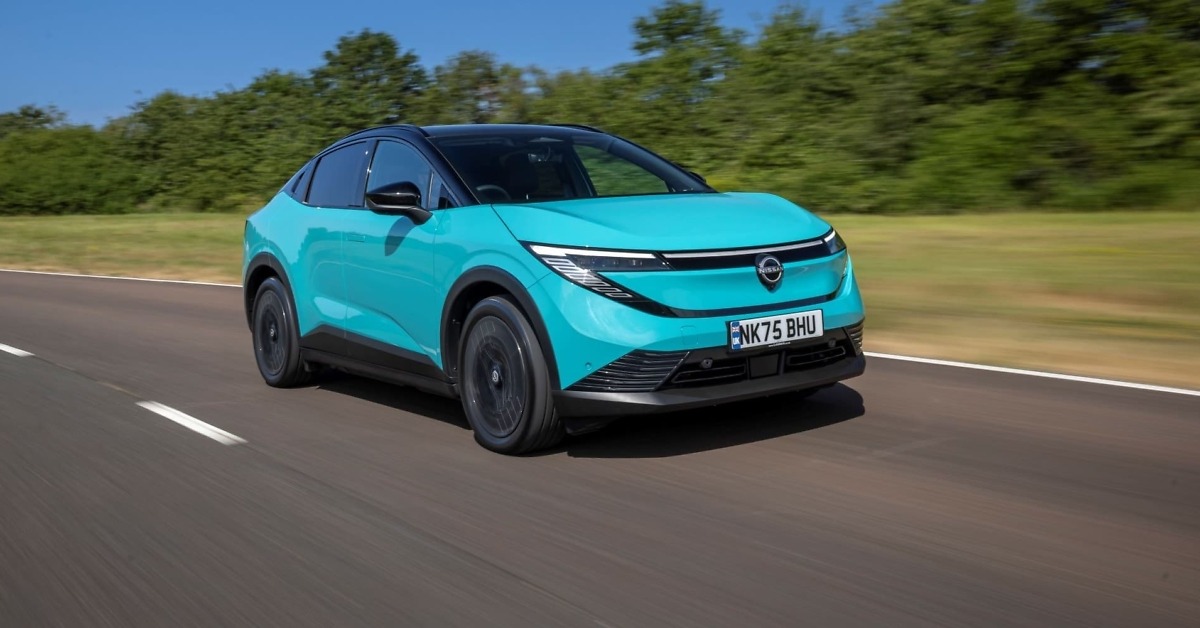
Make and model: Nissan Leaf
Description: Electric family hatchback/crossover
Price: From £32,599, before government grant
Summary: The third-generation Nissan Leaf is a thoroughly accomplished electric family car, combining a comfortable driving experience, impressive range and sensible design with few real weaknesses.

For a broader ownership picture, see our Nissan Leaf Expert Rating.
The original Nissan Leaf was one of the real EV pioneers, but the first two generations were never particularly appealing cars. Their awkward styling, minimal driving range and some peculiar technical quirks proved to be quite limiting.
The third-generation Leaf is a very different proposition. The styling is cleaner, the technology is more conventional and Nissan has addressed most of the shortcomings that made the previous models difficult to recommend.

The new Leaf is built at Nissan’s Sunderland factory, making it one of the few electric family cars manufactured in Britain. That’s an important consideration for the UK car industry, particularly as Nissan’s factory remains one of this country’s largest vehicle manufacturing operations.
The car has arrived later than originally intended, following delays to its development and production. Its success is therefore particularly important for Nissan’s British operations, although buyers should judge it primarily on its merits rather than where it’s built.
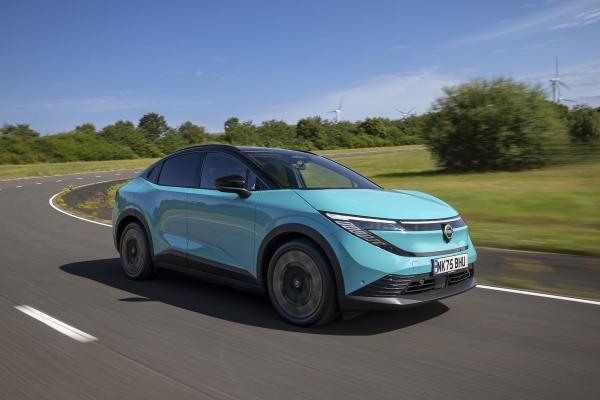
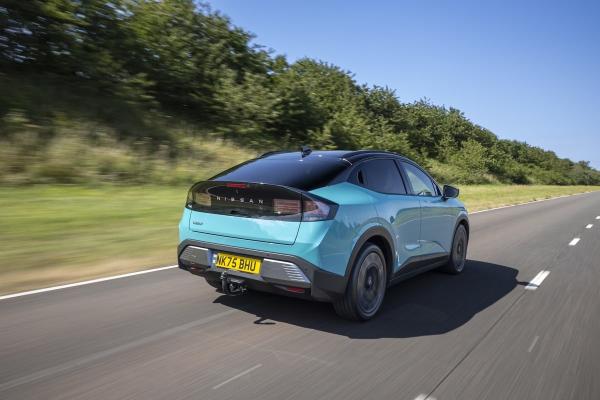
After spending a week with the new Leaf, I came away impressed. It’s not particularly exciting or groundbreaking, but Nissan has concentrated on getting the fundamentals right – and the result is an exceptionally good electric family car.
Price and equipment
The Nissan Leaf starts at around £32.6K before the government’s £3,750 Electric Car Grant, with a choice of 52kWh and 75kWh batteries. There are several trim levels, although availability depends on which battery you choose.
The entry-level Engage comes with a decent specification, including alloy wheels, digital displays, a heat pump and Nissan’s ProPilot driver assistance system. Higher versions add larger screens with Google built-in, heated seats, additional convenience features and more luxurious upholstery.
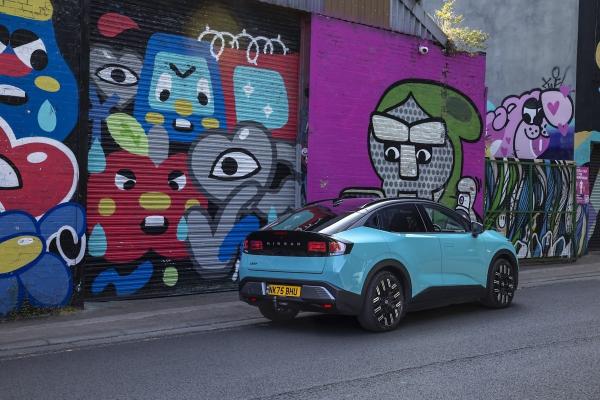
Our test car was an Advance with the larger 75kWh battery, priced at £38K before the grant. It also had £1,400 worth of two-tone Luminous Teal paint with a contrasting black roof, bringing the total to £39.4K before the government contribution.
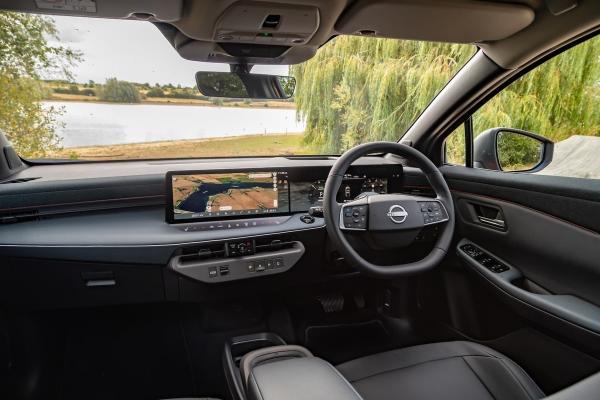
The Advance is a well-equipped choice, with twin 14-inch displays, Google Maps integration, heated front seats and steering wheel, head-up display, powered tailgate and a panoramic glass roof that can be electronically dimmed.
It’s probably the sweet spot for buyers who want the larger battery and a few additional comforts without stretching to the range-topping Evolve. The latter adds features such as electrically adjustable seats, a massage function and an upgraded Bose sound system, but none seems essential.
The Leaf’s pricing looks competitive against other electric family cars like the Kia EV3 and Volkswagen ID.3, particularly once the government grant is taken into account.
Inside the car
The new Leaf’s cabin takes plenty of inspiration from the larger Nissan Ariya, with a clean dashboard design, wide digital displays and a much more modern appearance than either of its predecessors.
Unlike the new Nissan Micra, which is closely related to the Renault 5, the Leaf has a distinctly Nissan character. The infotainment system and digital instruments will be familiar to anyone who’s spent time in an Ariya, and the technology generally feels well integrated rather than added simply to impress buyers in a showroom.
The interior isn’t especially luxurious, and some of the plastics are not quite as nice as you’d expect from a near-£40K car in 2026. But everything feels sensibly designed and properly assembled, creating a pleasing impression of quality without relying on unnecessary decoration.
Passenger accommodation is decent rather than outstanding, with sufficient room for everyday family use. The slightly raised seating position, typical of most EVs as the batteries are located under the floor, makes the Leaf feel more like a crossover than a conventional hatchback.
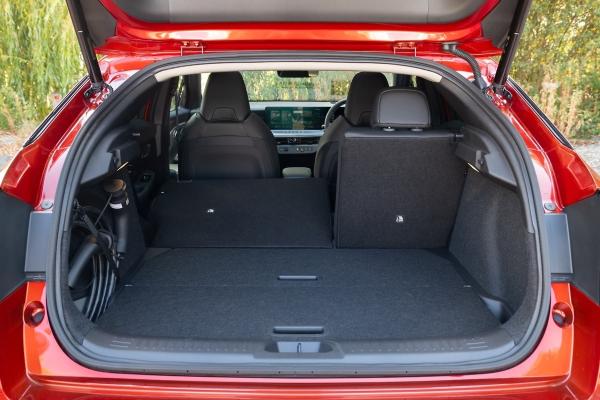
Boot space is similarly respectable, offering 437 litres with the rear seats in place. That’s a useful size for family shopping and luggage, although several rivals provide more room.
Overall, it’s an attractive and comfortable cabin, even if there’s little about the design that particularly stands out. More importantly, there’s nothing that feels unnecessarily complicated or poorly thought through.
Driving range and charging
The new Leaf is available with 52kWh and 75kWh batteries, giving official electric driving ranges of up to 280 and 387 miles respectively. That’s a substantial improvement over the previous generations, and the larger-battery model offers enough range to make longer journeys a realistic proposition without constant charging stops.
Our Advance test car had the 75kWh battery, which supports public rapid charging at up to 150kW. That’s not as fast as a number of rivals, but Nissan still quotes about 35 minutes for a 10-80% recharge, which is not unreasonable if you’re only doing it occasionally. If you’re a regular at motorway charging stations, you might prefer to look for a car with faster charging speeds.
One piece of good news, however, is that Nissan has finally abandoned the old Japanese Chademo charging connector in favour of the CCS system used by most modern electric cars in Europe, removing one of the biggest inconveniences of its predecessors.
On the road
The biggest impression from driving the new Leaf is just how normal it feels. That might sound like faint praise, but it’s actually one of the car’s greatest strengths.
Earlier generations had a tendency to remind you that you were driving an electric car, with compromises in their design and driving experience. The new model simply feels like a well-developed modern family car that happens to be electric.
It’s quiet and comfortable, with a reassuring sense of quality that carries through from the cabin to the way the car behaves on the road. The suspension is well judged, providing a settled ride without feeling excessively soft, while the steering is nicely weighted and predictable.
There are plenty of electric cars from newer Chinese brands that offer impressive specifications and equipment for the money, but most don’t quite feel as thoroughly developed once you’re behind the wheel. The Leaf is a step ahead in the way its steering and suspension work together, providing a more polished overall driving experience.
Performance is more than adequate, with the 75kWh model producing 215hp (160kW) and accelerating from 0-62mph in 7.6 seconds. There’s nothing particularly dramatic about the way the Leaf drives, and it isn’t the sort of car that encourages you to seek out winding roads for entertainment. But that’s hardly the point of a sensible electric family car.
Nissan has retained its e-Pedal driving function, which allows you to manage much of your acceleration and deceleration using the accelerator pedal. I’m not particularly fond of this style of driving, although that’s largely a matter of personal preference rather than a criticism of Nissan’s implementation.
What impressed me most was the absence of irritating quirks. Everything feels natural and easy to use, without the sense that Nissan is trying to reinvent familiar controls or make the driving experience unnecessarily different simply because there’s no petrol engine.
Ownership
Nissan provides a three-year/60,000-mile new car warranty, with separate eight-year/100,000-mile cover for the battery. The standard warranty is disappointing compared with the longer cover offered by several competitors.
The Leaf hasn’t yet been independently crash-tested by Euro NCAP, although Nissan has fitted it with an extensive range of safety and driver assistance equipment.
The Nissan Leaf currently holds an A-grade New Car Expert Rating in our Expert Rating Index, which combines independent media reviews with assessments of safety, environmental performance, running costs, reliability and warranty cover.
Verdict
The third-generation Nissan Leaf is a much better car than I was expecting. The previous models were important in establishing electric motoring as a mainstream proposition, but they were never cars you’d particularly want to own. The new Leaf is the first one that genuinely looks and feels like a valid choice for a family car.
There’s nothing especially revolutionary about the Leaf. The styling is attractive without being dramatic, the interior is comfortable rather than luxurious, and the cabin and boot are reasonably spacious without setting new standards. Public charging speeds are reasonable but could be better.
Where Nissan has triumphed is by clearly putting a lot of effort into the things that matter most in everyday use. The Leaf is quiet, comfortable and polished to drive, with sensible controls, a useful driving range and very few obvious shortcomings. It’s a car that simply gets on with the job without constantly reminding you that it’s electric.
After a long wait, Nissan has finally delivered a Leaf that you’d actually want to have on your driveway. It deserves to sell in substantial numbers, both because it’s a very good car and because its success would be welcome news for Nissan’s Sunderland factory and the wider British car industry. Whether British buyers agree remains to be seen, particularly with so many new electric alternatives now available. But judged on its own merits, the Leaf has made a convincing case.
We like:
- Quiet, comfortable and polished driving experience
- Impressive electric driving range
- Sensible, well-designed interior
- Few unnecessary quirks or irritations
- Built in Britain
We don’t like:
- Not particularly exciting
- Interior materials are fairly ordinary
- Some rivals offer more cabin and boot space
- Public charging speeds aren’t class-leading
- Basic new car warranty
Similar cars
Aion V | Alfa Romeo Junior Elettrica | BMW iX1 | BYD Atto 3 | Changan Deepal S05 | Citroën ë-C3 Aircross | Cupra Born | Fiat 600e | Ford Puma Gen-E | Geely EX5 | Hyundai Kona Electric | Jaecoo E5 | Jeep Avenger Electric | Kia EV3 | Kia EV4 | Leapmotor B10 | Lepas L6 EV | Mazda MX-30 | Mercedes-Benz CLA Electric | MG S5 EV | Omoda E5 | Peugeot E-2008 | Polestar 2 | Renault Mégane E-Tech | Skoda Elroq | Smart #1 | Tesla Model 3 | Vauxhall Mokka Electric | Volkswagen ID.3 | Volkswagen ID.4 | Volvo EC40
Key specifications
Model tested: Nissan Leaf 75kWh Advance
Price as tested: £39,394 before government grant
Powertrain: Single electric motor, front-wheel drive
Gearbox: Single-speed automatic
Power: 160kW / 215hp
Torque: 345Nm
Top speed: 100mph
0-62mph: 7.6 seconds
Driving range: Up to 387 miles
Public charging: Up to 150kW
Euro NCAP safety rating: Not yet rated (October 2026)
TCE Expert Rating: A (68%) as of October 2026

Related posts


Latest Post


No Comments