
The Forgotten Ducati Race Single That Fathered Every Modern Panigale
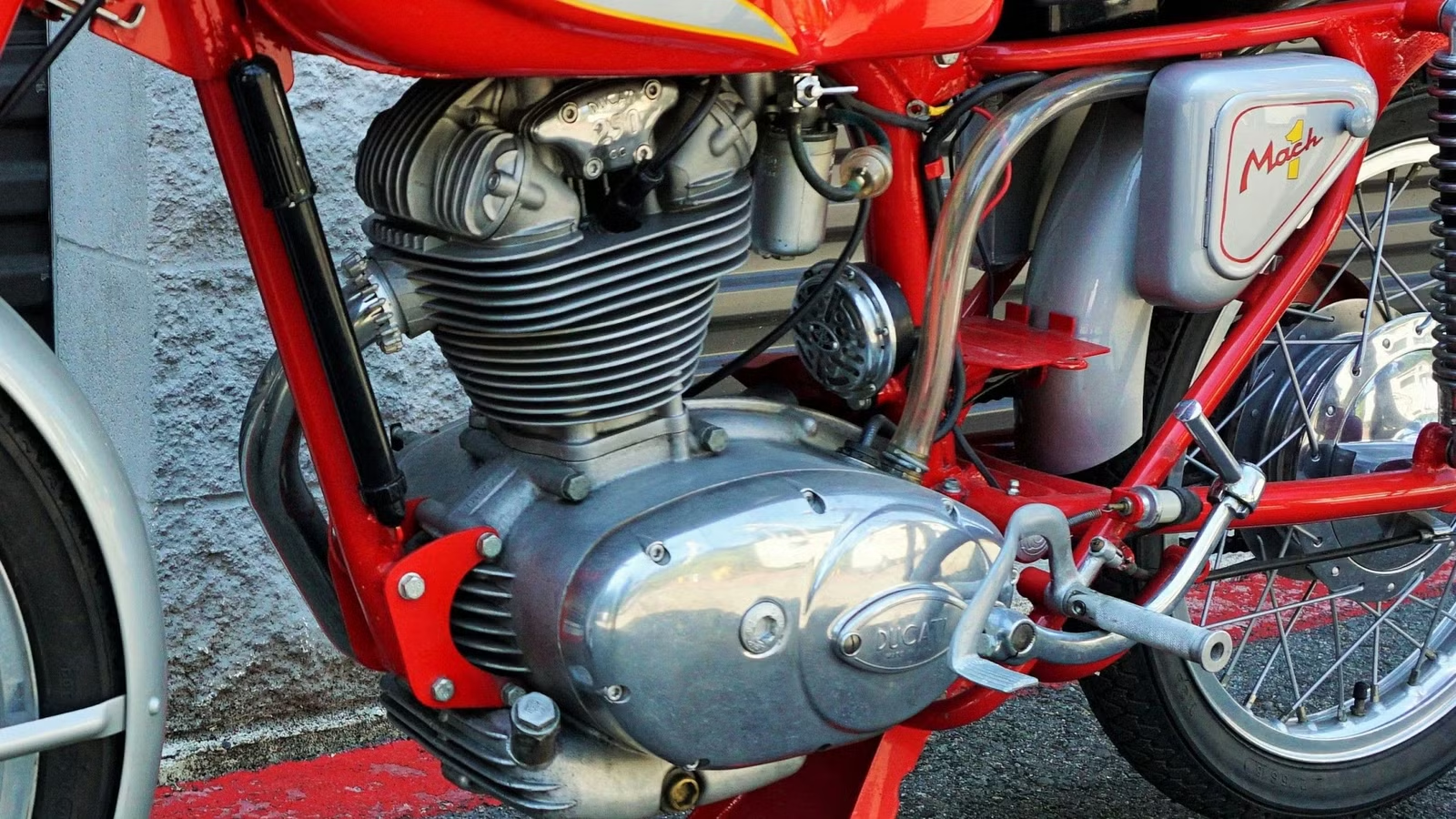
Not every brand has a bike that defines its entire output, but Ducati is certainly one of them. The Italian manufacturer is renowned for building exotic, beautiful race bikes that are capable of road use, and some of its bikes are among the most exciting on the road today. But while many can point to bikes like the 916, Desmosedici RR, and Panigale V4, there’s one bike that’s arguably more important than all of them, yet it’s almost entirely forgotten today.
Before Superbikes Existed, Lightweight Singles Ruled The Streets And Circuits

The Honda CB750 is widely credited with creating the template for the modern superbike. Released in 1969, it redefined what the top of the motorcycle market looked like and ignited a horsepower war that would last to this day. Yet high-performance motorcycles existed long before the CB750, and many of the most successful were lightweight single-cylinder machines.
British manufacturers were among the leading developers of high-performance single-cylinder motorcycles, with bikes like the BSA Gold Star, Velocette Venom, and Norton Manx, with the latter in particular being incredibly strong on the Isle of Man TT. This close relationship between road riding and racing shaped the development of the single-cylinder motorcycle, as manufacturers built machines capable of excelling in both environments. Other brands and countries were chasing the same successes, with Italy’s Ducati establishing a reputation for gorgeous race bikes that offered more than just transportation.
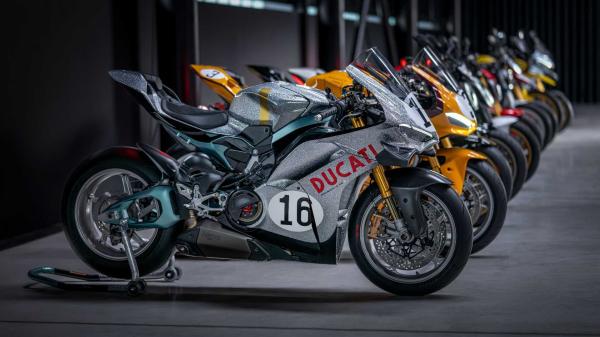

Ducati’s 100th Birthday Gift Includes 10 Gorgeous Motorcycles You’ll Probably Never Own
Ducati celebrates 100 years with some of the coolest bikes it has ever built.
Ducati’s Obsession With Racing Was Already Shaping Its DNA

Racing was as much about marketing as it was about road-going development in the 1950s, as manufacturers competed to show consumers whose bike was worth buying. Ducati embraced this philosophy entirely, building stunning race-bred machines that were equally at home on public roads. With Chief Designer Fabio Taglioni joining in 1954, the company focused on lightweight, high-revving singles that could win races first and go well on the road second. It was an approach that Ducati still follows to this day, and which was perfectly embodied by its 1964 250 Mach 1.
The Ducati 250 Mach 1 Was The Fastest Quarter-Liter Motorcycle Of Its Day

Since he’d started at Ducati in 1954, Fabio Taglioni’s input had shaped Ducati. 1955’s Gran Sport 125 (affectionately known as “Marianna”) had won endurance races on public roads, demonstrating the brand’s ability to create bikes that excelled in both road and race performance, and had helped to create desmodromic valve timing that allowed higher RPM and reliability. By the early 1960s, Ducati wanted to port this into a race bike for the road, and so it created the Ducati 250 Mach 1.
Ducati 250 Mach 1 Specs
|
Engine |
Power |
Transmission |
Weight |
|
248.66 cc four-stroke single-cylinder |
27 hp |
Five-speed |
255 lbs dry |
A quintessential 1960s Ducati, the Mach 1 arrived with clip-on handlebars, a slim fuel tank, and rear-set foot pegs that perfectly matched the cafe-racer aesthetic that Ducati had become known for, while the lightweight nature of the bike meant that it was agile as well as quick. This speed was comprehensively proven as well, as the Mach 1 earned Ducati its first Isle of Man TT victory in 1969 in the 250 cc Production Class at the hands of Alistair Rogers. It wasn’t just the track where the bike excelled, though, as it could break 100 mph in street-legal trim.
While other 250 singles existed at the time, what set the Mach 1 apart was its engineering. Its 248 cc engine had Ducati’s bevel-driven overhead camshaft design (another one of Taglioni’s influences) that was more common in high-end racing bikes than in road motorcycles.
The bevel-driven camshaft system paired with Ducati’s emerging Desmodromic valve control (developed under Taglioni) allowed more precise high-RPM operation and improved reliability compared to conventional spring-valve designs of the time. This helped the bike to achieve a stronger power-to-weight ratio, further improving speed and reliability.

The bike was made in incredibly limited numbers. Only 838 bikes were made, with just 136 of those slated for the US. The bike was made rarer still by people converting the already-quick bike into dedicated race bikes, leaving the number of road-legal versions even scarcer. That already limited supply means that finding a bike for sale is tough, and prices are high when one is available, as a 1965 bike sold for $28,600 in 2017.
Ducati stopped production of the bike after just a two-year run in 1966, partly to focus on larger displacements. The shift reflected a broader industry trend towards bigger, faster machines, as the lightweight category began to lose ground on outright speed. Ducati would continue refining the formula with the 250 Mark 3, but it was already looking towards the larger-capacity twin-cylinder bikes it would eventually become known for.
The Mach 1 Introduced A Blueprint That Ducati Still Follows To This Day

When it arrived, the Mach 1 was essentially a road-legal race bike at a time when most lower-displacement bikes were seen as commuter machines. By approaching the bike with a race first, road second mentality, Ducati created something truly exciting and aspirational rather than simply functional.
It’s a mentality that is still on show today, though Ducati perhaps errs more on the “race technology informing road bikes” side than strictly “race bikes with a numberplate”. One particularly strong example is the Ducati Panigale V4, which takes concepts learned in MotoGP and puts them onto the road. Its commitment to extreme aerodynamics (including the winglets on the front of the bike for increased downforce), electronics, and desmodromic engines all came from the circuit.
Of course, not every bike from Ducati’s stable needs to have the same level of track-honed technology. Bikes like the Scrambler or Multistrada, which are aimed more at off-roading, or the Monster, which is aimed more at the naked streetbike category, don’t have the same attention to pace as others. But that blueprint of taking race learning on the road, started by the Mach 1, is very much in Ducati’s DNA today.
10 Big-Bore Vintage Superbikes Real Riders Worship Forever
These legendary machines from motorcycling’s golden era continue to command massive respect and serious auction money decades later.
Every Modern Panigale Can Trace Its Bloodline Back To This Forgotten Single

Though the Panigale range was first introduced in 2011, some 47 years after the Mach 1 was released, it has the Mach 1 to thank for establishing the lightweight, race-focused philosophy that the brand has perfected. A road-going Ducati had to be as close to the race machine as possible, and the Mach 1 proved it.
The Mach 1 was, and remains, one of Ducati’s most important motorcycles. It was a bike ahead of its time that hinted at the future popularity of the race replica market, and which proved that lightweight, small-displacement singles could very much be exciting.
Its short production run might have hampered its overall legacy, but it was a bike that existed on the bleeding edge of technology. Bikes, and the bike market, were progressing quickly, and while 100 mph might have been fast for a 250 cc, it wasn’t fast in the bike market at large. Allowing the Mach 1 to become dull would have been a crime, and it’s arguably better off being a shorter-run bike that never lost its luster. In that sense, it wasn’t just a fast 250; it was a litmus test in motorcycle history, and one whose success is still felt in the motorcycle industry to this day.
Sources: Motorcycle Specs, Gooding Christie’s, MCNews

Related posts




Latest Post



No Comments