The Engineering Trick That Keeps Prius Batteries Alive Past 200,000 Miles
10 minutes reading
Thursday, 9 Jul 2026 11:00 0 93 autotech
The hybrid vehicle (HEV) segment is soaring to new heights in 2026, leading more and more consumers to ask about the long-term ownership costs. As of 2026, the demand for such hybrid cars in the U.S. has grown to its historic peak; the market is estimated to be around $778 billion, making up a 42 percent share of the global hybrid sector. This surge is primarily driven by a shift in consumer preferences, as buyers are now looking for better fuel efficiency and lower emissions without the range anxiety or charging infrastructure concerns of the full EV segment.
Generally, hybrid cars fare much better than their conventional ICE counterparts when it comes to reliability. That’s thanks to more durable engines and the integrated electric systems that take some of the load and stress off the engine. However, there’s one thing you can’t avoid with HEVs: own one long enough, and you will eventually need to replace the traction battery pack. This is typically the most expensive component to replace, which makes it essential that you pick a car that can use the same traction battery for years to come. Fortunately, you don’t need to worry about that so much with the Toyota Prius, and here’s why.
Why You Need To Replace The Battery In Hybrid Cars
2023 Toyota Prius front shotToyota
As good as hybrid vehicles are, the batteries are like any other battery out there, including the one on the device you’re reading this on. It will deteriorate over time, and its capacity will decline. This usually happens due to a combination of chemical degradation and usage patterns, and it depends on your car and how much you drive it. Other factors like high temperatures, rapid acceleration, and frequent deep discharges accelerate this process.
2025 Toyota Prius Plug-In Hybrid XSE — EngineCraig Cole | TopSpeed
With time, both lithium-ion and nickel-metal hydride cells within the battery pack experience wear as a result of repeated charging/discharging cycles, which causes the electrodes to deteriorate and electrolytes to break down. Your HEV’s battery management system regulates voltage and temperature, but as these cells age, the system becomes less effective at balancing charge between individual cells.
This results in a drop in fuel economy and power loss, especially during acceleration. It also leads to less overall driving range, as the internal combustion engine is forced to run more often to compensate for lower electric power. Once you notice such symptoms, it’s good to start saving up for a new battery pack. Generally, HEV batteries only last between 8 and 10 years or around 100k to 150k miles, unless you have the Toyota Prius. Then, you can expect it to last a lot longer, and here’s why.
The Toyota Prius Lasts A Very, Very Long Time
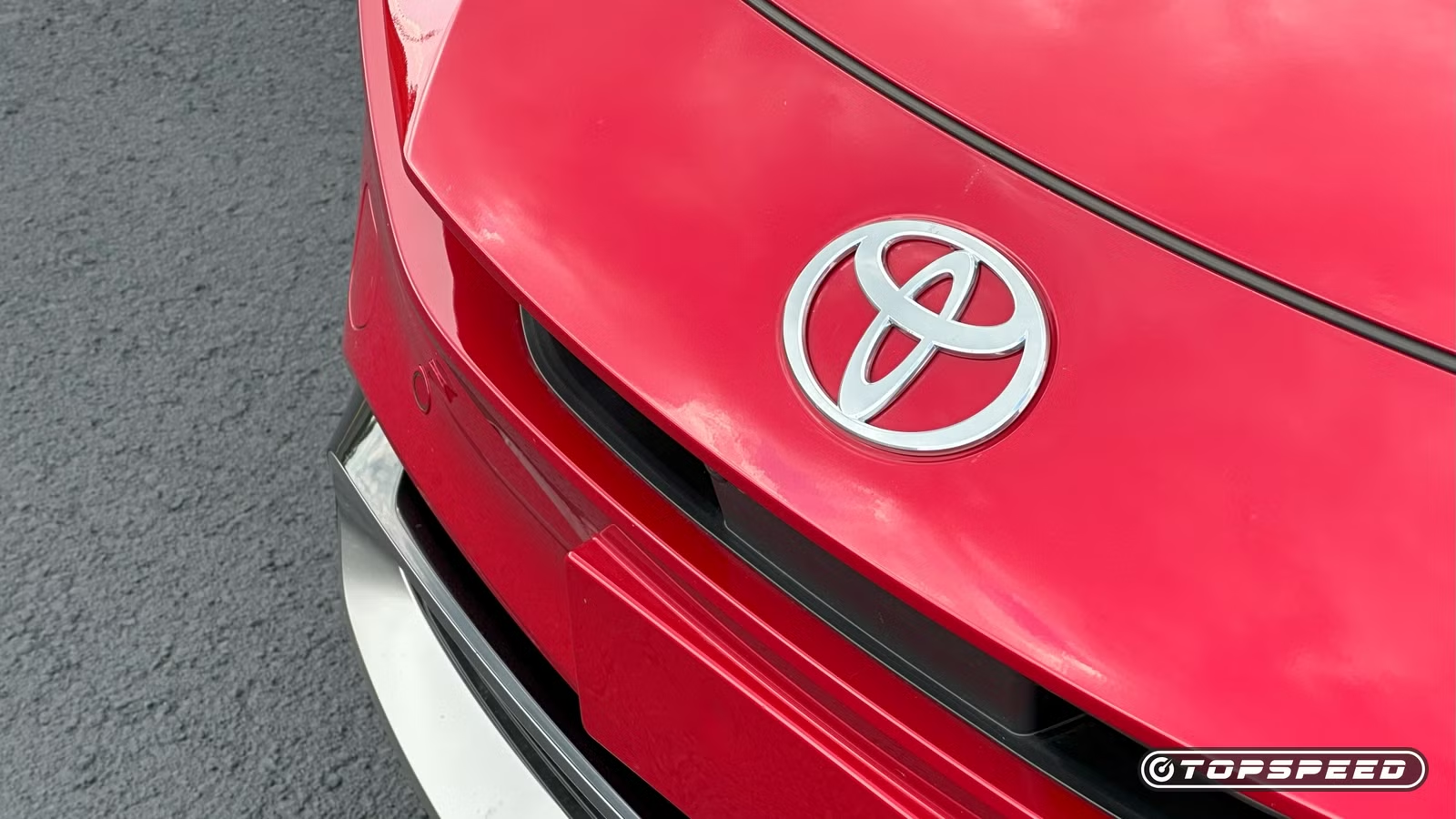
2023 Toyota Prius HEV EmblemToyota
As far as hybrid electric cars go, the Toyota Prius is among the most reliable and long-lasting options you can buy today. After all, there is a 2017 Toyota Prius with over 500k miles on it. Beyond that one-off reference, the Prius consistently ranks well in terms of reliability. J.D. Power’s consumer-verified rating system gives it 75 out of 100 for quality and reliability. iSeeCars gives the 2026 model an 8 out of 10 for reliability, while the overall Prius model gets 8.7 out of 10.
Base Trim Engine
2L I4 Hybrid
Base Trim Transmission
2-speed CVTi-S CVT
Base Trim Drivetrain
Front-Wheel Drive
Base Trim Horsepower
150 HP @6000 RPM
Base Trim Torque
139 lb.-ft. @ 4400 RPM
Base Trim Fuel Economy (city/highway/combined)
57/56/57 MPG
Base Trim Battery Type
Lithium ion (Li-ion)
Make
Toyota
Model
Prius
iSeeCars also estimates that an average Prius lasts for a whopping 12.3 years or 169,871 miles, with a 29.5 percent chance of it clocking 200k miles on the odometer. Along the way, the Prius is also very affordable to maintain. CarEdge estimates a ten-year maintenance cost of just $4,360, which beats the industry average by over $500. And there’s only an 11.58 percent chance it will require a major repair during that time. Similarly, RepairPal estimates an annual repair cost of $408.
Prius Batteries Last A Long Time, Too
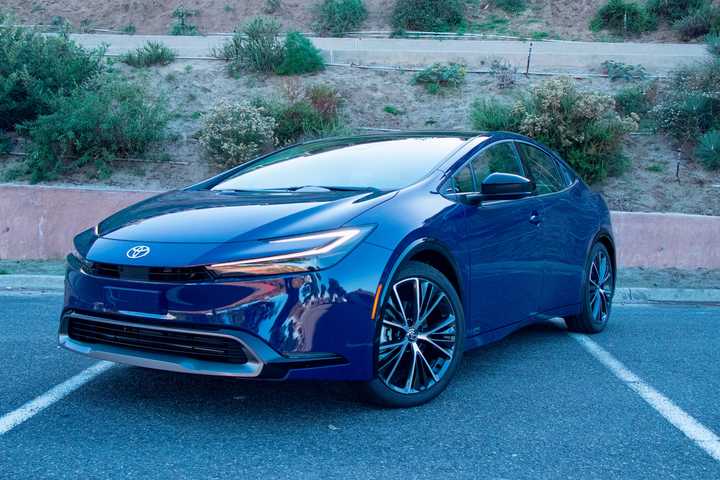
2026 Toyota Prius front 3/4Toyota
According to owner reports, the Prius traction battery also lasts a very long time. Generally, most owners have to replace it between 100k to 150k miles. However, many owners report that their Prius batteries are functional well up to 200k miles, too. The latest generation of the Prius has moved to lithium-ion batteries instead of nickel-metal hydride ones, so it’s a relatively new powertrain that is yet to prove its long-term reliability. But if the Prius’ own history and Toyota’s reputation for reliability are anything to go by, the current generation of the Prius should last equally long. That has more to do with its battery management.
2025 Toyota Prius Plug-In Hybrid XSE — Rear Three-QuarterCraig Cole | TopSpeed
The Toyota Prius is backed by 30 years of production experience and a well-engineered basic design, which has made its hybrid battery system exceptionally robust in the long run. This is reflected in the warranties the company produces. Apart from the 3-year/36k-mile bumper-to-bumper guarantee, Toyota’s hybrid models also come with a 5-year/60k-mile powertrain warranty and 8-year or 100k-mile coverage for hybrid-specific components, including the battery packs, control modules, and the like.
Thank Toyota’s Battery Management System For Such Longevity
2025 Toyota Prius front driving shotGuillaume Fournier | TopSpeed
The reason why the Toyota Prius battery lasts so long is because of how Toyota controls its state of charge (SOC). Essentially, the way to extend the life of these batteries is to tightly control their state of charge. In other words, even if you may think the battery is at 100 percent or completely empty, the actual scenario isn’t so. Instead, the top and bottom fractions of a hybrid battery are not used to preserve battery life.
Toyota
You have Toyota’s battery management system to thank for that. This system ensures that the battery operates only within a certain range. Every Toyota hybrid ships with around 40 percent of its battery capacity deliberately locked away, so the battery never hits 0 percent (full discharge) or 100 percent (full charge). That 40 percent capacity serves as a degradation buffer, which is a primary factor in preventing premature battery degradation, allowing the battery to survive 150k to 200k miles or 10 to 15 years. You might think that’s a waste of battery capacity, but it’s a deliberate and calculated sacrifice.
Toyota Does Not Openly Admit This, Though
Profile action shot of 2026 Toyota Prius drivingToyota
The thing is, Toyota does not openly admit that it locks away 40 percent of the battery capacity to improve its life. Instead, Toyota’s battery management parameters documented by the Prius technical community point to this. According to one member, the Prius’ HV battery is managed by a system that keeps the battery between the lower limit of 40 percent and the upper limit of 80 percent, though it can go lower or higher under certain circumstances. Even then, owners claim the management system brings the charge back into the ideal range.
This is the same principle that’s used on your smartphone or notebook laptop. Most lithium-ion or nickel-metal hydride batteries benefit from not being charged to 100 percent all the time. In fact, one owner recalls seeing an old Toyota PDF that appeared to confirm that Toyota oversized the battery pack and instructed the computer to never drain the battery below 20 percent or charge it over 80 percent, allowing for exceptionally long-lived batteries.
Silver 2023 Toyota Prius Posed In ShadowsToyota
While Toyota may not openly admit to this, this buffer is well documented by enthusiast forums, and it strangely contrasts with the Prius’ competitors. The rivals use more of the available capacity for better driving range, trading long-term longevity for short-term performance gains. Toyota, being the more conservative and durability-driven manufacturer, trades away that short-term performance by making the batteries appear worse on paper, only so they can last a lot longer. It’s this less-is-more approach that lets the Prius batteries last over 200k miles before needing a replacement.
Toyota’s Reputation For Reliability Only Builds On This Further
2025 Toyota Prius Nightshade engineNicole Wakelin/TopSpeed
When it comes to hybrid tech, Toyota remains the undisputed leader in the segment. The Japanese manufacturer has always maintained a high level of commitment to hybrid technology, showcased best by the Prius and popularized by the hybrid versions of the RAV4, Corolla, and Camry. At the same time, Toyota consistently ranks at the very top for producing some of the most reliable cars on the market. The fifth-generation Prius is no different, with many things playing a role apart from just the battery management system.
Toyota’s Kaizen Philosophy And The Fifth-Generation THS
2023 Toyota Prius Engine BayToyota
The current-generation Prius uses the fifth-generation Toyota Hybrid System (THS), which the manufacturer claims works exceptionally well. It offers better performance, refinement, and efficiency while improving on the system’s durability and reliability. It has Toyota’s Kaizen philosophy at its core, which ensures that each successive generation is better than the last. This continuous improvement is Kaizen in action: striving to make better products with every iteration. And the latest Prius benefits from it.
The Prius Swaps Out Its Ni-MH Battery For A Li-ion One
2025 Toyota Prius Nightshade front quarterNicole Wakelin/TopSpeed
The previous Prius generations all used nickel-metal hydride (Ni-MH) batteries, which are known for their durability and ability to handle thousands of charge/discharge cycles. However, the newer Prius gets lithium-ion (Li-ion) batteries, which offer better efficiency, are around 40 pounds lighter, and perform better at high temperatures compared to their Ni-MH counterparts.
2023 Toyota Prius Aerial ViewToyota
Despite being more expensive, the Li-ion batteries could be a better choice for the Prius for these reasons. For instance, older Ni-MH batteries’ usable state of charge ranged from 15 to 85 percent, whereas Li-ion batteries can operate from 5 to 95 percent. As a result, the latter offers better usable capacity than the Ni-MH batteries. This allows the Prius to use smaller Li-ion batteries that do the same job as larger Ni-MH battery packs.
Improved Cooling System Also Goes A Long Way
2025 Toyota Prius Nightshade profileNicole Wakelin/TopSpeed
One of the primary enemies of battery longevity in hybrid cars is excessive heat, which accelerates chemical degradation inside the cells, reducing their ability to hold a charge. Fortunately, Toyota works around this on the Prius by giving it a battery cooling system that’s designed to keep the high-voltage pack at optimal temperature. This system draws cabin air through the pack using a fan located near the rear seats.
Craig Cole | TopSpeed
This may look like a small system, but it goes a long way in keeping the air flowing through the battery pack and ensuring its long life. It prevents dangerous overheating that can cause permanent damage to the expensive battery cells. It’s a combination of the battery management system, Toyota’s extensive experience in hybrid technology, and its Kaizen principles that make the batteries last a lot longer than those of the Prius’ rivals.














No Comments