
The Motorcycle That Quietly Challenges An Entire Class
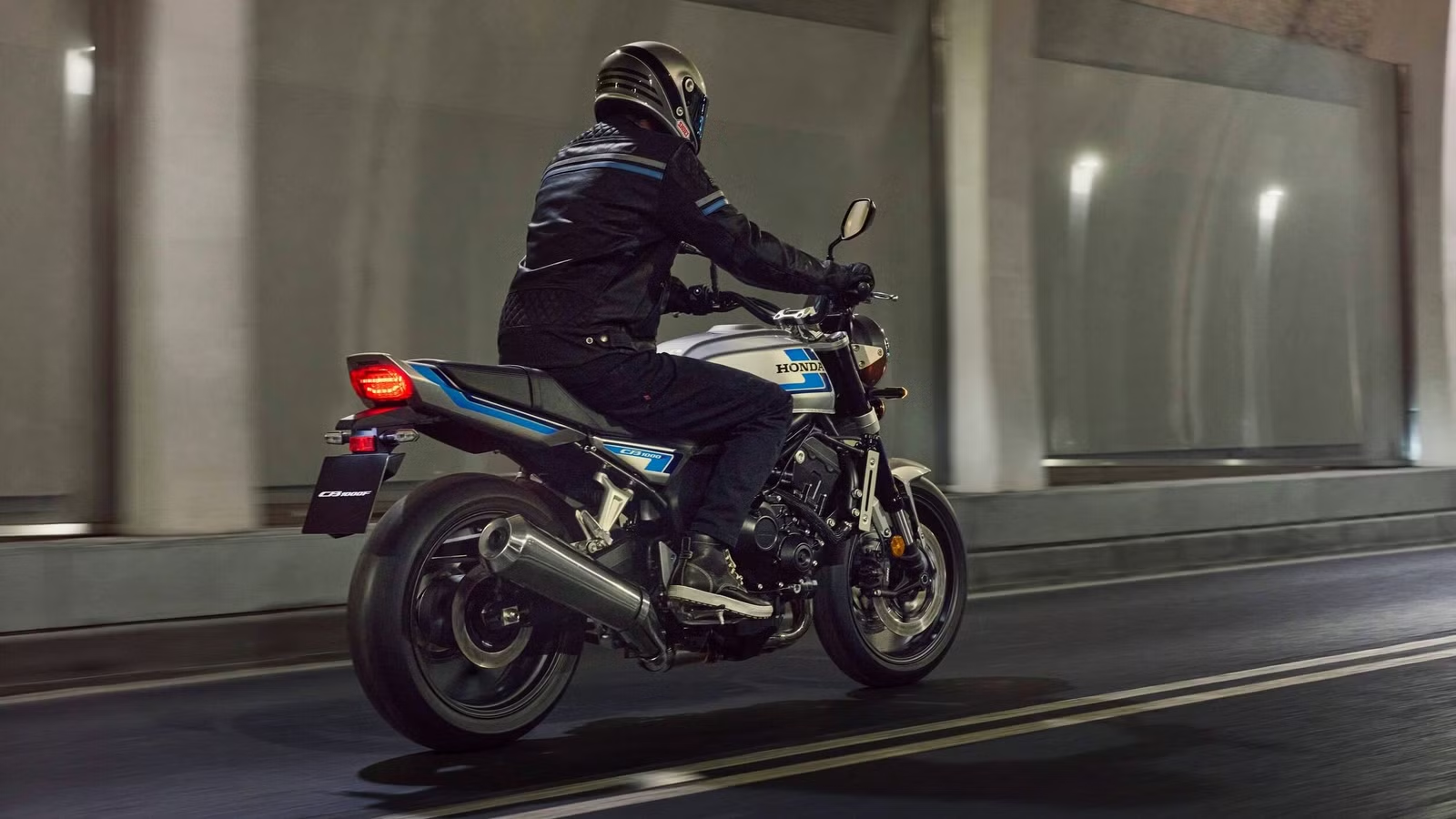
History has a way of repeating itself. Sometimes this happens by accident, but there are times when it seems intentional. Retro roadsters were initially thought of as a passing fad or a desperate attempt at a cash grab, with motorcycle manufacturers leaning heavily into nostalgia for sales.

But, no matter which way you look at it, retro bikes are here to stay and are most certainly no longer just a fad. Thus, manufacturers are putting an honest effort into improving the package on offer. That not only means more capable machines, but also aggressive pricing strategies. One Honda is a fitting proof of both these things.
The Retro Roadster Space Was Once Passé, But It Is Now Fashionable Once More
Manufacturers also don’t need to lean quite as heavily on nostalgia for sales. Some retro bikes are just really good motorcycles. Most offer a more simplified riding experience, but that isn’t always the case. Some bikes just offer buyers an alternative design to the contemporary naked bike it will be based on. Usually, this alternative design will also have an alternative price.


For years, it had become a common practice for manufacturers to jack up the price of these retro machines. Realistically speaking, any motorcycle, and by extension any product, is only worth as much as people are willing to pay for it. In the case of these roadsters, people have historically been willing to pay more for them. The bike in question breaks away from all of these trends, offering more of pretty much everything for a lower price than the competition.
The Honda CB1000F Is A Modern Reinterpretation Of A 70s Gem
MSRP: $10,599

The CB1000F doesn’t just undercut the Hornet SP, it also undercuts pretty much all of its direct competitors. Not only that, it has more power than any of them thanks to its superbike-derived inline-four, and in our opinion, looks even better than any of the Italian bikes. Its design harks back to the late 70s/early 80s era CB900F. In particular, the bike raced by Freddie Spencer. As a combination of all that, the CB challenges the entire retro roadster segment by offering an impeccable package at a scarcely believable price.
A Reworked Inline-Four Engine Sourced From The CBR1000RR
Power: 122 horsepower

Most retro bikes on the market today are either entry-level models or sporty middleweight offerings. The CB1000F, on the other hand, is a full-blown liter bike which makes use of an old superbike engine. In the CBR1000RR (which is actually the 2017 Fireblade), this engine is capable of producing up to 190 horsepower. But, most of that power only arrives high up in the rev range, which isn’t ideal for a street bike. This engine had already been thoroughly overhauled for the Hornet application, but Honda saw fit to take it a step further for the roadster.
Tuned To Be The Ultimate Street Bike Engine

Spec-sheet warriors will be disappointed that this powertrain is down almost 70 horsepower when compared to the superbike, but in the real world, even the best riders can’t make the most of that power where speed limits and bad roads exist. In this state of tune, the bike has a meaty midrange, and the gear ratios have been altered in an effort to make the most of this flatter torque curve. While this brings down the top speed and maximum power output, it cranks up the fun and makes all of its power more accessible. It also has the side effect of making what is already a reliable engine even more reliable.
The CB1000F Is A Gorgeous Motorcycle

Even if you actively hate retro bikes, the CB1000F remains inoffensive. It really is a timeless design that will appeal to a wide range of motorcycle enthusiasts, and not necessarily just those after something that looks like it was designed back in the 80s. While it draws inspiration from the bike ridden by Freddie Spencer, and wears the same livery, it is still a thoroughly modern motorcycle that blends elements of the past seamlessly with modern touches. We were initially a little surprised that Honda didn’t offer the base model CB1000 Hornet, but this bike’s arrival certainly explains its omission from the US market.

There is no denying that the two models would have just cannibalized sales, whereas this and the SP model are quite different. For one, the SP model still has a more aggressive tune, and if it were not for US noise restrictions, it would be good for over 150 horsepower. While both bikes run on the same budget-friendly steel chassis, the SP model gets an Öhlins rear shock that papers over some of the cracks that might appear when making the most of its power. The Showa suspension on this model is still effective, and more than sufficient for what is an incredible street bike.
Retro, Yet Still Tech-Savvy

Unlike the Hornet SP, the CB1000F actually gets an IMU, which enables features like cornering ABS and lean-sensitive traction control. It also has ride modes and a TFT dash (which looks a little out of place). Unfortunately, you do not get a quickshifter, but at this price point, that is hardly a dealbreaker. This is a bike that you simply need to engage with, and while we wouldn’t go as far as calling it a lightweight (a shade over 470 pounds), it is certainly a bike that can be used as a commuter.
An incredibly powerful, immensely fun commuter that will double as a handy canyon carver over the weekend. It is also comfortable enough to be used for some light touring once equipped with some saddlebags. So this is a bike that doesn’t just take the fight to the roadster class; it takes the fight to every street bike on the market right now. For the money, there simply isn’t anything better.

While it may seem a little down on power compared to other liter-class bikes, the power has not been removed; it has simply been spread across the rev range in a way that makes it more accessible. All the added tech also makes this powerful street bike more accessible, and anyone looking to upgrade from a beginner-class motorcycle should seriously consider taking this for a test ride. Roadsters are often criticized for being a little inauthentic, but there is nothing inauthentic here. This is just a fun, fast motorcycle that offers incredible bang for the buck.
Source: Honda Powersports

Related posts


Latest Post


No Comments