
Harley-Davidson’s Credit Downgrade To Junk Status: What It Actually Means For Riders And Buyers
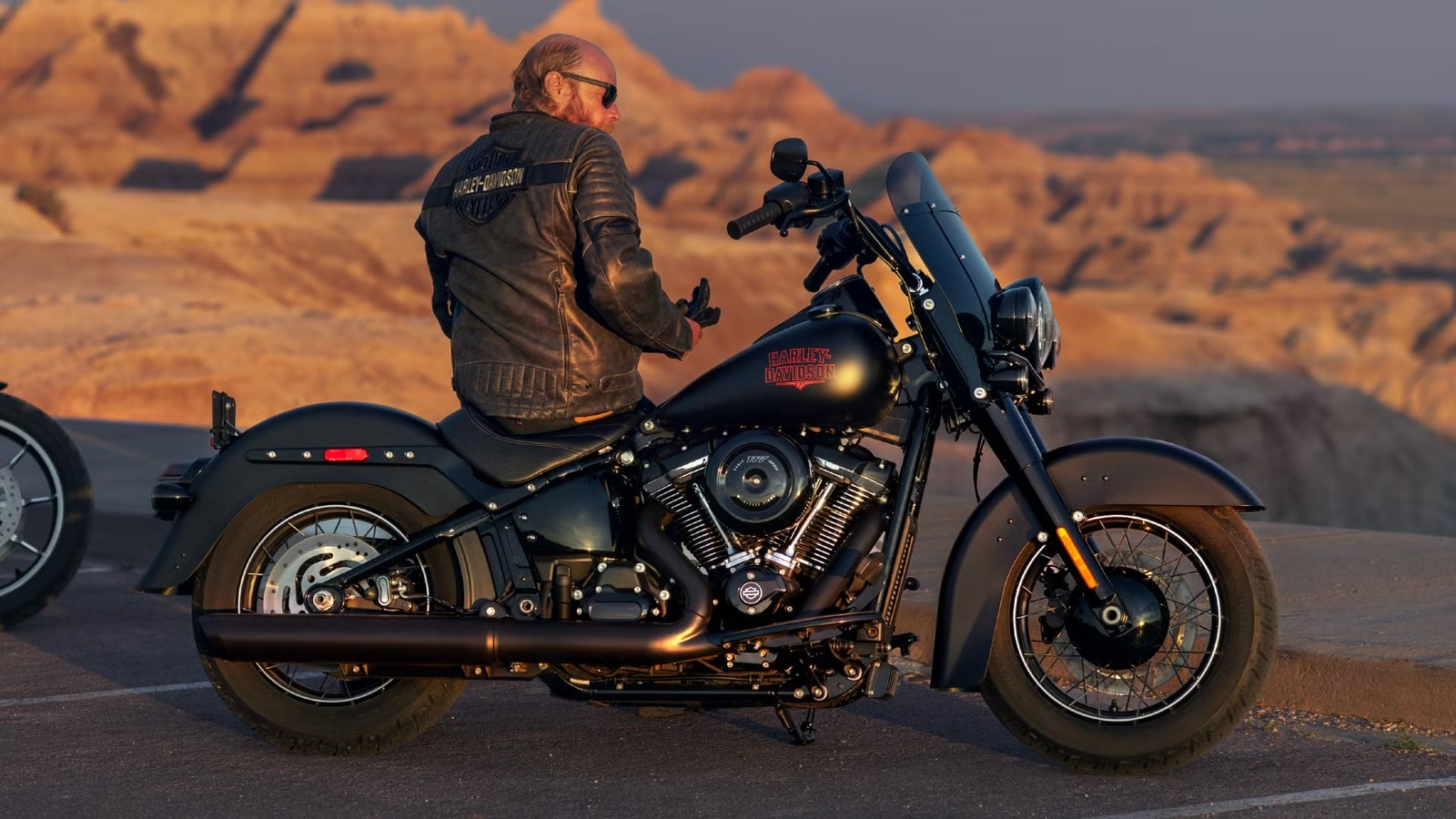
S&P Global cut Harley-Davidson’s long-term credit rating from BBB- to BB+ on July 9, 2026, officially pushing the Milwaukee brand into speculative-grade—or “junk”—territory. The word alone is enough to make a Road Glide shopper pause. But for riders comparing financing options at a dealership right now, the practical fallout is considerably quieter than the headlines imply.

The downgrade is rooted in S&P’s skepticism about Harley’s “Back to Bricks” turnaround strategy, announced in May under CEO Artie Starrs. The plan pivots toward lower-priced models—a returning Sportster at around $10,000 and a new entry-level Sprint—to pull in younger and first-time riders. S&P forecasts Harley’s adjusted EBITDA margin will stay compressed at 5% to 6% through 2026 and likely into 2027, down from the roughly 10% level the agency wants to see. That margin squeeze, not a cash crisis, is what triggered the rating cut.
What “Junk” Actually Means—And What It Doesn’t
A credit rating is essentially a scorecard for how reliably a company can repay its debts. Investment grade (BBB- and above) signals low default risk; speculative grade, or junk, signals higher uncertainty. The step from BBB- to BB+ is the smallest possible move across that threshold—Harley didn’t tumble to CCC territory. S&P simultaneously assigned a stable outlook and noted the company holds approximately $1.8 billion in cash and cash equivalents, plus access to more than $2 billion through its commercial paper program. That is not a company on the edge of insolvency.

For institutional investors—pension funds, bond managers with investment-grade mandates—the downgrade does matter. Some are required to sell Harley debt. That raises Harley’s borrowing costs on Wall Street. But that dynamic lives several layers above the showroom floor, and it does not directly translate into worse loan terms for the person financing a Street Glide.
Harley Financial Services: The Financing Picture For Buyers

Harley-Davidson Financial Services originates and services loans for roughly 71% of new Harley retail purchases in the U.S. The key structural detail here is that HDFS went through a significant overhaul in late 2025, selling approximately $6 billion in retail loan assets to investment partners KKR and PIMCO in exchange for capital and a more efficient balance sheet. Going forward, HDFS plans to sell about two-thirds of new retail loans to those partners while retaining the rest—earning servicing fees throughout. Harley executives described this new arrangement as “largely invisible” to dealers and customers.
That restructuring matters right now because it means HDFS’s ability to originate loans is not directly tied to Harley’s corporate credit rating in the way it once might have been. Promotional financing—rates in the 0.99% to 2.99% range on select new models when factory incentives are active—can still flow through the dealership. Riders with strong credit scores (720 and above) may still find credit unions beating HDFS’s standard published rates by half a point to a point and a half, as has historically been the case. That calculus hasn’t changed because of the downgrade.
Dealer Inventory And Warranties: Reasons To Watch, Not Panic

Dealer inventory is where the longer-term story gets more nuanced. The “Back to Bricks” plan is designed to improve dealer profitability—one of the explicit goals S&P acknowledged—but thinner margins on lower-priced models mean Harley needs higher unit volume to compensate. If that volume doesn’t materialize, dealers could face tighter allocation decisions down the road. For now, touring bikes like the Road Glide and Street Glide remain core to Harley’s lineup and revenue, and there is no indication those models are being deprioritized.
Warranty backing is backed by Harley-Davidson, the manufacturer, not by its credit rating. A downgrade does not void or weaken existing warranty terms. The relevant risk, as with any manufacturer warranty, is the long-term financial health of the company itself — and with $1.8 billion in cash on hand and a stable outlook from S&P, that is not an immediate concern. Riders buying today are not taking on unusual warranty exposure compared to six months ago.
The Bigger Picture: A Turnaround Under The Microscope

Harley’s U.S. registration share has slid from 49.1% in 2019 to an expected 34.5% in 2025—a significant erosion that the “Back to Bricks” strategy is designed to reverse. The plan is a real bet: lower prices attract new riders, new riders grow the base, and a larger base eventually supports the premium touring lineup that has always been Harley’s margin engine. S&P’s concern is that the math takes years to work, and margins will stay thin in the meantime.
For someone shopping for a touring bike today, the honest read is this: Harley is in a genuine transition, not a freefall. The junk label is a signal to bond markets, not a warning to walk away from the dealership. Financing remains accessible, warranties are intact, and the Road Glide isn’t going anywhere. What’s worth watching over the next 12 to 18 months is whether the new affordable models find buyers—because that’s what determines whether the turnaround plan holds up and, ultimately, whether Harley’s stability picture improves or worsens.

Related posts



Latest Post


No Comments