
The Demon 170’s Crankshaft Problem Is Exactly What Happens When A Factory Pushes Past Every Limit
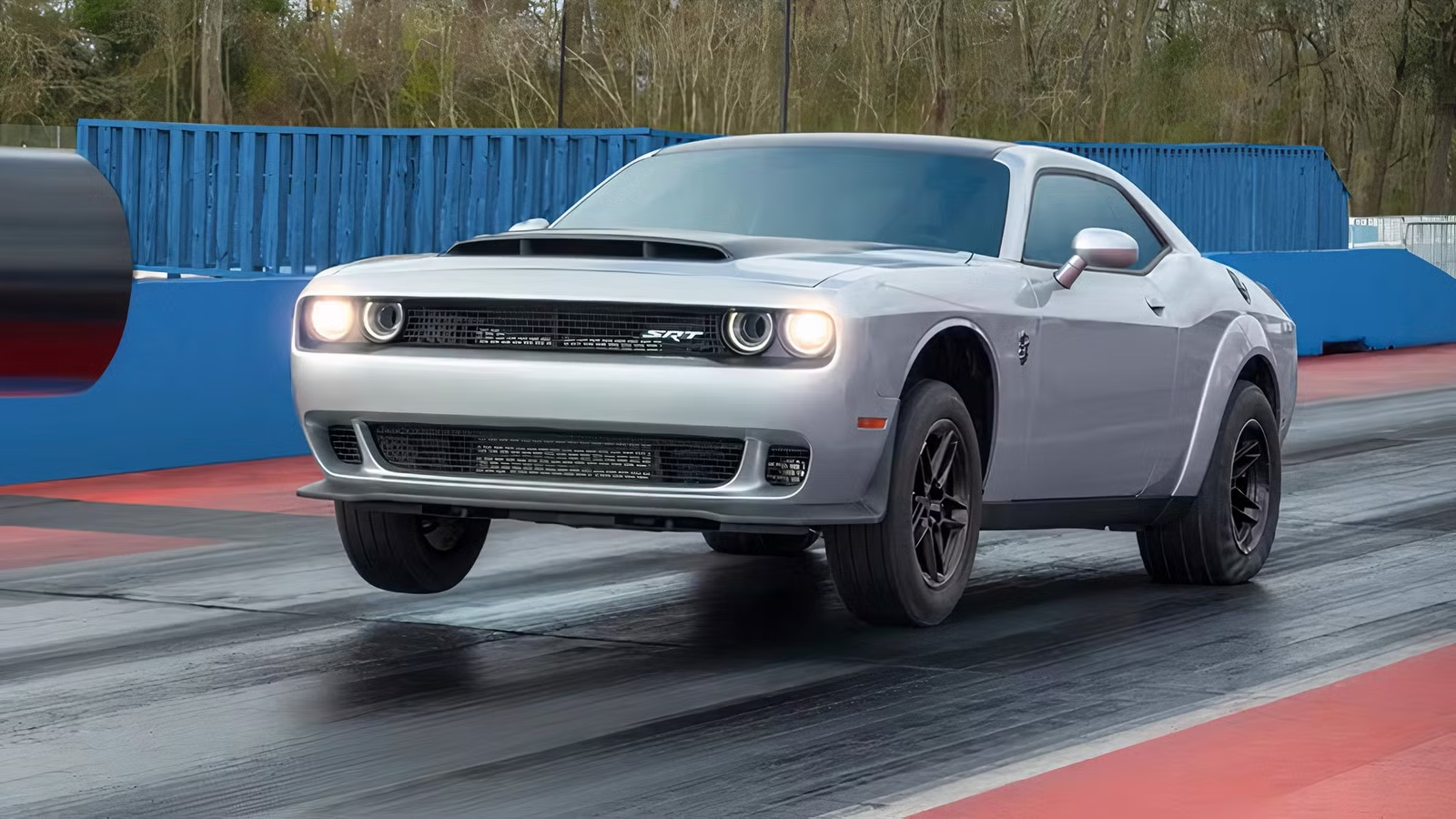
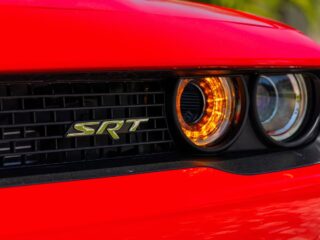
Dodge built the 2023 Challenger SRT Demon 170 to be the most powerful production muscle car ever made — 1,025 horsepower from a supercharged 6.2-liter Hemi, a number that put it ahead of hypercars costing three times as much. That kind of output doesn’t come without cost. This week, Dodge issued a Customer Service Notice covering 345 of the roughly 3,300 Demon 170s produced, flagging a crankshaft harmonic damper and its retaining bolt — sourced from a specific supplier production window — that can fail under the engine’s extreme stress and potentially cause catastrophic internal damage.

This isn’t a recall, and Dodge isn’t spinning it as one. The company traced the defective components to a narrow supplier batch, identified the affected VINs, and is contacting those owners directly. It’s also telling them not to drive the cars to the dealership. That last detail says everything about how seriously Dodge is treating the situation — and about what happens when an engine is engineered right at the edge of what’s physically possible.
What a Harmonic Damper Does, and Why It Matters at 1,025 HP
Every internal combustion engine generates torsional vibration — the crankshaft doesn’t spin in a perfectly smooth arc; it twists and untwists with each power stroke. A harmonic damper, bolted to the front snout of the crank, absorbs and dissipates those oscillations before they can build into resonance that cracks the crank or destroys the front-end accessories. On a stock 5.7-liter Hemi in a Ram 1500, that’s a manageable engineering problem. On a 6.2-liter supercharged Hemi making four figures of horsepower, the torsional loads are in a different category entirely.

The Demon 170’s engine runs a roots-type supercharger producing around 14.5 psi of boost, a compression ratio of 9.0:1, and is tuned specifically for E85 fuel to handle the thermal load. Those numbers push the bottom end — crank, rods, bearings — to margins that leave almost no buffer for component variation. When a harmonic damper or its fastener comes from a supplier batch that falls even slightly outside spec, the engine’s own power becomes the weapon that destroys it. That’s the scenario Dodge is trying to head off.
What Dodge Found, and How Many Cars Are Affected

The Customer Service Notice covers 345 cars — approximately 10 percent of total Demon 170 production. Dodge and Chrysler/ Dodge CEO Matt McAlear traced the issue to a specific production period at the damper supplier, which is why the affected VINs are not sequential. Some Demon 170s built before and after the flagged window are fine; the problem is isolated to parts from that particular batch.
McAlear was direct about the stakes: worst case, the damper fails under load and the resulting imbalance tears apart additional engine components. Owners would likely hear something wrong before it reached that point — a harmonic damper failure announces itself — but on an engine this expensive and this irreplaceable, “likely” isn’t good enough. Dodge’s recommendation is unambiguous: do not drive an affected car to the dealership. The company will arrange transportation to the service center and, for owners who want to keep mileage off their limited-edition machine, transportation back home once the work is done. The repair itself takes roughly two hours and can be completed from underneath the car without pulling the front fascia — a meaningful detail for collector-grade examples.
Owners who want to check their status immediately can look up their VIN on Mopar.com under the CSN section, which is separate from the recall section.
Dodge’s Proactive Stance Sets a Different Standard

It’s worth pausing on what Dodge is actually doing here. The Demon 170 was sold with a clear understanding that it was a drag-racing weapon — it shipped with a front passenger seat deleted, came with a separate “Demon Crate” of track-day hardware, and ran the quarter mile in the low nines on street tires. Performance brands routinely use track use as grounds to void powertrain warranties. Dodge is doing the opposite: proactively identifying affected cars, covering transportation costs, and fixing the problem before owners experience it.
The cynic’s read is that Dodge had no choice — some customer cars had already experienced failures, which is what surfaced the supplier batch in the first place. The more generous read, and the more accurate one, is that the Demon 170 was Dodge’s farewell to the Challenger nameplate and to the Hemi era. Letting 345 of those engines shake themselves apart would be a different kind of legacy. The CSN is the right call, and the engineering honesty behind it — this is what the limit looks like — is more interesting than any spin in either direction.
Gearheads who own a Demon 170 and haven’t heard from Dodge yet should check Mopar.com now. The 345 affected cars deserve better than a catastrophic failure on the way to a Cars and Coffee.

Related posts

Latest Post


No Comments