
Buick Just Beat Toyota And Honda In A Major Dependability Study
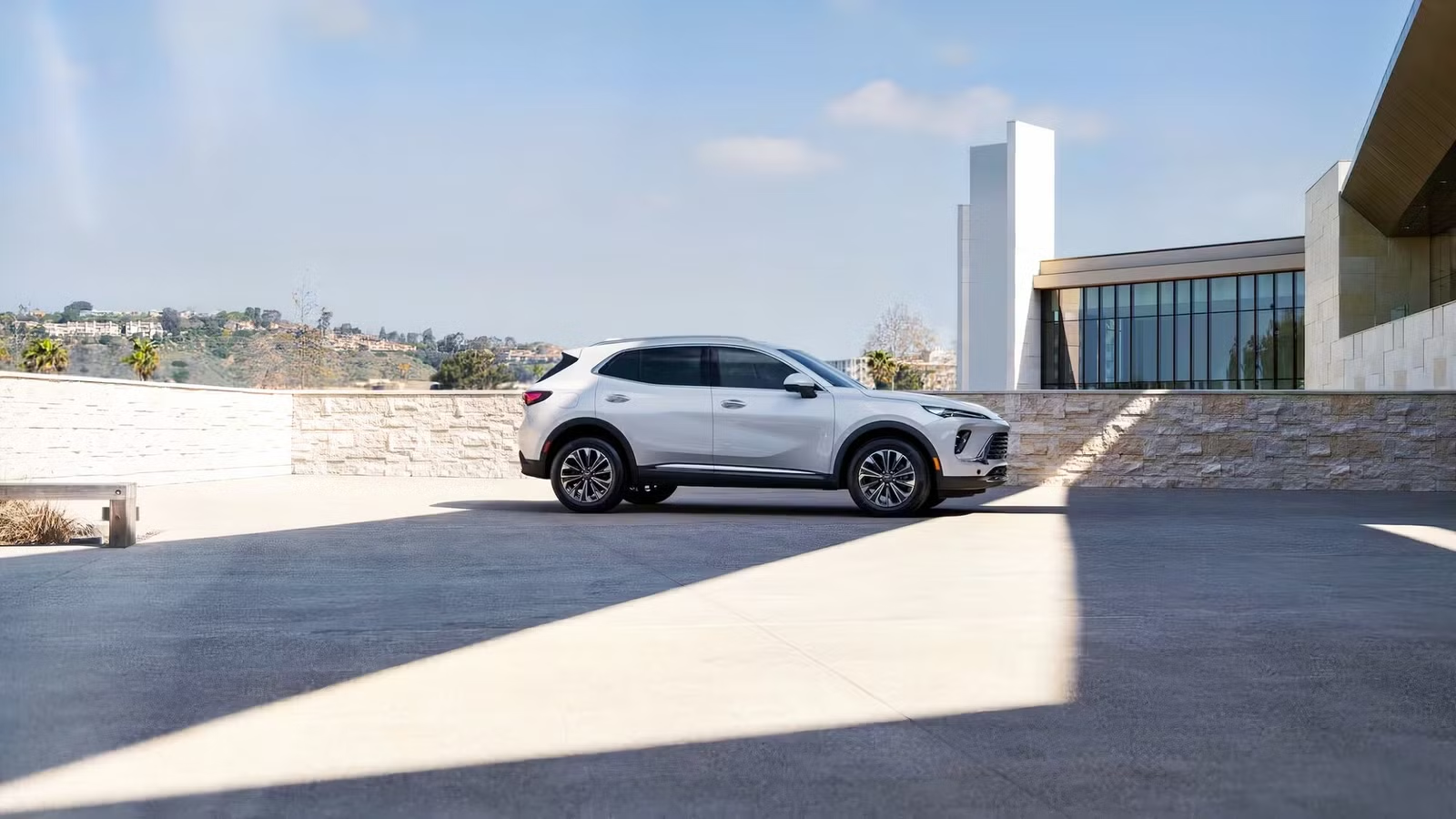
If, like me, you are on the sensible side of drivers, when you buy a new vehicle, you look at how reliable certain brands and models are meant to be. If you don’t want to do too much research, the widely held view that Toyota, Lexus, and Honda are the most reliable brands out there, for the most part, serves people well.

The times are changing, though; Buick is now above both Honda and Toyota in a respected J.D. Power dependability survey that many people swear by.
Japanese Brands Have Long Dominated The Reliability Conversation
Japanese marques have enjoyed a pretty comfortable position at the top of the reliability conversation for years. Lexus, Mazda, Subaru, Toyota, and Honda have all built reputations for making vehicles that keep going long after the finance payments stop.

We are not saying American or European brands are necessarily unreliable, but they certainly don’t have the clout that Japanese ones do. Older Lexus RX models, Mazda3s, and Corollas are still popular today because well-maintained models don’t usually spend half their lives waiting for parts or sitting in a garage.
Toyota And Honda Built Their Reputations On Dependable Everyday Cars

Toyota is effectively synonymous with reliability. It is famous for being relatively straightforward compared to other brands; naturally aspirated engines are used a fair amount; proven transmissions are a mainstay in many models; and complicated features aren’t generally piled in for the sake of it.
The same goes for Honda. Engines like the Honda K-Series inline-four have been used in the U.S. since 2001, and have a chain-driven timing system, overbuilt aluminum block, and strong internals, while models like the Civic and Accord are well-recorded as capable of hitting hundreds of thousands of miles with simple maintenance.
Buick Just Posted A Better Dependability Score Than Both

For the above reasons, it may come as a shock that Buick, a brand with an average-to-high historical dependability reputation, has been ranked higher by J.D. Power than both Honda and Toyota.
Buick Recorded 160 Problems Per 100 Vehicles, Beating The Japanese Stalwarts
According to the 2026 U.S. Vehicle Dependability Study (VDS), the industry average problems per 100 vehicles (PP100) is 204. Lexus is still the brand with the fewest PP100, at 151, but in second place is Buick. The 2026 VDS says that Buick models experience 160 PP100; Toyota, 185 PP100; and Honda, 211 PP100. The thing is, last year was similar.
The 2025 VDS says that Buick experienced 143 PP100, which is still behind Lexus (140 PP100), but above Toyota (162 PP100), Honda (201 PP100), and the industry average (202 PP100).
Smaller Lineup And Established Powertrains May Help Explain Buick’s Strong Result


Like many brands, Buick has slimmed down its lineup. The 2026 Buick lineup consists of the Envista, the Encore GX, the Envision, and the Enclave. There are no U.S. sedans or wagons, and maybe most crucially, no electric or hybrid vehicles.
A 1.2-liter EcoTec turbo-three is available for the Envista and Encore GX, and has been in service for the last seven years. A 2.0-liter EcoTec turbo-four that has been used since late 2018 is available for all Buick Envision models. The newest engine, which has been available since 2024, is a 2.5-liter CSS turbo-four under the hood of all Enclave trims.
The newest engine is the most powerful you can get this year, at 328 horsepower at 5,500 rpm and 326 pound-feet of torque at 3,500 rpm. While you won’t win many drag races with it, it is ideal if you want a bit more performance. Other engines this year range from 137 to 228 horsepower. In other words, similar to what some of the more famously reliable brands on the market are doing.
What The J.D. Power Study Actually Says About Buick Reliability

Buick’s strong standing in the table is worth considering, because the VDS doesn’t just measure whether an engine or transmission will give up. It covers the smaller faults that can make an otherwise decent vehicle a pain to own.
That includes problems with infotainment systems (which are helping to drive higher PP100s in the market), interior fittings, climate control, and driver assistance systems, as well as more serious mechanical problems. It gives a broad picture.
The Survey Tracks Problems Reported By Owners Of Three-Year-Old Vehicles

The 2026 VDS surveyed 33,268 original owners of 2023 model-year vehicles, and asked them about 184 specific problem points across nine categories. These range from the powertrain and seats to electronics and touchscreens.
Owner feedback is the best way to get an insight into how a vehicle behaves, and getting results from people who have owned a car for three years is much better than judging something after a short test drive. They know what works and what doesn’t, and which minor issues become genuine annoyances.
This also helps to look beyond brand reputation. A hood badge might carry years of goodwill, but if another brand, like Buick, is delivering a better ownership experience, that deserves more recognition.
A Strong Dependability Score Doesn’t Guarantee 250,000-Mile Longevity

There is a caveat, though. Just because Buick has a low PP100 rating on J.D. Power, and something like the 2023 Encore GX has an 84 out of 100 reliability score doesn’t mean it will be a vehicle that will last hundreds of thousands of miles.
iSeeCars says the vehicle with the highest probability of reaching 250,000 miles is the Toyota Sequoia, which has a 42.3 percent chance. They also say that Lexus, Toyota, and Honda occupy the entire top-ten most-likely model list.
Brand-wide, the top-ten most likely to reach 250,000 miles are Toyota, Lexus, Honda, Acura, GMC, Mazda, Lincoln, Ram, Ford, and Cadillac. Buick isn’t anywhere near it.
Of course, mileage depends on maintenance, how you drive, driving conditions, and how far you drive. A well-cared-for Buick can cover serious miles, but it doesn’t yet have the same proven long-haul record as a Sequoia or an Accord.
Buick Has Earned A Real Place In The Reliability Conversation

Buick may not have the same reputation as Japanese brands, but with the latest lineup, you are still getting a good deal of luxury alongside strong owner approval.
Its recent results (this year and last year) make a strong case that reliability and affordability don’t have to come exclusively from the likes of the Corolla or Civic. That makes Buick worth looking at alongside the usual Japanese options.
Sources: Buick, J.D. Power, and iSeeCars.

Related posts



Latest Post


No Comments