
The Best Nissan Z Nismo Isn’t The Quicker Automatic, It’s The 4.7-Second Manual
Sports cars keep getting faster, but outright speed doesn’t always make them more enjoyable. Modern transmissions change gears quicker than any human, launch cars with remarkable precision, and turn impressive acceleration into an almost effortless task. But every improvement comes with a trade-off. When computers handle the shifting, drivers lose some of the physical involvement that makes a sports car special. That raises an interesting question for enthusiasts: Is a faster car necessarily a better driver’s car?
Sports Cars Keep Getting Faster, But Something Is Being Lost

Modern automatic and dual-clutch transmissions have become almost unbeatable in performance testing. They execute rapid shifts, minimize power interruptions, and use launch control to manage traction with remarkable consistency. Even experienced drivers struggle to match their precision. That’s important when manufacturers compete over horsepower figures, 0–60 mph times, and lap records. A few tenths of a second can determine which car claims bragging rights.
However, those numbers don’t tell the whole story. A manual gearbox requires drivers to operate the clutch, select gears, and coordinate their movements with the engine. Getting everything right brings satisfaction that no acceleration figure can measure. Automatics make performance more accessible, but they also remove some of the skills that make driving rewarding.
A Seven-Figure V12 Shows Why The Stopwatch Isn’t Everything


Gordon Murray takes that philosophy to extraordinary lengths. On August 14, 2026, Gordon Murray Special Vehicles unveiled the S1 at Monterey Car Week. This exclusive supercar features a naturally aspirated 4.2-liter Cosworth V12 producing 681 horsepower and revving to an astonishing 12,100 rpm. Despite its extreme performance, Murray chose a six-speed manual transmission. Engineers developed a shift action that resembles the movement of a rifle bolt, emphasizing precision and mechanical feedback. Production is limited to just 64 individually commissioned examples, reportedly sold before the car’s public debut.
The S1 also features a central driving position, lightweight carbon-fiber construction, and an emphasis on mechanical grip. Its three-seat layout places the driver at the center of the experience, while carefully tuned suspension makes the car engaging beyond a racetrack. Murray could have prioritized outright acceleration, but the S1 instead celebrates the physical connection between driver and machine. Unfortunately, experiencing that philosophy requires an enormous bank account and an allocation that’s already gone.
The 2027 Nissan Z Nismo Manual Is Slower, And That’s The Point

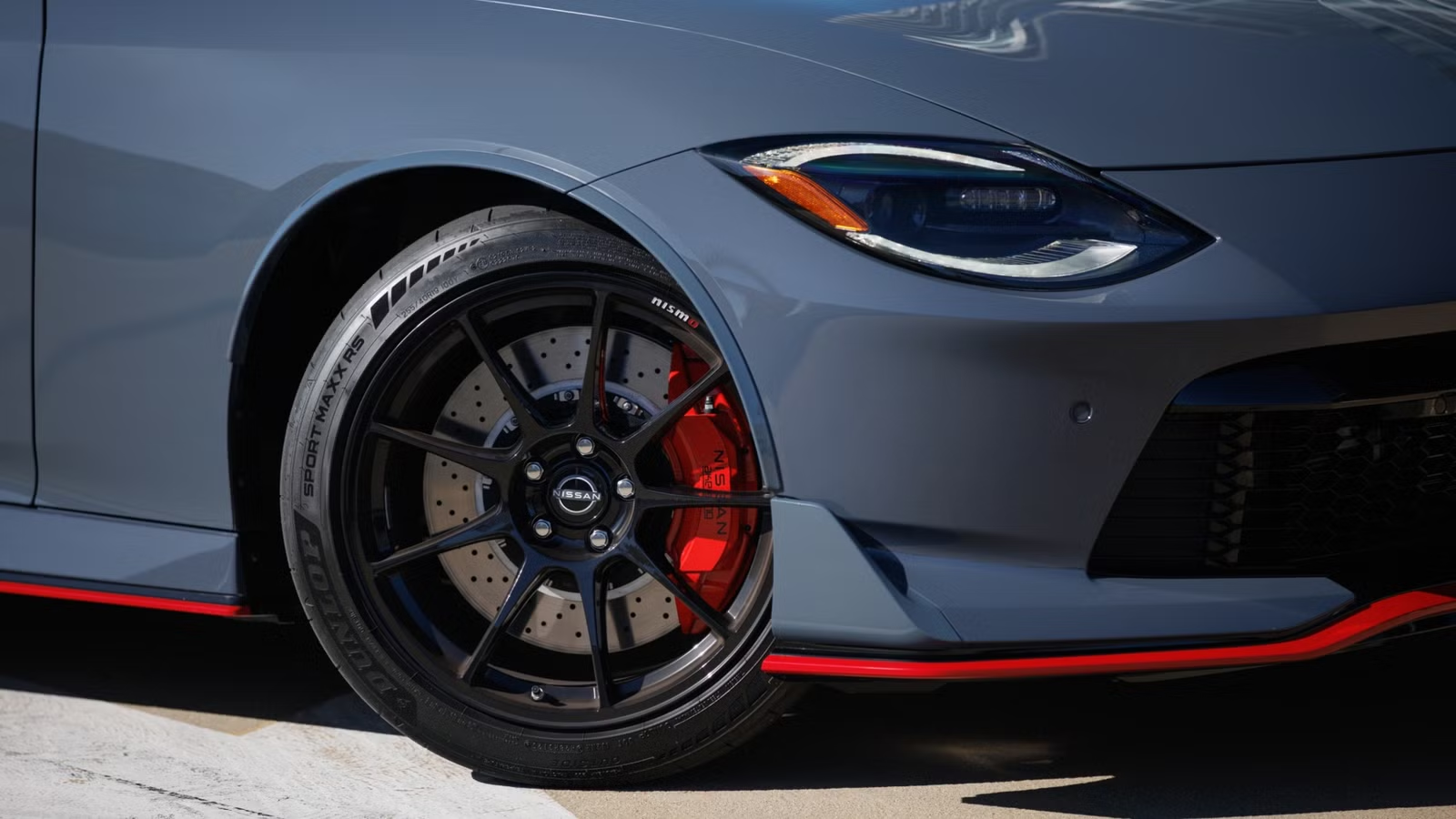
Fortunately, enthusiasts don’t need millions to enjoy a similar approach. The 2027 Nissan Z Nismo finally offers a six-speed manual transmission after initially launching exclusively with a nine-speed automatic. That restriction frustrated enthusiasts because less expensive Z trims already offered three pedals. Nissan eventually listened and introduced the manual for the 2027 model year, giving its most focused Z the transmission many buyers wanted from the beginning.
Both versions use a 3.0-liter twin-turbocharged V6 producing 420 horsepower and 384 lb-ft of torque. However, their acceleration figures tell different stories. The automatic reaches 60 mph in approximately 4.2 seconds, while 4.7 seconds is achieved with the manual. That’s half a second lost despite identical power outputs. The difference comes partly from slower shifts and the skill required to launch a manual car, but that involvement makes the slower version appealing. Drivers must manage the clutch, choose each gear, and control how the engine delivers its power rather than letting software make those decisions.

Nissan also made meaningful mechanical changes. A revised shifter shortens the shift stroke by 6 mm, while a reinforced clutch handles the Nismo’s additional torque. The 2027 model gains chassis refinements and GT-R-derived two-piece front brake rotors that reduce unsprung weight. These changes help the car maintain its track-focused character. Pricing starts at $67,260 before a $1,325 destination charge. That’s expensive for a Nissan Z, but remarkably attainable compared with Murray’s exclusive V12 machine. Both offer the satisfaction of controlling a powerful engine through a manual gearbox.
The Manual Isn’t Perfect, But It Makes The Driver Matter

Of course, simply adding a clutch pedal doesn’t guarantee an excellent driving experience. Some reviewers appreciated the Nismo manual’s greater involvement and mechanical character but noted some vagueness in the shift action. Others were less enthusiastic, criticizing the stiff gear changes, imprecise shifting, and demanding clutch engagement. The gearbox requires effort, and that effort doesn’t always translate into satisfying feedback.

Those complaints reveal an important distinction. A good manual needs precise gear engagement, predictable clutch response, and natural movement between gears. Without those qualities, shifting can become frustrating rather than enjoyable. The Nismo doesn’t completely nail that formula, especially compared with the best manual sports cars. However, it still gives drivers meaningful control: Nissan’s SynchroRev Match system can automatically match engine speeds during downshifts, or drivers can switch it off and practice heel-and-toe shifting themselves. The automatic handles those tasks without asking, but the manual makes them part of the experience.
The Best Part Of A Million-Dollar Supercar Doesn’t Have To Cost Millions

The Gordon Murray S1 represents an extraordinary expression of analog performance. Its screaming V12, lightweight construction, bespoke craftsmanship, and limited production justify its place among the world’s most exclusive supercars. Buyers pay for engineering that goes far beyond a manual gearbox. With just 64 examples reportedly allocated before launch, however, its mechanical driving experience remains practically unattainable for most enthusiasts.
The Nissan Z Nismo offers a more realistic taste of that philosophy. It lacks the S1’s exotic engineering and sky-high rev limit, but its manual transmission gives drivers the same basic responsibility for choosing gears and managing a powerful engine. Better still, Nissan charges the same MSRP for the manual and automatic. The nine-speed remains the better choice for drivers who want maximum acceleration, everyday convenience, and consistent performance. But enthusiasts who enjoy mastering a clutch and executing clean shifts may prefer the slower six-speed.
Source: Nissan, Gordon Murray Automotive

Related posts


Latest Post


No Comments