
Why The 1970 Chevelle SS 454 LS6 Wasn’t the Hemi-Killer It Should Have Been
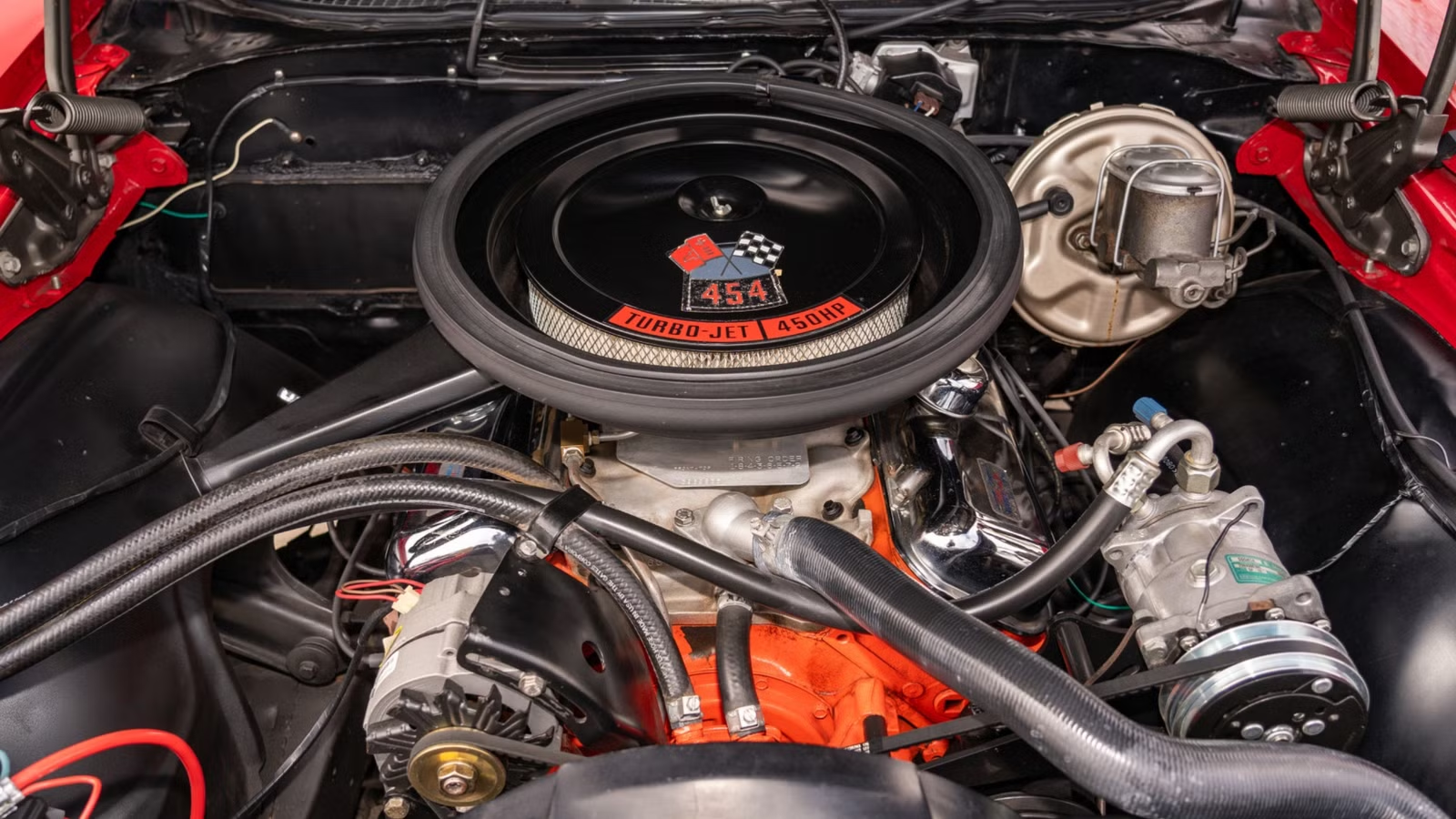
In a tactical blunder that makes Waterloo and Wounded Knee look like brilliant strategic victories, GM put a cap on 400 cubic inches for engines in intermediate cars in 1963, just as the muscle car craze and horsepower wars were about to explode. This arbitrary big engine ban hampered its divisions for most of the Golden Age as there was nothing that could compete with the Chrysler 440 Six Pack, 426ci Hemi or even the base model 440s and 383s. Dodge and Plymouth muscle cars ruled the streets, but in 1970 there was finally some hope for the Chevy Chevelle as GM mercifully removed all barriers and allowed massive displacement big-blocks straight from the factory. The ’70 Chevelle SS 454 LS6 had 450 angry horses under the hood and was poised to finally topple the Mopar Street Empire, but sadly fell short of being the Hemi-killer it promised to be.

Before 1970, the most powerful engine a Chevelle SS had access to was the 375 horsepower, 415 pound feet of torque 396 L78 V8. With this engine, the 1969 Chevelle SS accelerated from 0-60 in 5.8 seconds and ran a quarter-mile in 14.1 seconds, while lesser, more common versions of the 396 were in the high 14s and even low 15s. During the Golden Age of American Muscle, if you didn’t have a 13-second car, you didn’t have a muscle car. It may have looked badass and aggressive, but running in the 14s or 15s made it a grocery getter. The only saving grace was that super-powered Hemis were rare, so most of what anyone would face in a red-light challenge was also a 14-second ride, but there was always the fear that a Mopar might pull up next to you at some point nad then it was over.

Thankfully, GM pulled the plug on their pointless 400ci engine cap and in 1970, Chevy celebrated by making the new 454 V8 available to the Chevelle. The base LS5 version of the 454 generated 360 horsepower and 500 pound-feet of torque, which was okay but definitely not a contender against Hemis or Six Packs. The LS6 variant of the 454, however, was putting out 450 hp and 500 lb-ft of tire-shredding torque, which was considerably more powerful than the 425 hp and 490 lb-ft of torque the 426 Hemi V8 had going. With the 454 LS6, Chevy was sure they finally had the engine that would help the Chevelle SS blow the doors off of any and all Mopar muscle cars, but things didn’t quite work out.

There is anecdotal evidence that a ’70 Chevelle SS 454 LS6 could hit the quarter-mile with a sub-13.2-second ET, but those tales most certainly involve cars that were prepped and tuned. The quickest documented pass for a bone-stock SS 454 LS6 is 13.4 seconds, which doesn’t suck by any stretch of the imagination, but it’s not anything that would send shivers down the spine of a Dodge or Plymouth owner who had a Hemi-equipped ride. The 426 Hemi pretty much guaranteed 13.4 seconds right off the dealer lot, and cars like the Plymouth Hemi Road Runner were a little quicker by a tenth of a second or so. Running even isn’t blowing anyone away and, depending on driver skill, a Chevelle SS 454 LS6 could easily get embarrassed against a Dodge Charger Hemi R/T.


There was another thing that happened in 1970 that totally pooped the Chevelle SS 454 LS6’s bowl of Wheaties and that was the introduction of the Dodge Challenger Hemi R/T and Plymouth Hemi ‘Cuda. Both of these Mopar E-body dynamos could annihilate the quarter-mile in 13.1 seconds without any alterations whatsoever. Three tenths of a second doesn’t seem like a long time, but in drag racing it’s an eternity. If driver skill were equal and both cars performed perfectly, a Hemi ‘Cuda versus a Chevelle SS 454 LS6 would be an ass-whooping. At 13.1 seconds, the Hemi ‘Cuda would cross the finish line 45 feet before the Chevelle SS’s 13.4-second run. That’s like almost three car lengths, and to observers and even the drivers, it is a serious beat down. If there’s daylight between you and the car you’re racing, you got your ass seriously dragged, son.
Why Wasn’t the 454 LS6 a Hemi-Killer?

The 454 LS6 V8 had 25 more horsepower and 10 more pound feet of torque than the 426 Hemi, so on paper it should have been quicker and faster, but it wasn’t. The Chevy big-block only had a single four-barrel carburetor, while the Hemi was a dual-quad setup, but that doesn’t really explain anything given the power ratings. The ’70 Chevelle SS 454 LS6 had a curb weight of approximately 3,900 pounds while a ’70 Hemi ‘Cuda tipped the scales at 3,880, so there is no real power-to-weight advantage going on here. The Hemi ‘Cuda had a 108-inch wheelbase, which was four inches shorter than the Chevelle SS, which could make weight transfer off the launch help dig the tires in, but also created more front-end lift and instability, so this isn’t the key either.

Scientists have been trying to unravel the mystery of the 454 LS6’s lack of Hemi-Killing abilities for generations, but we here at HotCars think we have found the answer. It’s probably because the 454 LS6’s 450-horsepower rating was accurate and the 425 hp of the 426 Hemi was a massive underestimation. Experts agree that the 426 Hemi was probably near 500 horsepower, and that would explain why it smoked the Chevelle SS. Horsepower ratings were never exact, and most manufacturers downplayed the ferocity of their muscle cars, to help buyers get better insurance premiums. Obviously, a 425-horsepower car isn’t getting a deal on car insurance, but a 500-horspower ride couldn’t even find a company that would write a policy. Anyone expecting a super-technical breakdown of why the Hemi was a more kick-ass engine may be disappointed, but sometimes the most logical answer is the right answer.
Sources: Chevrolet

Related posts

Latest Post


No Comments