
The AMG E53 Hybrid Wagon’s Identity Crisis Puts It Directly In The Audi RS6 Avant PHEV’s Crosshairs

A fresh review of the 2026 Mercedes-AMG E53 Hybrid Wagon published today by The Drive lands a verdict that will sting at Affalterbach: the car is, in the reviewer’s words, “a bit mild, a bit wild, but mostly confusing.” That’s a damning summary for a wagon wearing AMG badges and carrying a price tag well into six figures. It’s also the clearest possible invitation to ask whether the Audi RS6 Avant PHEV—the other electrified super-estate in this rarefied fight—has already answered the question the E53 is still asking.

Both cars occupy the same narrow slice of the market: performance wagons with plug-in hybrid powertrains, German engineering, and buyers who want school-run practicality without surrendering the ability to embarrass sports cars at a rolling start. But the two approaches couldn’t be more philosophically different—and that divide is exactly what makes the comparison worth having right now.
What The Drive’s Review Actually Says About The E53
The Drive’s critique isn’t that the E53 Hybrid Wagon is a bad car. It’s that the car doesn’t fully commit to being any particular kind of good car. The hybrid powertrain—a turbocharged inline-six paired with an electric motor—produces a combined output that puts it firmly in the performance conversation, but the way that power is delivered reportedly feels more executive express than AMG bruiser. The electric assist smooths out the character, softening the edges that AMG buyers typically pay for.

The related source from The Drive, published two weeks earlier, flagged the same tension: “crazy fast for a car without a ’63’ badge on it, but it certainly doesn’t have eight cylinders.” That framing is telling. The E53 is positioned below the full AMG hierarchy, and the hybrid system—while technically impressive—doesn’t paper over that gap as convincingly as Mercedes may have hoped. The result is a wagon that’s genuinely quick and genuinely comfortable, but that occupies an uncomfortable middle ground between the E-Class All-Terrain’s refined touring mission and what a real AMG wagon should feel like.
How Audi Answers The Same Question Differently

The RS6 Avant PHEV takes the opposite philosophical stance. Where Mercedes appears to have used electrification to broaden the E53’s appeal—softening its performance edge in the process—Audi has deployed the RS6’s plug-in hybrid system as a performance amplifier rather than a character moderator. The RS6 Avant already had a reputation as one of the most complete performance wagons ever built; the PHEV variant adds electric torque to an existing twin-turbocharged V8 platform, meaning the combustion foundation is already doing the heavy lifting before the electric motor contributes.
The result is a car that knows exactly what it is. The RS6 Avant PHEV doesn’t hedge. It’s not trying to be a slightly sportier E-Class; it’s an RS car that happens to have a plug. That clarity of purpose is precisely what The Drive’s review implies the E53 lacks—and for buyers in this segment, purpose tends to matter as much as performance numbers.
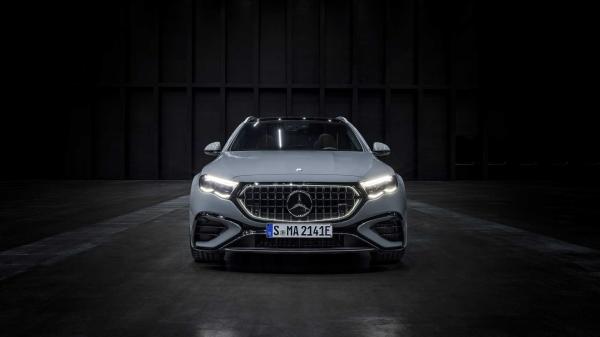
The Performance Wagon That Makes The RS6 Avant Look Overpriced
You can save almost $40k over the RS6 Avant with this AMG station wagon.
What This Means For Buyers Choosing Between Them

The practical reality is that both wagons will haul a family and their luggage without complaint, both will cover ground at a pace that makes their power outputs feel entirely believable, and both will draw attention in a school parking lot. But the buyer profiles they suit are genuinely different.
If you’re coming from a luxury-first mindset—an E-Class buyer who wants more performance without fully crossing into track-day territory—the E53 Hybrid Wagon’s blended character may actually be a feature rather than a flaw. The smoother hybrid delivery and the AMG badge without the AMG intensity could be exactly the right balance for a significant portion of the market. For the buyer who already knows what an RS6 feels like and is asking whether the PHEV version preserves that experience, the answer from Audi appears to be yes. The electric hardware adds capability without diluting the RS identity.
The super-estate hybrid segment is still young enough that neither car has definitively set the template. But The Drive’s review suggests Mercedes is still finding its footing in this space—and Audi, at least for now, looks like it arrived with a clearer answer.

Related posts


Latest Post


No Comments