
Why A Genesis SUV Might Be The Smartest Luxury Buy Today
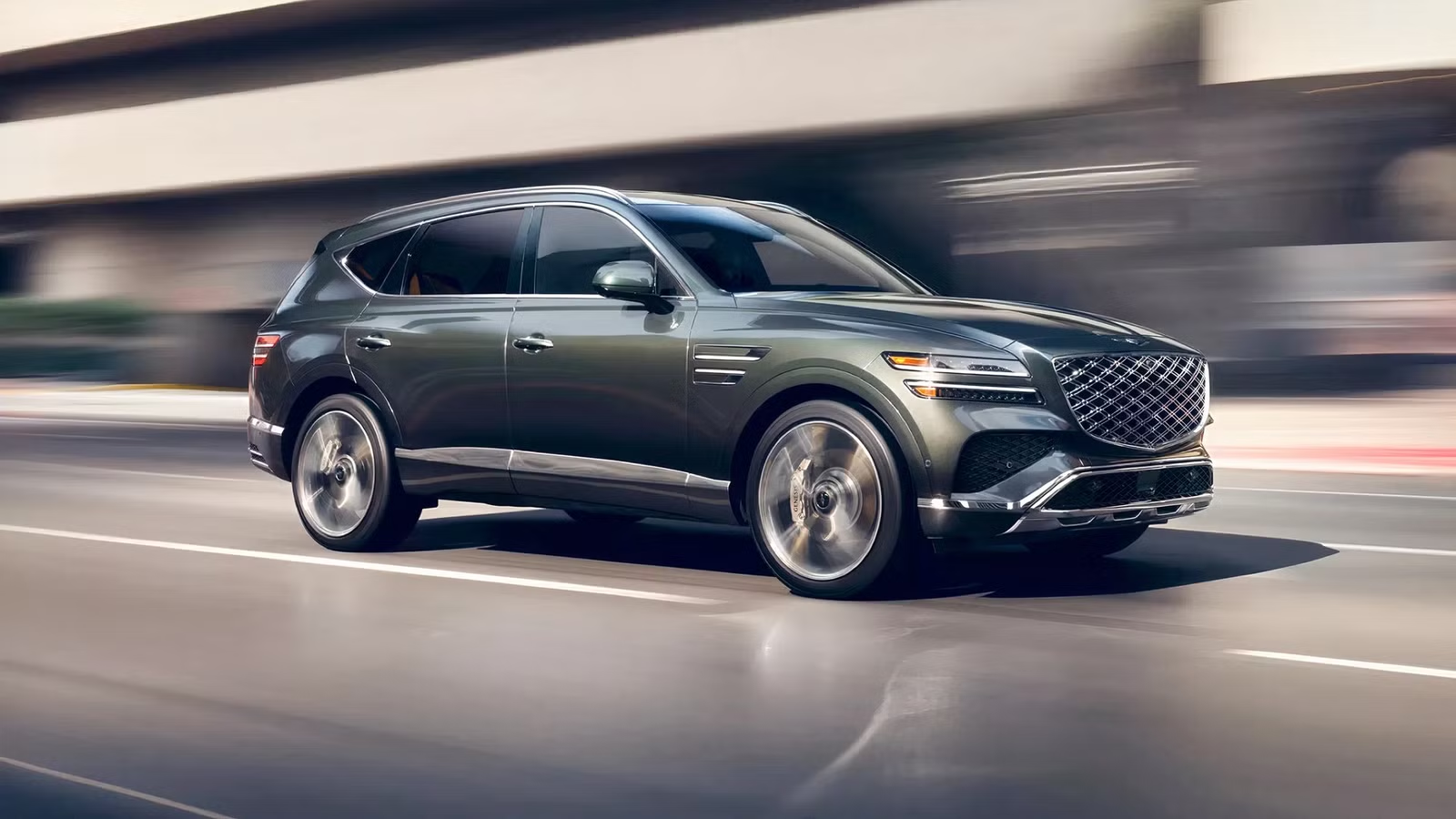
Luxury SUV buyers have traditionally gravitated toward brands such as BMW, Mercedes-Benz, Audi, and Lexus. For decades, those badges dominated the segment and were often the default choice for premium buyers. Today, however, the luxury market looks different. Rising vehicle prices, costly options packages, and growing ownership concerns have encouraged buyers to look beyond traditional luxury brands. That shift has created an opportunity for Genesis. While it lacks the heritage of its German and Japanese rivals, the South Korean brand has quietly built a compelling SUV lineup through distinctive design, advanced technology, generous warranty coverage, and competitive pricing. Models such as the GV70, GV80, and GV60 challenge long-held assumptions about what a luxury SUV needs to be.
Luxury Buyers No Longer Automatically Choose German Brands
Prestige Alone Doesn’t Matter Like It Used To

For years, luxury SUV buyers rarely looked beyond BMW, Mercedes-Benz, Audi, or Lexus. If you wanted a premium SUV, those were the brands that dominated the conversation. They still build excellent vehicles, but they have also become increasingly expensive. A 2025 BMW X3 starts at around $49,000, while a Mercedes-Benz GLC begins at roughly $50,000. Add popular options, and those prices can climb by thousands beyond the sticker price.

As a result, buyers are asking a different question: What am I actually getting for my money? Technology, warranty coverage, comfort, safety, and long-term value now matter just as much as badge prestige. That shift has created an opening for Genesis. Whether it’s the GV70, GV80, or all-electric GV60, Genesis offers a luxury SUV lineup that increasingly appeals to buyers who prioritize substance over tradition.

The Korean Luxury Sedan Built For Long-Term Ownership
This Korean luxury sedan combines supple luxury with athleticism, offering low ownership costs and industry-leading warranties.
Genesis Quietly Became A Serious Luxury Brand
Strong Design And Premium Cabins Changed Everything

The biggest mistake buyers still make with Genesis is treating it like an upstart luxury brand trying to earn credibility. That phase is over. Genesis is no longer competing for a seat at the table—it is already sitting there alongside BMW, Mercedes-Benz, Audi, and Lexus.

Car and Driver has praised Genesis for its quality, refinement, and attention to detail. More importantly, publications no longer treat Genesis as a bargain alternative, but rather as a legitimate luxury competitor in its own right.

Whether examining the compact GV70, the larger GV80, or the all-electric GV60, Genesis has developed a distinctive design language that avoids simply mimicking German rivals. The GV70 blends athletic proportions with elegant styling, the GV80 delivers the sort of road presence normally associated with far more expensive luxury SUVs, and the GV60 embraces a futuristic aesthetic that helps it stand apart in an increasingly crowded EV market. The interiors are equally important to Genesis’ rise.

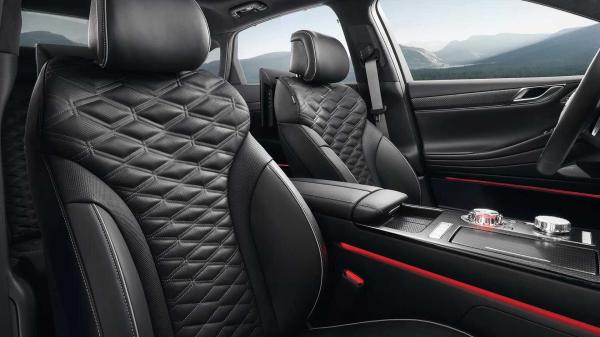
Car and Driver named the GV70 to its 2025 10 Best list, recognizing its blend of luxury, performance, technology, and value. Inside, premium materials, a distinctive knurled glass shift selector, a sweeping dashboard design, and a new 27-inch integrated display help the GV70 deliver a cabin experience that rivals far more expensive luxury SUVs.

What truly strengthens Genesis’ position is equipment. Many features that are optional extras on competing luxury SUVs come standard on Genesis models. Buyers often receive a more complete luxury experience without spending thousands on additional packages.

The same philosophy extends to the GV80. Starting at approximately $59,000, it offers premium materials, advanced technology, available quilted leather upholstery, and the sort of refinement buyers typically expect from luxury SUVs costing considerably more.

A well-equipped BMW X5 or Mercedes-Benz GLE can quickly move beyond $70,000, making the GV80’s value proposition difficult to ignore.

Then there is the GV60. While the GV70 and GV80 represent a more traditional interpretation of luxury, the GV60 showcases Genesis at its most ambitious. Distinctive styling, a Crystal Sphere gear selector, facial-recognition access, biometric fingerprint authentication, wireless smartphone integration, and a new 27-inch integrated display make it one of the most technology-rich SUVs in its segment. Few rivals offer as much equipment at a similar price point.

The Genesis trio highlights exactly why Genesis has become a serious luxury contender. The brand is no longer relying on lower pricing to attract buyers. Instead, it competes through a level of luxury that is simply hard to ignore.
The Genesis Luxury SUV Range Compared
|
Specification |
Genesis GV70 |
Genesis GV80 |
Genesis GV60 |
|
Base Powertrain |
2.5-Liter Turbocharged I4 |
2.5-Liter Turbocharged I4 |
Single-Motor EV (RWD) |
|
Base Output |
300 hp / 311 lb-ft |
300 hp / 311 lb-ft |
225 hp / 258 lb-ft |
|
Optional Powertrain |
3.5L Twin-Turbo V6 |
3.5L Twin-Turbo V6 |
Dual-Motor Performance AWD |
|
Top Output |
375 hp / 391 lb-ft |
375 hp / 391 lb-ft |
483 hp / 516 lb-ft |
|
Drivetrain |
AWD |
AWD |
RWD or AWD |
|
0–60 MPH |
5.0 sec (3.5T) |
5.3 sec (3.5T) |
3.7 sec (Performance) |
|
Starting Price |
$47,895 |
$57,700 |
$52,525 |
|
Primary Rival |
BMW X3, Mercedes-Benz GLC, Audi Q5, and the Lexus NX |
BMW X5, Mercedes-Benz GLE, Audi Q7, and the Lexus RX |
BMW iX, Mercedes-Benz EQE SUV, and the Audi Q4 e-tron |
|
Key Strength |
Sporty luxury and value |
Space, comfort, and refinement |
EV performance and technology |
The Genesis SUV Lineup Covers Different Buyers
GV70, GV80, And GV60 Each Have Their Own Strengths

Rather than offering slight variations of the same formula, the GV70, GV80, and GV60 each target different types of buyers while maintaining the same focus on luxury, technology, and value. The GV70 is the sweet spot of the lineup. Positioned against vehicles such as the BMW X3, Mercedes-Benz GLC, Audi Q5, and Lexus NX, it combines premium appointments with strong performance.

Buyers can choose between a turbocharged 2.5-liter four-cylinder producing 300 horsepower and 311 lb-ft of torque, or a twin-turbocharged 3.5-liter V6 generating 375 horsepower and 391 lb-ft of torque. Car and Driver recorded a 0–60 mph time of just 5.0 seconds for the V6 model, placing it firmly among the quicker compact luxury SUVs on the market. More importantly, reviewers praised its ability to blend performance and comfort without sacrificing refinement.

The GV80 takes a different approach. As Genesis’ flagship SUV, it prioritizes comfort, space, and long-distance luxury. Competing directly with the BMW X5, Mercedes-Benz GLE, Audi Q7, and Lexus RX, it offers the sort of premium experience buyers expect from established luxury brands while often undercutting them on price.

Available four-cylinder and twin-turbo V6 powertrains provide ample performance, but the GV80’s greatest strength is refinement. CarBuzz praised its plush ride quality and quiet cabin, highlighting the vehicle’s focus on comfort rather than outright sportiness. It is a luxury SUV designed to make every journey feel effortless.

Then there is the GV60, the vehicle that showcases Genesis at its most ambitious. Built on Hyundai Motor Group’s dedicated E-GMP electric platform, the GV60 targets rivals such as the BMW iX, Audi Q4 e-tron, Mercedes-Benz EQE SUV, and Tesla Model Y.

Depending on the specification, output ranges from 225 horsepower to 483 horsepower, with 516 lb-ft of torque in the Performance model with Boost Mode activated. According to CarBuzz testing, the GV60 Performance can sprint from 0 to 60 mph in around 3.7 seconds, making it one of the quickest luxury EVs in its class. The GV60 also offers up to 306 miles of range and ultra-fast charging capability that can replenish the battery from 10% to 80% in around 18 minutes.
The Korean SUV That’s Threatening German Luxury Brands
A new challenger from South Korea is quietly shaking the foundations of the premium compact SUV segment long dominated by German luxury brands.
Where Genesis SUVs Quietly Make The Most Sense
Luxury Features And Value Backed Up With Maintenance

This is where Genesis makes its strongest case. Every Genesis SUV comes with a 10-year/100,000-mile powertrain warranty, a 5-year/60,000-mile limited warranty, and three years or 36,000 miles of complimentary maintenance—coverage that comfortably exceeds what BMW, Mercedes-Benz, and Audi offer. The same benefits extend to the all-electric GV60. That does not automatically make Genesis better than its German rivals. However, it does mean buyers often receive a comparable luxury experience, more standard equipment, and greater long-term ownership confidence. For many shoppers, those advantages help offset Genesis’ smaller dealer network and younger brand image.
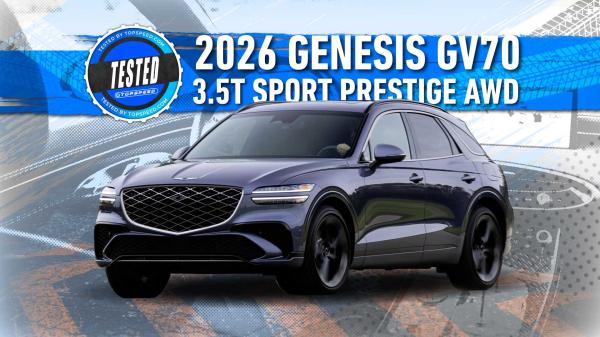
2026 Genesis GV70 3.5T Sport Prestige AWD First Drive: The Luxury Underdog That Just Keeps Getting Better
Jam-packed with tech, smart execution, and plush appointments, the GV70 feels a lot richer than its sticker price suggests.
Genesis Still Comes With A Few Tradeoffs
Prestige And Dealer Networks Still Matter To Some Buyers

Genesis has made enormous progress, but it is not without drawbacks. The biggest hurdle remains brand recognition.
Mercedes-Benz, BMW, Audi, and Lexus spent decades building their reputations. Genesis only became a standalone luxury brand in 2015. For some buyers, that lack of heritage still matters. Dealer presence is another challenge.

Genesis operates just over 200 retailers in the United States, including 84 dedicated Genesis facilities. By comparison, Mercedes-Benz has more than 380 dealerships nationwide, while BMW’s network exceeds 340 locations. For buyers outside major metropolitan areas, that difference can affect convenience in servicing and ownership support. Depreciation also remains a consideration. According to Kelley Blue Book data, Genesis generally trails established luxury brands such as Lexus in long-term resale value. Buyers who trade vehicles every few years may feel that difference more acutely than long-term owners.
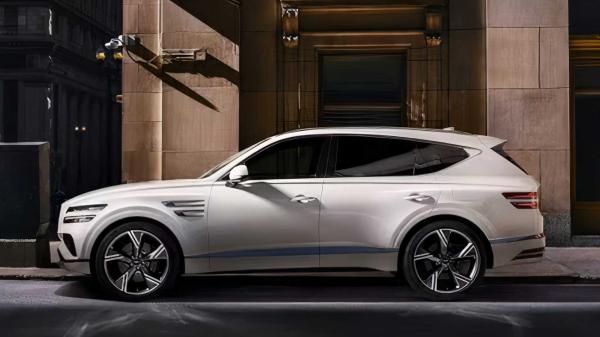
This $60K Luxury SUV Is Outpacing Its Rivals In Sales
The GV80 is zooming past expectations and giving its rivals something to think about.
Why A Genesis SUV May Be The Smarter Luxury Buy
Luxury Substance Matters More Than Luxury Tradition

Luxury buyers once had little reason to look beyond Germany or Japan. Today, that is no longer the case. Genesis has built a lineup centered around the things owners interact with every day: comfort, refinement, technology, safety, design, and value. Rather than relying on decades of heritage or badge prestige, the brand has focused on delivering a premium experience where it matters most. The result is a lineup that consistently punches above its weight.

The GV70 brings athletic styling, strong performance, and an upscale cabin to the compact luxury SUV segment. The GV80 delivers flagship-level comfort, refinement, and technology while often undercutting established rivals on price. Meanwhile, the all-electric GV60 proves Genesis can compete in the EV space with impressive performance and technology.

A Genesis SUV may not carry the same prestige as a Mercedes-Benz, BMW, Audi, or Lexus. Yet for buyers focused on what they actually receive for their money, that may be beside the point. The GV70, GV80, and GV60 combine luxury, technology, and performance—all in great measure—in a way that puts established rivals under pressure. The smartest luxury purchase is not always the one with the most recognizable badge. Increasingly, it is the one that delivers the most substance for the money. That is precisely why Genesis has become a genuine luxury contender—and why its SUVs deserve a place on any luxury buyer’s shortlist.
Sources: Genesis USA, Carbuzz, J.D. Power, Kelly Blue Book, BMW USA, Audi USA, Lexus USA

Related posts






Latest Post


No Comments