The American V8 Sedan Built For Old-School Drivers
9 minutes reading
Sunday, 23 Aug 2026 14:00 0 51 autotech
There is something increasingly unusual about a modern performance sedan that asks its driver to do some of the work. As the industry moves toward smaller turbocharged engines, electrification, all-wheel drive, and transmissions that shift faster than any human could, one American sedan continues to make a different argument.
It does not need to reinvent the formula. Instead, it doubles down on the ingredients that made high-performance cars so compelling in the first place. A big V8, rear-wheel drive, a manual transmission, and enough power to overwhelm the rear tires. The result is a sedan that feels almost rebellious in an increasingly digital performance-car world.
The Cadillac CT5-V Blackwing Refuses To Follow The Turbocharged Crowd
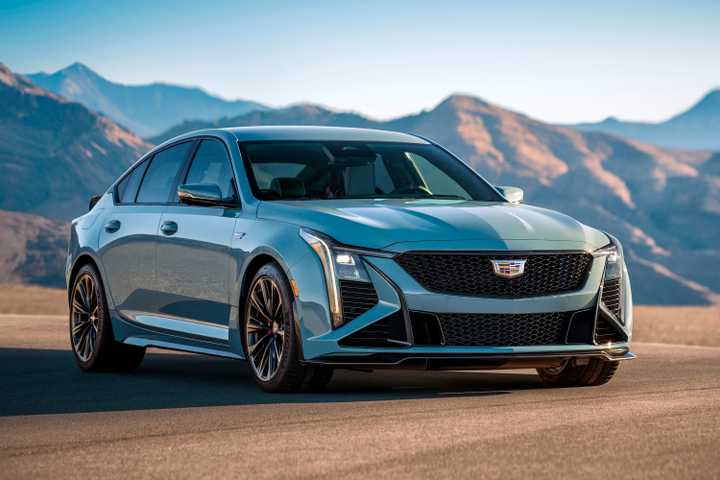
2025 Cadillac CT5-V Blackwing front 3/4 shotCadillac
The engine is the first clue that this Cadillac was developed with a very different philosophy from most modern performance sedans. Under the hood sits a hand-built 6.2-liter supercharged V8, rather than a smaller twin-turbocharged six-cylinder or four-cylinder. It uses a cam-in-block architecture with two valves per cylinder, direct injection, and active fuel management. On premium gasoline, it produces 668 horsepower at 6,500 rpm and 659 pound-feet of torque at 3,600 rpm. Cadillac quotes a 0-to-60 mph time of just 3.4 seconds. Those numbers are important, but the way the engine produces them matters just as much.
A supercharger delivers its boost differently from a turbocharger. There is no waiting for exhaust gases to build pressure before the engine responds. The result is an immediate, muscular connection between throttle input and acceleration. Press the accelerator and the V8 answers with a surge that feels linear, forceful and distinctly mechanical.
Why That Character Is Becoming Increasingly Rare
Rear 3/4 action shot of 2025 Cadillac CT5-V Blackwing being driven on roadCadillac
Turbocharging has become the dominant solution for extracting more performance from smaller engines while improving efficiency and emissions. The regular CT5-V, for example, uses a 3.0-liter twin-turbocharged V6 producing 360 horsepower and 405 pound-feet. The Blackwing takes a completely different route, using twice the cylinders and more than twice the displacement per cylinder to deliver its performance.
It is not the most efficient way to build a fast sedan. Cadillac itself rates the Blackwing at just 13 mpg city and 20 mpg highway. But efficiency was clearly not the primary objective here. The objective was character. The engine also gives the Blackwing an unmistakable soundtrack. The supercharged V8’s induction noise, mechanical whine, and exhaust note combine to create an experience that simply cannot be replicated by a smaller turbocharged engine or an electric motor. That makes the Blackwing unusual before it even moves.
RWD, A Manual Gearbox, And Power That Rewards Driver Input
The front 3/4 view of a black 2026 Cadillac CT5-V Blackwing F1 Collector Series.Cadillac
The engine would already make the Blackwing special, but Cadillac went considerably further. Power is sent exclusively to the rear wheels, and the standard transmission is a six-speed manual. A 10-speed automatic is available, but the manual is the combination that best captures the philosophy behind this car. That matters because 668 horsepower is not a number that can simply be switched off by an electronic safety net. The driver has to manage it.
The six-speed manual puts the driver directly into the process. Selecting the correct gear, judging engine speed, modulating the clutch and controlling throttle application become part of the experience. With 659 pound-feet available, there is always enough torque to punish a sloppy input, but that is also part of the appeal.
How The CT5-V Blackwing Delivers Old-School Driving Feels
Front view of 2026 Cadillac CT5-V BlackwingCadillac
Modern performance cars increasingly do an enormous amount of the thinking for their drivers. All-wheel-drive systems distribute torque between axles, dual-clutch transmissions execute near-instantaneous shifts and sophisticated stability systems intervene before mistakes become expensive. The Blackwing certainly has sophisticated electronics of its own. It features Performance Traction Management, an electronic limited-slip differential, launch control, Magnetic Ride Control, and selectable drive modes. Its Brembo brakes are designed to handle repeated hard use, while an available carbon-ceramic setup provides even greater stopping power.
But those systems support the driver rather than replacing the experience. The rear-drive layout is particularly important. Instead of simply launching with all four tires clawing for traction, the Blackwing makes its rear axle an active participant in the driving experience. Throttle application can alter the car’s attitude, and the driver can exploit the enormous grip available from its wide performance tires. The result is a sedan that can be driven quickly without feeling clinical. It feels like a machine.
668 HP Turns It Into A Genuine Performance Outlier
2025 Cadillac CT5-V Blackwing front driving shotCadillac
This is where the Blackwing stops being merely an interesting alternative and becomes something genuinely extraordinary. Cadillac gives the sedan 668 horsepower, 659 pound-feet of torque and a manufacturer-estimated 3.4-second sprint to 60 mph. It can exceed 200 mph on a racetrack, according to Cadillac. Those figures put the Blackwing firmly into super-sedan territory. Yet the most impressive part is not simply that it is fast. Plenty of modern sedans are brutally quick. The difference is that the Blackwing combines that speed with a package that remains unusually focused on driver involvement.
How Cadillac Engineered The Chassis To Cope With The Engine’s Output
Magnetic Ride Control continuously adapts the suspension, while the performance-oriented chassis, electronic limited-slip differential and Performance Traction Management system allow the car to transition between road-going comfort and serious track capability. The brakes are equally serious. Brembo hardware is fitted at both ends, with slotted performance rotors standard and carbon-ceramic brakes available for buyers who intend to spend significant time on a circuit. The car also rides on 19-inch forged wheels with high-performance tires, including 275-section rubber at the front and 305-section tires at the rear.
That combination gives the Blackwing the hardware to exploit its engine rather than merely advertise it. And yet it remains a genuine sedan. There are five seats, 11.9 cubic feet of cargo space and a cabin designed to function as a luxury interior rather than a stripped-out race-car cockpit. Cadillac quotes 42.4 inches of front legroom and 37 inches of rear legroom. That dual personality is one of the Blackwing’s greatest strengths.
Cadillac CT5-V Blackwing wheel and brakesCadillac
It can be a brutally fast driver’s car on Saturday morning and still function as a reasonably practical luxury sedan during the week. For 2026, Cadillac lists the CT5-V Blackwing at $98,900 before options, putting it firmly into expensive territory but also making its mechanical specification remarkable for the money.
The Luxury Sedan That Still Feels Mechanical, Raw, And Involving
Calling the Blackwing “old school” does not mean calling it primitive. Inside, the car is packed with technology. Cadillac offers heated and massaging front seats, a heated steering wheel, premium materials, carbon-fiber trim, and a 33-inch display with Google built-in. An AKG 16-speaker audio system is also available, while Super Cruise can provide hands-free driving assistance on compatible roads. That combination is important because the Blackwing does not reject modern luxury. It simply refuses to let technology become the entire personality of the car.
The Cabin Can Be Quiet And Comfortable When Required
The front seats of a black 2026 Cadillac CT5-V Blackwing F1 Collector Series.Cadillac
The suspension can absorb ordinary road imperfections. The seats can provide the sort of comfort expected from a modern Cadillac. The technology can handle navigation, entertainment, and driver assistance. Then the driver presses the V button, selects a gear, and finds an entirely different machine underneath. That contrast is what makes the Blackwing so compelling.
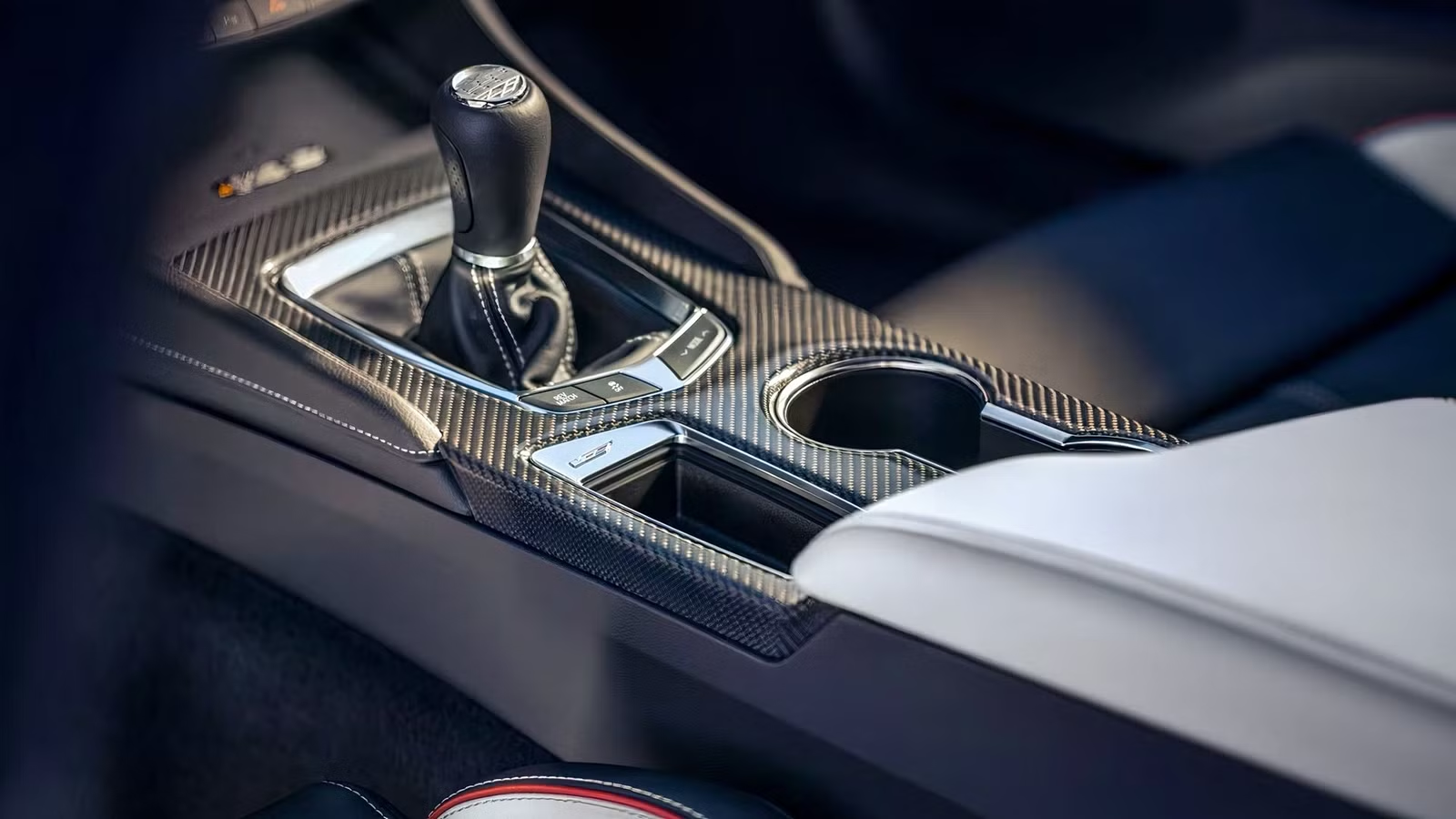
There is also something reassuringly physical about the controls. A manual shifter moves through a defined gate. A clutch pedal has to be operated. The engine responds to throttle position. The rear axle responds to power. The driver can feel the consequences of their decisions. That is increasingly unusual.
The shift knob of a Cadillac CT5-V Blackwing F1 Collector Series.Cadillac
Even some of the world’s most accomplished performance sedans have moved toward turbocharged engines, automatic transmissions and all-wheel drive. Those cars are extraordinarily capable, often faster in the real world and easier to drive quickly. But they can also create a layer of separation between the person behind the wheel and the machine underneath.
Why The CT5-V Blackwing May Be The Last Great Old-School American Super Sedan
Calling any car the “last” of anything is risky. Automotive history rarely follows a perfectly predictable path. But the evidence makes the Blackwing’s position increasingly difficult to ignore. The formula it represents is disappearing. A large-displacement supercharged V8 is already an increasingly unusual choice in a new performance sedan. A rear-wheel-drive layout is becoming less common as manufacturers pursue all-weather traction and increasingly sophisticated torque-vectoring systems. And a six-speed manual transmission has become almost exotic in the luxury performance segment. The Blackwing combines all three.
More importantly, Cadillac is not merely keeping the configuration alive as a symbolic gesture. It continues to offer the 668-horsepower supercharged V8 with the six-speed manual for the 2026 model year. Cadillac lists the car as having extremely limited availability, while a special Curated by Cadillac version is being hand-built in Michigan with production beginning in mid-2026. That special model’s approximately $158,000 starting price also demonstrates just how exclusive the formula can become.
Cadillac’s Broader Performance Portfolio Is Moving In Several Directions At Once
2026 Cadillac Optiq-V front 3/4 shot driving on the roadCadillac
The company now sells electric performance models alongside combustion-powered V-Series cars, including the 519-horsepower Optiq-V and the electric Lyriq-V. The CT4-V Blackwing uses a twin-turbocharged V6 rather than a V8, while the CT5-V Blackwing remains the flagship expression of Cadillac’s traditional high-output formula. That broader industry shift makes the Blackwing more significant.
The argument is not that electric or turbocharged performance cars are worse. In many measurable respects, they are faster, more efficient and more technologically advanced. The argument is that the Blackwing represents a type of car that is becoming harder to build under modern efficiency, emissions, and electrification pressures. A 6.2-liter supercharged V8 powering the rear wheels through a manual transmission is almost an act of defiance. And that is why the Cadillac CT5-V Blackwing matters to enthusiasts. It is a reminder that performance is not defined solely by acceleration numbers. It is also about noise, vibration, shifting, throttle control, and the small decisions that allow a driver to feel responsible for what the car does next.









No Comments