
Porsche Mission S: The Mid-Engine Super Sports Car Above The 911
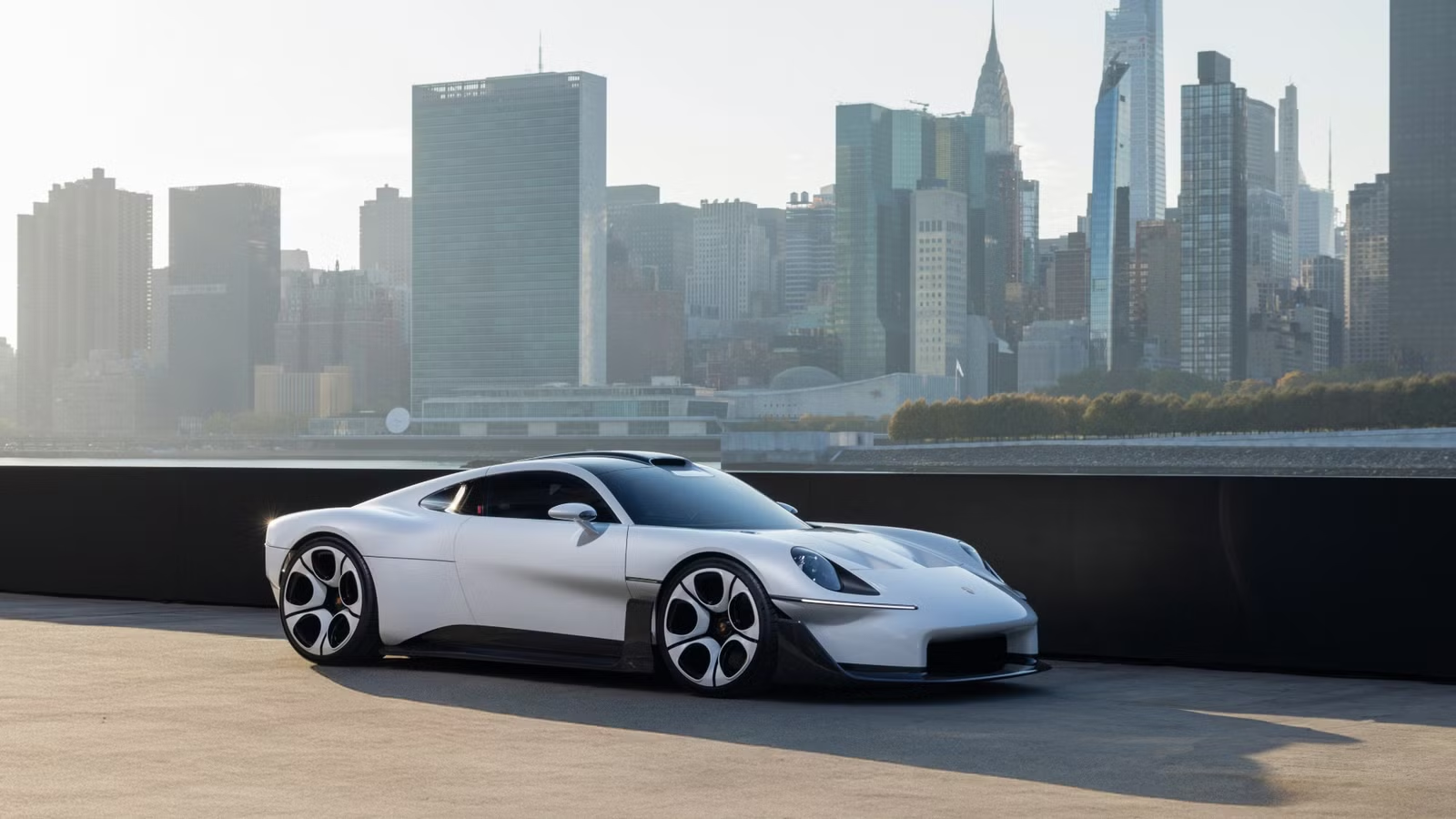
Porsche picked a pier in Queens to reveal its next big idea, and the location wasn’t an accident. It’s the same spot where the mid-engined 550 Spyder was photographed back in 1953, with the Manhattan skyline behind it, in images that ended up traveling the world and helping define the brand’s identity in America. On October 15, 2026, Porsche returned to that pier to unveil the Mission S concept, and the symbolism was the point: this is a mid-engined Porsche with the weight of 73 years behind it.

But the Mission S isn’t a tribute car or a one-off showpiece built to flatter collectors. Porsche says it’s a vision model for a permanent mid-engined super sports car platform that will sit above the 911 in the lineup, not as a hypercar flex but as a standing offer in the brand’s catalog. Chairman Dr. Michael Leiters called it part of the company’s “Sportwagenschmiede ’35” realignment, a glimpse at design language and a driving philosophy Porsche intends to carry into real, buildable cars.
A Design Built From Porsche’s Own Back Catalog
Look closely at the Mission S and you’re looking at a greatest-hits reel. The round headlights and torpedo fenders echo the 911. The flat nose borrows from the GT1, and that car’s rear end supplies the “car-in-car” look Porsche has reused here. The roofline dips and flows in a way that nods to the 959, and the cooling intakes reference the 917’s radiator fan setup from Le Mans. Even the wheels get a history lesson: the dial-style design traces back to the 928, reworked here for lighter construction.

Porsche’s design chief, Tobias Sühlmann, frames this as more than nostalgia. He calls the Mission S the product of a “forward-looking, holistic design strategy” that will show up across future models, not just this one concept. The company is leaning on a three-word mandate for where its design goes next: authentic, consistent, timeless. A wraparound line ties the front and rear light signatures together, and the proportions are dictated by the mid-engine layout itself, with the engine sitting centrally to create the long, low “flyline” silhouette Porsche purists will recognize instantly.
An Interior That Argues Against The Big-Screen Trend
While most new car interiors are racing toward bigger displays, Porsche went the other direction. The Mission S has no permanent center screen and no fixed passenger display. Instead, there’s a retractable, MagSafe-compatible smartphone mount that pulls double duty as a nav or info screen only when the driver wants it there. The rest of the time, the dashboard stays clean.
Five Round Dials And A Rev Counter That Moves
The centerpiece behind the wheel is a set of five round instruments, drawing a straight line back to the 550 Spyder and 356 for inspiration. The rev counter sits dead center, built around an analog needle with a digital display layered behind it. Switch drive modes and the rev counter physically shifts closer to the driver, while the surrounding gauges rearrange themselves, side by side in one mode, stacked front to back in another. Porsche paired that with push-pull dashboard controls for comfort and driving functions, plus a reworked Sport Chrono dial that blends analog feel with digital accuracy. It’s a deliberate mix of old-school tactility and new-school precision, rather than a touchscreen standing in for both.
Motorsport Colors, Not Showroom Gloss

The paint and trim lean hard into racing heritage rather than concept-car flash. Porsche built three new colors for the Mission S: Firn White Metallic, Light Red Metallic, and Black Chrome, with Special Black used inside. The palette is meant to call back to the brand’s historic motorsport liveries, the white-grey-red combinations that have marked Porsche race cars for decades, reinterpreted here instead of simply recreated.
Small engineering touches carry the same motorsport thread through the cabin. The seatbelt buckle is integrated into the center panel, and the electric seat controls have been repositioned, changes Porsche describes as blending comfort and function with race-car DNA rather than adding complexity for its own sake.
What Comes After The 911
The headline detail buried in all this heritage talk is strategic: Porsche is confirming, for the first time, that it’s developing a mid-engined super sports car platform meant to live permanently above the 911, not as a limited hypercar run but as an ongoing part of the lineup. Leiters was specific about that distinction, calling it “a permanent and versatile addition to our customer offering” rather than a one-off halo car.
That’s a notable shift for a brand whose flagship performance story has run through the 911 for generations, with mid-engined cars like the Carrera GT and 918 Spyder treated as occasional special projects rather than a standing tier. The Mission S suggests Porsche now wants a permanent answer to what sits above the 911, built around the same purist, driver-first thinking on display here: analog feedback, lightweight construction, and fewer screens standing between the driver and the car.

Related posts

Latest Post


No Comments