
The Motorcycle That Makes Every Dollar Count
There was a time when shopping for a motorcycle in America meant making a fairly simple choice. You either bought an affordable bike that covered the basics, or you stretched your budget for something with premium touring hardware. Today, those lines have become increasingly blurred, and prices have climbed right along with them. Value in today’s motorcycle market isn’t about buying the cheapest machine available. It’s about getting the greatest amount of real-world capability for every dollar you spend.

Riders want a motorcycle that can commute during the week, carve back roads on weekends, handle the occasional road trip, and still put a smile on their face every time they thumb the starter. That’s a far more meaningful definition of value than simply looking at the sticker price. The problem is that entry-level motorcycles often leave experienced riders wanting more. They may be approachable, but once your skills improve, so does your appetite for more acceleration. At the opposite end, premium bikes have become incredibly sophisticated, but many of them now cost well into five figures.
The Middleweight Naked Market Has A Quiet Inflation Problem
It’s worth putting some numbers to the frustration. The Ducati Monster starts at $13,995. The Triumph Street Triple 765 RS is priced at $13,845. BMW’s F 900 R will run you $10,495. These are genuinely excellent middleweight naked motorcycles, but they’re asking buyers to fund development costs, brand prestige, and exotic engineering that rarely gets used on a Tuesday morning commute or a weekend canyon run.


The tech gap has closed substantially at the top of the market. The electronics package on a $14,000 naked bike today is meaningfully better than one from five years ago, but not so far ahead of the bikes below it that the premium feels essential. Riders being asked to pay more are increasingly getting only incremental improvements over what’s available in the class below — and that creates an opening.
The Honda CB750 Hornet Makes Every Dollar Count
Base Price: $7,999

Honda’s answer to that opportunity has a name the American market hasn’t heard for a while. The Honda CB750 Hornet made its global debut in Europe for the 2023 model year. With minimalist, streetfighter styling shaped by the latest generation of creative minds in Honda’s Rome R&D facility, the model was designed to offer an accessible yet high-performance entry into the middleweight naked category. For 2025, it finally made the trip across the Atlantic to American showrooms — and the timing couldn’t have been better.
Despite adding E-Clutch for 2026, Honda is keeping the CB750 at the same $7,999 price as the 2025 model — plus a $600 destination charge. That positions it against the Yamaha MT-07 at $8,599, the Kawasaki Z650RS at $8,999, and the Triumph Trident 660 at $8,745, but with a standard specification sheet that doesn’t ask you to spend more to get what you actually want. At this price, the CB750 Hornet isn’t just competitive but the benchmark in its segment.
A Naked Streetfighter Reborn For The US Market

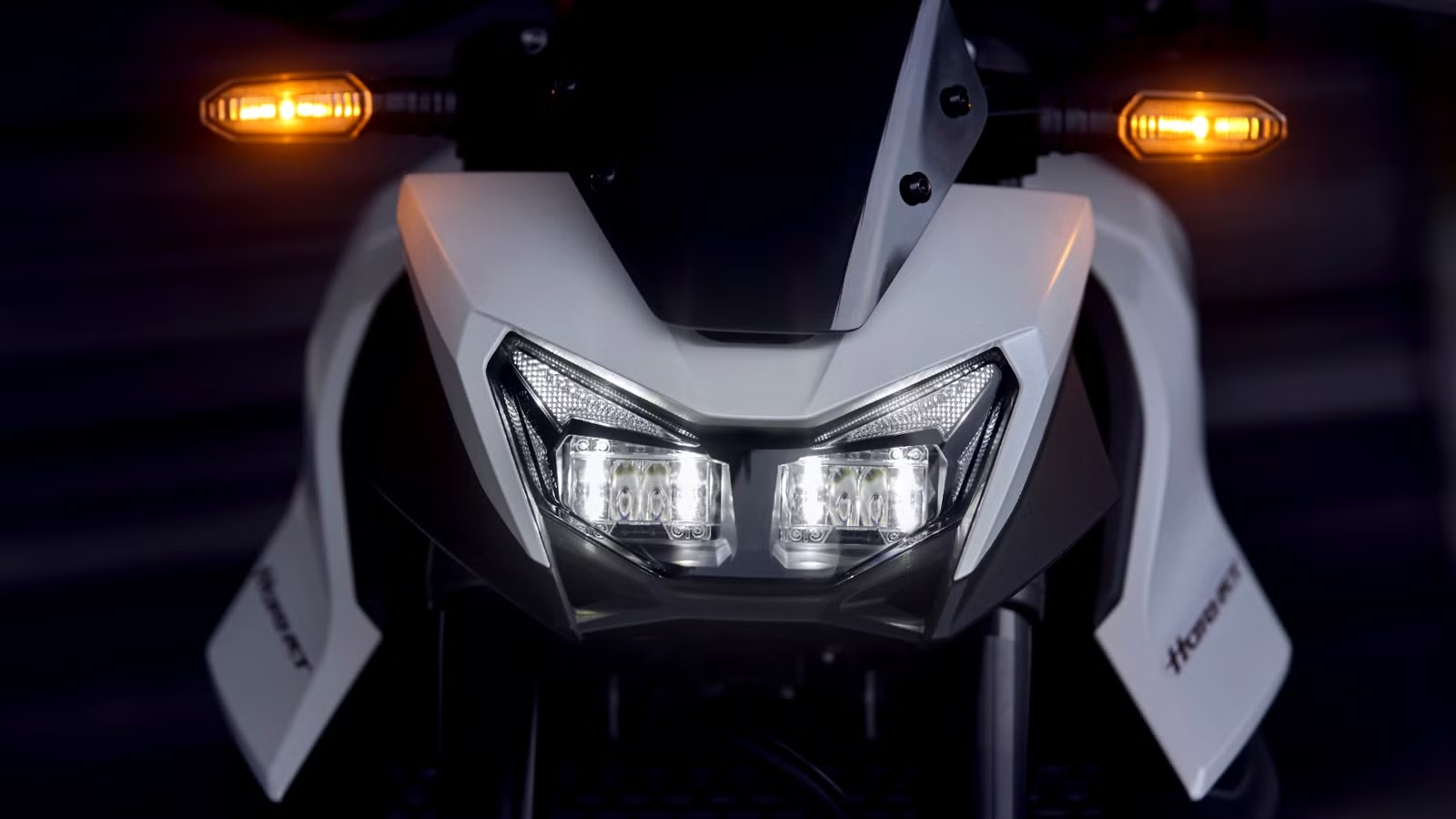
The main signature of the CB750 Hornet is the fuel tank, which takes inspiration from the shape of a hornet’s wing. From the aggressively angled nose fairing to the razor-sharp, minimal tail, there are hallmarks of tension and aggression, outlining true sporting intent. The dual projector LED headlamp sits low and centered, giving the front end a focused, predatory look that doesn’t borrow from anything else in Honda’s lineup.
Unlike its SP stablemate, the CB750 comes outfitted with a variety of more affordable components, yet it wears that restraint well. This is a 750cc hooligan machine at an entry-level price, built in Japan with the reliability and refinement you’d expect. For riders stepping up from smaller-displacement machines or returning to motorcycling after time away, the Hornet resets what a sub-$8,000 machine is allowed to deliver.
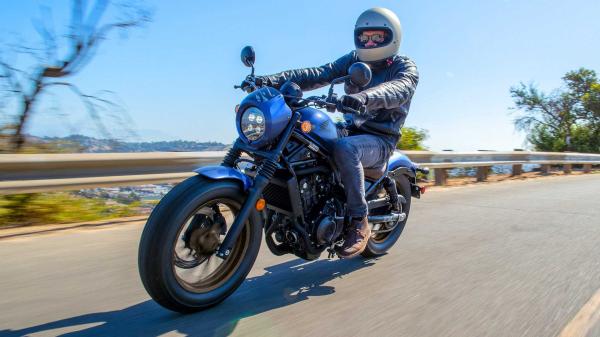
The Budget Cruiser Riders End Up Keeping For Years
Offering adaptability and low maintenance costs, this Honda Rebel keeps making sense in the garage year after year
The 755cc Parallel-Twin Is The Benchmark Of Pure Efficiency

The 270-degree crank and uneven firing order create a characterful, twin-cylinder pulse feeling. To make the engine as compact as possible, there’s no balancer drive gear; the primary drive gear doubles up duties and spins the balance shaft. That’s elegant, practical Honda engineering — fewer parts, less weight, and none of the parasitic power loss that comes with a conventional counter-balancer arrangement. A 270-degree firing interval makes for a V-twin-style power delivery and exhaust note. The Hornet doesn’t sound or feel like a typical parallel-twin. Instead, it sounds like something that costs more.
Class-Leading Power Without the Premium Price Tag

Displacing 755cc, with an eight-valve Unicam cylinder head, the engine has bore-and-stroke figures of 87.0mm x 63.5mm, with a compression ratio of 11.0:1. The compact, lightweight Unicam head is a configuration used for the CRF450R motocrosser. The 35.5mm intake valves are operated via cam, and the 29mm exhaust valves are operated by rocker arms. The arrangement keeps the engine shorter and lighter than a conventional DOHC layout.
For razor-sharp throttle response, Honda’s patented Vortex Flow Ducts ensure fast, uniform airflow, which elevates torque combined with the same high-pressure fuel injectors found on their flagship sport bike — the CBR1000RR-R. The result is 90.5 horsepower at 9,500 rpm and 54.8 lb-ft of torque, delivered with the kind of linear, predictable character that builds confidence rather than demanding it.
A Chassis Built To Inspire Confidence, Not Just Carry The Engine

The CB750’s steel diamond frame is lightweight at just 36.6 pounds. A technological process of optimizing the thickness of the main tube and down tube, and the shape of the pivot, resulted in an extremely strong platform, with rigidity balance for feel. Suspension hardware comprises a Showa 41mm SFF-BP inverted fork front and a Pro-Link single shock rear with preload adjustability. Geometry is set at a 25-degree rake and 55.9-inch wheelbase. The Showa suspension leans toward the softer side, delivering excellent comfort across varied road conditions. Braking is handled by Nissin calipers on floating front discs with ABS as standard. It’s an appropriate setup for this power level and this rider demographic.
A Seat Height That Widens The Audience

The 31.3-inch seat height is approachable for most, and the upright ergos, wide handlebars, and slightly rear-set pegs provide a natural, in-control position. Honda clearly designed these ergonomics with a broad spectrum of riders in mind. The Hornet 750 acts very much like a big supermoto, with similar ergonomics, a light feeling, and forgiving enough to encourage monkeying around on the bike. For someone stepping up from a 300 or 500cc machine, or a returning rider who hasn’t thrown a leg over anything in a few years, that accessibility is a genuine selling point.
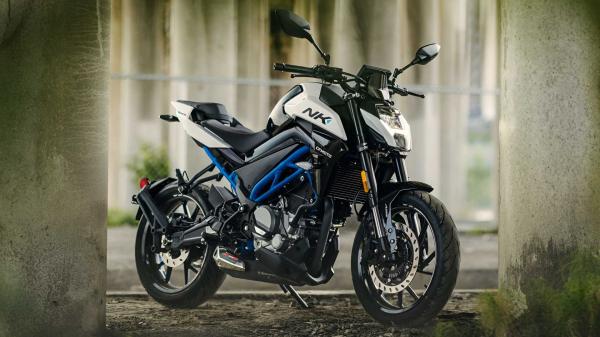
10 Perfect Lightweight Motorcycles For New Riders In 2025
The lightest motorcycle on this list weighs just 282 pounds and is a capable dual-sport.
The Electronics Package Rewrites Expectations At This Price

The 5-inch TFT display is crisp and easy to read, and Honda’s RoadSync integration adds smartphone functionality like navigation, calls, and music. Menus and settings are controlled via a four-way backlit switch on the left grip. All lighting is LED, there’s a USB-C port under the seat, and turn signals are self-canceling. This is the kind of feature list that used to justify a $12,000–$15,000 price tag. The fact that it now arrives on an $8,000 motorcycle should make every competing manufacturer uncomfortable.
Traction Control And ABS Come As Standard

Electronic rider aids, thanks to throttle by wire, include three riding modes — Standard, Sport, Rain — and two fully rider-programmable User modes, three-level Honda Selectable Torque Control (HSTC), wheelie control with three-level engine power, and engine braking adjustment. Both HSTC and ABS are standard equipment on the CB750 Hornet, with no upgrade required and no alternative trim level to navigate.
For 2026, the CB750 Hornet gains a major advantage with the inclusion of Honda’s E-Clutch — an industry-first technology that brings a new level of convenience and control to the middleweight naked segment. The system allows consistent gear changes that are faster and smoother than a quick-shifter, prevents stalling, and manages transitions smoothly, boosting convenience and rider confidence in stop-and-go urban traffic and on challenging inclines. At $7,999, there is nothing else in the segment that offers this.
Source: Honda Powersports

Related posts




Latest Post


No Comments