
The 1989 Oldsmobile With A Sony Touchscreen Nobody Was Ready For
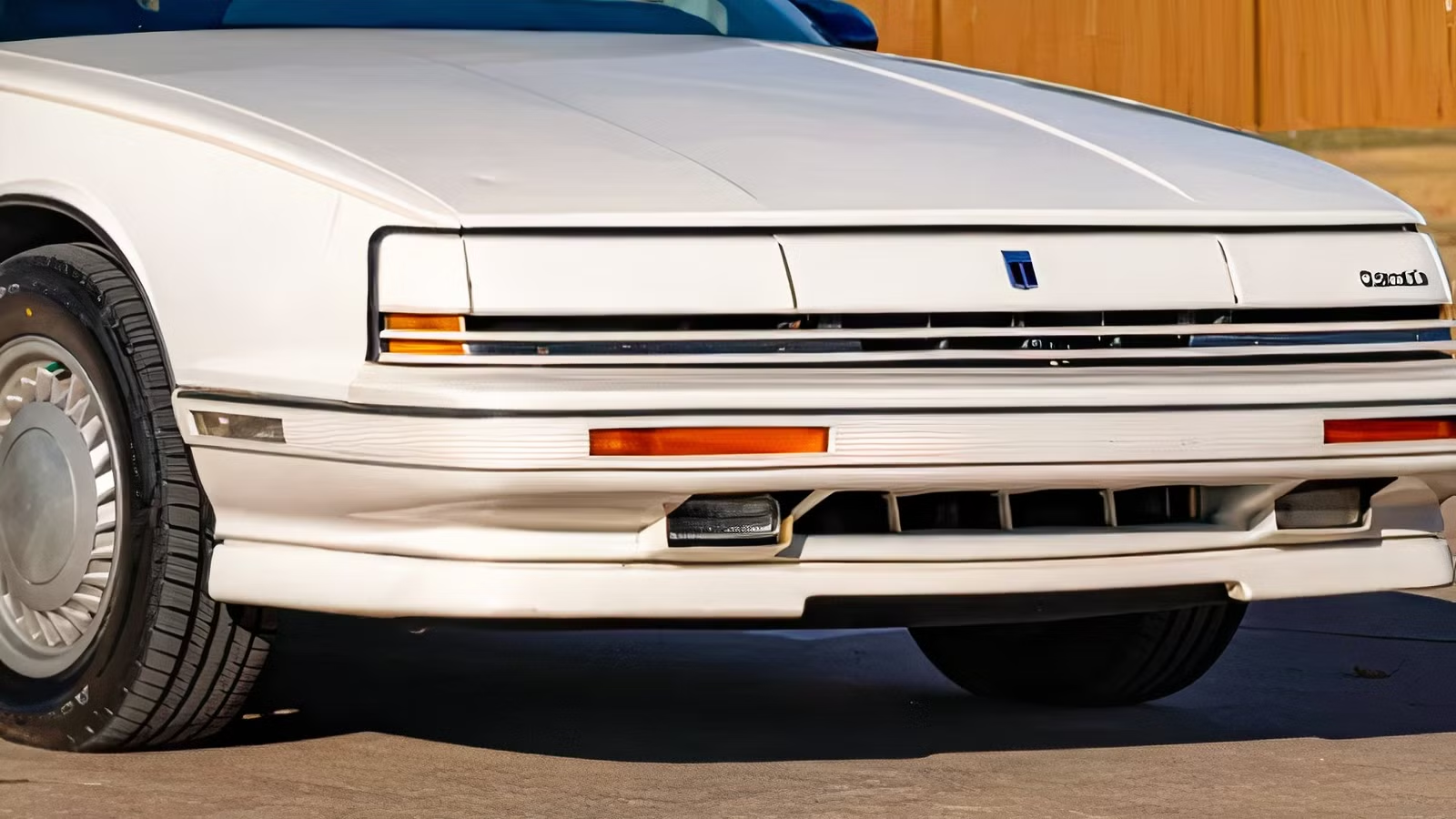
Oldsmobile was a pretty hot-and-cold place to be in the mid-to-late 1980s. Truthfully, it was closer to cold most of the time by this stage. The luster of the muscle car era was long gone a decade ago, and what remained needed to do something other than drive fast in a straight line to stand out. Simply put, the good times were over, and that meant gimmicks were the next best thing for ‘Olds. Then again, they did come up with one really good one. We’re talking so good, its effects are still felt today. Truthfully, maybe a little bit too much.
Oldsmobile in the mid-80s: Grasping at Straws After a Muscle Car Renaissance

What a difference 20 years can make to an automaker, Oldsmobile is surely a testament for that. After the Cutlass, the Toronado, and the 442 wowed Americans with their Rocket V8 engines for most of the 1960s, the rising tide of global geopolitics and emissions regulations here at home were ready to bring all the fun to an end.
A downright oil crisis in 1973 that saw strict rationing not seen before or since saw the larger Rocket V8s in the fleet, like the 455-cubic inch monster, be dropped after 1976. The smaller 403 Rocket V8 lasted until 1979, and the even smaller 307 lingered around into the very early ‘90s. In short, it was a slow, drawn-out process that saw ‘Olds become a very different brand than it used to be.
Forced against its will to use four, as well as six-cylinder engines wherever possible, the brand couldn’t sell itself on bravado and straight-line speed anymore. Nor could it exactly be more cushy or refined than a Cadillac. Slotted firmly above the more family-friendly and affordable Buick and Chevrolet, Oldsmobile was being ripped apart from both ends of the market. When factoring in JDM brands like Honda, Toyota, and Mitsubishi, it really was a critical situation for ‘Olds. With this in mind, instead of getting more luxurious, Oldsmobile had to get clever.

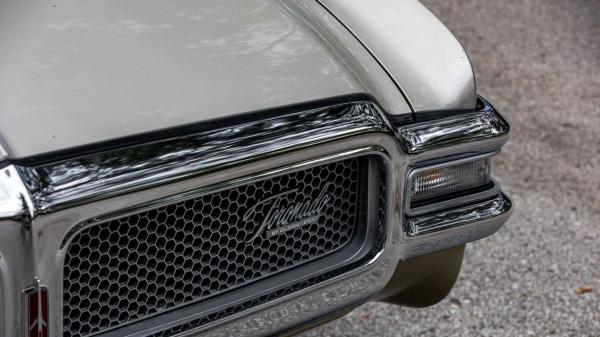
The Only Front-Wheel-Drive Car That Could Outrun Muscle Cars In The ’60s
Back when rear-wheel drive ruled the streets, one bold American coupe flipped the formula.
Teaming With Sony, Masterful Gambit, at Least in the Moment

Given its restrictions on being better or more affordable than its sister brands, Oldsmobile’s options really were limited. Still, one thing they could try with comfort, at least without seriously irking Cadillac, was to experiment with something we’d now identify as an in-car infotainment system. In an era where switches and dials for every function were still the standard, integrating audio and climate controls, a mobile phone system, diagnostic data, and even rudimentary navigation into one screen was genuinely forward-thinking.
At the time, it would’ve been fairly ludicrous for an automotive OEM to develop such technology all in-house. The delicate CRT touch screen technology and the associated compute components were specialized instruments made by just a handful of vendors in the entire world. One company that arguably did it better than anyone else was Sony. At the same time as the Japanese tech titans were cornering the portable audio market with the Walkman, and the entry home-video space with the Handycam, Oldsmobile contracted Sony with the express purpose of making an automotive infotainment suite.
The system called for a six-inch multi-color capacitive CRT touchscreen, a massive step forward from the strictly text-based neon-green monochrome systems other manufacturers, including Buick, had tried previously. Design plans called for digitized audio sliders, on-the-fly engine diagnostics, built-in compass-driven navigation, and even mobile phone connectivity. Effectively, any system that didn’t involve driving the vehicle itself was not accessible via CRT.
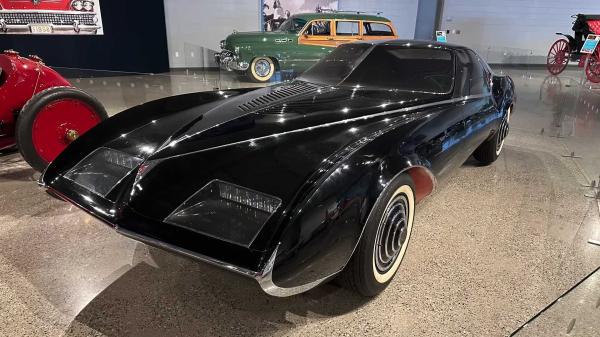
The Phantom Pontiac Muscle Car Most Gen-Z Enthusiasts Don’t Know About
This mysterious machine, hidden beneath the household names of Pontiac’s most famous models, remains one of the most intriguing ‘what if’ stories in the brand’s history.
Oldsmobile Toronado Trofeo & the VIC: A Highlight For ‘Olds in the Middle of the Dark Ages

The front-wheel-drive Toronado had really let itself go by the late 1980s. Once the first front-wheel-drive muscle car from 1966 to 1970, the Toronado grew more bloated, and increasingly slower, with each passing year until the late 1970s. By the mid-1980s, the fourth-generation Toronado was more like a Honda Civic or Toyota Corolla analog than anything close to a muscle car. Gone was the old Rocket V8, replaced by a series of Buick V6s, which, admittedly, included the bulletproof 3800 motor.
Paired with a four-speed automatic slush box, the Toronado was clearly a slouchy cruiser, not a sports coupe. For a car whose most interesting feature in 1989 would’ve been anti-lock brakes, the addition of the optional Visual Information Center (VIC) six-inch infotainment screen really was a glimpse 30 years into the future. Admittedly, the car still had physical switches and buttons to support non-VIC-equipped models. In truth, it gives the system a leg up in redundancy compared to a lot of modern infotainment systems.
Beneath the skin, the VIC system used microprocessing hardware based on the 8-bit Motorola 6800 family, and manufactured by AC Delco, paired with 64 kb of internal memory. For some context, a modern infotainment system, complete with ADAS and all the associated hardware, use X86-based chips with up to 16 gigabytes of RAM. Honestly, from 1989 to 2026, the performance really does scale nicely. Because CRTs need to warm before use, a grounding switch inside the outside driver’s door handle automatically pre-heated the system before you even turn the key. With surprisingly intuitive and responsive controls for the period, it really did look like witchcraft in the late ‘80s.
Seriously Cool, But It Never Moved the Needle

Almost objectively, the Oldsmobile VIC infotainment system was decades ahead of its time. In almost every respect, the very same technology would be refined and upgraded until today, we quite literally can’t build new cars without it. Had Oldsmobile had the gumption to try and market the VIC system beyond the early 1990s, there’s every chance in the world their achievement would be better known and well-celebrated.
Instead, the rest of the Toronado Trofeo, be it the powertrain, the interior, or the driving dynamics, were just sort of, “acceptable” for the period. There was nothing about a standard model that wasn’t better done by a Japanese, German, or even other American manufacturer. Statistically speaking, the E-body Buick Riviera almost certainly moved more metal than its Oldsmobile counterpart.
Such was the sentiment many American buyers had regarding GM’s two mid-range brands. Without the sports car element to back it up anymore, Buicks simply made more sense more of the time to most Americans. Still, one thing’s for sure, the technology’s stuck around and then some.
The Phantom Pontiac Muscle Car Most Gen-Z Enthusiasts Don’t Know About
This mysterious machine, hidden beneath the household names of Pontiac’s most famous models, remains one of the most intriguing ‘what if’ stories in the brand’s history.
Did VIC Do More Harm Than Good?

As much of a novelty as the VIC system in the Toronado Trofeo may have been, its legacy once the model was sunset after 1992 is one of overzealous overcommitment. In 2026, OEMs are only now realizing that wrapping every single automotive sub-system into just one or two touchscreens often creates more distractions than advantages.
Could Oldsmobile have predicted that the ubiquitous center screen would soon be flanked by a digital gauge cluster, and even AI connectivity in some instances? Honestly, if you pressed them on the matter, they’d have probably seen this coming from three decades away. Even so, you can’t argue the VIC was one of the coolest gimmicks Oldsmobile ever dreamed up before it kicked the bucket in 2004. Had the Toronado Trofeo had a V8 in it, they might’ve even made it out of the 20th century. For those that still have these optional extra VIC sytems in their Toronados, bespoke websites exist, dedicated just to supporting the hardware.Any way you slice it, that’s pretty cool.
Source: fixyourvic.com

Related posts

Latest Post


No Comments