-
 Toyota
-
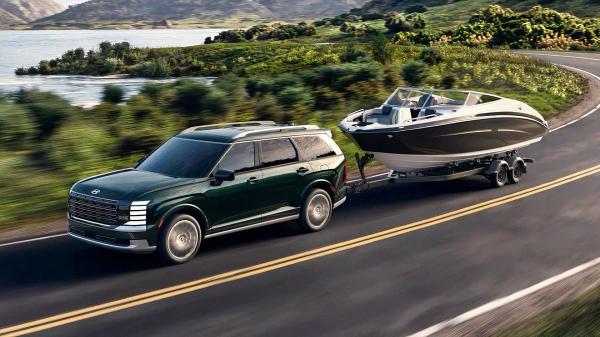
Front 3/4 action shot of 2026 Hyundai Palisade towing a boat Hyundai

The GMC Yukon Shows Why Buyers Continue To Pay Top Dollar For Full-Size SUVs
6 minutes reading
Tuesday, 10 Nov 2026 00:00 0 8 autotech
A 2026 Hyundai Palisade starts at $41,035 with destination. It seats eight, rides quietly, and tops Edmunds’ midsize three-row SUV rankings. The cheapest version of one particular GM truck-based SUV costs more than $31,000 more than that.

100 autotech
A gap that size should send shoppers running for the crossover aisle. Instead, that SUV grew its sales in the third quarter of 2026, while its own Chevy platform twins went the other way.
Why Full-Size SUV Buyers Keep Paying More While Sales Cool
Full-size SUVs are having a rough year. Sales of body-on-frame three-row SUVs fell 6.6 percent in the second quarter of 2026, according to The Fast Lane Truck, and through September, the Chevy Tahoe was still running more than 7 percent behind its 2025 pace.
Three-Row Crossovers Now Do Most Of The Job For Far Less

151 autotech
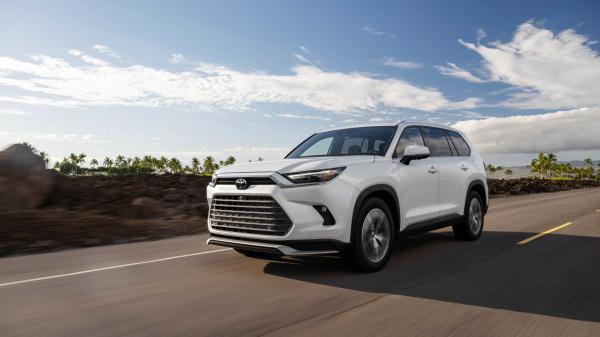
The biggest threat to the full-size SUV isn’t another full-size SUV. Through September 2026, the Toyota Grand Highlander outsold every model in the large SUV segment, as GoodCarBadCar tracks it. It starts at $43,855 with destination, and the Palisade undercuts it.
Both offer hybrids, adult-usable third rows, and the car-like ride most families want. For a household that never tows anything heavier than a bike rack, a crossover is the rational choice.
The Jobs Crossovers Still Can’t Do
The gas Palisade tows 5,000 pounds and offers 86.7 cubic feet of cargo space behind the front seats. GM’s truck-based SUVs offer roughly 123 cubic feet and tow at least 7,500 pounds in four-wheel-drive form. Add V8 or diesel torque, and the use case changes. A camper, a boat, or eight adults with luggage is where the crossover math falls apart.
The GMC Yukon Costs More Than A Tahoe And Still Holds Its Ground

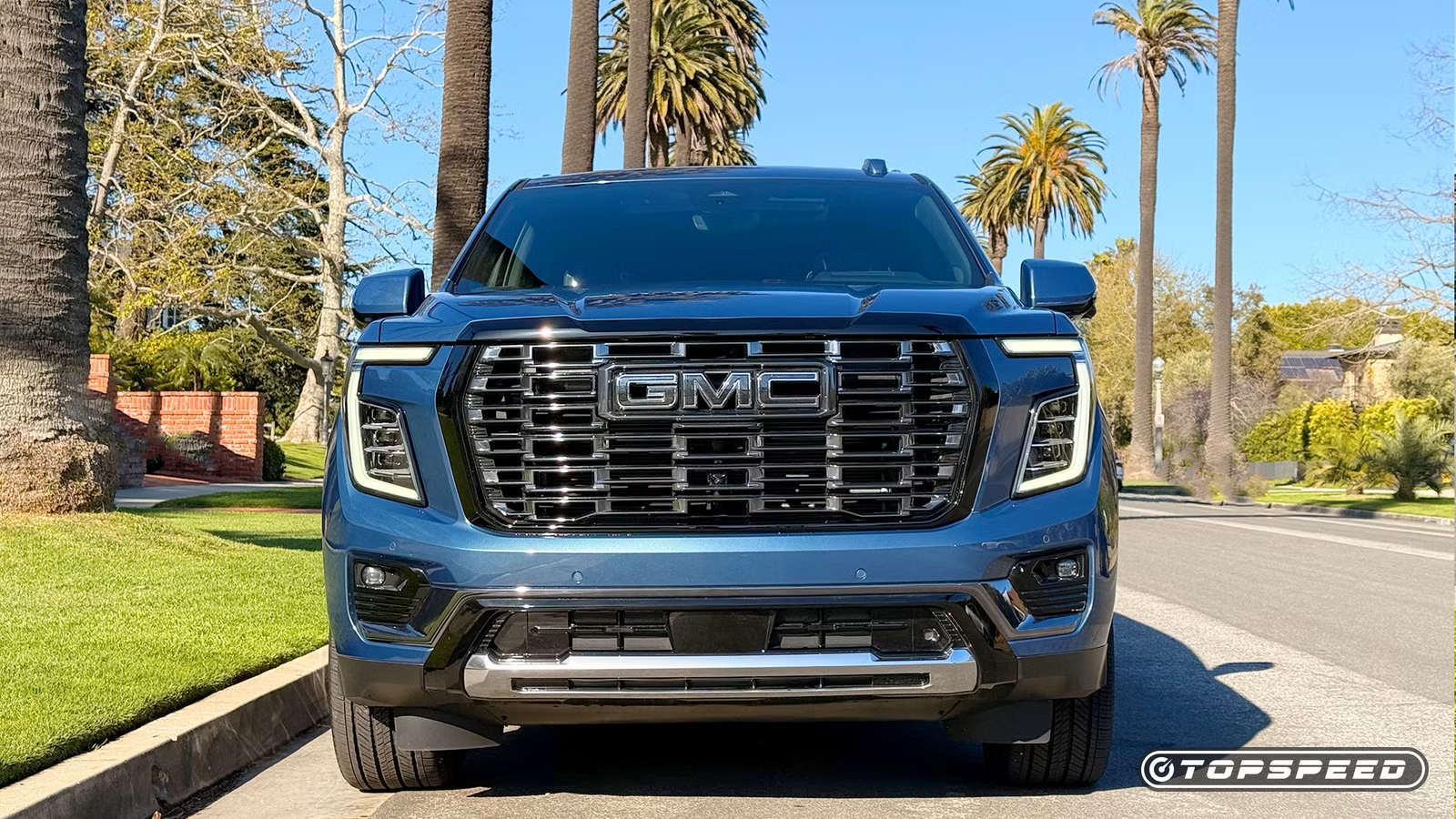
The 2027 GMC Yukon is a clean test of whether buyers pay for more than hardware. It is mechanically a twin of the Chevy Tahoe, yet for 2026, it runs from $72,395 for the Elevation to $105,195 for the Denali Ultimate, destination included.
What The Yukon’s Premium Over The Chevy Tahoe Actually Buys


At the bottom of the range, the gap is real. A Tahoe LS starts at $63,495, so the cheapest Yukon costs $8,900 more. At the top, it nearly disappears: the Tahoe High Country starts at $81,995, just $1,200 less than a Yukon Denali.
GMC’s 2025 refresh brought an interior and technology overhaul that, in Edmunds’ assessment, pulls the Yukon further from the Tahoe. That’s the premium in a sentence: a cabin and badge a rung above Chevrolet, without Cadillac money.
An 8 Percent Sales Gain While Its Chevy Twins Slipped


Buyers keep paying it. GM reports the Yukon and Yukon XL together, and that family grew 8 percent to 21,583 units in the third quarter of 2026. The Tahoe and Suburban fell a combined 5.4 percent, and the Ford Expedition dropped 9.1 percent.
The Yukon isn’t immune. It slipped 3.9 percent in the second quarter and is down 3.1 percent for the year through September. Still, the pricier GM twin is losing less ground than the cheaper one.
Two V8s, A Duramax Diesel
And 122.8 Cubic Feet Of Space

The Elevation and AT4 use a 5.3-liter V8 with 355 horsepower, while the Denali steps up to a 6.2-liter V8 with 420 horsepower and 460 pound-feet of torque.
The more interesting engine is the 3.0-liter Duramax turbo-diesel inline-six, with 305 horsepower and 495 pound-feet. It’s EPA-rated at 23 mpg combined with two-wheel drive, and with four-wheel drive, it tows 7,900 pounds, more than either V8. Cadillac dropped it from the Escalade for 2025 due to weak demand, but GMC keeps it for 2027, where it’s the cheaper Denali engine by $510.
AT4 And Denali Ultimate Trims Push Into Escalade Territory

The top of the range is where pricing gets ambitious. A 2026 Denali starts about $10,800 below a base Escalade at $93,995. The AT4 Ultimate at $99,195 and the Denali Ultimate both go past it, and the 2027 Denali climbs another $2,700.
At that point, buyers are paying luxury money for features like available Air Ride Adaptive Suspension and Super Cruise in an SUV wearing a truck brand’s badge. The value case is strongest in the mid-range.
The Yukon Beats Most Big SUVs On Resale, Just Not The Palisade


iSeeCars data shows the Yukon losing 53.3 percent of its value over five years, against a 56.3 percent average for all large SUVs. That beats the class.
Against the Palisade, the picture flips. iSeeCars has the Hyundai losing 45.3 percent over the same span. The Yukon starts more than $31,000 higher and sheds a larger share of its value, so the dollar gap widens over the ownership period instead of narrowing.
Fuel Economy And Running Costs Are The Honest Trade-Off
The pattern holds at the pump and in the service bay. A rear-drive Yukon with the 5.3-liter V8 is EPA-rated at 17 mpg combined, against 21 mpg for a front-drive gas Palisade. RepairPal puts the Yukon’s average annual repair and maintenance bill at $747, against $474 for the Palisade. None of that is shocking for a nearly 6,000-pound SUV. Neither figure helps the Yukon’s case.
The Yukon Isn’t The Sensible Buy, It’s The Right One For Its Buyers

Judged purely as family transport, the Yukon loses. A Palisade or Grand Highlander costs far less to buy, run, and own, and the Yukon even asks a premium over a Tahoe that shares its bones.
But that isn’t who buys it. The Yukon customer tows a 7,000-pound trailer on weekends, fills every seat and the cargo bay at once, and wants a cabin that feels premium without Escalade pricing. For that buyer, a crossover was never an option, and the Tahoe never felt like quite enough. The third-quarter sales numbers say there are still plenty of them.
Sources: GMC, KBB, RepairPal, ISeeCars

Related posts

Latest Post

4 minute ago
1 autotech


No Comments