
The 1985 GSX-R750 Was the Last Time Japan Shocked the Racing World
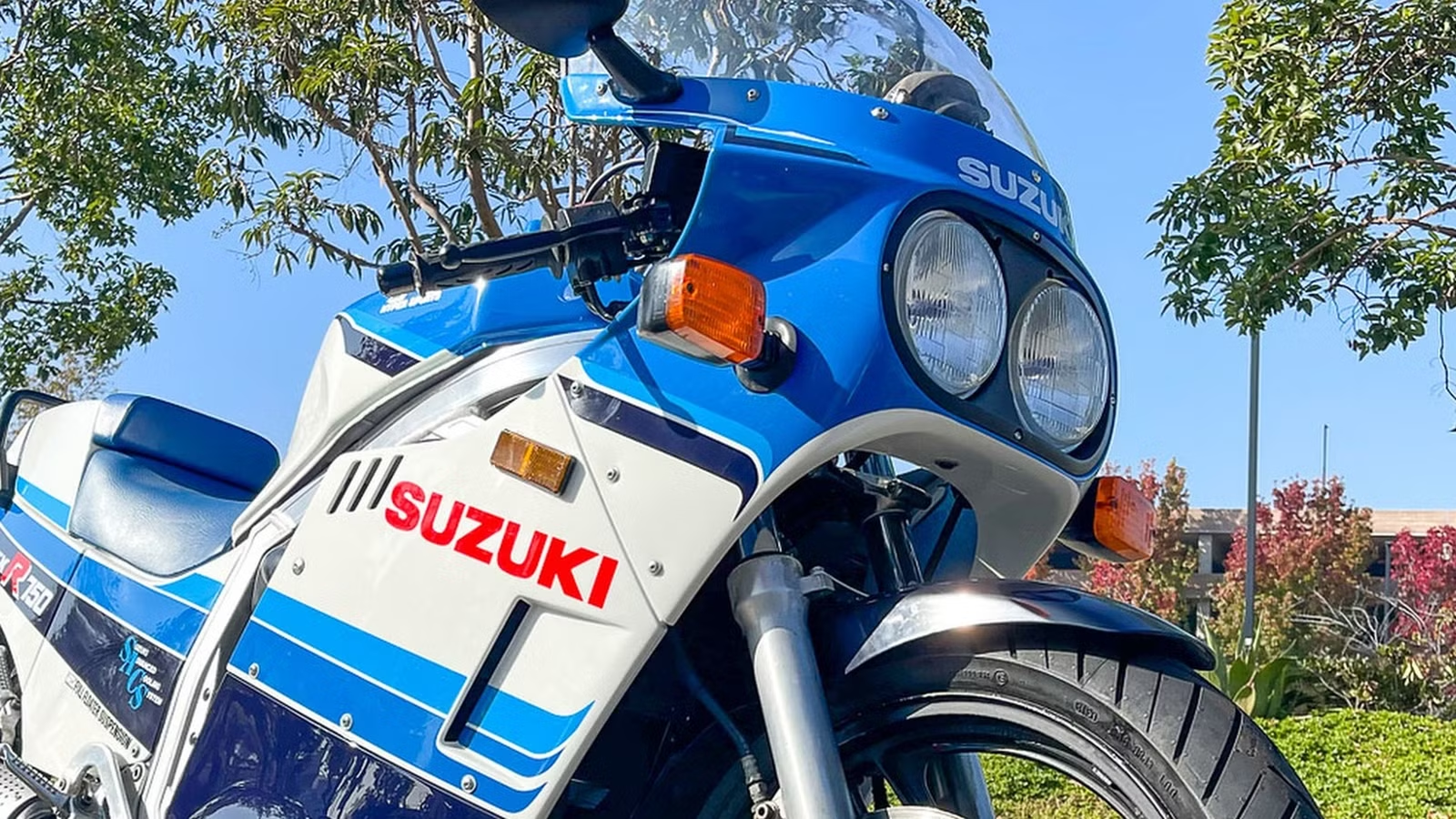
The Suzuki GSX-R750, launched in 1985, is widely considered the first genuine sport bike. While it wasn’t the first fully-faired production motorcycle, or the first high-performance inline-four, nor was it the first bike to feature an aluminum frame, it was the first bike that was able to successfully combine all three. In so doing, it provided the general public with a genuine production racing motorcycle straight from the factory.
The 1985 Suzuki GSX-R750 Was A Game-Changer

Back in the 80s, two-stroke bikes were still a dominant force on track, even though regulators had long since stepped in to restrict emissions of road-going bikes, thereby limiting the viability of production versions. This led to a disconnect between the bikes being raced and the bikes widely available to the public. One of the few exceptions was endurance racing, where four-stroke bikes were still a force. Suzuki saw an opportunity, and offered what was essentially their factory endurance racer to the public.
Although the GSX-R750 is pretty much a track bike with lights back in the day, it is not the kind of track bike we have grown accustomed to today. It is a usable machine that offers fantastic street performance, and a degree of comfort we are no longer afforded with modern sport bikes. With an independently verified 0–60 time of under three and a half seconds, it is a fast motorcycle, even by modern standards, but it wasn’t just built for straight-line speed.
An Innovative Air/Oil-Cooled Inline-Four Delivered Exceptional Performance
Power 100–130 Horsepower


At the time, most other high-performance bikes (both two and four-stroke) had actually switched over to liquid-cooling. The Suzuki engineers made the decision to rather add an oil-cooler, which saved weight and achieved more or less the same cooling efficiency a liquid-cooled version of the bike would have. As most Harley fans will attest, oil-cooling is an underrated cooling solution for motorcycles, most especially on motorcycles with exposed engines.
Naturally, liquid-cooling systems have come a long way since 1985, and the performance gains usually merit the added weight, especially on sport bikes where fairings restrict airflow at low speed. The power objective of 100 horsepower was achieved for the bike, but a race kit was available that pushed that power figure up to 130 horsepower. For those looking to race these bikes back in the 80s, that would have been an essential option, but today the more reliable 100 horsepower version will certainly be more desirable.
“Added Lightness” Wins Races
Dry Weight: 395 Pounds

While 100 horsepower motorcycles were relatively common, pretty much all of them weighed over 500 pounds. With a dry weight of just 395 pounds (which translated to a wet weight of around 450 pounds), nothing capable of this kind of power was even close to as light as the GSX-R750. While the engine was relatively light for the class, it was the aluminum chassis that made all the difference. Even though it wasn’t quite as advanced as some of the Italian bikes, it was so much lighter that its superior power-to-weight ratio overcame any deficiencies.
It became the default choice for superbike racing (like the AMA Superbike series) all over the world, and an updated version would eventually feature in the World Superbike Championship (WorldSBK). From amateur enthusiasts to seasoned professional racers, the GSX-R750 was the bike to have if you wanted to be competitive on track in the mid-80s. It paved the way for the sport bike class, forcing answers out of the competition, who all hit back pretty hard with a wide selection of options. By the end of the decade, we were genuinely spoiled for choice, with pretty much every major manufacturer offering a capable sport bike. Well, aside from Harley, but that is a story for another day.
The Bike Of The Decade

The 80s was a huge decade for the motorcycle industry. Harley came back from the dead, BMW invented the adventure bike (although nobody knew it), and the “Speed Wars” kicked off in spectacular style. Much of this was down to a booming Japanese economy, with a wide range of high-performance bikes getting green-lit without so much of a hint of resistance. The Japanese brands forced other manufacturers to come up with some sort of answer to each of their models, or quite literally die trying.
The GSX-R750 was a product of this incredible optimism, and, at least in our opinion, stands out as the most influential bike of the 80s. Not because it was the best bike, but because of the role it played in moving the goal posts. Other exotic motorcycles also offered similar performance, but for twice the price. The Suzuki, on the other hand, was both affordable and reliable.
Prices May Vary On The Used Market
Price Range: $5,000-$25,000

Today, these original bikes (1986 models in the US market) are getting harder to find. Most of them were used for their intended purpose, which was to be raced. Ex-track machines or projects are relatively affordable, but if you want a runner you will need to be prepared to part ways with at least $10k, which is a lot of money for an old Japanese superbike. There was also a Limited Edition (pictured) model that was released the year after on the back of a Le Mans victory. With only 500 of those bikes leaving the factory, they are highly collectible, and worth around $25k.
Suffice to say, it is no longer the blue-collar hero it once was, but there are several newer, better GSX-R750 models that are still affordable. If you like the lightweight air/oil-cooled models, then looking at a 1990 or 1991 model might be best. Early liquid-cooled models were a little porky, but the 1996 SRAD offers exceptional value, and the same dry weight figure as the original.
Naturally, nothing quite compares to the original bike when it comes to historical significance, or racing pedigree. It was, and still is a legend of a motorcycle that made high-performance motorcycles more accessible than ever before.
Sources: Suzuki Global and Cycle World Magazine (June 1985)

Related posts

Latest Post


No Comments