
7 American Turbos You Can Still Buy Before Prices Explode
American performance has always been about monstrous V8 power, and because of that, turbocharging never really caught on with speed freaks and horsepower junkies. Even today, if it’s a forced induction ride, it’s most likely a supercharged eight-cylinder beast, not a turbocharged six or four. Most people probably associate turbos with European or Japanese sports cars, but there’s actually a long history in America as well. There are at least two or three American turbo rides that most people can recall, but an even bigger number that have been lost to time. We’re doing a deep dive into some of the coolest American turbo cars that, for whatever reason, have been memory holed.
7
1962 Chevrolet Corvair Monza Spyder
Unsafe at Any Speed

Introduced in 1960, the Chevrolet Corvair was a rear-engine air-cooled flat-six compact, which is to say it was the least American thing Chevrolet has ever built. Initially rated at a modest 95 hp, in 1962 it would get a sporty upgrade with the Corvair Monza Spyder. Sporting a 150 hp, 210 lb-ft 2.4-liter H-6, the relatively light sports car was still fairly sluggish with a 12.1-second 0-60 time and an 18.5-second quarter-mile. This early example of a turbo car may have actually soured Americans on turbocharging, because it sounded like it would make a car faster, but didn’t really deliver. Despite all of that, as well as the bad press the Corvair got for allegedly being unsafe, it was a cool little car that was actually fun to drive.
6
1962 Oldsmobile F-85 Jetfire
The Rocket Juice is Loose

The Corvair Monza Spyder may have prejudiced Americans against turbochargers, but the 1962 Oldsmobile F-85 Jetfire actually created some real animosity, because it was something of a mess. With an all-aluminum 215 turbocharged V8, this compact, at least on paper, was pretty frickin’ awesome, but in the real world it wasn’t terribly impressive. Its 215 hp and 300 lb-ft of torque was better than the Corvair’s, but not much quicker, with a 9.1-second 0-60 and a 17-second flat quarter-mile. The real issue with this turbo was that the compression ratio was so high that there was significant engine detonation (knocking) and the solution was “Rocket Fuel,” which was a reservoir of distilled water and methyl alcohol. Most owners forgot to fill the Rocket Fuel, and so they got even less performance out of it. Now, the one-year wonder F-85 Jetfire is a historical oddity that collectors adore, so all it took was a little time to finally catch on.
5
1978 Buick Regal Turbo Sports Coupe
GNX Origin Story

The Ferrari-killing turbocharged 1987 Buick GNX is a legendary piece of American performance history, but most people probably don’t realize its origins lie with a more humble ride from the late 1970s. After the early turbo flops of the 1960s, Buick decided to revisit the forced air induction engine with the 1978 Regal Turbo. Unfortunately, they weren’t able to substantially improve things 16 years later, as the 165 hp, 285 lb-ft 3.8-liter turbo V-6 only got the Regal Sports Coupe moving from 0-60 in 9.0 seconds and down a quarter-mile in 16.9 seconds. This was the height of the Malaise Era of detuned engines, so it’s not as though Buick was slower than anything else on the road, but it didn’t quite sell the idea that turbos were a performance solution to American buyers. It was, however, the groundwork for something awesome to come in the GNX, so it’s definitely an important car.
4
1979 Ford Mustang Turbo
Forced Air Fox Body

Almost everyone, including people who owned one, has forgotten that there was a turbocharged Fox Body Mustang. With the 1979 Mustang Turbo, Ford took a different approach to turbocharging, offering a car with decent fuel economy, versus something that was supposed to tear up the asphalt. With a 132 hp, 165 lb-ft I-4, the Mustang Turbo was adequate for the time with a 9.1-second 0-60 time and a 17.4-second quarter-mile ET. Ford would try again in 1984-1986 with the Mustang SVO, but neither of these cars resonated with the public. The Fox Body generation moved a large number of Mustangs for Ford, but the ’83 Mustang Turbo sold fewer than 30,000 units, and fewer than 10,000 Mustang SVOs were produced across three model years. Like all things Mustang, rarities end up as collectibles because they have such a devoted fanbase, and so these middling turbos are now a hot commodity.
3
1980 Pontiac Turbo Trans Am
Turbocharged Screaming Chicken

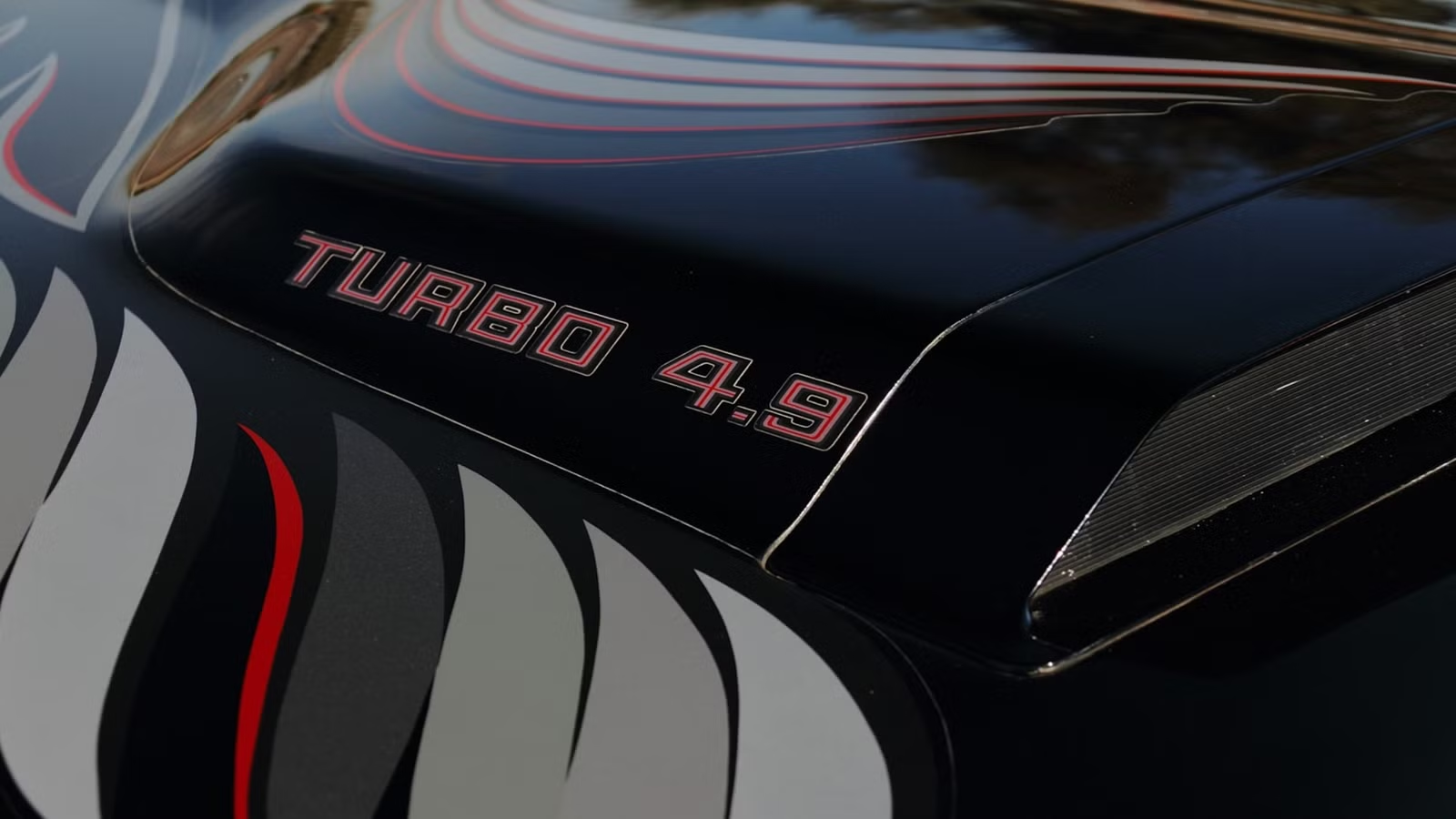
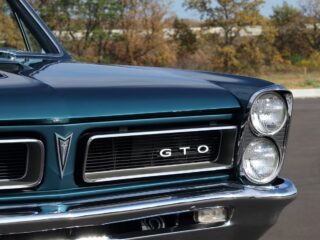
Though the second-gen Pontiac Firebird had been around since 1970, the Trans Am hero car in the 1977 Burt Reynolds’ action/comedy Smokey and the Bandit really put it on the map. Conversely, the utterly forgettable 1980 sequel Smokey and the Bandit II couldn’t help anyone remember the Turbo Trans Am which was featured in the film. In 1980, Pontiac built a special-edition Trans Am with a 4.9-liter turbocharged V8 that produced 210 hp and 345 lb-ft of torque, good for getting from 0-60 in 8.2 seconds and down the quarter-mile in the mid-16s. That’s not particularly mind-blowing, but it was decent for the era and better than the non-turbo Trans Am, which was nearly two seconds slower on both acceleration points. Speaking of things nobody remembers, there was actually a Smokey and the Bandit Part 3 with no Burt Reynolds and a third-gen Trans Am, that couldn’t live up to the iconic Screaming Chicken from the first movie.
2
1983 Ford Thunderbird Turbo Coupe
Fun, Fun, Fun Again

The Ford Thunderbird is one of the most iconic American rides, but it comes with a huge asterisk. Though it was in continuous production from 1955 to 1997, nobody remembers any of them except the classic first gens that the Beach Boys wrote songs about. Saying that people forgot about the 1983 Thunderbird Coupe is obvious because the entire 1983-1988 ninth generation is forgotten. In actuality, this wasn’t a bad-looking car, and its 145 hp, 180 lb-ft 2.3-liter turbocharged I-4 was better than the V8 option and had the T-Bird Turbo running even with the ’83 Mustang GT’s 5.0. The best thing is, this car came standard with a five-speed manual transmission, marking the first time a T-Bird had a stick since the ’60s. We couldn’t find a usable picture of an ’83, so we went with an ’87, which is the same basic car but with a different front fascia. Actually, by 1987, the Thunderbird Turbo Coupe was up to 190 horsepower, making it an even bigger blast to drive.
1
1991 GMC Syclone
Da Bomb Syclone

In an ironic twist, it ended up being a pickup truck that finally nailed turbocharged performance in an American vehicle. The 1991 GMC Syclone was equipped with a 4.3-liter turbocharged V-6 that was severely underrated at 280 horsepower and 350 pound-feet of torque. The reason we know this compact truck was more powerful is that it could blast off from 0-60 in 4.3 seconds and rip a quarter-mile in 13.4 seconds, which are acceleration times that require more power under the hood. This mighty pickup even bested a 300 hp Ferrari 348ts that cost $100,000 more. The reason nobody seems to remember this truly remarkable muscle truck is that GMC didn’t make many of them, with only a 2,995-unit production run. Thanks to the collective amnesia surrounding this one, the ’91 Syclone is remarkably affordable, with a Hagerty excellent-condition value of just $55,700, which almost feels like giving it away.
Sources: GMC, Buick, Ford, Chevrolet, Pontiac, Oldsmobile, Hagerty

Related posts



Latest Post


No Comments